An Indian ‘industrial novel’ from the winner of the 1990 Odisha Sahitya Akademi Award
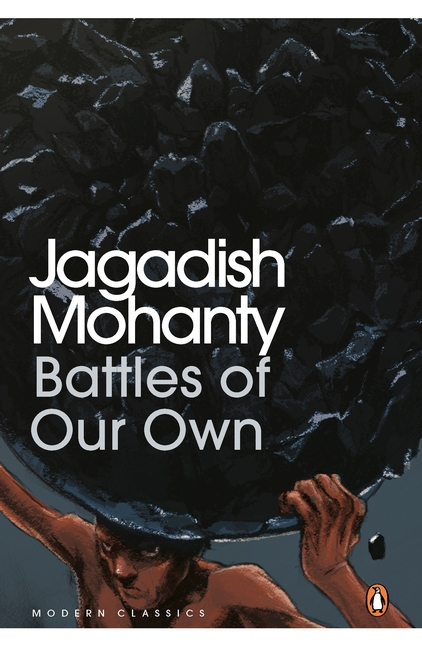
Jagadish Mohanty’s Battles of Our Own is a rare work of modern Odia and Indian fiction. It seeks to delineate a world that is off the grid. Its action unfolds in the remote and non-descript Tarbahar Colliery-a fictional name for the over hundred-year-old open-cast Himgiri Rampur coal mine in the hinterland of western Odisha. A work of gritty realism in its portrayal of a dark and dangerous underworld where coal is extracted, the novel poignantly reveals the primeval struggle between man and brute nature.
Offering a complete experience of the ‘industrial novel’-face offs between trade unions and management, trade union rivalry, and clandestine deals between enemy camps-this work brings alive Mohanty’s literary genius, which takes us to a world beyond the simplistic binary division between the worker and the master. The novel unravels a complex, fractious, and nuanced picture of the human condition.
This sensitive and evocative rendering by Himansu S. Mohapatra and Paul St-Pierre captures the thrill, beauty, horror and tragedy of this fictional tour de force.

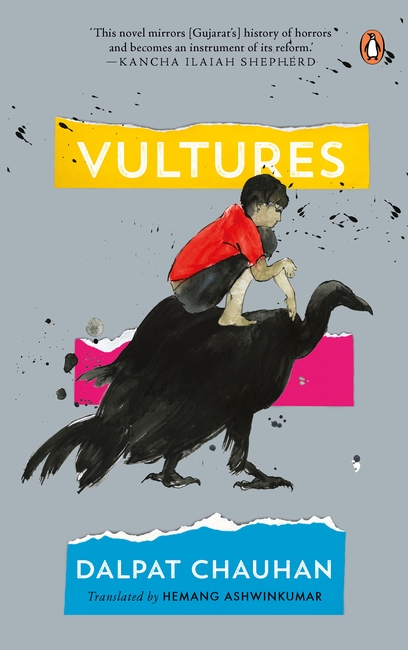
Gujarat, 1964. The agrarian system of renewable annual contract mandates fulltime labour on the houses and farms of landlords. In these bleak circumstances, Iso, a tanner by birth, graduates from being a child labourer to an adult serf on the estate of Mavaji. His life is one of humiliation, hunger and drudgery, and the only respite comes in the form of Diwali, Mavaji’s daughter. Between them exists a physical relationship that is shrouded in secrecy, shame and fear. Even as Iso creates distance between them, a chance encounter turns to violence and tragedy, and he faces the brutal sword of caste patriarchy.
Based on the blood-curdling murder of a Dalit boy by Rajput landlords in Kodaram village in 1964, Vultures portrays a feudal society structured around caste-based relations and social segregation, in which Dalit lives and livelihoods are torn to pieces by upper-caste vultures. The deft use of dialect, graphic descriptions and translator Hemang Ashwinkumar’s lucid telling throw sharp focus on the fragmented world of a mofussil village in Gujarat, much of which remains unchanged even today.

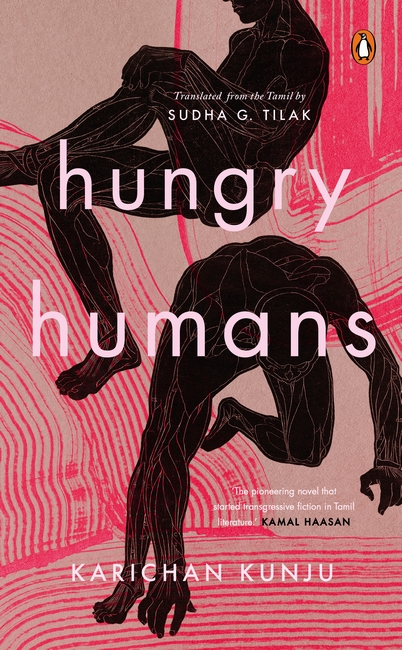
Ganesan returns, after four decades, to the town of his childhood, filled with memories of love and loneliness, of youthful beauty and the ravages of age and misfortune, of the promise of talent and its slow destruction. Seeking treatment for leprosy, he must also come to terms with his past: his exploitation at the hands of older men, his growing consciousness of desire and his own sexual identity, his steady disavowal of Brahminical morality and his slowly degenerating body. He longs for liberation-sexual, social and spiritual-but finally finds peace only in self-acceptance.
This translation of the groundbreaking Tamil novel Pasitha Manidam, first published in 1978, offers deep insight into the conservative and caste-conscious temple town of Kumbakonam, viewed here with dispassionately cold clarity as a society that utterly fails its own. Sudha G. Tilak deftly builds upon Karichan Kunju’s prose to expose this world, raw, real, without frills or artifice. The themes of masculinity, desire and sexuality, caged within caste and repression, all combine to give readers front-row seats to the many acts we put on for and as a community.

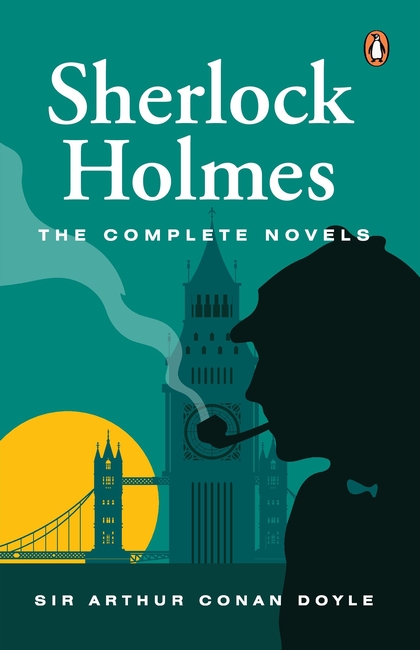
Meet Sherlock Holmes-eccentric genius and brilliant detective. Using the science of deduction, Holmes cracks cases
that baffle even the police. When the famous sleuth moves into rooms at 221B Baker Street in London with Dr John Watson, a medic returned from the war front, the two begin a warm and enduring friendship-and a series of exciting adventures.
This volume contains the four novels featuring the world’s most famous detective. Narrated by Dr Watson, the adventures in this volume are packed with multi-layered mysteries-a grisly murder, a daring robbery, mysterious messages, strange sights and sounds, shadowy alliances, and secret societies-and are truly epic.
A thrilling collection of the most famous detective novels ever written, Sherlock Holmes: The Complete Novels brings
together four timeless classics of the mystery genre.

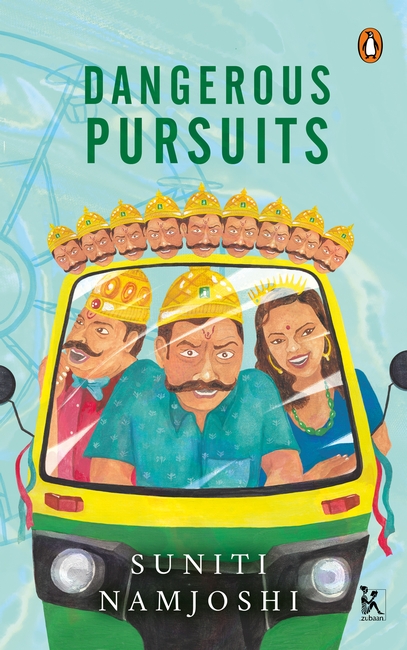
Humankind’s unrelenting mistreatment of our planet has finally led to a seemingly futile awareness of our acute shortage of time. What separates us from an oblivion preceded by excruciating pain and strife? The characters of this unique book, inspired by legends from lore and literature alike, pursue paths they believe are best for them and for their world. They are unaware of the flaws that distort their dreams. Divided into three parts, Suniti Namjoshi’s Dangerous Pursuits turns righteousness and virtue upon their heads, making for an irreverent and ruminative exploration of the beginning of the end of the world.
In “Bad People”, Ravana, Shupi and Kumbh deflect the world from its destructive course, but perfection remains a distant dream. Ravana, of course, belongs to epic; but how does he fit into the twenty-first century? With the help of Grandma Ketumati’s balm, these three ‘bad’ people outwit our contemporary villains. In “Heart’s Desire”, an old woman seeks to make a bargain with the devil, but the devil isn’t interested, and she finds herself stuck with two angels instead. She and the angels do their best, but the old woman learns that the heart’s desires aren’t all that she had expected. And in “The Dream Book”, based on The Tempest, Caliban, Miranda, Prospero and the rest find that their dreams clash and are as pretty and pitiless as glass shards. Yet, each time their dreams crack, they dream again, reckless in this dangerous pursuit.

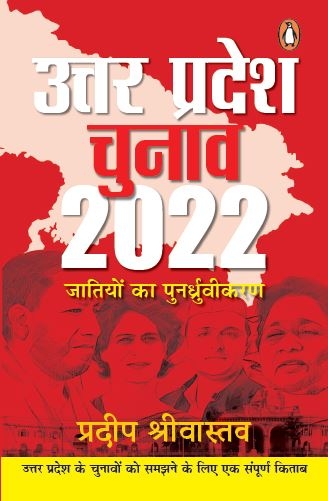
It is said that road to India’s power corridor runs through Uttar Pradesh, the most populous state of the country which sends eighty MPs to the lower house of the Parliament. Till date, most of the Prime Ministers of India belonged to this state and an electoral win in the state assembly paves the way for the formation of a central government.
The question is, do we have a barometer to guess the political pulse of the people? What are the political trends in the state? Which are the political, social, and economic factors that affect those trends?
Would extreme backward castes (EBCs) be successful in getting direct share in the power structure, which has been a dream so far for them?
This book written by veteran journalist Pradeep Srivastava tries to find out answers to these questions with in-depth analysis and in an easy to understand language.

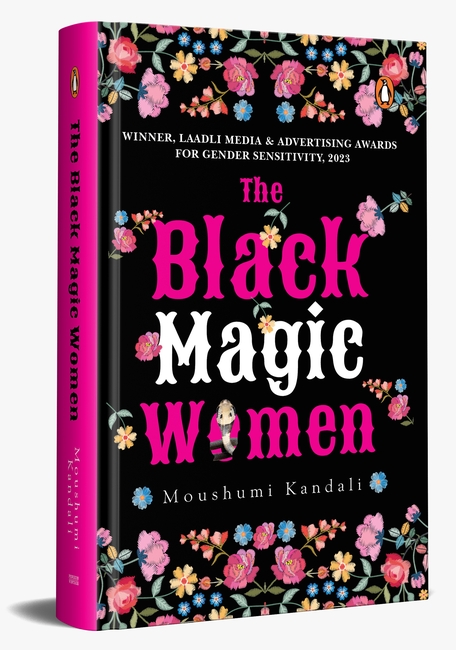
In the recent past, many writers have acquainted readers with the composite culture of Assam. Moushumi Kandali makes a similar attempt in The Black Magic Women, but with a stark difference. She brings her characters out of Assam and places them in the mainstream, capturing their struggle to retain their inherent ‘Assameseness’ as they try to assimilate into the larger society.
The stories makes one pause, think and debate issues that range from racial discrimination (‘The Fireflies Outside of the Frame’) to sexual harassment (‘The Hyenas and Coach Number One’, ‘Kalindi, Your Black Waters . . . ‘) to the existential and ideological dilemma induced by the state’s complex sociopolitical scenario (‘The Final Leap of the Salmon’). The title story is revealing of how mainstream India perceives Assamese women-as powered with the art of seduction and black magic-as a result of which they face social discrimination that can range from racial slurs to physical abuse.
The writer ventures into a surrealistic mode, using a generous sprinkle of fable, myth and metaphors to deliver a powerful punch. With all the shades of emotion these ten stories from the North-east evoke, the reader cannot remain a passive observer.

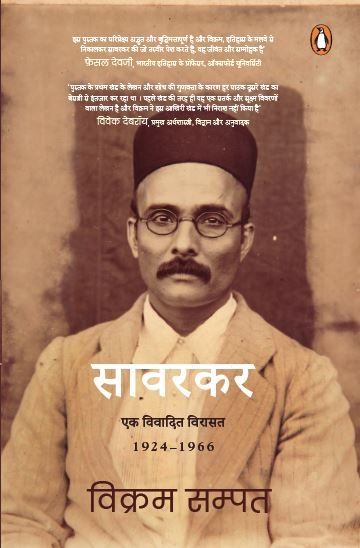
Was Savarkar really a co-conspirator in the Gandhi murder?
Was there a pogrom against a particular community after Gandhi’s assassination?
Decades after his death, Vinayak Damodar Savarkar continues to uniquely influence India’s political scenario. An optimistic advocate of Hindu-Muslim unity in his treatise on the 1857 War of Independence, what was it that transformed him into a proponent of ‘Hindutva’? A former president of the All-India Hindu Mahasabha, Savarkar was a severe critic of the Congress’s appeasement politics. After Gandhi’s murder, Savarkar was charged as a co-conspirator in the assassination. While he was acquitted by the court, Savarkar is still alleged to have played a role in Gandhi’s assassination, a topic that is often discussed and debated.
In this concluding volume of the Savarkar series, exploring a vast range of original archival documents from across India and outside it, in English and several Indian languages, historian Vikram Sampath brings to light the life and works of Vinayak Damodar Savarkar, one of the most contentious political thinkers and leaders of the twentieth century.

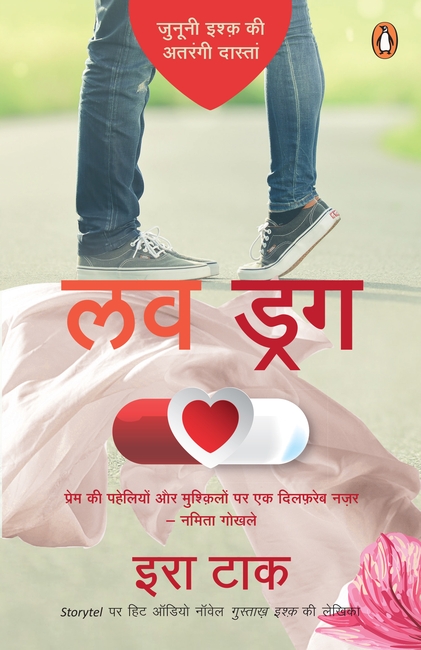
Love can arrive unexpectedly and it’s addictive like drugs.
Shazia couldn’t escape from Martin’s charm. Despite being totally different from each other, they are insanely in love.
‘Love Drug’ is the narrative of their intense, magical love saga which will keep you captivated.
To learn more about these love birds, read Era Tak’s new novel ‘Love Drug’.