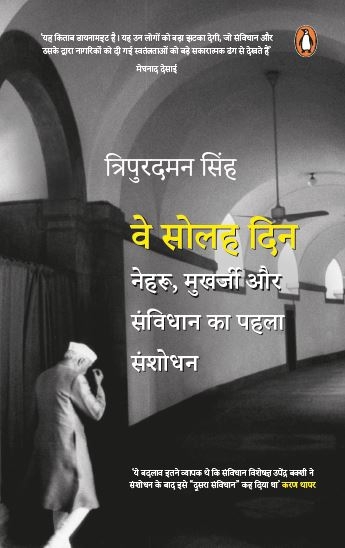
Ve Solah Din narrates the riveting story of the First Amendment to the Constitution of India-one of the pivotal events in Indian political and constitutional history, and its first great battle of ideas. Passed in June 1951 in the face of tremendous opposition within and outside Parliament, the subject of some of independent India’s fiercest parliamentary debates, the First Amendment drastically curbed freedom of speech; enabled caste-based reservation by restricting freedom against discrimination; circumscribed the right to property and validated abolition of the zamindari system; and fashioned a special schedule of unconstitutional laws immune to judicial challenge. Enacted months before India’s inaugural election, the amendment represents the most profound changes that the Constitution has ever seen. Faced with an expansively liberal Constitution that stood in the way of nearly every major socio-economic plan in the Congress party’s manifesto, a judiciary vigorously upholding civil liberties, and a press fiercely resisting his attempt to control public discourse, Prime Minister Jawaharlal Nehru reasserted executive supremacy, creating the constitutional architecture for repression and coercion.
What extraordinary set of events led the prime minister-who had championed the Constitution when it was passed in 1950 after three years of deliberation-to radically amend it after a mere sixteen days of debate in 1951?
Drawing on parliamentary debates, press reports, judicial pronouncements, official correspondence and existing scholarship, Sixteen Stormy Days challenges conventional wisdom on iconic figures such as Jawaharlal Nehru, B.R. Ambedkar, Rajendra Prasad, Sardar Patel and Shyama Prasad Mookerji, and lays bare the vast gulf between the liberal promise of India’s Constitution and the authoritarian impulses of her first government.

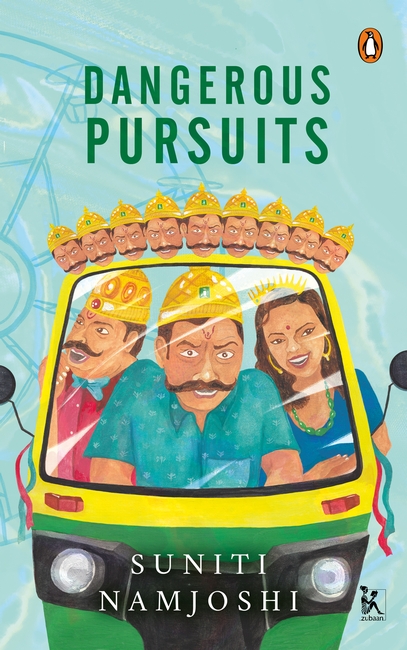
Humankind’s unrelenting mistreatment of our planet has finally led to a seemingly futile awareness of our acute shortage of time. What separates us from an oblivion preceded by excruciating pain and strife? The characters of this unique book, inspired by legends from lore and literature alike, pursue paths they believe are best for them and for their world. They are unaware of the flaws that distort their dreams. Divided into three parts, Suniti Namjoshi’s Dangerous Pursuits turns righteousness and virtue upon their heads, making for an irreverent and ruminative exploration of the beginning of the end of the world.
In “Bad People”, Ravana, Shupi and Kumbh deflect the world from its destructive course, but perfection remains a distant dream. Ravana, of course, belongs to epic; but how does he fit into the twenty-first century? With the help of Grandma Ketumati’s balm, these three ‘bad’ people outwit our contemporary villains. In “Heart’s Desire”, an old woman seeks to make a bargain with the devil, but the devil isn’t interested, and she finds herself stuck with two angels instead. She and the angels do their best, but the old woman learns that the heart’s desires aren’t all that she had expected. And in “The Dream Book”, based on The Tempest, Caliban, Miranda, Prospero and the rest find that their dreams clash and are as pretty and pitiless as glass shards. Yet, each time their dreams crack, they dream again, reckless in this dangerous pursuit.

WINNER OF THE INTERNATIONAL BOOKER PRIZE 2022
Winner of an English Pen Award
LONGLISTED FOR THE JCB PRIZE 2022
In northern India, an eighty-year-old woman slips into a deep depression after the death of her husband, and then resurfaces to gain a new lease on life. Her determination to fly in the face of convention – including striking up a friendship with a transgender person – confuses her bohemian daughter, who is used to thinking of herself as the more ‘modern’ of the two.
To her family’s consternation, Ma insists on travelling to Pakistan, simultaneously confronting the unresolved trauma of her experiences of Partition, and re-evaluating what it means to be a mother, a daughter, a woman, a feminist.
Rather than respond to tragedy with seriousness, Geetanjali Shree’s playful tone and exuberant wordplay results in a book that is engaging, funny, and utterly original, at the same time as being an urgent and timely protest against the destructive impact of borders and boundaries, whether between religions, countries, or genders.

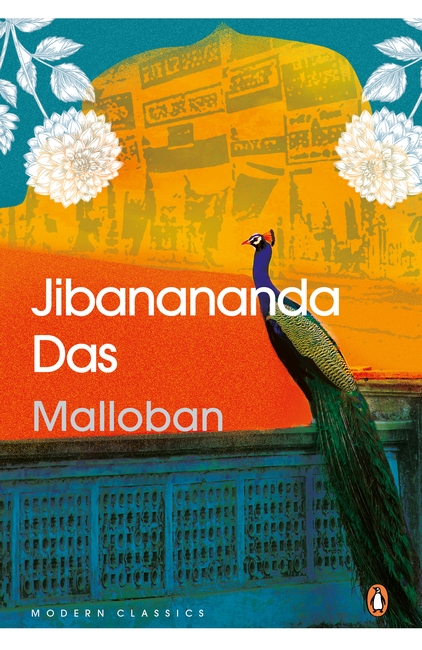
Malloban is set in North Calcutta in the winter of 1929. The eponymous protagonist, a lower-middle-class office worker, lives in College Street-a locality known for its bookstores, publishing houses, and universities-with his wife Utpala and their daughter Monu. The novel unfolds through a series of everyday scenes of dysfunction and discontent: bickering about bathrooms and budgeting, family trips to the zoo and the movies, a visit from Utpala’s brother’s family which displaces Malloban to a boarding house, and the appearance of a frequent late-night visitor to Utpala’s upstairs bedroom. Meanwhile, the daughter Monu bears the brunt of her parents’ “unlove.”
Arguably the most beloved poet in modern Bangla after Tagore, Jibanananda wrote a significant number of novels and short stories discovered and published after his death. Malloban is his most popular novel.
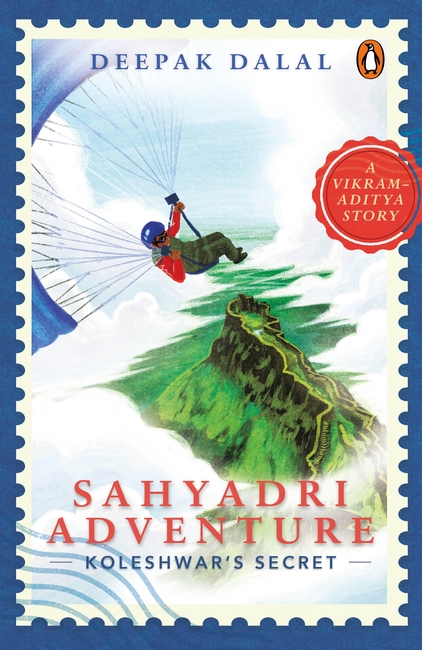
Far out in the Sahyadris rises a mountain called Koleshwar. Amidst its caves and rumbling streams lie many secrets, secrets that Anirudh discovers when he wakes from a strange dream. Vikram, Aditya, Chitra and Anirudh are now tasked with trying to make sense of his dream. How does Anirudh inexplicably recognize not just every contour and ridge of the lush, monsooned hills but also know every minute detail of the vanished Fort of Mumbai? Will this group of budding adventurers decode the forgotten legacy, buried in the ancient slopes of the Sahyadris, before everything tips over the edge?
Journey to the Sahyadris in the concluding instalment of this riveting tale where history meets adventure in one of the most beautiful locales of India.

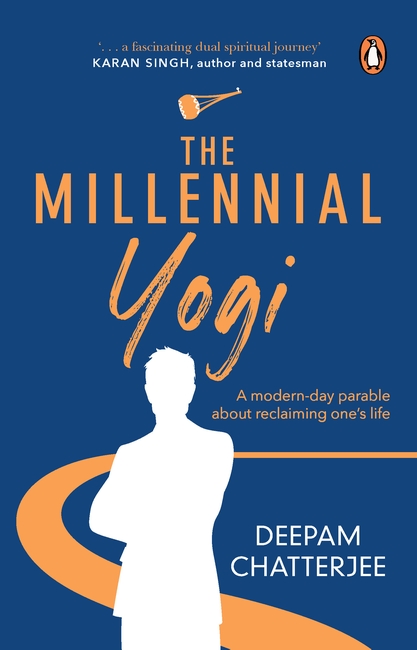
‘How do I fight? I see failure at every juncture,’ said Jay.
‘If we divide our life the way we sort laundry, we will never find peace,’ replied Vini.
Jayshankar Prasad, or Jay, has had a shady-yet-mercurial rise in his journey as an entrepreneur, but he has little idea as to what is around the corner. On the other hand, Vini, a mystic monk, has already been there, and knows what it is like to have it all and then lose it in an instant. Greed . . . power . . . money . . . are all transitory.
In a serendipitous twist of fate, Jay crosses paths with the enigmatic Vini and thus begins a cathartic and transformative journey. The Millennial Yogi is the zeitgeist parable for anyone searching for meaning and purpose in life. With prose that is both photographic and profound, Deepam Chatterjee has crafted an extraordinary tale of loss, redemption and the fight for one’s soul in an increasingly materialistic world.

Sid is a successful photographer in a boutique ad agency. He is single and has everything he wants-a great job, great colleagues and a hassle-free life. But if there is one thing that has eluded him, it is love. Until the gorgeous, free-spirited Cara walks into his life. The two begin a charged affair that disrupts all his notions of love and transforms the way Sid thinks about pleasure. But then something strange happens-Sid finds himself falling in love with another woman.
‘Each story in this collection illuminates a particular universe, completely authentic in texture and detail, giving us writing that is not only pleasurable, but finely-crafted as well’-Indian Review of Books
In ‘A New Year’s Party’, Geoffrey finds all his attempts to throw a successful party come to naught as his inappropriately chose guests make their dislike for each other very vocal; the wonderful camaraderie that can exist between a four-year-old and his ancient Nana is explored in ‘Song of Innocence and Experience’; two men’s lives follow a similar pattern in ‘A Diagnosis of Destiny’-and then one of them dies to the other’s horror; in ‘The Taste of Almonds’, a senile but endearing Nawab finds himself at odds with the changed times.
As each exquisite story unfolds we are introduced to characters as varied and colourful as the parts of India to which they belong.
How do villagers respond to pornography?
Not very differently from their big-city cousins, we discover in the wonderfully comic ‘Chandu and the Bissyaar’, one of eighteen evocative stories in Neelum Saran Gour’s third book of fiction. The making and unmaking of a poet is described in ‘A Lane in Lucknow’; two old men find solace in ‘Winter Companions’; and a nurse examines the quality of her faith in ‘The Knitting Needle’.
In a vivid kaleidoscope of provincial bazaars, claustrophobic bedrooms, cemeteries, courtyards, hospital corridors, park benches and railway compartments, we are introduced to varied and colourful characters forging unexpected emotional bonds with friends, lovers, strangers and kin, tangled in the skeins of dreams, deceptions, anxieties, lusts and joys.
It was the best and brightest of times . . .
You’d think a Bombay teen’s life in the early 90s would be the usual sunshine and rain. But when this regular teenager realizes he’s gay, things suddenly get interesting.
Pop culture and its massive influence on a young gay boy lie at the core of this memoir. Bear witness to his transition to adulthood as he traverses a big, burgeoning city and the gay scene slowly blooming at its fringes.