LONGLISTED FOR THE JCB PRIZE 2022
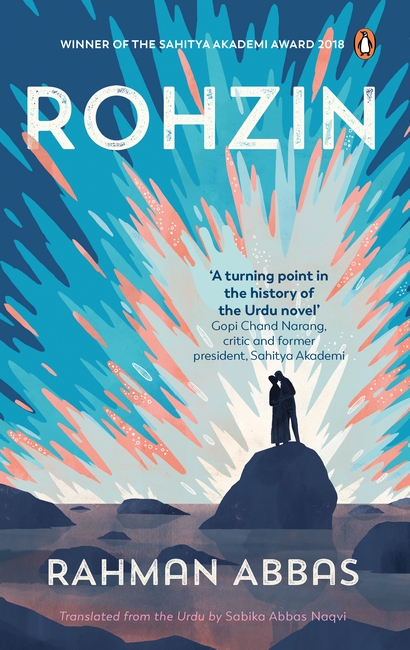
Mumbai was almost submerged on the fatal noon of 26 July 2005, when the merciless downpour and cloudburst had spread utter darkness and horror in the heart of the city. River Mithi was inundated, and the sea was furious. At this hour of torturous gloom, Rohzin begins declaring in the first line that it was the last day in the life of two lovers, Asrar and Hina.
The novel’s protagonist, Asrar, comes to Mumbai, and through his eyes the author describes the hitherto-unknown aspects of Mumbai, unseen colours and unseen secrets of the city’s underbelly.
The love story of Asar and Hina begins abruptly and ends tragically. It is love at first sight which takes place in the premises of Haji Ali Dargah.
The arc of the novel studies various aspects of human emotions, especially love, longing and sexuality as sublime expressions. The emotions are examined, so is love as well as the absence of it, through a gamut of characters and their interrelated lives: Asrar’s relationship with his teacher, Ms Jamila, a prostitute named Shanti and, later, with Hina; Hina’s classmate Vidhi’s relations with her lover and others; Hina’s father Yusuf’s love for Aymal; Vanu’s indulgence in prostitutes.
Rohzin dwells on the plane of an imagination that takes readers on a unique journey across the city of Mumbai, a highly intriguing character in its own right.

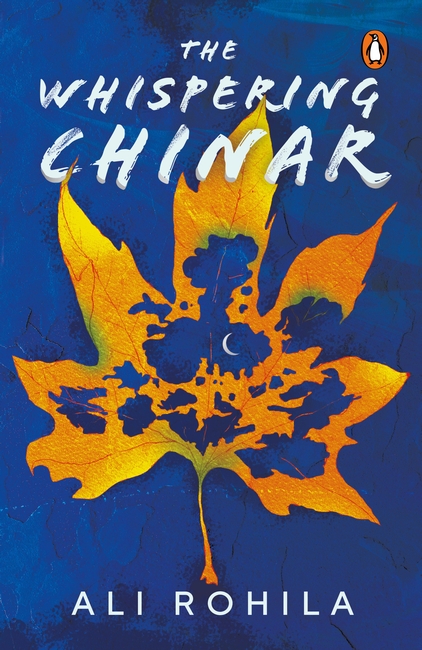
In Charbagh, Khyber-Pakhtunkhwa, a short detour from the Grand Trunk Road that leads towards Afghanistan, stands a chinar tree in the garden of Khan Mohammad Usman Khan. Legend has it that it was planted by a saint known to the grandfather of the Khan, who had told him that the family would prosper till this tree survived. The tree has stood for generations, a silent witness to the many stories of Charbagh, its grounds held sacred until the day a bullet fired by the oldest son of the Khan hit one of its branches.
In this debut collection of interlinked stories, the banker author recounts the stories as seen by the chinar tree. In Charbagh, a village where modernity slowly creeps in, there are tales of unrequited love, of family honour and religious persecution, of patriarchy and breaking its shackles, and of what it means to belong to Charbagh in tumultuous times.
Here, Fahad Khan falls in love with Saad Bibi, but it is a dangerous affair that threatens to uproot social norms. An imam competes with another for devotees, and an air-crash survivor-turned-teacher is charged with the crime of blasphemy. In Charbagh, Nazo learns why she has been sent away from her family, and Ali finds out how far friendship and trust can go. A banker struggles to make sense of his misfortunes, while Farid Khan must acquaint himself with a woman’s rejection.
Beginning from the 1970s, when the Indus was dammed near Charbagh, these stories chronicle a time and a place of belonging, of nostalgia, and of relationships and friendships. The Whispering Chinar is an extraordinary debut collection that tells stories from an unknown part of our world.