Publish with Us

Follow Penguin

Follow Penguinsters

Follow Penguin Swadesh

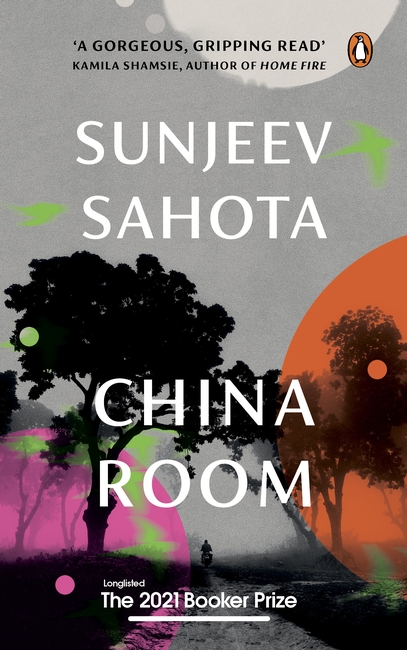
China Room

Longlisted for Booker Prize 2021, China Room is a literary masterpiece, inspired by real-life events, from award winning author Sunjeev Sahota

‘Sunjeev Sahota’s writing is the stuff of miracles’ – Bryan Washington

‘A gorgeous, gripping read’ – Kamila Shamsie

‘I’m blown away by it. I was gripped from the first page to the last’ – Tessa Hadley

‘Such a thrilling combination of beauty and heartbreak. It’s breathtaking’ – Charlotte Mendelson

‘An intense drama of classic themes – love, family, survival, and betrayal – told with passion and precision in Sahota’s economical, lyrical prose. China Room is a brilliant novel. I won’t forget any of these characters’ – Adam Foulds

A multigenerational novel of love, oppression, trauma and the pursuit of freedom, inspired in part by the author’s own family history, China Room twines together the stories of a woman and a man separated by more than half a century but united by blood.

Mehar, a young bride in the rural Punjab of 1929, is trying to discover the identity of her new husband. She and her sisters-in-law, married to three brothers in a single ceremony, spend their days hard at work in the family’s ‘china room’, sequestered from contact with the men. When Mehar develops a theory as to which of them is hers, a passion is ignited that puts more than one life at risk.

Spiralling around Mehar’s story is that of a young man who, in 1999, travels from England to the now-deserted farm, its ‘china room’ locked and barred. In enforced flight from the traumas of his adolescence-his experiences of addiction, racism and estrangement from the culture of his birth-he spends a summer in painful contemplation and recovery, before finally finding the strength to return home.
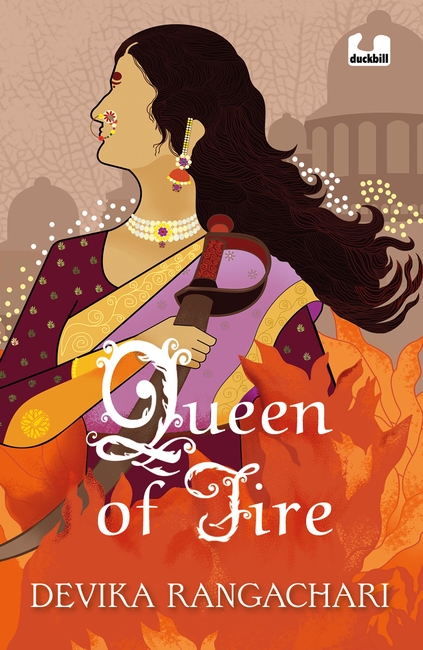
Queen of Fire

‘I will not yield. . .’

Lakshmibai, the widowed queen of Jhansi, is determined to protect her son’s right to his father’s throne and safeguard the welfare of her kingdom. Faced with machinations to take over Jhansi, at a time when all of India is rising up against the British, she has to prove her valour and sagacity time and again. But will this be enough to save all that she values?

In this gripping novel, award-winning historical novelist Devika Rangachari brings to vivid life the interior life of this nineteenth-century queen, thrust into a position she does not desire but must assume, and of her son, who is cowed by the challenges he has to face but determined to live up to his mother’s courage.

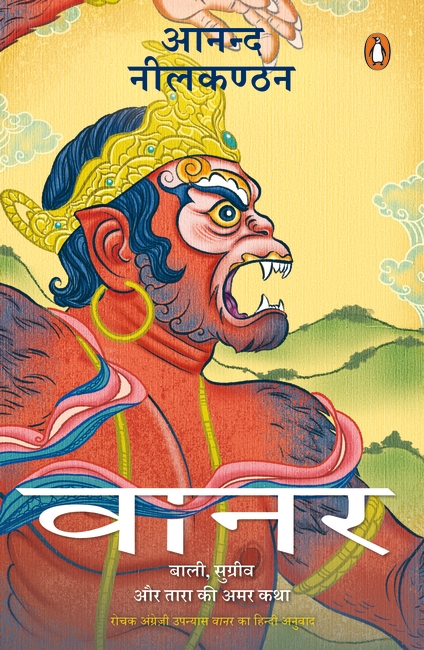
Vaanar : Baali, Sugreev Aur Tara Ki Amar Katha

Baali and Sugreeva of the Vana Nara tribe were orphan brothers who were born in abject poverty and grew up as slaves like most of their fellow tribesmen. They were often mocked as the vanaras, the monkey men.
Sandwiched between the never-ending war between the Deva tribes in the north and the Asura tribes in the south, the Vana Naras seemed to have lost all hope. But Baali was determined not to die a slave. Aided by his beloved brother, Sugreeva, Baali built a country for his people. The capital city, Kishkindha, became a beacon of hope for emancipated slaves from across the world. It was a city of the people, by the people, for the people, where there was no discrimination based on caste, creed, language or the colour of skin. For a brief period in history, it seemed as if mankind had found its ideal hero in Baali. But then fate intervened through the beautiful Tara, the daughter of a tribal physician. Loved by Baali and lusted after by Sugreeva, Tara became the cause of a fraternal war that would change history for ever. The love triangle between Baali, Tara and Sugreeva is arguably the world’s first. Written by Anand Neelakantan who gave a voice to Ravana in Asura, Duryodhana in the Ajaya series and Sivagami in the Baahubali series, Vanara is a classic tale of love, lust and betrayal. Shakespearean in its tragic depth and epic in its sweep, Vanara gives voice to the greatest warrior in the Ramayana-Baali.

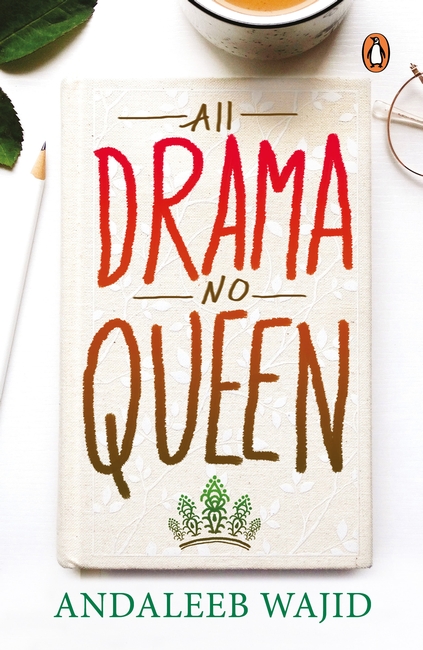
All Drama, No Queen

Farida’s parents passed away in an accident when she was twelve. And for years, she’s had to fend off Reshma Phuppu, a distant relative plotting to gain control of her parents’ house in Bangalore. When all the drama gets too much, she runs away to stay with her best friend, Priya. Farida deeply feels the absence of a family, and only has memories of her distant cousin, Irshad. She’s had a crush on him since she was a twelve-year-old, but they lost contact when her parents died. Nearly two decades later, Priya’s boyfriend, Ajay, serendipitously finds Irshad.
Now, Irshad is a doctor and lives in Mumbai. Farida is thrilled to reconnect with him, but is disappointed when she learns that he’s engaged to another woman. But as Irshad and Farida meet and reminisce, it becomes hard to deny their deep bond. As things get more complicated between Farida, Irshad and his fiancée, Shagufta, Farida must find a way to deal with all the drama in her life.

The Terrible, Horrible, Very Bad Good News

Soon to be seen as a major motion picture Badnam Ladoo, this humorous yet inspiring story of a small-town woman’s fight against social stigma will resonate with every woman, and man

Thirty-four-year-old Ladoo, a simple middle-class divorcée from Rishikesh, wants only one thing from life–a baby. She eats gondh halwa, drinks badam milk, and takes folic acid, to slow down her ticking biological clock and become the world’s most fertile woman.

When an accidental meeting with a gynaecologist reveals that her ‘eggs are drying up’ and finding a sperm donor is her last chance of having a child, Ladoo races against time to find the right baby daddy, whose kundali matches her, while addressing her own mixed feelings about whether Mr Right Donor can also be Mr Right.

Along the way, Ladoo must figure out whether motherhood means marriage, whether being a single mother means loneliness, whether ‘my body, my rules’ applies to women, and whether doing something scandalous is outrageous or courageous.

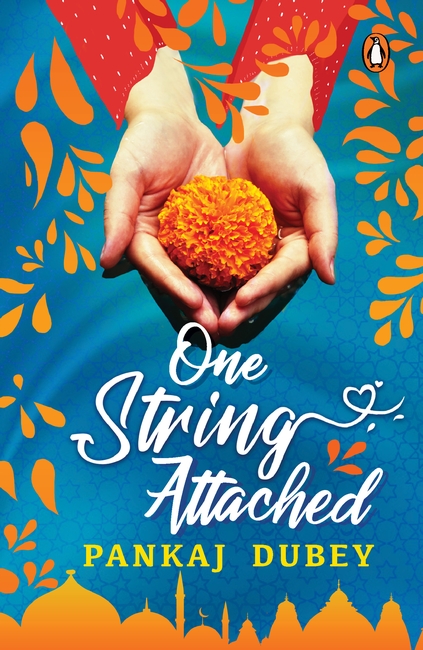
One String Attached

In the ancient town of Ayodhya, two lovers of different faiths, Shivam and Aaina, have just begun to come together-she, a college student and he, an aspiring tailor. Unfortunately, the day they decide to confess their love is also the day he loses his all, his shop, his parents and his blue-eyed beauty, to a riot. Only painful memories are left behind.
Bitter and broken, Shivam shifts to Delhi, to lose himself in the bustle of the city and his work. Then, one day, the past comes back to him like a whiff of air, and he gets the impression that Aaina is alive. With the information he gathers, Shivam stitches a path-a journey that takes him all the way to Dubai in search
of Aaina.What is love if not a thin thread of hope . . .

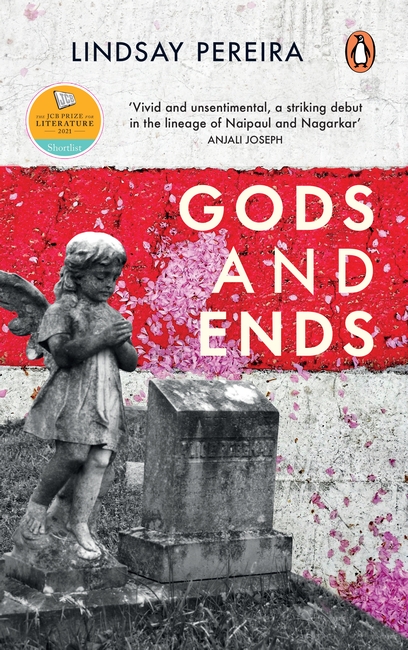
Gods and Ends (Shortlisted for the JCB Prize for Literature, Tata Lit Live First Book Prize)

Philomena Sequeira knows what she wants by the time she turns fourteen. Her father wants something else. Life is unyielding for tenants of the rundown Obrigado Mansion in Orlem, a Roman Catholic parish in suburban Bombay. They grapple with love, loss and sin, surrounded by abused wives and repressed widows, alcoholic husbands and dubious evangelists, angry teenagers and ambivalent priests, all struggling to make sense of circumstances they have no control over.
Gods and Ends takes up multiple threads of individual stories to create a larger picture of darkness beneath a seemingly placid surface. It is about intersecting lives struggling to accept change as homes turn into prisons. This is a book about invisible people in a city of millions, and the claustrophobia they rarely manage to escape from.

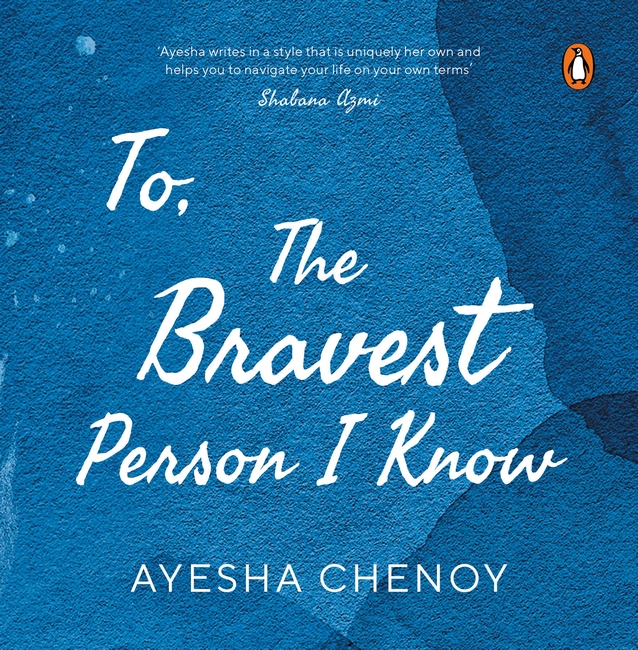
To the Bravest Person I Know

To the Bravest Person I Know is a book on poems that help us deal with difficult challenges we face in life. It explores mental health situations/issues like depression, anxiety, and other insecurities to help overcome them.

“Through her work, she hopes readers understand that they are not alone in their struggles and it is not difficult to navigate life on your own terms.” – The Hindu

From growing up with dysfunctional families to coming of age, from dealing with heartbreak, pain and grief to learning to accept and forgive, To, the Bravest Person I Know is your guide through every difficult situation. It is modern therapy delivered to you through a series of poems and a letter in verse that runs as a footnote from the beginning to the end of the book.

The poems explore the whole construct of ‘normal’, of that which was created to make people feel less normal if they don’t fit in, to make them feel ‘abnormal’. The book tells us that depression is normal, as is fear; feeling insecure is normal, as is hurting people. And bravery is about facing all of this-it’s about facing everything life
throws at you every day.

To, the Bravest Person I Know cuts through rainbows and self-righteous dross to provide a vaccine of truth, liberating and reminding us that we are all in a tunnel, and that it’s normal to feel like we may never get out. But there is light at the end of it.

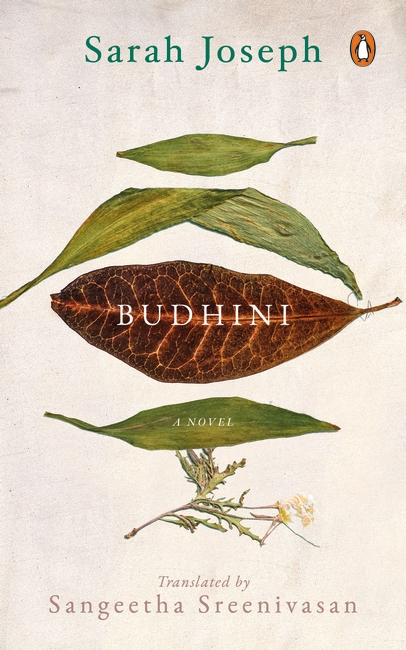
Budhini

On 6 December 1959, Prime Minister Jawaharlal Nehru went to Dhanbad district in Jharkhand to inaugurate the Panchet Dam across the Damodar river. A fifteen-year-old girl, Budhini, chosen by the Damodar Valley Corporation welcomed him with a garland and placed a tikka on his forehead. When these ceremonial gestures were interpreted as an act of matrimony, the fifteen-year-old was ostracized by her village and let go from her job as a construction worker, citing violation of Santal traditions. Budhini was outlawed for ‘marrying outside her community’.

Budhini Mejhan’s is the tale of an uprooted life, told here through the contemporary lens of Rupi Murmu, a young journalist distantly related to her and determined to excavate her story. In this reimagined history, Sarah Joseph evokes Budhini with vigour, authority and panache, conjuring up a robust and endearing feminine character and reminding us of the lives and stories that should never be forgotten.

Translated by her daughter, Sangeetha Sreenivasan, a fiercely individualistic novelist herself, Sarah Joseph’s Budhini powerfully invokes the wider bio-politics of our relentless modernization and the dangers of being indifferent to ecological realities.

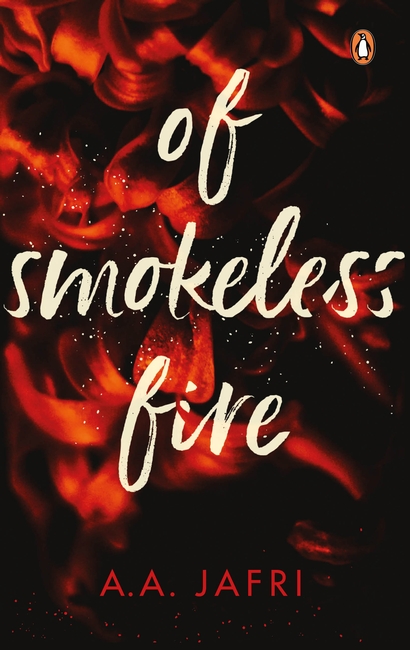
Of Smokeless Fire

Djinns-the invisible beings made of smokeless fire are Allah’s creations. Human beings cannot create or beget them, but whether it was a djinn or not, a rumour took birth that day that a djinn was born at the residence of Noor ul Haq, bar-at-law.
So begins the story of a lifelong friendship between three unlikely children. Mansoor, the rumoured djinn, who balances his love and loyalty between his devoutly religious mother and his erudite, alcoholic father. Mehrun, the churail-a Medusa-like creature-who struggles to get an English-medium education, the elusive ticket out of poverty. And Joseph, the bhangi, a derisive name for a sweeper, who dreams of becoming a movie star as he cleans the toilets of the rich and powerful. Wearing their insults like a garland, they transgress society’s norm and follow their dreams. Their lives intimately tied to the vagaries of Pakistan’s politics, alternating between tragedies and triumphs.
Of Smokeless Fire is a story about belonging and displacement. It is a reminder that belonging is not just about allegiance, and exile is not just physical. The novel asks the questions: Once you are ripped from your homeland, do you become homeless forever? What does it mean to live in a land that has forsaken you? Whether rooted or uprooted, is your relationship with your country conditioned by its politics?

error: Content is protected !!