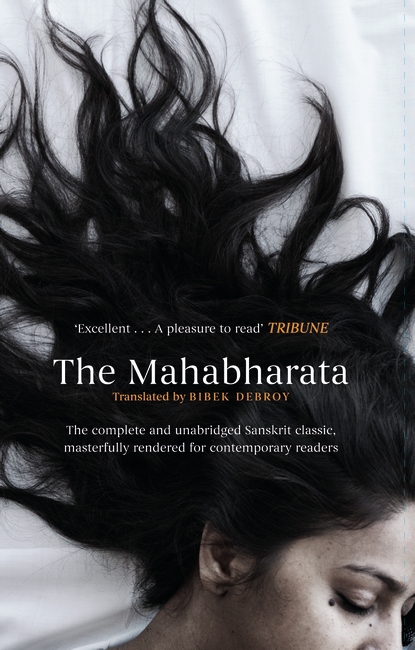
The greatest Indian story ever told of a war between two factions of a family, The Mahabharata has continued to sway the imagination of its readers over the past centuries.
While the dispute over land and kingdom between the warring cousins-the Pandavas and the Kauravas-forms the chief narrative, the primary concern of The Mahabharata is about the conflict of dharma. These conflicts are immense and various, singular and commonplace. Throughout the epic, characters face them with no clear indications of what is right and what is wrong; there are no absolute answers. Thus every possible human emotion features in The Mahabharata, the reason the epic continues to hold sway over our imagination.
The complete and unabridged Sanskrit classic, now masterfully and accessibly rendered for contemporary readers by Bibek Debroy.

This book is the biography of the country’s leading Dalit leader and currently Union Minister of Consumer Affairs, Food and Public Distribution, Ramvilas Paswan who have been active in politics for more than 50 years. This biography says, how he started his political journey from Shaharbanni, a small village surrounding by rivers on three sides of Khagaria district of Bihar, and performed well with the responsibility of MLA, MP and Union Minister.
Paswan is considered a leader who received the love and support of every religion and community and became known as Vikas Purush in the Country. Paswan played an important role in implementing the recommendations of the Mandal Commission. Many Project started in Bihar during his railway ministership and whichever ministry he stayed in, the center of his concern was always poor people and marginalized people.
The Biography of Ramvilas Paswan is a living document of his commitment to Dalit empowerment.

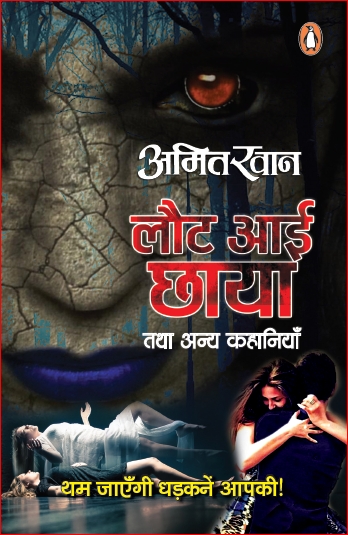
Chhaya is madly in love with her writer husband Parimal Ghosh. ‘Prem’-she calls him lovingly. After their love marriage, Chhaya’s world begins with Prem and ends with Prem. A Tragic incident leads to Chhaya’s death. A shocking twist follows and Chhaya, for the sake of her love, returns to this world from the other world. How did Chhaya return? Read this and 3 more storieds with darkness of mystery and sweetness of romance from desk of Amit Khan!

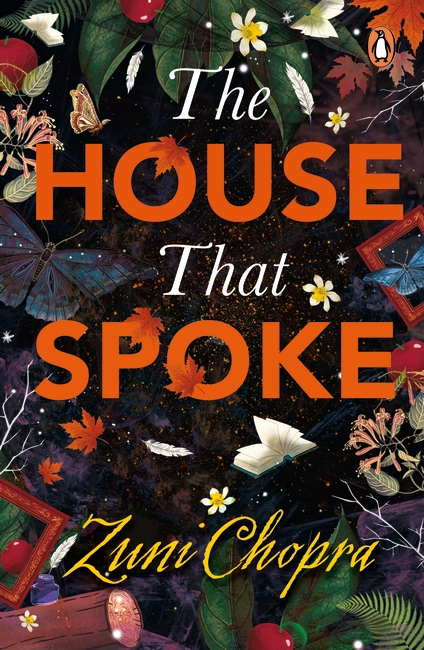
Fourteen-year-old Zoon Razdan is witty, intelligent and deeply perceptive. She also has a deep connection with magic. She was born into it. The house that she lives in is fantastical-life thrums through its wooden walls-and she can talk to everything in it, from the armchair and the fireplace to the books, pipes and portraits! But Zoon doesn’t know that her beloved house once contained a terrible force of darkness that was accidentally let out by one of its previous owners. And when the darkness returns, more powerful and malevolent than ever, it is up to her to take her rightful place as the Guardian of the house and subsequently, Kashmir.

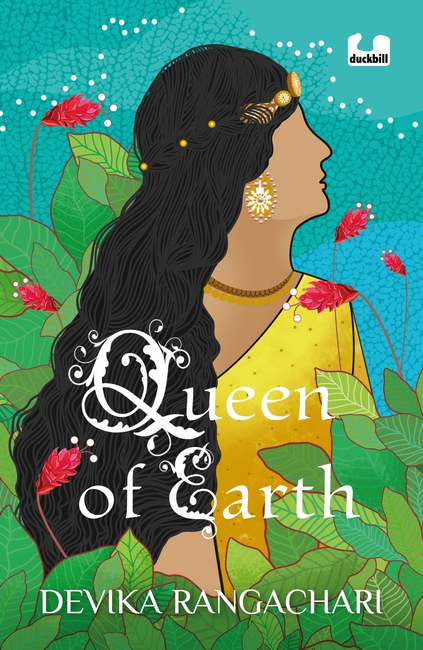
‘I am Prithvimahadevi, the goddess of the earth.’
Prithvimahadevi is the daughter of the powerful Somavamshi king of Kosala. Her life is circumscribed by the rules that govern the existence of women of her royal family. She can only hope that she will marry a king whose power matches that of her ambitious father.
Instead she is married to her father’s enemy, the Bhaumakara ruler, Shubhakaradeva, whose way of life she finds alien and austere, and who worships strange gods. There seems to be no hope for her to fulfil her dreams of becoming a great queen-until suddenly one day, there is . . . But is she willing to play the game of sacrifice and betrayal that this will entail?
The story of this ninth-century queen of Odisha by award-winning historical novelist Devika Rangachari will keep you riveted.

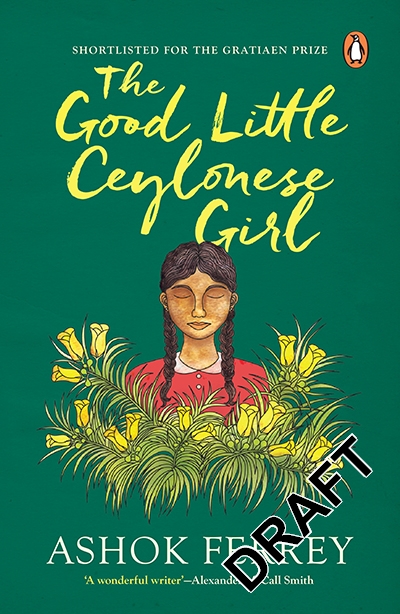
Our Sri Lankan narrator visits his friend Joe in Italy where Joe attends a course in higher (or, shall we say, lower) studies in women. But Italians-much like today’s residents of Colombo-live at home till marriage, death, and sometimes even beyond. A hen and chicken affair of fake fiancés and phony engagements ensues. Long years and many miles away, Colombo’s Father Cruz attempts to rescue a church from parishioners who like to put their donations where others can see them-with plaques to announce their charity. On the coast, a retired Admiral escapes the tsunami on an antique Dutch cabinet. A broken mother-with neither Dutch cabinet nor navy helicopter to rescue her-feels her son slip away, and watches him go giving her looks of mild reproach. Two childhood sweethearts, in time-honoured Sri Lankan tradition, are married off to strangers. Nineteen years of clandestine meetings culminate in another chance of marriage. Perhaps time does separate.
Ashok Ferrey writes about Sri Lanka and its people, wherever they roam. He writes of the Sri Lankan diaspora, who seem not to notice that their country has changed in their absence. He writes of the West’s effect on Sri Lankans, of its ‘turning them into caricatures, unmistakably genuine but not at all the real thing’. As you laugh, you are left with nostalgia for a bygone Sri Lanka and Sri Lankans who might have been.
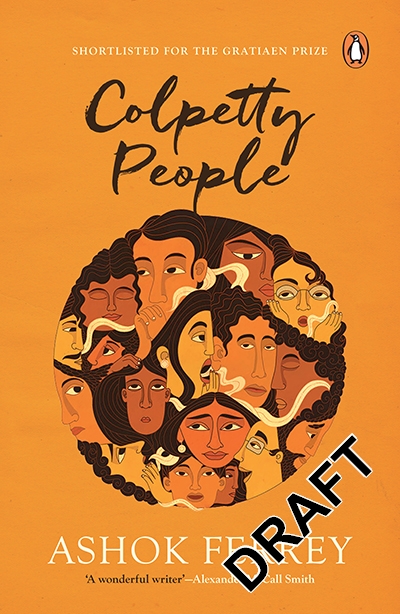
In this extraordinary debut, Ashok Ferry chronicles, in a gently probing voice, the journeys of characters seeking something beyond the barriers of nations and generations. His tales of social-climbing Sri Lankans, of the pathos of immigration, of rich people with poor taste, of icecream karma, of innocent love, eternity, and more take us to Colombo’s nouveau riche, hoity-toity returnees, ladies with buttery skin and square fingernails, old-fashioned aristocrats, and the poor mortals trapped between them. Ferry’s stories comprise characters that are ‘serious and fine and upstanding, and infinitely dull’, but also others like young John-John, who loses his childhood somewhere ‘high up in the air between Asmara and Rome’; the maid, Agnes of God whose mango-sucking teeth ‘fly out at you like bats out of the mouth of a cave’; Ashoka, the immigrant who embodies his Sri Lankan identity only on the bus-ride between home and work; and Professor Jayaweera who finds sterile freedoms caged in the ‘unbending, straight lines of Western Justice’. Absurd, sad, scathing and generous, but mostly wickedly funny, Colpetty People presents modern Sri Lankans as they navigate worlds between Ceylon and the West.
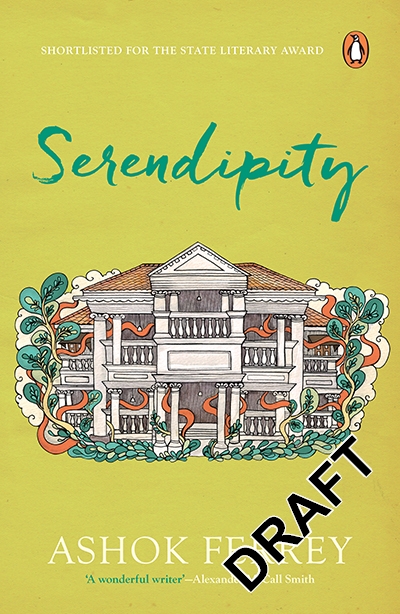
Piyumi Segarajasingham is a young barrister in eighties London, half Tamil and half Sinhalese and newly responsible for her family’s share of an inheritance in Sri Lanka. The servants’ quarters of a house called Serendipity in Colombo’s colonial quarter, Cinnamon Gardens, is now her charge-she wants to keep it, her relatives are keen to sell. So begins Piyumi’s journey home, full of a host of memorable characters and the hilarious happenstance of daily life in Colombo, haunted by the memory of a stranger she met back in London-will they ever get together? Set in a more innocent time-Sri Lanka’s civil war had only just begun-Serendipity is satire, thriller and comedy of manners all in one, told with Ferrey’s trademark wit.
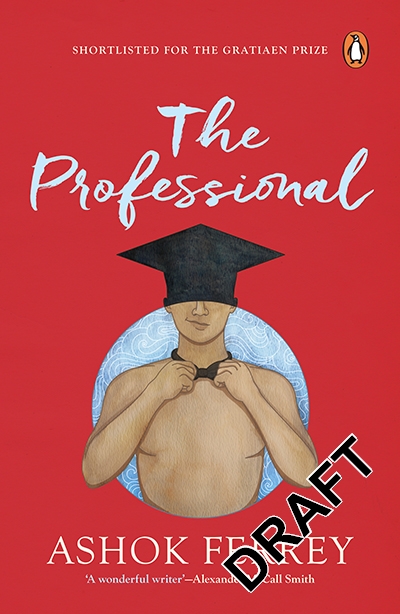
It is a universally acknowledged truth that an immigrant in England must be in want of a visa. In 1980s London, young Sri Lankan Chamath, recently down from Oxford with a degree in Maths, struggles to reconcile himself with the workplace. When his father writes him to say, ‘You’re on your own now, mate’, assuming that the magic word ‘Oxford’ will open any door to him, he realizes that push must now come to shove. Working on a building site as a casual labourer, he is approached by two men who ask him whether he would like ‘a bit of work after hours, to earn some dosh on the side’. Chamath gets dragged down below the invisible grid that exists in any big city, into a blue-grey twilight world of illegals. Hired as a male escort, a ‘professional’, a career at which he excels to his great surprise, he finds an unlikely means of making his way through the world. Then, two former clients, an older couple, decide to rescue him-with disastrous consequences. Masterfully and hilariously told, The Professional is sage, canny and witty as Ashok Ferrey always is: an exploration of the nature and meaning of love, of time, of memory.