




The jungle is wild when these animal friends get together for a fun day of play. Toddlers will have fun pressing the sound buttons and joining the animals as they hiss, squawk, roar, and more.-Promote sensory stimulation and listen to the sounds of the different jungle animals in this interactive children’s book.-Various touch and feel materials are included on the cover and each spread..-Interactive fun will engage young readers.-Sound buttons show the instrument to play.-Fun story with short rhyming sentences makes for an easy read.-Add a new baby book to a child’s library today!These fun children’s books are perfect for reading anytime or to give as gifts for special occasions such as, birthday gifts, baby shower wishing well gifts or for holidays such as Christmas, Easter or Valentine’s Day. Look out for other touch and feel board books, children’s padded board books, novelty books and more!Whether you’re looking for well-known tales, tender or funny animal stories, or educational books for toddlers, Little Hippo® Books will become bedtime, or anytime, reading favorites!-Board Book with touch and feel and sound buttons-10 pages-9.25 inches x 7.75 inches-Ages Baby to 6
Catagory: Arts, Film & Photography
kumar

rr
fjf
csa
boookes

prrrtttt
boookes

Product Description
boookes

yuytduyt123
mapbook

producttt revieee
fjf
csa
Ebrahim Alkazi
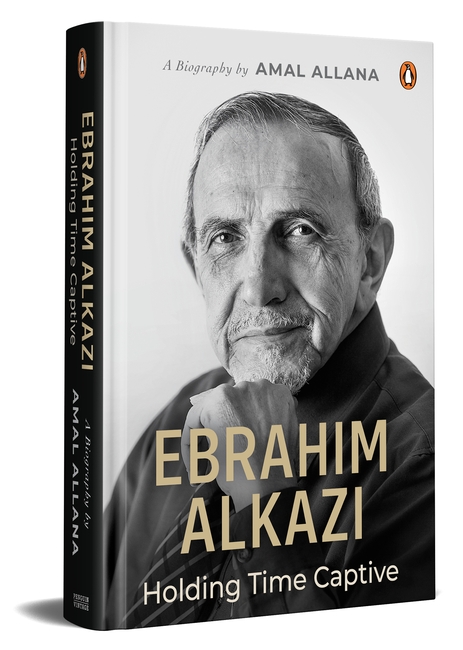
Amal Allana’s compelling biography of her father is the first carefully researched, full-length account of the life, work and times of Ebrahim Alkazi, one of the giants of twentieth-century theatre and a key promoter of the visual arts movement in India. Evoking the excitement of Alkazi’s student years in England, the controversies that surrounded his provocative ideas to transform the theatre movement in Bombay and later in Delhi, as the director of the National School of Drama (NSD), this book charts Alkazi’s meteoric rise to the top, with his modernist staging of plays and his aim of putting Hindi theatre on the map.
It was at the Sangeet Natak Akademi that Alkazi first confronted resistance to his ideas on the role of tradition in the making of a new ‘national’ culture. By the 1970s, disillusioned with the curtailing of civil liberties and a dysfunctional bureaucracy, he ultimately resigned from the NSD, developing his own independent institutions for the promotion of the visual arts in India as well as abroad. Staging the cultural history of India between the 1940s and 2000s, and featuring a galaxy of artists and actors as the dramatis personae—including M.F. Husain, F.N. Souza, Akbar Padamsee, Gieve Patel, Nissim Ezekiel, Alyque Padamsee, Girish Karnad, Manohar Singh, Vijaya Mehta, Kusum Haidar and Gerson da Cunha—Allana’s chronicle is charged with their fierce energy and commitment as contributors to a vibrant new India.
The author’s personal perspective as Alkazi’s daughter brings to the narrative an added dimension of veracity and sensitivity. With objective candour, Allana shares details of her parents’ relationship as they examine their marriage on entirely new terms, as a partnership of equals. Holding Time Captive shows a dynamic Alkazi in his quest to bring about an inclusive, international, intercultural and interdisciplinary thinking in artistic expressions that is transformative and liberating. This book offers unique glimpses into an enigmatic personality whose emotionally charged life closely reflected and ran parallel to the growth and evolution of his startlingly fresh ideas and vision for a modern cultural movement in India.
Radio for the Millions: Hindi-Urdu Broadcasting Across Borders
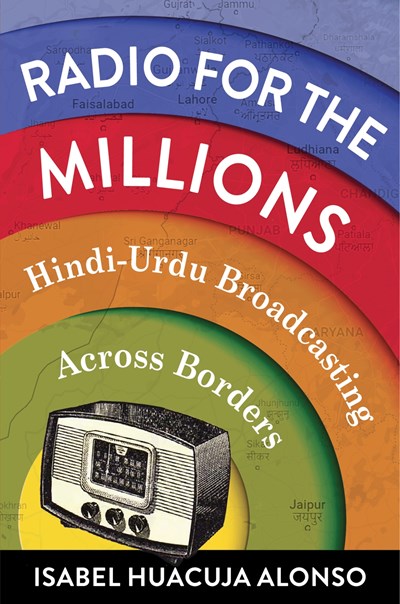
From news about World War II to the broadcasting of music from popular movies, radio played a crucial role in an increasingly divided South Asia for more than half a century. Radio for the Millions examines the history of Hindi-Urdu radio during the height of its popularity from the 1930s to the 1980s, showing how it created transnational communities of listeners.
Isabel Huacuja Alonso argues that despite British, Indian, and Pakistani politicians’ efforts to usurp the medium for state purposes, radio largely escaped their grasp. She demonstrates that the medium enabled listeners and broadcasters to resist the cultural, linguistic, and political agendas of the British colonial administration and the subsequent independent Indian and Pakistani governments. Rather than being merely a tool of nation building in South Asia, radio created affective links that defied state agendas, policies, and borders. It forged an enduring transnational soundscape, even after the 1947 Partition had made a united India a political impossibility.
Huacuja Alonso traces how people engaged with radio across news, music, and drama broadcasts, arguing for a more expansive definition of what it means to listen. She develops the concept of “radio resonance” to understand how radio relied on circuits of oral communication such as rumor and gossip and to account for the affective bonds this “talk” created. By analyzing Hindi film-song radio programs, she demonstrates how radio spurred new ways of listening to cinema. Drawing on a rich collection of sources, including newly recovered recordings, listeners’ letters to radio stations, original interviews with broadcasters, and archival documents from across three continents, Radio for the Millions rethinks assumptions about how the medium connects with audiences.