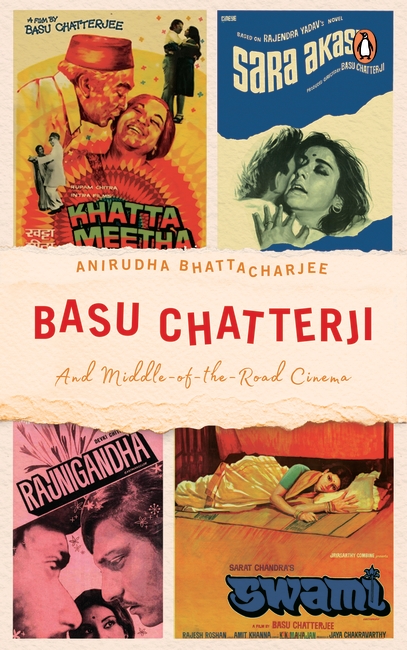
A behind-the scenes look at Basu Chatterji’s most loved films
This is the enigma of Basu Chatterji. His films did not have the box-office ingredients that could make them a distributor’s hot pick, nor were they art house cinema that needed unravelling over many cups of tea. He was the quintessential ‘middle-of-the-road’ film-maker, a genre that he founded in Bollywood. His films, whether it be Chhoti Si Baat or Rajnigandha or Chitchor, were about common people and common problems, such as employment and love, social and economic inequalities, and joint family conflicts. Like fellow cartoonist R.K. Laxman, who created the ‘common man’, Chatterji too was an auteur of the common man, whose journey he portrayed with charm, delicate warmth and humour.
As a person, Basu was much like his common man: mild, unobtrusive and media-shy. He preferred not to scout for stars and mostly made his films with rookies, giving them respectability as artists. And today, names like Amol Palekar, Vidya Sinha, Pearl Padamsee, Zarina Wahab, Nandita Thakur, Girish Karnad, Rakesh Pandey, Bindiya Goswami and Ranjit Chowdhry have become central to the history of Indian cinema, thanks to Basu.
Basu Chatterji: And Middle-of-the-Road Cinema, anecdotal in nature, goes behind the scenes of his films. It places Basu’s cinema and television work in the context of the changing times, like the emergence of Rajesh Khanna, Kishore Kumar and Amitabh Bachchan, the Emergency, the return of Sarat Chandra’s stories, the introduction of disco and the decadent phase of Hindi cinema in the 1980s. The book celebrates the work of one of the most underrated, yet successful, film-makers in Hindi cinema.

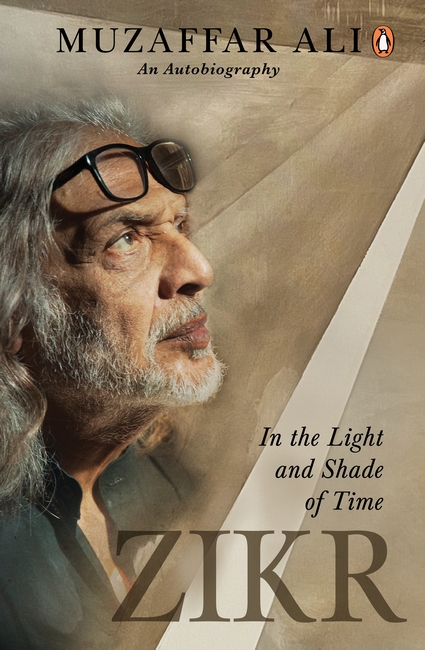
Internationally renowned, Muzaffar Ali has donned many hats in his lifetime. The scion of the princely house of Kotwara, the boy Muzaffar was shaped by the changing post-Partition India. Having studied science at Aligarh University, he started his career in an advertisement agency in Calcutta, worked with the nascent Air India and then ventured on a journey that produced cinematic masterpieces like Umrao Jaan. Along the way, his path collided with many-from Satyajit Ray to Faiz Ahmad Faiz-and he has cultivated many a passion, whether for cars or couture.
His autobiography is a peek into this wealth of experience-a close look at Ali, prince, poet, philosopher, film-maker, automobile aficionado and artist. Zikr is also a rich interior portrait of an artist, as Ali takes us behind the scenes of films like Anjuman and Gaman, speaking of the sensibilities that shaped them and the influences on his work. Above all, this is a book that resounds with a deep love for life.
Whether you’re looking for inspiration, seeking to venture off the beaten track of Bollywood or wishing to bite into a slice of erstwhile Awadhi culture, Zikr has something to offer all.

K.A. Abbas gave me my first film, Saat Hindustani. I called him Mamujaan. The book is a deep, incisive look at the gold and silver world of cinema. The sheen wears off but the spirit lives on. K.A. Abbas Trust keeps Abbas Saheb’s unrelenting spirit effervescent’ AMITABH BACHCHAN
‘An interesting read’ SHABANA AZMI
‘A must read for film lovers’ RANDHIR KAPOOR
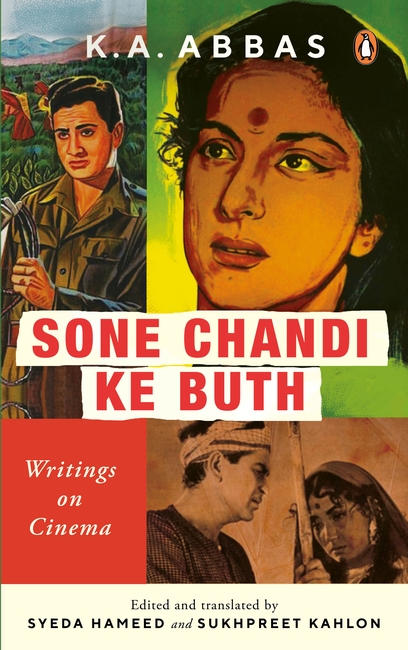
Sone Chandi ke Buth is a collection of writings on cinema that includes the observations, thoughts and
reflections of Khwaja Ahmad Abbas. Originally written in Urdu by the well-known journalist, screenwriter and film-maker, it has now been translated for the first time into English.
The book is a collection of short stories, essays and articles on famous film personalities and varied aspects of the film industry. Abbas was a prolific writer who published seventy-four books in his seventy-three years, besides writing extensively on the film industry for the Bombay Chronicle newspaper. Sone Chandi Ke Buth, published a year before he passed away, was his last
book-a final word on the glitz, glamour and gritty reality of the Hindi film world.
It includes his candid observations on famous actors, writers and directors such as Raj Kapoor, Amitabh Bachchan, Dilip Kumar, Satyajit Ray, Meena Kumari, Balraj Sahni and V. Shantaram. A series of essay focuses on various aspects of cinema, from the changes in the film
industry to the power of film stars. The book also includes short stories set in the context of the film industry, some having veiled references to actual film stars. A common thread running through them all is his emphasis on making socially relevant films rather than those that succumb
to the pull of glamour and the box office.
This book also presents a section of his writings as a film journalist for the Bombay Chronicle. His column, ‘The Last Page’, one of the longest running in Indian journalism, began in 1935, and moved to the Blitz after the Chronicle‘s closure, where it continued until his death in 1987. They
complement the writings in Sone Chandi Ke Buth and are invaluable for cinema lovers.
Abbas’s matter-of-fact style and the didactic element in his prose illustrate the humanistic ideals that were at the very core of his thought. His writing, both humorous and incisive, is like a laser that pierces right to the heart of the matter.

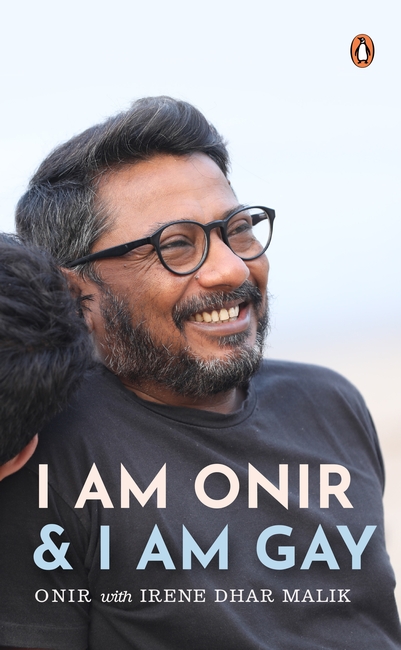
The award-winning filmmaker Onir, whose directorial debut, My Brother Nikhil (2005), broke new ground in LGBT representation on the Indian silver screen, opens up fully for the first time. From his childhood days in Bhutan to when he was a young man with no connections in the Hindi film industry who dreamt big and fought to carve a niche for himself, Onir takes the reader through his struggles and triumphs to offer an intimate glimpse of his fascinating journey to success. Now one of the few openly gay directors in Bollywood, Onir remains fearless about his identity and passionate about his role as a filmmaker in opening up the road to difficult conversations about identity and resilience.
I Am Onir and I Am Gay is a raw, eloquent and inspiring memoir about confronting and transcending frontiers. Written with his sister Irene Dhar Malik, this emotionally gritty and unabashedly honest personal story is a pathbreaking narrative of hope, love and the pursuit of dreams.

“…a narrative that is controversial, explosive and unputdownable.” KABIR KHAN
“…a stark, compelling portrait of our times.”
ADOOR GOPALAKRISHNAN
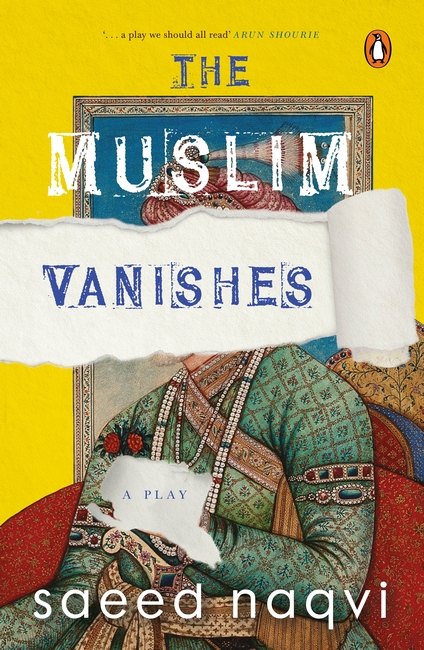
The great poet Ghalib, part of a long tradition of eclectic liberalism, found Benaras so compelling that he wrote his longest poem on the holy city. If we take Ghalib and his myriads of followers out of the equation, will Hindustan be left with a gaping hole or become something quite new? The Muslim Vanishes, a play by Saeed Naqvi, attempts to answer that question.
A Muslim-free India, as a character speculates naively in the play, would be good for socialism, since what the 200 million Muslims leave behind would be equitably shared by the general population. Meanwhile, another character, a political leader, is traumatized by the sudden disappearance of the Muslim voter base and the prospect of a direct electoral confrontation with the numerically stronger Dalits and other backward classes.
Caste, the Hindu-Muslim divide, Pakistan and Kashmir-the decibel levels on these subjects are too high for a conversation to take place, with each side fiercely defending their own narrative. What is the way out of this trap?
How to douse the social and political flames? In this razor-sharp, gentle and funny play, Saeed Naqvi draws on a mix of influences-from grandma’s bedtime stories to Aesop’s fables and Mullah Nasruddin’s satirical tales-to spring an inspired surprise on us, taking us on a journey into the realms of both history and fantasy.

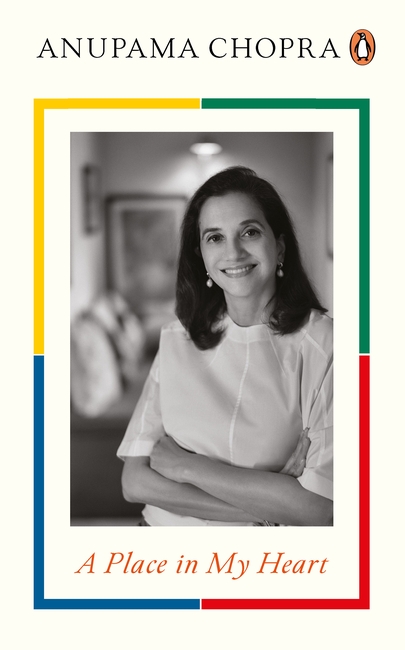
A Place in My Heart is a many-splendored thing. It is a listicle. It is a celebration of the power of storytelling. It is also an account of a life lived in the Bollywood trenches. National Award-winning author, journalist and film critic Anupama Chopra writes about fifty films, artistes and events that have left an indelible impression on her and shaped her twenty-five-year-long career. Shah Rukh Khan is here. So are Super Deluxe and the Cannes Film Festival. A Place in My Heart is a blend of recommendations and remembrances, nostalgia and narratives. It is a smorgasbord of cinematic delights, written, as Marie Kondo would say, to ‘spark joy.’ Above all, it is a testament to Chopra’s enduring love for all things cinema.
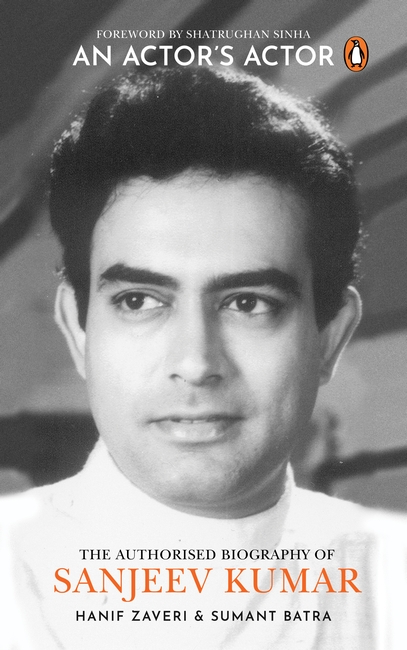
More than thirty-five years after his death, Sanjeev Kumar remains a role model for all aspiring actors. He could light up the screen in underpants, paunch showing, in one of Hindi cinema’s most lovable song sequences, ‘Thande thande paani se nahana chahiye’ (Pati Patni Aur Woh, 1977). Entirely unselfconscious of his image as a star, he would often be cast as the father figure to a number of his contemporaries, most famously Sharmila Tagore in Mausam (1975) and Amitabh Bachchan in Trishul (1978), or as the elderly Thakur in Sholay (1975) and yet leave an indelible mark with his presence and his acting prowess.
After starting out in B-films in the 1960s, he caught the eye in Sungharsh (1967), where the manner in which he held his own against Dilip Kumar is now stuff of Hindi film folklore. Equally adept at comedy (Angoor and Manchali, for example) and dramatic serious roles (Anubhav and Koshish), he was truly an actor’s actor.
Hanif Zaveri and Sumant Batra’s biography provides a glimpse of star’s personal and professional lives, taking off from the traditional business of the Zariwalas, his romantic involvement with some of Hindi cinema’s biggest names, his lifelong battle with loneliness and his glittering achievements on screen. An Actor’s Actor is a succinct introduction to the life and films of a star who left us tragically at the young age of forty-seven but who continues to live through his unforgettable and remarkable contribution to Hindi cinema.

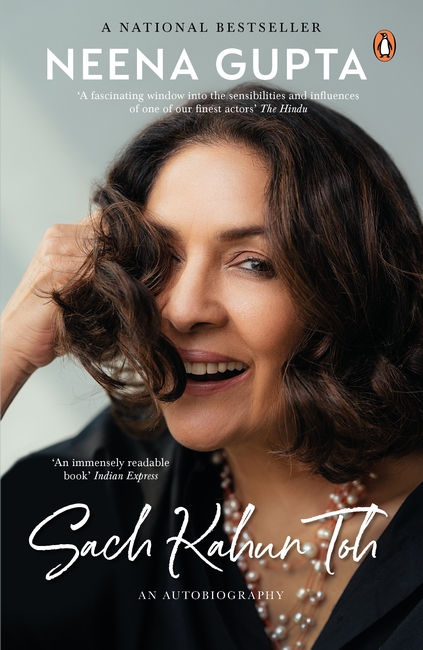
An unsparingly honest memoir by an actor who is known to lead life on her own terms. Neena Gupta’s most awaited auto-biography!
In Sach Kahun Toh, actor Neena Gupta chronicles her extraordinary personal and professional journey-from her childhood days in Delhi’s Karol Bagh, through her time at the National School of Drama, to moving to Bombay in the 1980s and dealing with the struggles to find work. It details the big milestones in her life, her unconventional pregnancy and single parenthood, and a successful second innings in Bollywood. A candid, self-deprecating portrait of the person behind the persona, it talks about her life’s many choices, battling stereotypes, then and now, and how she may not be as unconventional as people think her to be.

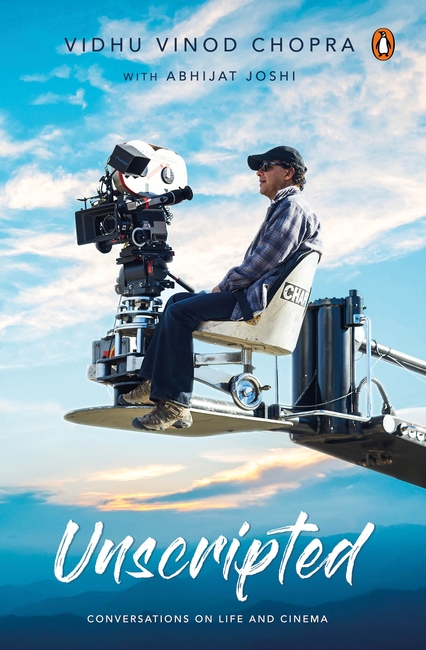
Starting in Wazir Bagh, a small mohalla in Kashmir, Vidhu Vinod Chopra’s life has been well and truly unscripted. Over the last thirty years, he has blazed a trail in Hindi cinema-even going on to direct a film in Hollywood. From someone who once released his student film though it was incomplete, because he ran out of money and film stock, he now has the distinction of heading one of the key production houses in India, VVC Films. The company has made some of the biggest blockbusters in recent times. Not only is he a film-maker par excellence, but he has also nurtured some of the brightest talents in the Hindi film industry, including directors Rajkumar Hirani, Pradeep Sarkar and Sanjay Leela Bhansali.
In Unscripted, Vidhu Vinod Chopra speaks to his long-time collaborator and scriptwriter Abhijat Joshi about his exceptional journey. Engaging and illuminating, the book provides a glimpse into the mind, method and madness of one of contemporary Hindi cinema’s best film-makers.

‘Excellent political biography of NTR. I enjoyed reading it. There is a lot of good stuff here’
SANJAYA BARU, author, political commentator
‘A very objective, lucid, truthful biography’
DR JAYAPRAKASH NARAYAN, founder, Lok Satta
‘…fair, even-handed and objective in assessing NTR’s political journey’
PARAKALA PRABHAKAR, author, political commentator
‘Found it impossible to put down the book till I completed it’
K. PADMANABHAIAH, chairman, Administrative Staff College of India
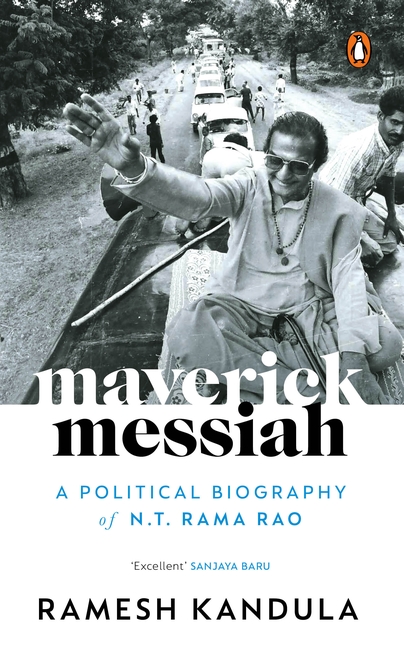
Nandamuri Taraka Rama Rao, widely known as NTR, was not merely a film star who strayed into politics and captured power in Andhra Pradesh. The actor-politician redefined the political culture in the state and scripted a new political idiom.
His rather dramatic entry into politics, the profound impact he left on the people of Andhra Pradesh and the vital role he played in national politics during his relatively short political life, however, have not received deserving recognition.
Maverick Messiah captures the different facets of NTR’s life in all their varied hues and puts in perspective the significant contribution of the actor-politician to the Indian political tapestry.