



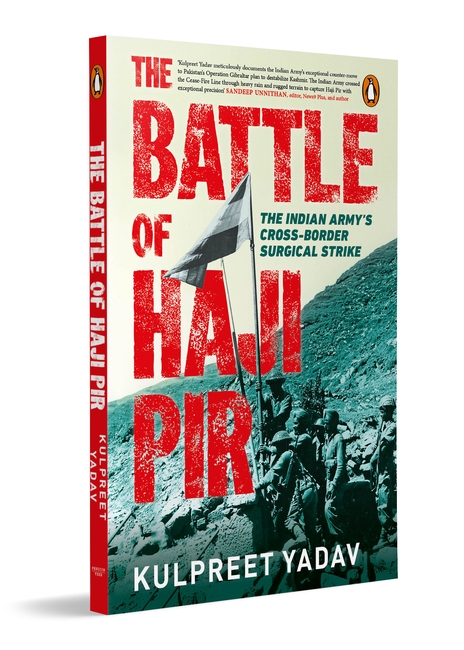
In August 1965, 30,000 Pakistani infiltrators crossed the Cease Fire Line (CFL) in Kashmir and began attacking civilians and army personnel. Codenamed ‘Operation Gibraltar’, this assault involved a mix of trained militia, mercenaries and Pakistani army personnel. Amidst the devastation, Indian forces retaliated and captured the strategic Haji Pir Pass.
The triumph however was short-lived as the pass was returned under the Tashkent Agreement, a bitter pill for the soldiers who had fought tirelessly for it. This book chronicles their courage and sacrifice, offering a poignant glimpse into the lives of those who won the Haji Pir Pass, a symbol of both victory and loss for India.
Catagory: Biographies, Diaries & True Accounts
Knife (Hindi) / Chaakoo/चाकू
अंतरराष्ट्रीय स्तर पर प्रसिद्ध लेखक और बुकर पुरस्कार विजेता सलमान रश्दी की ओर से, उनके खिलाफ दिए गए फतवे के तीस साल बाद, उनकी जान लेने की एक निर्दयी कोशिश को लेकर एक मर्मभेदी, निजी ब्योरा। 12 अगस्त, 2022 की सुबह, सलमान रश्दी चॉटॉक्वा इंस्टीट्यूशन के मंच पर अपने व्याख्यान की तैयारी कर रहे थे, तभी काला लिबास और काला नकाब पहने एक शख्स चाकू लहराता हुआ उनकी तरफ दौड़ा। इसके बाद हिंसा की वीभत्स घटना ने पूरी साहित्यिक दुनिया को हिला कर रख दिया। अब, पहली बार, इस अविस्मरणीय विवरण में, रुश्दी उस दिन और उसके बाद की दर्दनाक घटनाओं के साथ-साथ स्वास्थ्य लाभ की अपनी यात्रा को याद कर रहे हैं। चाकू (नाइफ) में रश्दी अपनी शक्तियों के चरम पर हैं, इसमें वह अडिग ईमानदारी के साथ लिख रहे हैं। यह अकल्पनीय को समझने, जीवन, हानि, प्रेम, कला पर एक अंतरंग और जीवन की आस्था को पुष्ट करने वाली अंतर्गाथा और फिर से उठ खड़े होने की शक्ति खोजने की साहित्य की क्षमता का एक बेहद प्रेरक अनुस्मारक है।
Gandhi (Hindi)/गांधी
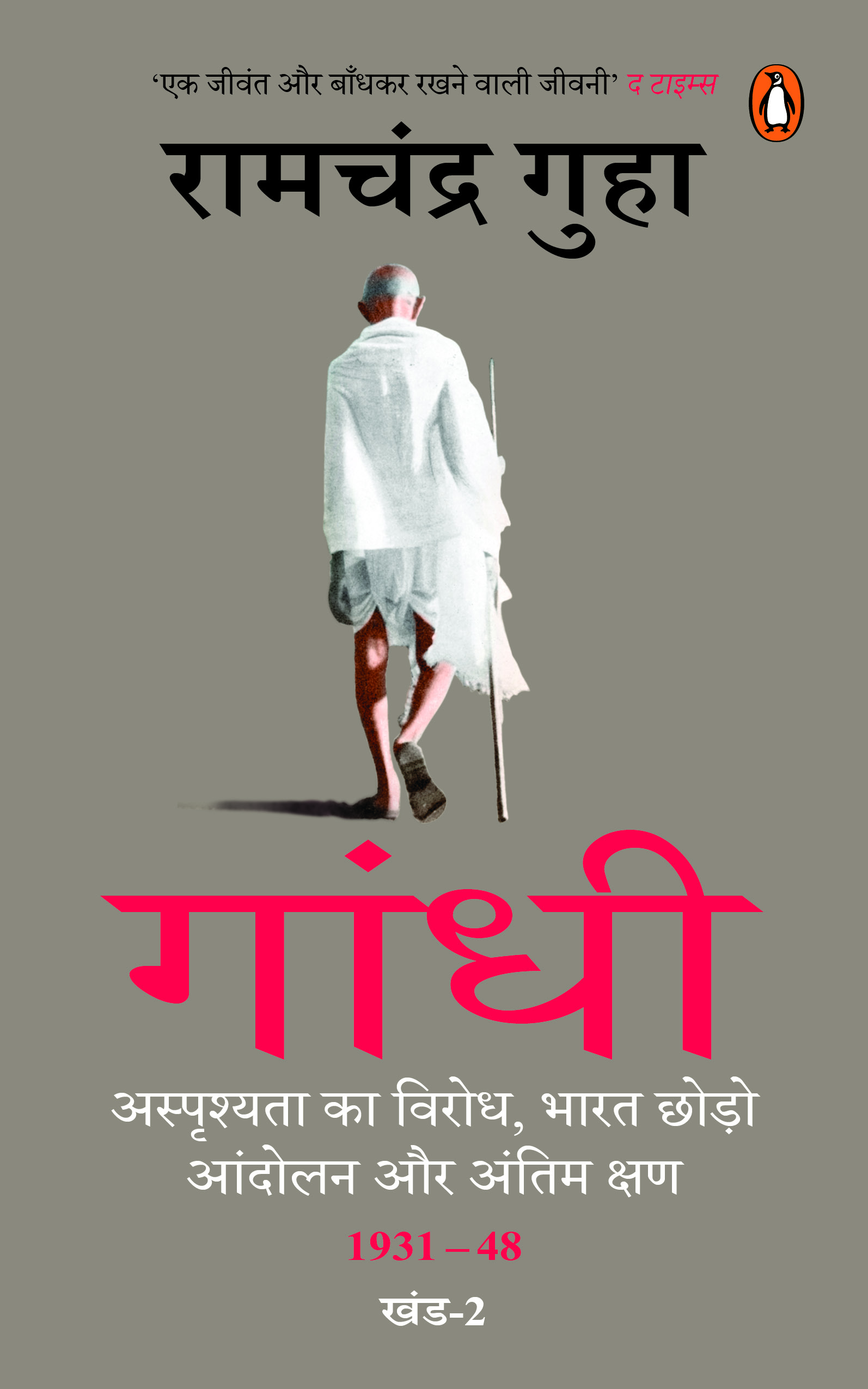
‘गुहा, गांधी को उनके वास्तविक रुप में प्रस्तुत और उनके सुभी विरोधाभासों को प्रकट होने देते हैं’ — न्यूयॉर्क टाइम्सगांधी का जीवन बीसवीं सदी के महानतम व्यक्तित्वों में से एक है। उन्होंने दुनियाभार में करोड़ों लोगों को प्रेरित किया, असंख्य लोग उनसे नाराज़ भी हुए और उनके चिंतन और कार्यक्षेत्र में उन्हें चुनौती दी। उनका पूरा जीवन ब्रिटिश राज के साये में बीता, लेकिन उस साम्राज्य को झुकाने में गांधी का योगदान सर्वोपरि रहा। फासीवादी और कम्युनिस्ट तानाशाहों की हिंसा से भरी उस दुनिया में गांधी के पास सिवाय तर्कों और उदाहरणों के कुछ नहीं था। उन्होंने जातीय और लैंगिक भेदभाव से भी युद्ध किया और धार्मिक सद्भाव के लिए संघर्ष करते हुए अपनी जान तक दे दी।यह शानदार किताब गांधी के जीवन के उस कालखंड का वर्णन है जब वे गोलमेज़ सम्मेलन से लौटकर वापस भारत आए और एक बार फिर से स्वतंत्रता संग्राम की योजना में जुट गए। पुस्तक का यह खंड अस्पृश्यता के विरुद्ध उनकी लड़ाई, वर्धा आश्रम की स्थापना, सुभाष चंद्र बोस के साथ उनके मतभेद, भारत छोड़ो आंदोलन, देश की स्वतंत्रता और 1948 में उनकी हत्या तक के कालखंड को समेटता है। इस पुस्तक में जिन्ना और आम्बेडकर के साथ उनके संवादों से लेकर स्वतंत्रता आंदोलन के ऐसे कई आख्यान शामिल हैं जो गांधी के व्यक्तित्व का परिचय हमसे उनके समकालीनों की दृष्टि से करवाते हैं। दुनिया के सामने अभी तक अप्रकाशित रहे स्रोतों और लेखन की शानदार किस्सागोई और राजनितिक समझ इस पुस्तक को राष्टृपिता पर अभी तक लिखी गई पुस्तकों में सर्वाधिक महत्त्वाकांक्षी बनाकर प्रस्तुत करती है।
Jamsetji Tata
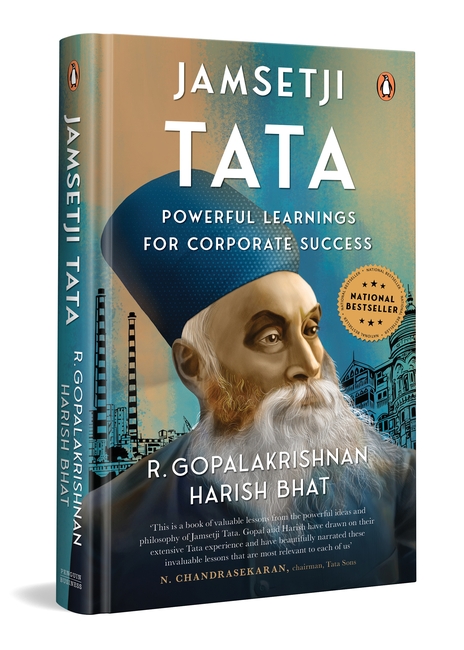
Jamsetji Tata pioneered modern Indian industry. He has been a key catalyst in the economic growth and development of the country.
From Empress Mills to the Iron and Steel Plant, from the establishment of Indian Institue of Science to the building of the Taj Mahal Hotel, Jamsetji’s vision made India stand tall. In this carefully researched account, R Gopalakrishnan and Harish Bhat provide insights into the entrepreneurial principles of Jamsetji that helped create such a successful and enduring enterprise.
His contribution and that of his successors has led to the institutionalization of Tata values. Over the decades, through hard work, determination, and a consistent vision, he and his successors have embedded these values in the organization, which has stood the test of time and has consistently contributed to the country’s industrial development. The book takes readers into the heart of this amazing story and what has made it possible.
Interwoven with engaging real-life stories about iconic leaders of the Tata Group, and interesting anecdotes that went into the making of India’s popular brands such as Tata Tea, Tata Steel, Tata Motors and Tanishq, this unique account brings alive the vision of Jamsetji Tata and tells us what we can learn from it.
Tilak
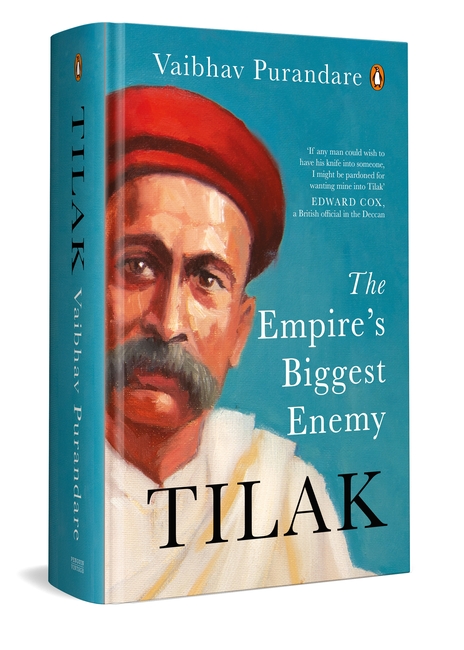
Bal Gangadhar Tilak was considered to be the biggest threat to the British hegemony.
He was prosecuted thrice for sedition.
Was termed ‘the father of Indian unrest.’
He was convicted for his fiery writings in his nationalist daily Kesari.
Tilak, the first definitive biography of the man who raised the slogan that ‘freedom is my birthright and I shall have it.’
Before Mahatma Gandhi, there was Bal Gangadhar Tilak – the revolutionary who ignited the spark of Indian nationalism. The Times, London, called him ‘the father of Indian unrest,’ and the one-time Secretary of State for India Edward Montagu felt he had ‘the greatest influence of any person’ on the Indian people. Above all, for the British Raj, Tilak was sedition-monger-in-chief, and it prosecuted him thrice for sedition.
Hailed as ‘Lokmanya’ or ‘One Revered by the People,’ Tilak transformed India’s fight for freedom from polite discourse to a mass uprising. His fierce writings, relentless activism, and controversial stances earned him the title ‘enemy of the British government’ from the Raj, which saw him as its greatest threat. And at a time the British were undermining Indian self-esteem and dismissing Indians as ‘uncivilized heathens,’ Tilak argued powerfully and relentlessly that there was much of enormous value in India’s past, its culture, heritage and civilization, awakening Indians to a sense of their own identity. This definitive biography traces Tilak’s journey from his early days in Konkan to his influential role across India, highlighting his battles against the British, imprisonments, and commitment to Swaraj.
Rediscover an icon of Indian history whose ideas and actions continue to resonate today. Bal Gangadhar Tilak’s story is not just a tale of resistance but a testament to perseverance and conviction.
Doglapan
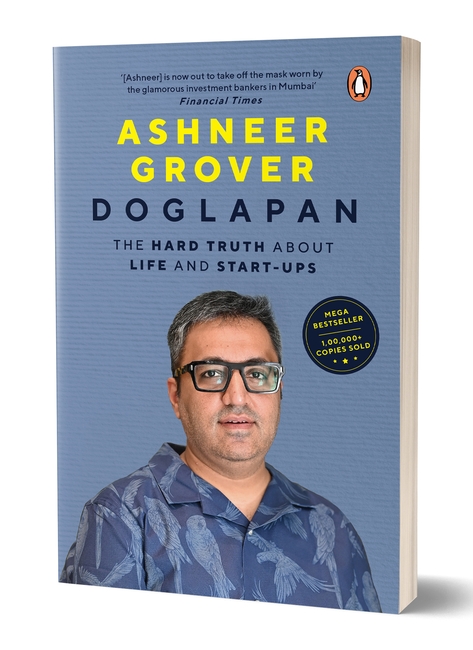
This is the unfettered story of Ashneer Grover-the favourite and misunderstood poster boy of Start-up India.
Raw, gut-wrenching in its honesty and completely from the heart, this is storytelling at its finest.
A young boy with a ‘refugee’ tag growing up in Delhi’s Malviya Nagar outpaces his circumstances by becoming a rank-holder at the pinnacle of academic excellence in India-IIT Delhi. He goes on to do an MBA from the hallowed halls of IIM Ahmedabad, builds a career as an investment banker at Kotak Investment Banking and AmEx, and is pivotal in the making of two unicorns-Grofers, as CFO, and BharatPe, as co-founder.
As a judge on the popular TV show Shark Tank India, Ashneer becomes a household name even as his life turns upside down. Controversy, media spotlight, garrulous social media chatter descend, making it difficult to distinguish fact from fiction.
Shiva
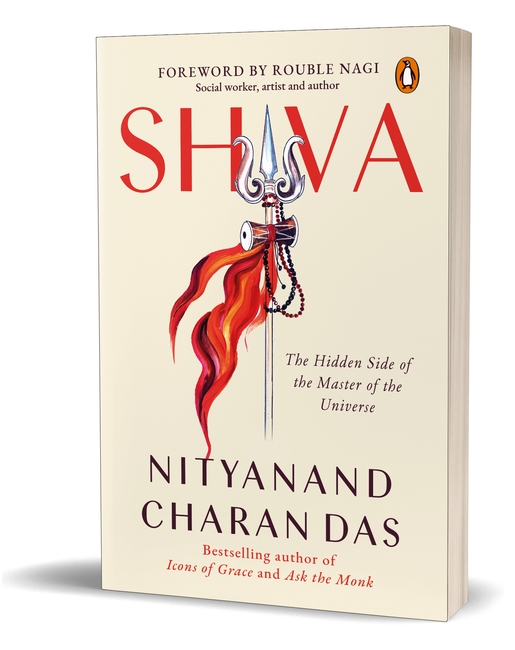
Lord Shiva, the most mystical and enigmatic deity of the Vedic pantheon, remains the most popular and yet, the least understood personality.
From being the destroyer to the most compassionate, being the personification of anger to the one who is easily pleased, living a life of complete detachment from the material to blessing his worshipers with material opulence, he remains a perfect puzzle to most.
Lord Shiva is often depicted in deep meditation, symbolizing transcendence and inner peace. With his third eye, he represents wisdom and insight, capable of both annihilating ignorance and bestowing enlightenment. As the lord of renunciation, he challenges devotees to transcend worldly attachments and embrace spiritual ascension. Yet, he is also the benevolent protector, offering solace and guidance to those in need.
This book explores the side of Shiva that is completely hidden from us, giving us a deeper insight into the unexplored personality that he is.
Before Memory Fades: An Autobiography (Collector’s Edition)
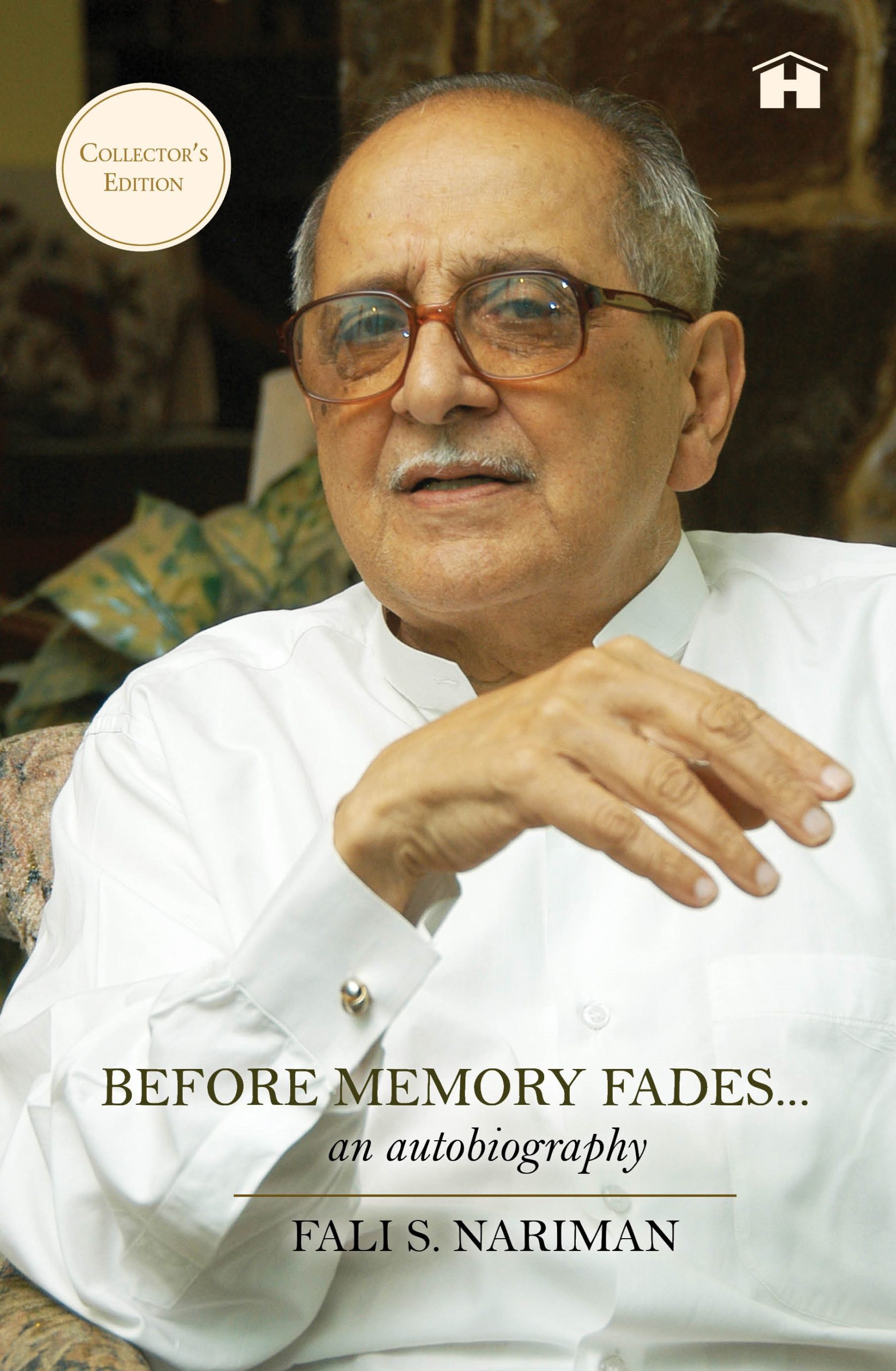
A revelatory, comprehensive and perceptive autobiography – candid, compelling and authoritative
Over the decades, Fali S. Nariman has attained the status of a pre-eminent advocate whose views are not only heard by those in the corridors of power – both judicial and political – but also respected. This volume presents his life journey right from his childhood in Rangoon to the present. Starting with his formative years, when he had the good fortune to interact with many eminent judges and advocates, the author moves on to deal with a wide variety of important subjects, such as:
• The sanctity of the Indian Constitution and attempts to tamper with it.
• Crucial cases that have made a decisive impact on the nation, especially on the interpretation of the law.
• The relationship between the political class and the judiciary, and how political power can be asserted in the guise of judicial interpretation.
• The cancer of corruption and how to combat this menace.
The author also outlines measures to restore the now-low credibility of the legal profession. He delineates his role in several high-profile cases and describes the highlights of his tenure in the Rajya Sabha. This book is a must for both members of the legal profession and the lay reader who will find the contents informative, educative and thought-provoking.
Before Memory Fades: An Autobiography
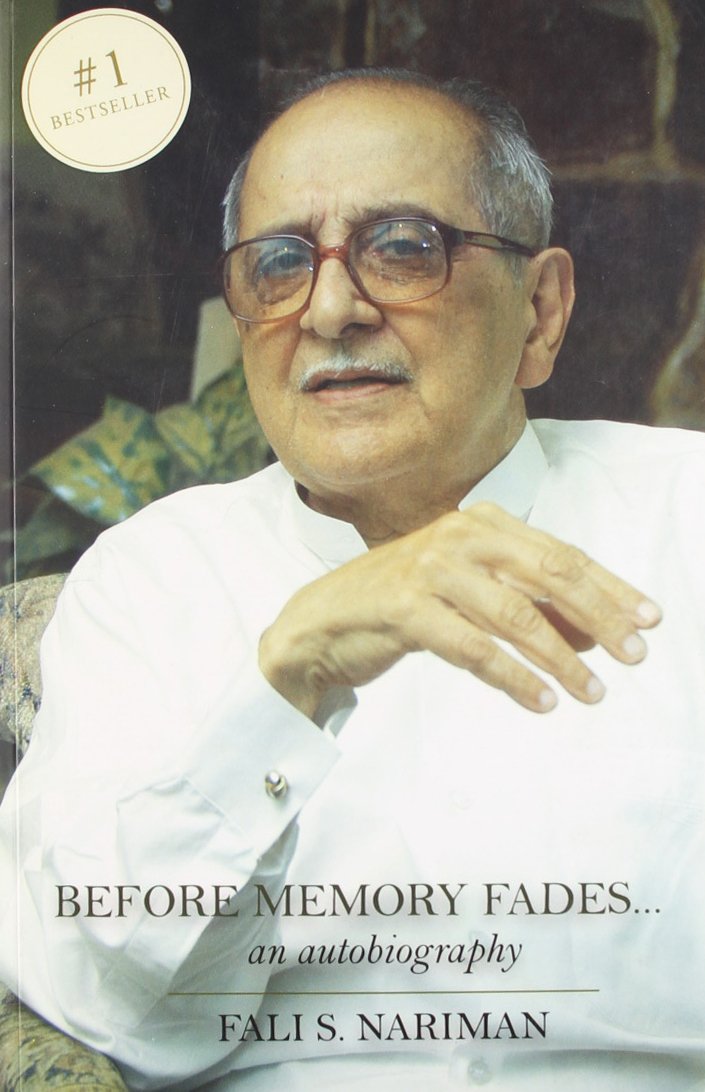
A revelatory, comprehensive and perceptive autobiography – candid, compelling and authoritative
Over the decades, Fali S. Nariman has attained the status of a pre-eminent advocate whose views are not only heard by those in the corridors of power – both judicial and political – but also respected. This volume presents his life journey right from his childhood in Rangoon to the present. Starting with his formative years, when he had the good fortune to interact with many eminent judges and advocates, the author moves on to deal with a wide variety of important subjects, such as:
• The sanctity of the Indian Constitution and attempts to tamper with it.
• Crucial cases that have made a decisive impact on the nation, especially on the interpretation of the law.
• The relationship between the political class and the judiciary, and how political power can be asserted in the guise of judicial interpretation.
• The cancer of corruption and how to combat this menace.
The author also outlines measures to restore the now-low credibility of the legal profession. He delineates his role in several high-profile cases and describes the highlights of his tenure in the Rajya Sabha. This book is a must for both members of the legal profession and the lay reader who will find the contents informative, educative and thought-provoking.
Superstar India
‘Vintage Shobhaa Dé, with scathing take-offs on everything, from the caste system to male chauvinism, from sex to social pretension . . . in other words, it’s all great fun’-Economic Times
Watching the preparations for independent India’s 60th birthday in 2007, Dé-poised then to enter her own sixth decade-was struck by the thought, ‘Surely my life has taken the same trajectory as the country’s!’ While she reflected on this, many more questions arose: Does India really deserve to congratulate itself? Has it lived up to the early promises it made to its people? Does Dé herself believe in India?
In Superstar India, an intimate confession to her readers, Dé answers these questions and discovers a jawan-young-India, ready to find its place in today’s world. Witty, passionate and gloriously opinionated, Superstar India celebrates the spirit of a nation that is certainly not about to lose its glow.