



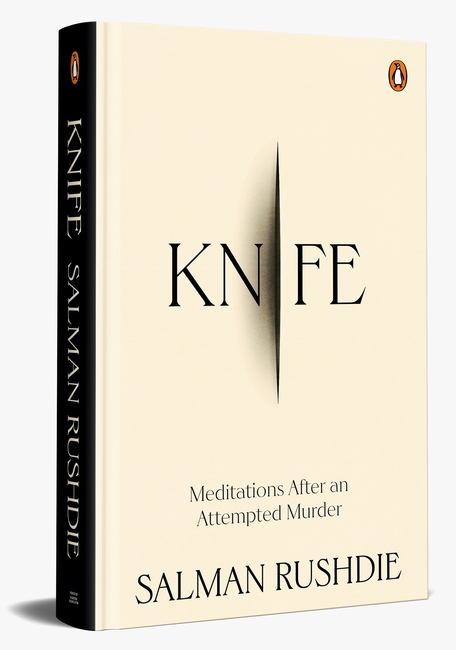
On the morning of August 12, 2022, Salman Rushdie was standing onstage at the Chautauqua Institution, preparing to give a lecture on the importance of keeping writers safe from harm, when a man wearing black clothes and a black mask rushed down the aisle toward him, wielding a knife. His first thought: So it’s you. Here you are.
What followed was a horrific act of violence that shook the literary world and beyond. Now, for the first time, and in unforgettable detail, Rushdie relives the traumatic events of that day and its aftermath, as well as his journey toward physical recovery and the healing that was made possible by the love and support of his wife, Eliza, his family, his army of doctors and physical therapists, and his community of readers worldwide.
Knife is Rushdie at the peak of his powers, writing with urgency, with gravity, with unflinching honesty. It is also a deeply moving reminder of literature’s capacity to make sense of the unthinkable, an intimate and life-affirming meditation on life, loss, love, art—and finding the strength to stand up again.
Catagory: Biographies, Diaries & True Accounts
The Autobiography of God
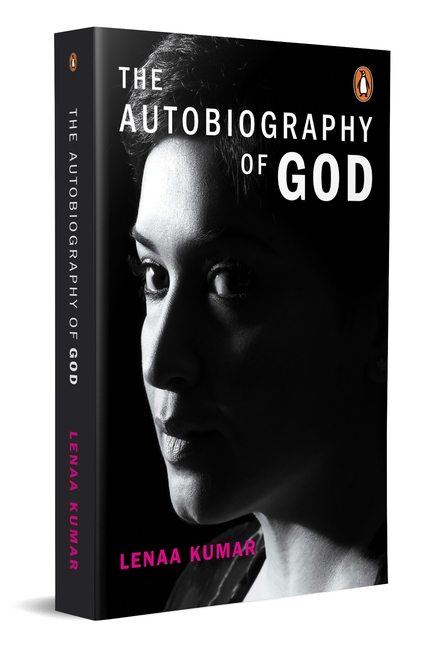
Are you a seeker, rebel, non-conformist and free-spirit? Yes? … This book is for you.
This book is for the rational, the practical, the seeker, the non-conformist, the leader, the rebel and the free spirit . . . This book is for you, dear reader, to destroy your self-limiting beliefs and realize your full potential.
As this journey of self-discovery spanning eighteen years unfolds, Lenaa keeps a promise she made to herself during her darkest hours: ‘If I can stay off psychiatric medication for two years, I will write a book for fellow sufferers of anxiety, depression and the rigid psychiatric system.’ Now, five years later, the clarity has distilled down to five questions, one answer and a system of instant self-realization.
What am I? Who am I? Where am I? When am I? Why am I?
Can you answer these questions to your own satisfaction? If the answer is not a definite ‘Yes’, dive right into The Autobiography of God.
Before I Forget
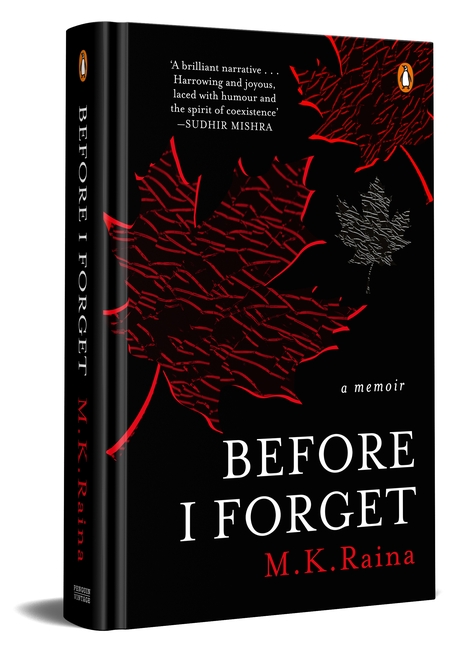
In his sparkling memoir, M.K. Raina documents the many lives he has lived. From sharing the stage with some of the most celebrated actors in India to his journey as a young man witnessing the violence and horrors rampant through the streets of Kashmir, an entire history of northern India is painted with subtle elegance.
Brimming with delightful anecdotes as well as poignant, painful memories of a region that once was, this book is a tour de force.
More Than a Life (Hindi)/Yugan Yugan Yogi/युगन युगन योगी
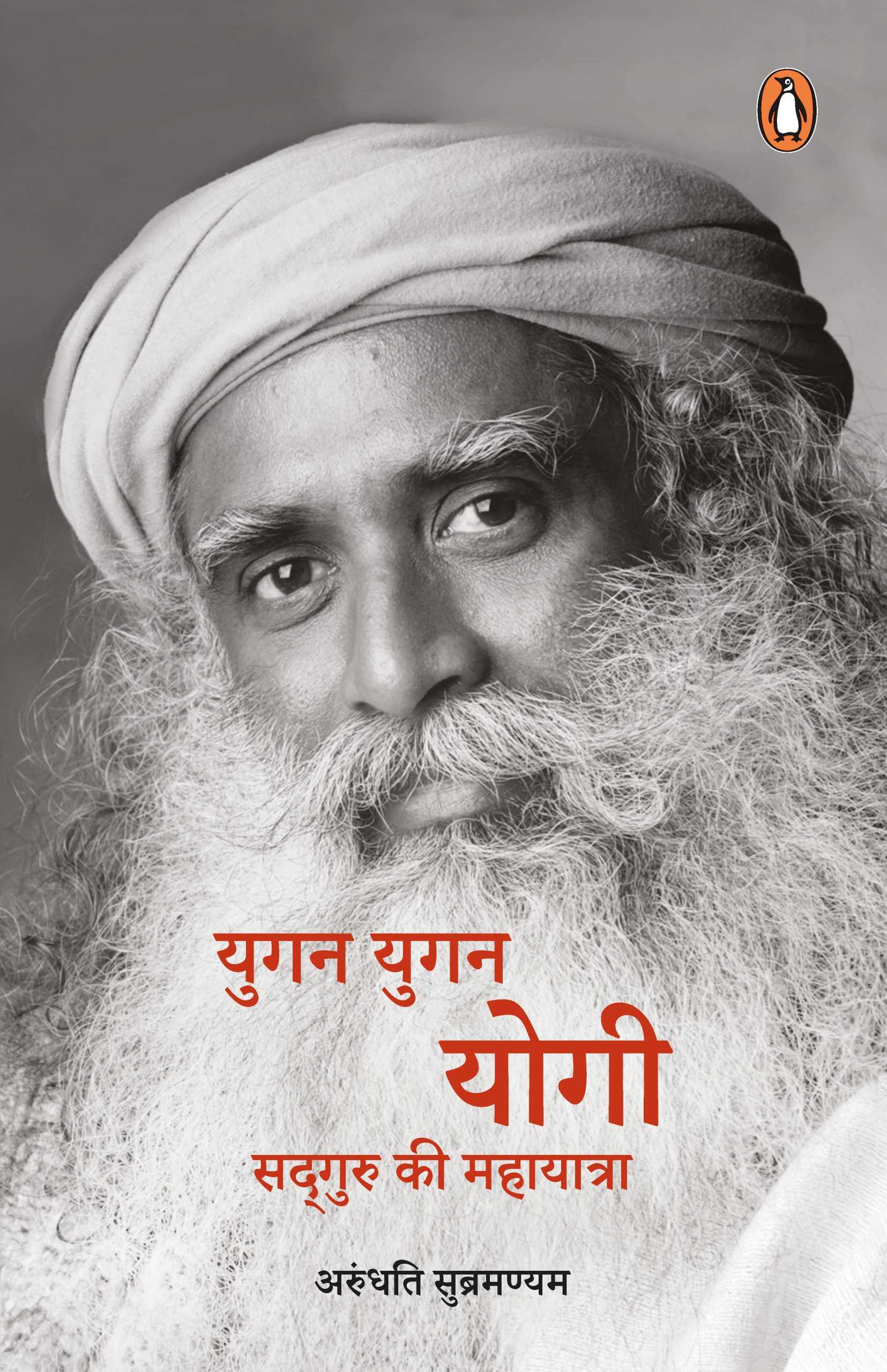
अस्तित्व की गुत्थियों को सुलझाने और सत्य की झलक पाने में मनुष्य हमेशा से यात्राएँ करता रहा है। उसकी यात्रा की कहानियाँ युगों पुरानी हैं। कई बार ये यात्राएँ कुछ वर्षों में पूरी हो जाती है, तो कई बार कोई यात्रा कई जन्मों तक चलती है।
पढ़िए ऐसी ही एक अनोखी यात्रा की कहानी, एक ऐसे असाधारण मनुष्य की कहानी, जिसने सत्य की खोज में अपना सर्वस्व अर्पित कर दिया।
एक ऐसा विद्रोही, जिसे समाज के नियमों का उल्लंघन करने के लिए मौत की सज़ा मिली। राह में मिली चुनौतियाँ भी उसे डिगा नहीं सकीं। उसका संकल्प नहीं घटा, उसके अरमान नहीं टूटे, उसकी दीवानगी नहीं उतरी। तीन सौ साल बाद उसी इंसान ने ऐसी आध्यात्मिक क्रांति पैदा की, जिसने विश्व को हिला कर रख दिया। उस इंसान को हम सद्गुरु के नाम से जानते हैं।
सद्गुरु एक आत्मज्ञानी, युगद्रष्टा और योगी हैं, जिनकी सत्य की खोज उन्हें जीवन और मृत्यु के पार ले गई। इस पुस्तक में पढ़िए सद्गुरु के कई जन्मों की कहानी।
The Big Bull of Dalal Street (Hindi)/द बिग बुल ऑफ़ दलाल स्ट्रीट
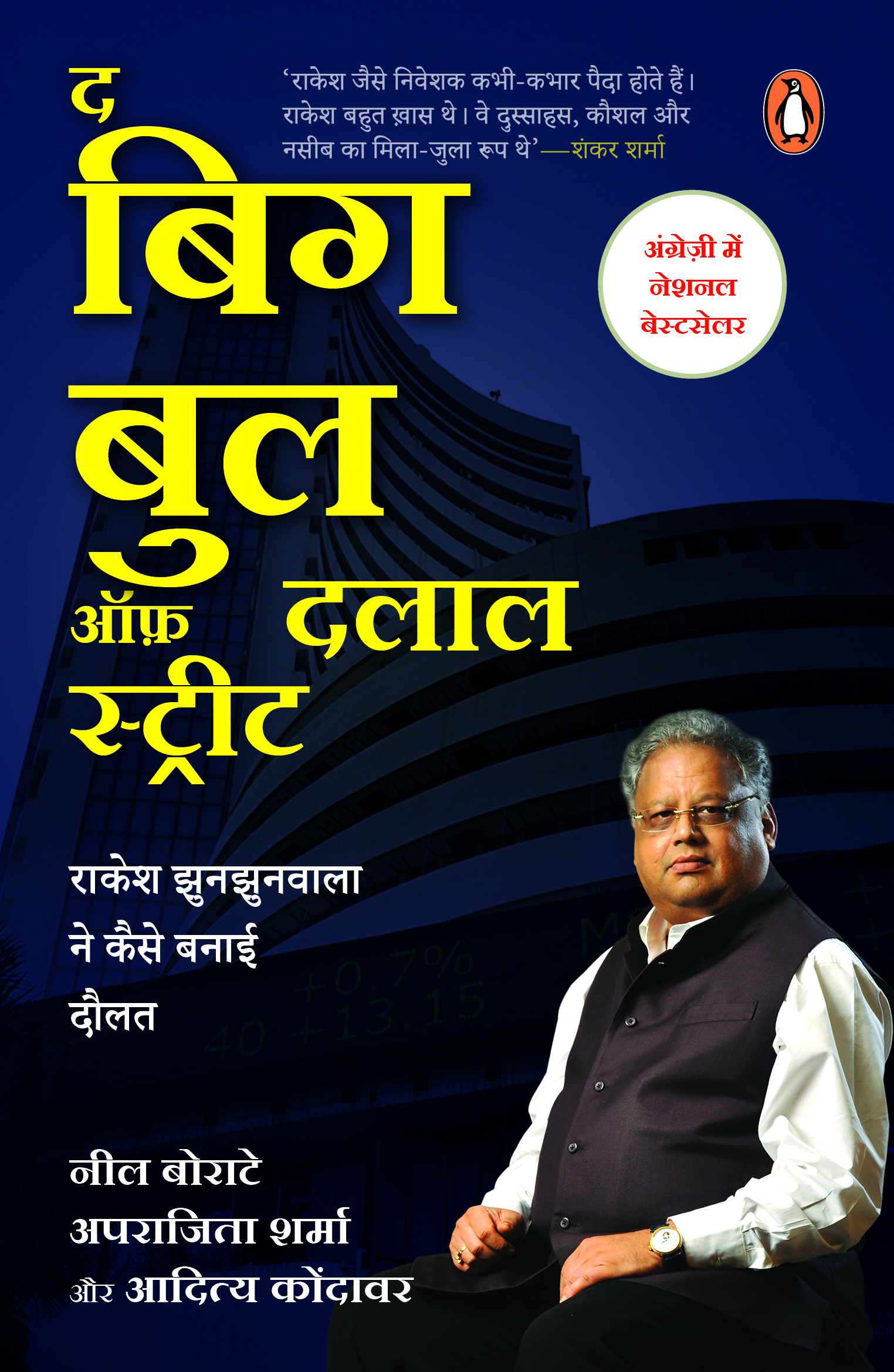
यह किताब मुंबई शयेर बाजार के मशहूर इंवेस्टर राकेश झुनझुनवाला की जीवनी है। इसमें उनके निवेशों और हाल के वर्षों में दिए गए साक्षात्कारों का शानदार विश्लेषण है; साथ ही यह पुस्तक मुंबई शेयर बाज़ार को समझने में भी मददगार साबित हो सकती है जिसने उन्हें दौलतमंद बनाया और कारोबार के कीमती सबक सिखाए।
यह पुस्तक खुदरा निवेशकों के साथ-साथ आम लोगों के लिए भी उपयोगी है जो बाजार में लंबे समय के निवेश पर लाभ, इनवेस्टमेंट के समय की जाने वाली गलतियों और लीवरेज़ ट्रेड के बारे में जानना चाहते हैं।
A Map of Longings
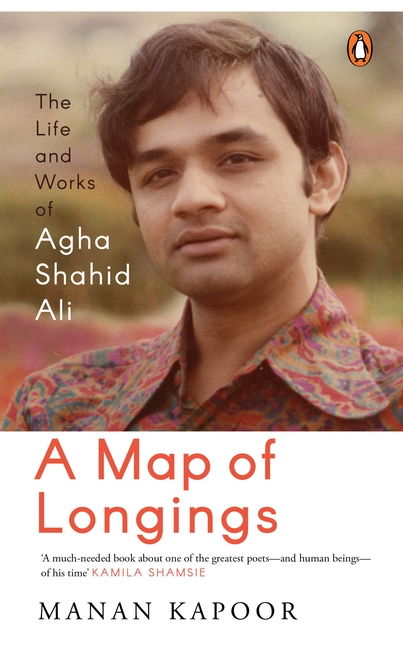
This first definitive biography of Agha Shahid Ali offers a rich portrait of the poet and the world he inhabited.
“A scintillating portrait of one of the finest poets of the late 20th century”-Ranjit Hoskote
“Manan Kapoor’s immersive study returns the poet to his roots, which are inescapably Indian-there’s no other word for the syncretic mastery of the Hindi, Urdu and English traditions that shaped his work.”-Jeet Thayil
Shahid is widely regarded as one of the finest poets from the Indian subcontinent, and his works are read across the world, touching millions of lives. A pioneer of ghazal writing in English, he wrote extensively about loss, nostalgia and home. A witness to the conflict that ravaged his homeland Kashmir, a loss he lamented in his collection The Country without a Post Office, Shahid has today become a symbol of hope in a violent world.
In this biography, Manan Kapoor explores the concerns that shaped Shahid’s life and works, following in the footsteps of the ‘Beloved Witness’ from Kashmir to New Delhi and finally to the United States. He charts Shahid’s friendships with figures like Begum Akhtar and James Merrill, and looks at the lives the poet touched with his compassion and love. He also traces the complex evolution of Shahid’s evocative verses, which mapped various cultures and geographies, and mourned injustice and loss, both personal and political. Drawing on various unpublished materials and in-depth interviews with Shahid’s family, friends, students and acquaintances, Kapoor narrates the riveting story of a major literary voice and presents Shahid’s poetic vision, revealing not just what he wrote but also how he taught the world to live.
Bipin (Hindi)/Bipin/बिपिन
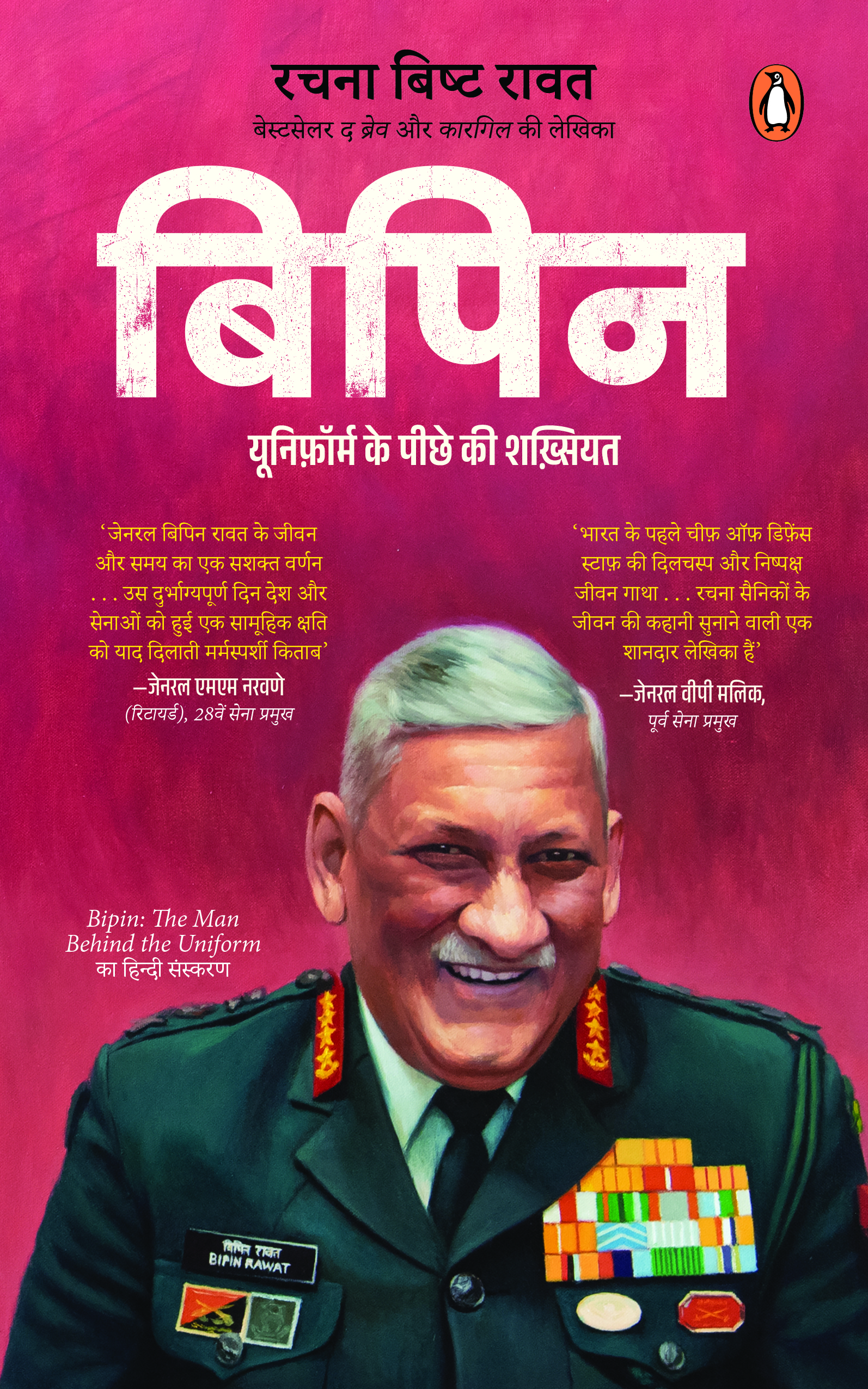
बिपिन; यूनिफ़ॉर्म के पीछे की शख़्सियत उस एनडीए कैडेट की कहानी है जिसे स्विमिंग पूल में अनिवार्य जंप नहीं कर पाने के लिए दंडित किया गया; उस नौजवान सेकंड लेफ़्टिनेंट की कहानी है जिसका आई कार्ड अमृतसर रेलवे स्टेशन पर नकली सहायक बनकर आए 5/11 गोरखा राइफ़ल्स के एक ऑफ़िसर ने चुरा लिया; उस मेजर की कहानी है जो पैर पर प्लास्टर चढ़े होने के बाद भी पाकिस्तान सीमा पर, दुश्मन की नाक के नीचे अपने सैनिकों के साथ दशहरा मनाने चौकी पर जा पहुँचा; उस सेना प्रमुख की कहानी है जिसने फैसला लिया कि भारत सीमा-पार आतंकवाद की हर हरकत का खुलकर जवाब देगा; उस चीफ़ ऑफ़ डिफ़ेंस स्टाफ़ की कहानी है जिसे सबसे ज़्यादा ख़ुशी तब मिलती थी जब वह गोरखा सैनिकों के साथ झामरे डांस करता; और उस शख्स के एक स्तब्ध कर देने वाले अंत की कहानी भी है जो रक्षा सेवाओं में बड़ी तेज़ी से ऊँचाई तक पहुँचा।
Savarkar and the Making of Hindutva: The Making of Hindutva
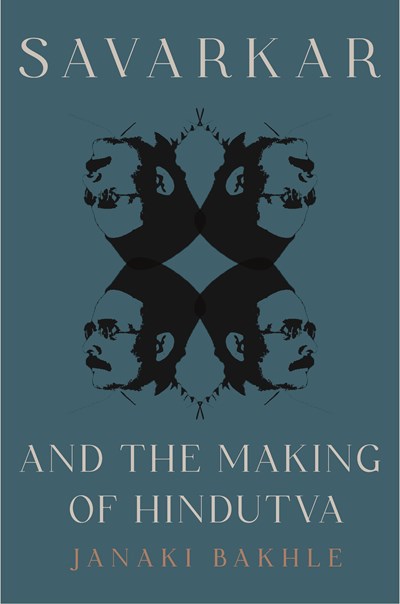
A monumental intellectual history of the pivotal figure of Hindu nationalism
Vinayak Damodar Savarkar (1883–1966) was an intellectual, ideologue, and anticolonial nationalist leader in India’s struggle for independence from British colonial rule, one whose anti-Muslim writings exploited India’s tensions in pursuit of Hindu majority rule. Savarkar and the Making of Hindutva is the first comprehensive intellectual history of one of the most contentious political thinkers of the twentieth century.
Janaki Bakhle examines the full range of Savarkar’s voluminous writings in his native language of Marathi, from political and historical works to poetry, essays, and speeches. She reveals the complexities in the various positions he took as a champion of the beleaguered Hindu community, an anticaste progressive, an erudite if polemical historian, a pioneering advocate for women’s dignity, and a patriotic poet. This critical examination of Savarkar’s thought shows that Hindutva is as much about the aesthetic experiences that have been attached to the idea of India itself as it is a militant political program that has targeted the Muslim community in pursuit of power in postcolonial India.
By bringing to light the many legends surrounding Savarkar, Bakhle shows how this figure from a provincial locality in colonial India rose to world-historical importance. Savarkar and the Making of Hindutva also uncovers the vast hagiographic literature that has kept alive the myth of Savarkar as a uniquely brave, brilliant, and learned revolutionary leader of the Hindu nation.
Ebrahim Alkazi
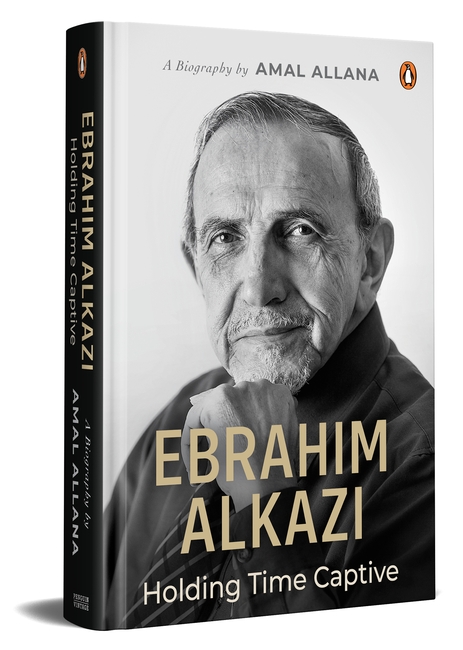
Amal Allana’s compelling biography of her father is the first carefully researched, full-length account of the life, work and times of Ebrahim Alkazi, one of the giants of twentieth-century theatre and a key promoter of the visual arts movement in India. Evoking the excitement of Alkazi’s student years in England, the controversies that surrounded his provocative ideas to transform the theatre movement in Bombay and later in Delhi, as the director of the National School of Drama (NSD), this book charts Alkazi’s meteoric rise to the top, with his modernist staging of plays and his aim of putting Hindi theatre on the map.
It was at the Sangeet Natak Akademi that Alkazi first confronted resistance to his ideas on the role of tradition in the making of a new ‘national’ culture. By the 1970s, disillusioned with the curtailing of civil liberties and a dysfunctional bureaucracy, he ultimately resigned from the NSD, developing his own independent institutions for the promotion of the visual arts in India as well as abroad. Staging the cultural history of India between the 1940s and 2000s, and featuring a galaxy of artists and actors as the dramatis personae—including M.F. Husain, F.N. Souza, Akbar Padamsee, Gieve Patel, Nissim Ezekiel, Alyque Padamsee, Girish Karnad, Manohar Singh, Vijaya Mehta, Kusum Haidar and Gerson da Cunha—Allana’s chronicle is charged with their fierce energy and commitment as contributors to a vibrant new India.
The author’s personal perspective as Alkazi’s daughter brings to the narrative an added dimension of veracity and sensitivity. With objective candour, Allana shares details of her parents’ relationship as they examine their marriage on entirely new terms, as a partnership of equals. Holding Time Captive shows a dynamic Alkazi in his quest to bring about an inclusive, international, intercultural and interdisciplinary thinking in artistic expressions that is transformative and liberating. This book offers unique glimpses into an enigmatic personality whose emotionally charged life closely reflected and ran parallel to the growth and evolution of his startlingly fresh ideas and vision for a modern cultural movement in India.
Shriramcharitmanas/श्रीरामचरितमानस
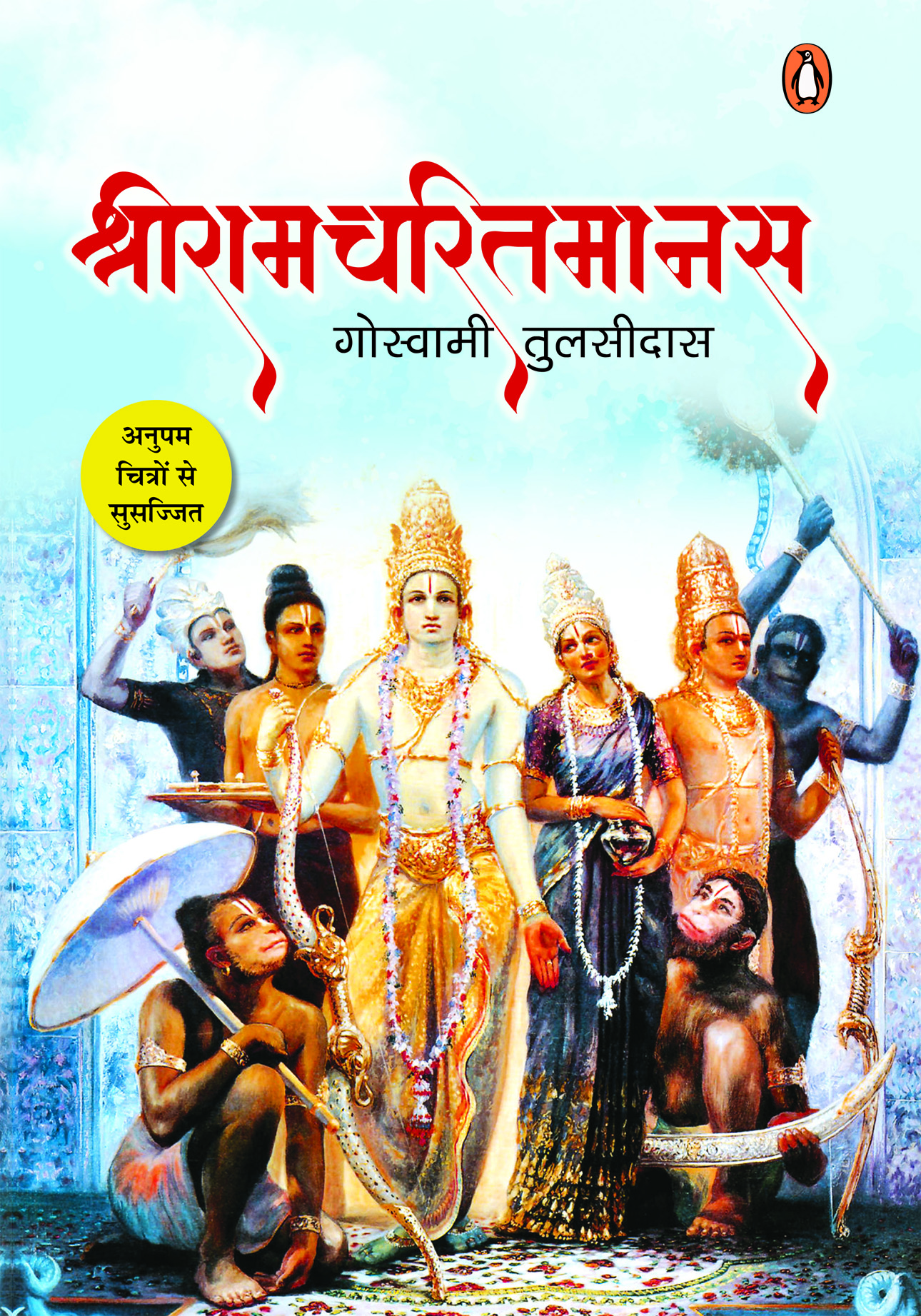
श्रीरामचरितमानस गोस्वामी तुलसीदास द्वारा 16वीं सदी में रचित प्रसिद्ध महाकाव्य है। इस ग्रंथ को अवधी (हिंदी साहित्य) की एक महान कृति माना जाता है। श्रीरामचरितमानस भारतीय संस्कृति में एक विशेष स्थान रखता है। रामचरितमानस की लोकप्रियता अद्वितीय है। भारत में यह ग्रंथ ’रामायण’ के रूप में बहुत से लोगों द्वारा प्रतिदिन पढ़ा जाता है।
श्रीरामचरितमानस के नायक राम हैं, जिन्हें मर्यादा पुरुषोत्तम के रूप में दर्शाया गया है, जोकि मान्यताओं के अनुसार अखिल ब्रह्मांड के स्वामी हरि नारायण भगवान के अवतार हैं। गोस्वामी जी ने रामचरित का अनुपम शैली में दोहों, चौपाइयों, सोरठों तथा छंद का आश्रय लेकर वर्णन किया है। इसमें 12,800 पंक्तियाँ हैं, जो 1,073 दोहों और सात कांड में विभाजित हैं। श्रीरामचरितमानस को विश्व के 100 सर्वश्रेष्ठ लोकप्रिय काव्यों में 46वाँ स्थान प्राप्त है।