



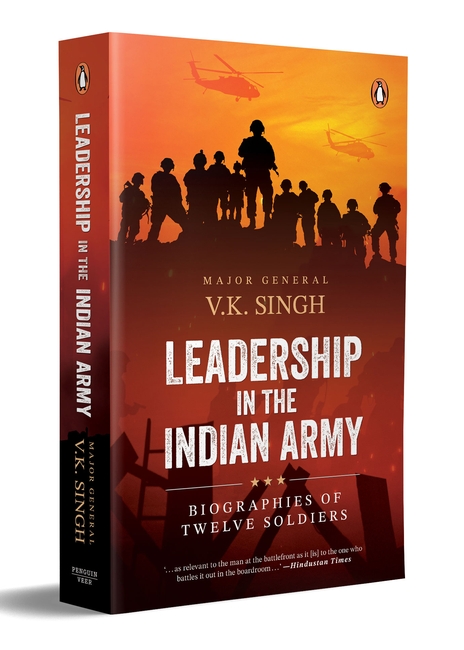
Unlike traditional biographies of combat leaders, which focus primarily on military operations or regimental histories, in this book Major General V.K. Singh concentrates on personal accounts, anecdotes and reminiscences in order to highlight these leaders’ personalities, and to draw out the human face behind the military facade. Through the stories of these twelve military leaders, the book also throws new light on several historical events and the role of political leaders during India’s fight for independence and the partitioning of the subcontinent. He gives an overview of India’s military history after independence, including major operations, and describes many hitherto unknown or little-known incidents concerning smaller operations like Nathu La in 1967 and Goa in 1962.
Written records tend to glorify the actions of battalions as well as individuals, Singh says, magnifying achievements while suppressing the mistakes and glossing over failures. Leadership in the Indian Army provides a truer picture of the strength of character and convictions of each of these leaders. A must-read for anyone interested in India’s military history.
Catagory: Biographies, Diaries & True Accounts
Another Sort of Freedom
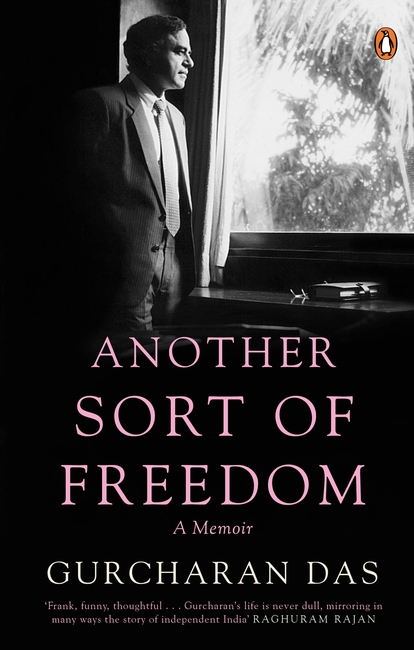
Another Sort of Freedom is a funny, moving and honest memoir of a man’s struggle to break free from expectations. Gurcharan Das was born in Lyallpur, Punjab, during World War II, when Hitler, Churchill and Hirohito were bashing everyone around. His mother noted in her diary, ‘This is a restless baby.’ By age two he had become ‘a difficult child’, and by three she was calling him a ‘troublemaker’. He discovered one day that he could run, and he has been running ever since.
There are strange twists in his journey, from Partition’s chaos to misguided attempts at winning over first loves. Setting out to become an engineer, he ends up with a philosophy degree from Harvard University. He then abandons a promising academic career in ivy-covered halls to become a salesman for Vicks VapoRub in India’s dusty bazaars. This leads him to the CEO’s position of Procter & Gamble India. One day, at the peak of his professional life, his high-powered corporate mask crumbles, and he walks away to become a celebrated writer and public intellectual.
Candid, witty and wry, the memoir is filled with moments of deep introspection at every turn alongside wise observations on the author’s encounters with history on four continents. This is Gurcharan Das as you have never seen him before.
Doctor Steel
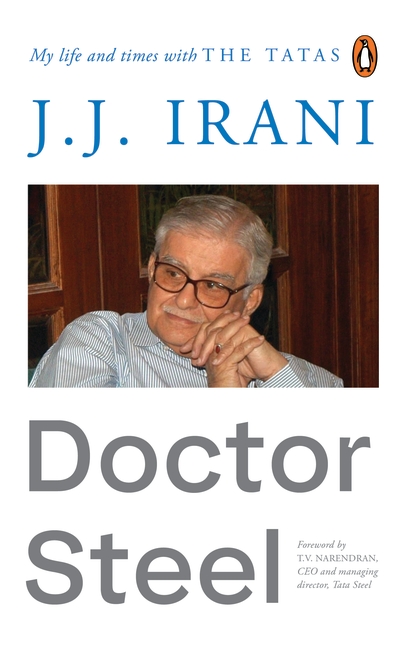
In the 1980s, the steel produced in India was not cost-effective, plagued by quality issues and unable to meet the standards required to take India a step ahead in its development goals.
Enter Jamshed Jiji Irani, fondly known as ‘Doc’ to all, whose efforts aimed at modernizing Tata Steel changed everything. Today, Tata Steel produces low-cost, high-quality metal of international standards. Under his leadership, Tata Steel ushered India into a new age of economic growth. But his story doesn’t end there. A leading industrialist, Irani was keenly involved in the 1990s economic liberalization that put India on the global map. He held positions on various Tata boards, and was part of the Confederation of Indian Industry and several other government-appointed committees. He was awarded the Padma Bhushan and an honorary knighthood by the British government for his work.
Behind his formidable exterior was a man with a big heart and a fondness for life. He was a man of integrity and conviction, devoted to Tata Steel and the people there. The chapters that make up Doctor Steel—the result of freewheeling conversations between Irani and N.K. Sharan in the months before the former’s passing—look back at this journey.
A.P.J. Abdul Kalam in 100 Anecdotes: Inspirational Biography of Indian President & Rocket Scientist | Illustrated Gift Edition for All Ages
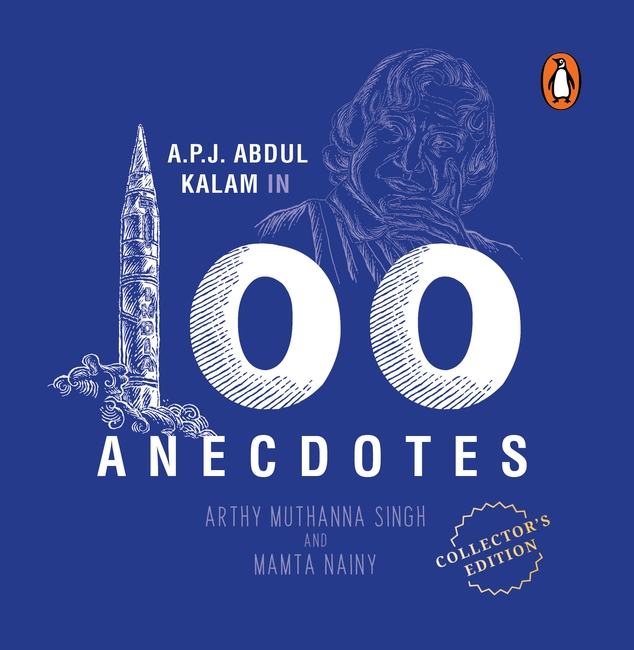
On 15 October 1931, Avul Pakir Jainulabdeen Abdul Kalam, popularly known as A.P.J Abdul Kalam, was born in Rameswaram, Tamil Nadu. He went on to become one of the most revered personalities of Independent India. A scientist, leader, thinker, teacher, and writer who achieved great success in various fields, Dr Kalam realized his dreams against all the odds.
This one-of-a-kind book, with gorgeous illustrations, is a collectible edition that celebrates an extraordinary man who serves as a role model for all. Starting from his days growing up in the island town of Rameswaram, to working on India’s space programmes, to his years as the eleventh President of India and his life thereafter, the hundred anecdotes in the book have been chosen with utmost care to demonstrate the importance of hard work, commitment, courage, and innovative thinking that he stood for.
This book, apart from sharing amazing life lessons, also shows the importance of scientific curiosity and celebrates the scientific progress that we owe to great scientists like Dr Kalam. It is a wonderful tribute to a remarkable life.
Why You Should Read the Book?
• A special collector’s edition to celebrate life of a remarkable icon.
• A part of a series of interesting biographies done in a special format that includes books like Gandhi in 150 Anecdotes, Satyajit Ray in 100 Anecdotes and His Holiness The Dalai Lama in 100 Anecdotes.
• Striking wood-cut style of illustrations to complement the engaging text, episodic narrative that is accessible.
• A must for every library, in school, college or at home.
Anarchy Or Chaos
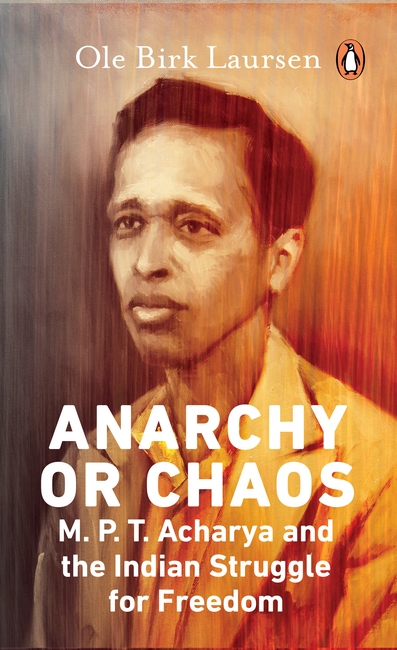
In this fascinating biography of the Indian revolutionary M. P. T. Acharya (1887–1954), Ole Birk Laursen uncovers the remarkable transnational networks, movements and activities of India’s most important anticolonial anarchist in the twentieth century.
Driven by the urge for complete freedom from colonialism, authoritarianism, fascism and militarism, which are rooted in the idea and politics of the nation-state, Acharya fought for an international vision of socialism and freedom. During the tumultuous opening decades of the 1900s—marked by the globalization of radical inter-revolutionary struggles, world wars, the rise of communism and fascism, and the growth of colonial independence movements—Acharya allied himself with pacifists, anarchists, radical socialists and anti-colonial fighters in exile, championing a future free from any form of oppression, whether by colonial rulers or native masters. Drawing on a wealth of archival material, private correspondence and other primary sources, Laursen demonstrates that, among his contemporaries, Acharya’s turn to anarchism was unique and pioneering in the struggle for Indian independence.
Anarchy or Chaos is the first comprehensive study of M. P. T. Acharya. It offers a new understanding of the global and entangled history of anarchism and anti-colonialism in the first half of the twentieth century.
Divorce is Normal

A divorce rate of around 1 per cent is often boasted about with pride in this country, without much critical thought spared for what it actually means. When Shasvathi Siva decided to end her marriage, she realized exactly how difficult getting a divorce was in our society and legal system. Since then, she has been working towards ensuring that others have it easier, and this book is an endeavour to share her learnings with great empathy and sagacity. Divorce Is Normal is an invaluable companion for anyone contemplating separation and divorce, and a necessary reminder for everyone else that divorce is normal. Through her story, Siva brings to readers fresh insights on unhappy marriages and divorce in the Indian context, helping expand perspectives so that people can overcome societal stigma and accept a brighter, happier future. Filled with practical tips, comforting stories and endless compassion shaped by a lived experience, this book acts like a warm hug and a stern friend all at once.
Common Yet Uncommon
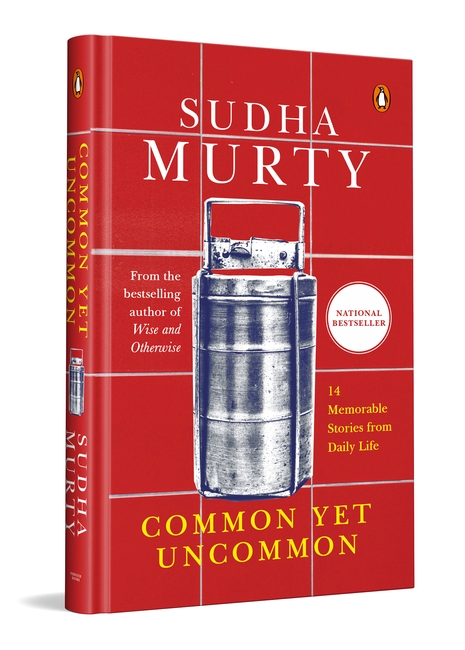
Meet these people: Bundle Bindu, so named because he likes his truth with a little embellishment, Jayant the shopkeeper who doesn’t make any profit, and Lunchbox Nalini, Sudha Murty herself, who brings her empty lunchbox-to be filled with food-wherever she goes!
Written in Sudha Murty’s inimitable style, Common Yet Uncommon is a heartwarming picture of everyday life and the foibles and quirks of ordinary people. In the fourteen tales that make up the collection, Sudha Murty delves into memories of childhood, life in her hometown and the people she’s crossed paths with. These and the other characters who populate the pages of this book do not possess wealth or fame. They are unpolished and outspoken, transparent and magnanimous.
Their stories are tales of unvarnished humans, with faults and big hearts.
Testament to the unique parlance of a small town, Common Yet Uncommon speaks a universal language of what it means to be human.
Sunderkand (Illustration)/सुन्दरकाण्ड (Gift Edition)
सुंदरकाण्ड गोस्वामी तुलसीदास कृत श्रीरामचरित मानस का सबसे अधिक लोकप्रिय खण्ड है।
सुंदरकाण्ड में हनुमान जी द्वारा किए गए महान कार्यों का वर्णन है। रामायण पाठ में सुंदरकाण्ड के पाठ का विशेष महत्व माना जाता है। सुंदरकाण्ड में हनुमान का लंका प्रस्थान, लंका दहन से लंका से वापसी तक के घटनाक्रम आते हैं। इस सोपान के मुख्य घटनाक्रम है—हनुमान जी का लंका की ओर प्रस्थान, विभीषण से भेंट, सीता से भेंट करके उन्हें श्री राम की मुद्रिका देना, अक्षय कुमार का वध, लंका दहन और लंका से वापसी। इसी के साथ इस पुस्तक में हनुमान चालीसा, आरतियाँ और बहुत कुछ देखने को मिलेगा।
Fugitive of Empire
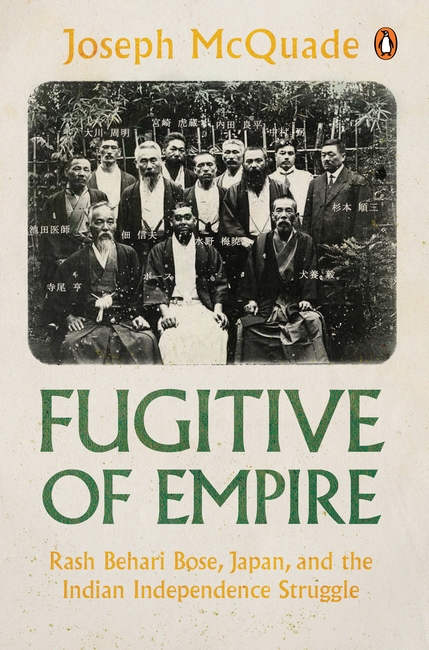
In 1912, Rash Behari Bose made his dramatic entrance into India’s anti-colonial freedom movement when he orchestrated a bomb attack against the British viceroy during a public procession in Delhi. Forced to
flee his homeland, Bose settled in Japan, becoming the most influential Indian in Tokyo and earning the affectionate title ‘Sensei’ among Japanese youth, military personnel, and far-right ultranationalists.
Throughout the 1920s and 1930s, Bose remained a perpetual thorn in the side of the British Empire as he built
and maintained a global network of anti-colonialists, radicals, smugglers, and intellectuals. After siding with Imperial Japan against his British adversaries during the Second World War, Bose died in 1945-just two years before India gained independence.
A complex, controversial, and often contradictory figure, Bose has been described as a committed democrat, an authoritarian, an advocate of religious harmony, a Hindu chauvinist, an anti-communist, a political pragmatist, an idealist, a Japanese collaborator, an anti-racist, a cultural conservative, a
Pan-Asianist, an Indian nationalist, and much more. Drawing on extensive archival research
from India, Japan, and the UK, this refreshing new biography brings to life the largely forgotten story of one of twentieth-century Asia’s most daring revolutionaries.
Poorna Swaraj
It contributes to current analyses of the health of liberal democracies-Rajmohan Gandhi
An impressive contribution to Gandhian studies-Bhikhu Parekh
This work merits attention-Gopal Guru
An extremely valuable and timely work-Prabhat Patnaik
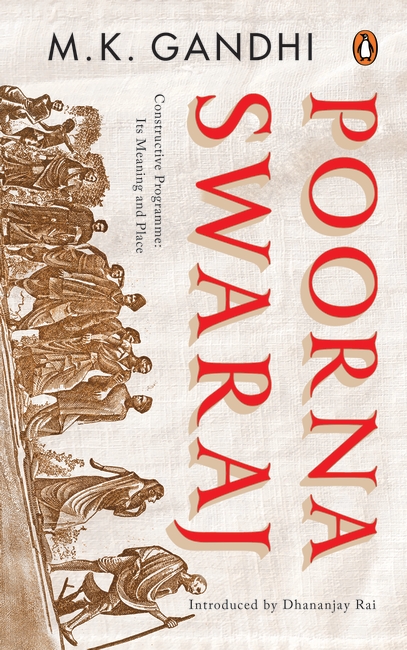
Time and again, Mahatma Gandhi’s life, work and philosophy have played pivotal roles in bringing positive change in society. Poorna Swaraj, through its reading of the Constructive Programme: Its Meaning and Place, opens a window to his vision of attaining real and complete independence or ‘swaraj’ for India. With his ideas on communal unity, prohibition, basic education, emancipation of women, advisasis’ concerns, farmers’ distress, removal of untouchability, demystification of leprosy, the role of khadi, charkha, village and small-scale industries, among others, this book brings to light Gandhi’s road map for an egalitarian society.
This first critical edition, with a comprehensive contextual introduction by Dhananjay Rai, sets the backdrop for readers to understand Gandhi’s thoughts on making an ideal society. Amazingly relevant and thought-provoking, Poorna Swaraj is a must-read for students and scholars of history, social science, politics and Gandhian studies. An invaluable companion for policymakers and general readers, this book is a treasure trove.