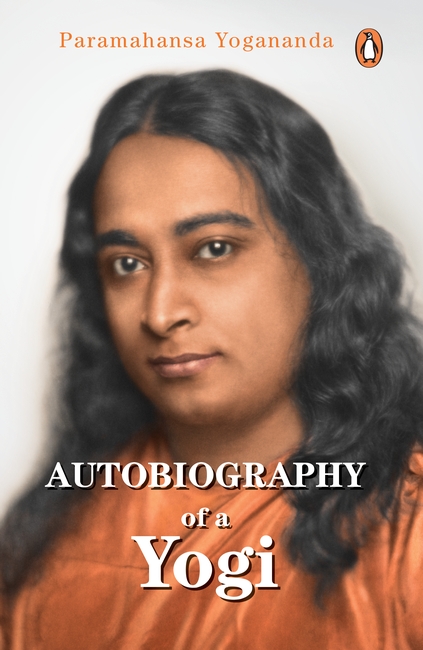
Named one of the 100 best spiritual books of the 20th century, Paramahansa Yogananda’s remarkable life story takes you on an unforgettable exploration of the world of saints and yogis, science and miracles, death and resurrection. With soul-satisfying wisdom and endearing wit, he illuminates the deepest secrets of life and the universe – opening our hearts and minds to the joy, beauty, and unlimited spiritual potentials that exist in the lives of every human being.
This complete edition – offered in collaboration with Yogoda Satsanga Society of India and Self-Realization Fellowship, the organizations founded by the author – incorporates all of his wishes for the final text, including the extensive material he added after the 1946 edition.
Experience the captivating journey of Paramahansa Yogananda’s life through the pages of “Autobiography of a Yogi.” With remarkable candor, eloquence, and wit, Yogananda shares his inspiring chronicle, from his extraordinary childhood to encounters with saints and sages during a quest for an illumined teacher in India.
Through this compelling life story, Yogananda unveils the subtle laws governing both ordinary and extraordinary events, offering a profound understanding of human existence. “Autobiography of a Yogi” transcends time, enthralling readers with its spiritual teachings, making it a timeless masterpiece and a revered spiritual classic.
Join Yogananda on a journey that will leave an indelible mark on your soul and open your heart to the mysteries of life!

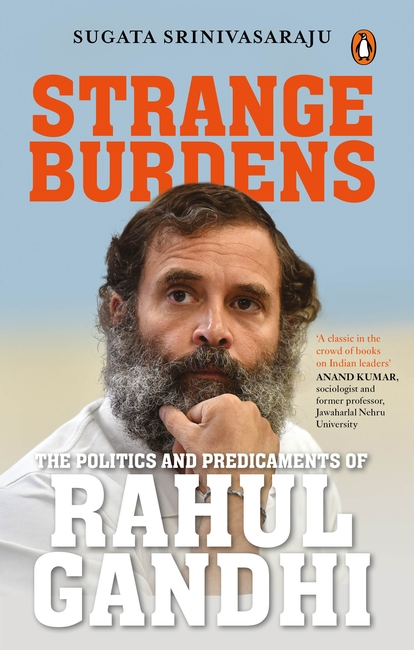
Strange Burdens is not a biography but a book of political commentary. It examines and analyses Rahul Gandhi’s ideas and leadership since he officially entered politics in March 2004. It journeys all the way to the conclusion of the Bharat Jodo Yatra in Srinagar on 30 January 2023 and captures the dilemmas of his
disqualification a couple of months later.
The narrative here crawls across two decades with the intention of understanding Rahul Gandhi’s politics and predicaments, confusions and contradictions, triteness and triumph, as well as his burdens and benignity. It is not the purpose of this book to understand his failures and successes in tabular columns but speculate in the best traditions of political commentary why he is where he is, both politically and as an individual. The book does not seek to answer questions about his suitability or unsuitability for a public role but is rather focused on how he has been caught in the currents of history. It is not a myth-busting or myth-making exercise, nor is it an inquisition; it is a pursuit of political insight.
Since the book is about Rahul Gandhi and the Congress party, it cannot not be about Narendra Modi and the Bharatiya Janata Party. Examining one automatically illuminates the other. The book looks at the contrasts and convergence of the two personalities and the two parties they represent.

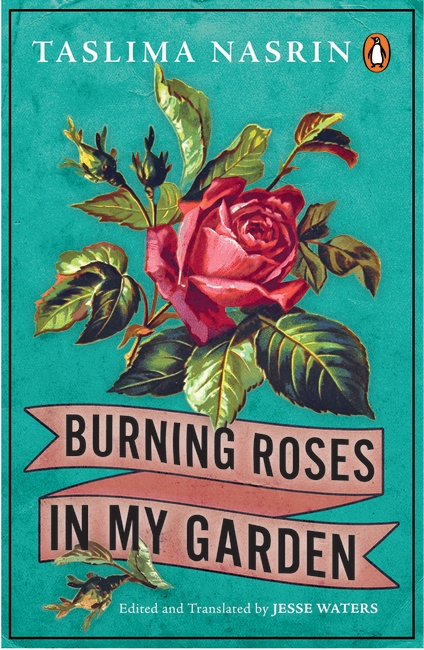
‘Have I not, having kept a man for years, learnt that it’s/ like raising a snake?/ So many animals on this earth, why keep a man of all things?’ writes one of the world’s most celebrated writers, Taslima Nasrin, in her first-ever comprehensive collection of poetry translated from the original Bangla into English. The poems get to the heart of being the other in exile, justifying one’s place in a terrifying world. They praise the comfort and critique the cruelty of a loved one. In these are loneliness, sorrow, and at times, exaltation. Relying almost entirely upon the free verse form, these poems carry a diction which is at once both gentle and fierce, revealing the experiences of one woman while defining the existence of so many generations of women throughout time, and around the world.

One Way to Live was written at a time when Dr Tehemton Udwadia knew that he had just a few months left to live. It is partly a personal memoir recounting about his youthful romance and the influence of his mother and heartfelt anecdotes about his friends and family, and partly his own medical journey, including the story behind the setting up of Center for Minimal Access SurgeryTraining (ceMAST)-perhaps his greatest achievement.
The last few couple of chapters of this book were written at a time when Dr Udwadia was on ventilator support; the second and final epilogue was dictated by him from a hospital bed at a time when he could barely speak. He passed away on 7 January 2023. It was life well-lived.

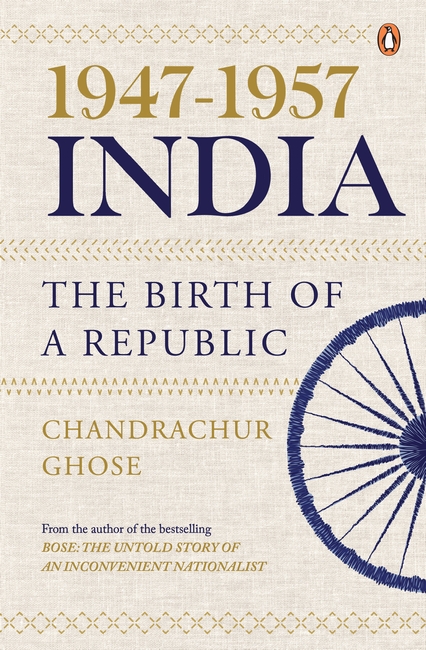
The story of a decade-1947 to 1957-that made and unmade India
The first decade after India’s independence, 1947-1957, was probably the most crucial in the nation’s history. Opening a window to this period, this book weaves a story out of the complex ideas and events that have largely remained beneath the surface of public discourse. The transfer of power, the framing of the Constitution and the formation of the governance machinery; the clash of ideas and ideologies among parties and personalities; the beginning of the disintegration of the Congress and the consolidation of political forces in the opposition; Nehru’s grappling with existential problems at home and his quest for global peace; the interplay between democratic ideals and ruthless power play-all these factors impinged on each other and shaped the new republic in its formative decade.
Thought-provoking, argumentative and unputdownable, 1947-1957, India: The Birth of a Republic is a must-read for anyone interested in Indian political history.

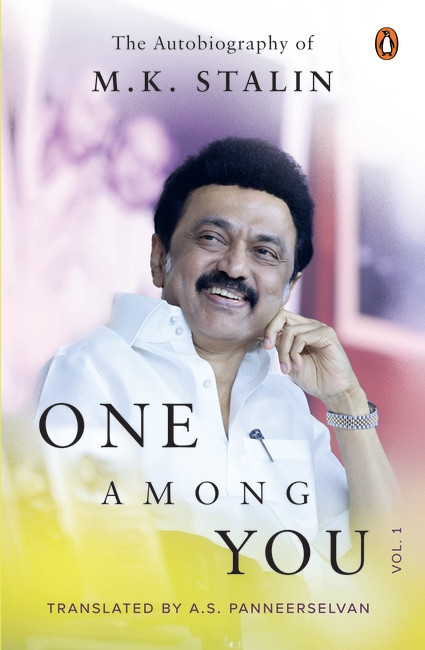
In 1966, M.K. Stalin began his political innings by launching the Gopalapuram Youth Dravida Munnetra Kazhagam. Over the next five decades, his political career would see him rise to become the Mayor of Chennai in 1996, the President of the Dravida Munnetra Kazhagam (DMK) in 2018 and the Chief Minister of Tamil Nadu in 2021.
One Among You, a translation of Volume 1 of Stalin’s Tamil autobiography, Ungalil Oruvan, is the story of the first twenty-three years of his life, from 1953 to 1976. These formative years were witness to Stalin’s school and college days, his early involvement with the DMK and his integral role in the party publication, Murasoli. But Stalin’s journey extends beyond politics. He also had a profound connection to the world of theatre and cinema, where his passion for art intersected with his pursuit of social change.
As the son of the political titan Kalaignar M. Karunanidhi, it was inevitable that Stalin would grow up in a household throbbing with discussions about art, culture, politics, and language. This autobiography, ably translated by veteran journalist and editor, A.S. Panneerselvan, offers an intimate glimpse into the world that moulded the Tamil Nadu Chief Minister.

A story from a third-generation soldier of the 1st Battalion, the 5th Gorkha Rifles (FF) who was killed in combat.
A ghost story narrated to the author by an officer of the Garhwal Rifles while on a visit to Lansdowne.
A gripping account of the air raid on Pakistan’s airfield at Sargodha in 1965 led by Wing Commander O.P. Taneja, VrC.
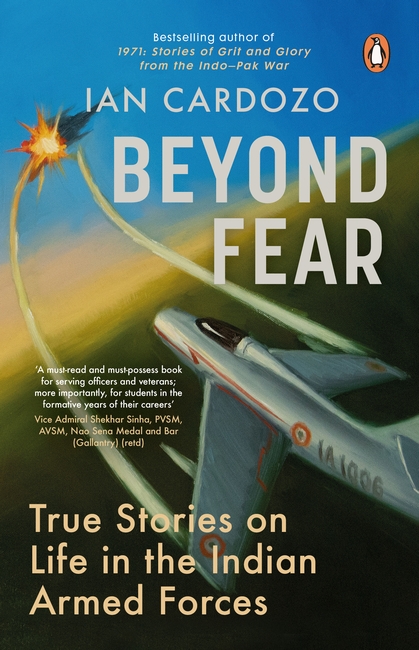
These are some of the stories featured in Major General Ian Cardozo’s book Beyond Fear, stories that inform the reader that fear is not exceptional. It is common to all human beings. The question is: Do we face fear or run away from it? Through these thirteen stories, he reveals to the reader how military personnel conquer fear. He calls it ‘biting the bullet’.
Through the twists and turns of his stories, he brings out how honour, love, courage, trust, hope, faith and loyalty help the soldier in his quest to conquer fear and that these very qualities can help the reader deal with fear in their everyday lives. These stories also show that real life can sometimes be stranger than fiction.

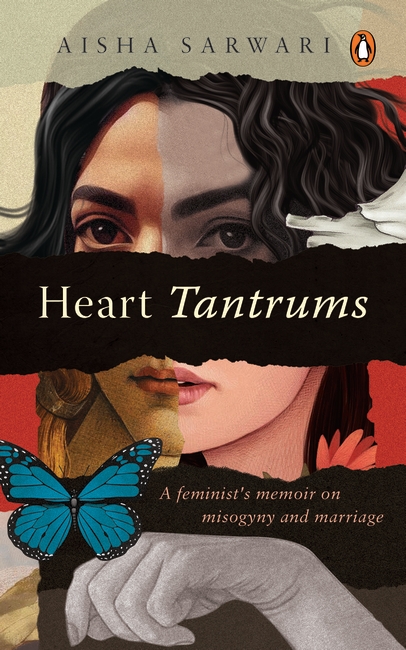
In order to be able to survive, Aisha Sarwari was told, love and devoted acts of service will always light the way. These however, become the very reason of her complete unravelling.
In this large and messy voice of a memoir, Heart Tantrums artfully describes the scatter of catastrophic losses-the loss of her father in early adolescence; leaving behind her family home in East Africa; and trying to fit into a completely different culture in Lahore after marriage. In 2017, when Aisha first held her husband Yasser Latif Hamdani’s brain MRI against the light, she began to also lose the man she loved to a personality-altering brain tumour.
Oscillating between being a good woman and a bad woman, Aisha has been adamant that the hard knocks of life would not define her. But even self-respect comes at a high price. The internal life of mental health chaos is like the very disease itself-degenerative. The book rejects the idea that love and domestic servitude saves the day.
Pakistan, she never thought, could become like living in a state of self-exile for the couple that married for country-Aisha Sarwari, a proud Pakistani feminist and career professional, and Yasser Latif Hamdani, a human rights lawyer turned internationally acclaimed biographer of Pakistan’s founding father, M.A. Jinnah. Often, they both failed to play for the team, but their fight for belonging was sometimes punctuated by the warmth of parenting and the joy of extraordinary friendships.
This book is a prayer on a page, with this immigrant girl finding her way in the dark through a raw and magnificently well-told story of grief, hybrid identity, immigration woes, systemic family oppression, caregiver fatigue and, of course, what every good literature tries hard to hack-the terror of oblivion.

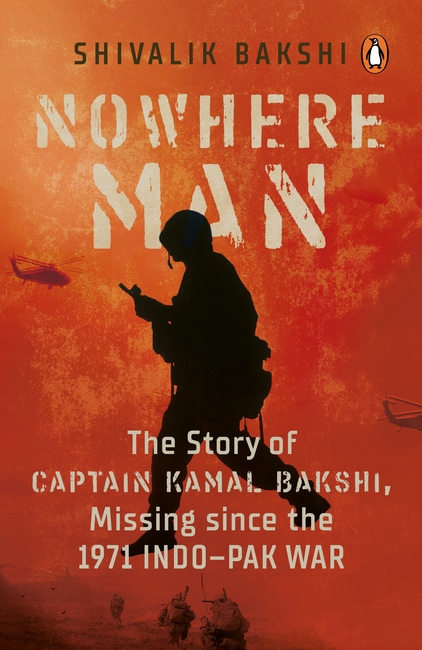
Capt. Kamal Bakshi fought in the 1971 Indo-Pak War and went missing after the Battle of Chhamb–the bloodiest battle of 1971. Although no one from his battalion had seen him get killed, no one had been able to locate his body. And so, the military declared him ‘Missing, Believed Killed’–the ambiguous status assigned to soldiers when their death cannot be confirmed.
However, six years after the war, the Indian government changed its mind. The Ministry of External Affairs announced in Parliament that Indian intelligence agencies have reason to believe that Pakistan had not been truthful when it handed over the list of Indian POWs in its custody. It went on to state the names of at least forty Indian soldiers still believed to be in Pakistani custody and one of the names was Kamal Bakshi’s.
This book has been written by his nephew Shivalik Bakshi. It is his story, recreated from his letters, diaries, recollections of those who crossed paths with him and published accounts of the Battle of Chhamb.