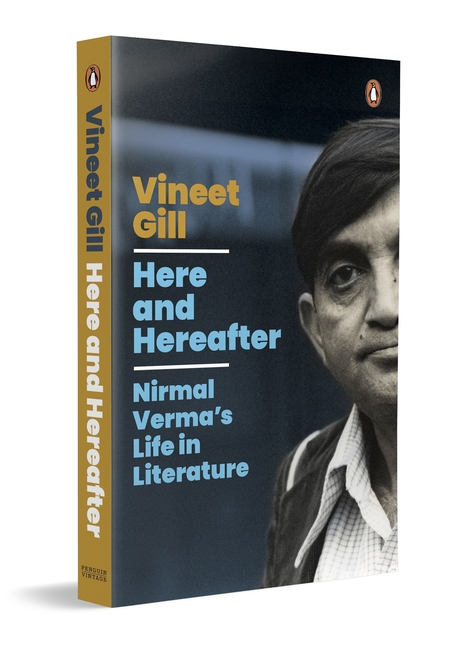
‘Here and Hereafter is as much about Nirmal Verma’s life in literature as it is about Vineet Gill’s. There is no other book quite like it’—ARVIND KRISHNA MEHROTRA
‘A literary gem’—AMITAVA KUMAR
How is a writer formed? Yes, through labour, commitment, perseverance, grit and various other things that we keep hearing about. But equally, a writer is formed through the workings of a particular kind of sensibility. As Vineet Gill attempts to understand this writerly sensibility in Nirmal Verma’s life and work, he finds that the personal and the literary are, on some level, inseparable.
In this masterly deep dive into the world of one of Hindi literature’s pioneers, Gill looks at the scattered elements of Verma’s life as ingredients that went into the making of the writer. The places he lived in, the people he knew, the books he read are all reflected, in Gill’s view, in Verma’s stories and novels. This is a work of intense readerly analysis and considered excavation-a contemplation on Verma’s oeuvre and its place in world literature.

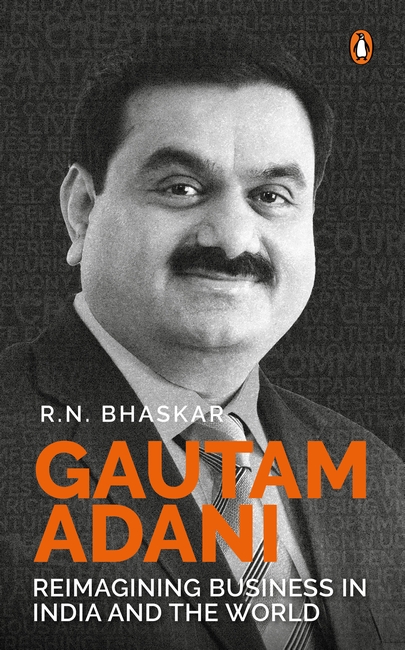
Gautam Adani needs no introduction. One of the richest men in the world, he also helms a business empire that is now India’s largest player in ports and renewable energy. He is also the country’s largest private sector player in sectors like airports, city gas distribution, power transmission, thermal power, edible oil, and railway lines. Yet, look beyond these facts, and startlingly little is known about Gautam Adani, the maverick businessman; about his motivations and vision; about his life, and the episodes, minor and major, that propelled him to make the choices he did.
This book sheds light on all that we have never known, but should know, about Gautam Adani. It delves deep, detailing a range of fascinating anecdotes from Gautam Adani’s life, illuminating his early childhood, his initiation into business, and the learnings and opportunities he exploited.
But beyond biography, this book is committed to analysing those business strategies of Gautam Adani that have intrigued all. It marries biography and business data, storytelling and hard numbers. Besides, it has been authored by one of India’s most senior journalists who has long followed Gautam Adani’s career.

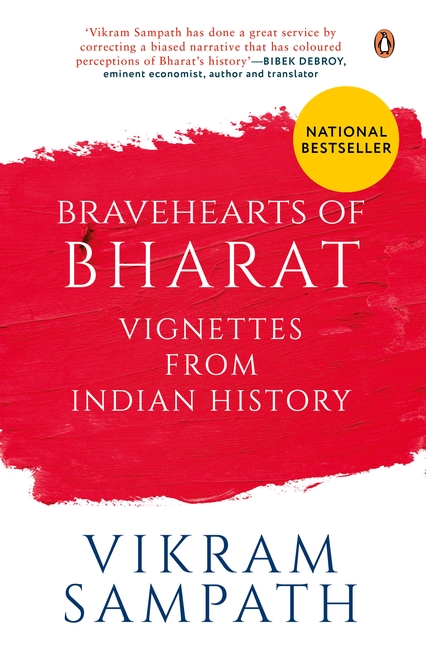
Fifteen Brave Men and Women of Bharat who Never Succumbed to the Challenges of Invaders But were Lost and Forgotten in the Annals of History. These are the stories of those Bravehearts who Fought to Protect their Rights, Faith and Freedom.
History has always been the handmaiden of the victor. ‘Until the lions have their own storytellers,’ said Chinua Achebe, ‘the history of the hunt will always glorify the hunter!’ Exploring the lives, times and works of the fifteen long-forgotten and mostly neglected unsung heroes and heroines of our past, this book brings to light the contribution of the warriors who not only donned armour and burst forth into the battlefield but also kept the flame of hope alive under adverse circumstances.
Narrating the tales of valour and success that India, as a nation and civilization, has borne witness to in its long and tumultuous past, the book opens a window to the stories of select men and women who valiantly fought against invaders for their rights, faith and freedom.
Rajarshi Bhagyachandra Jai Singh of Manipur, Lalitaditya Muktapida of Kashmir, Chand Bibi of Ahmednagar, Lachit Barphukan of Assam, Begum Hazrat Mahal of Awadh, Rani Abbakka Chowta of Ullal, Martanda Varma of Travancore, Rani Rudrama Devi of Warangal, Rani Naiki Devi of Gujarat and Banda Singh Bahadur are some of the ‘bravehearts’ who fought to uphold the tradition and culture of their land.
Pacy and unputdownable, Bravehearts of Bharat chronicles the stories of courage, determination and victory, which largely remained untold and therefore unknown for a long time.

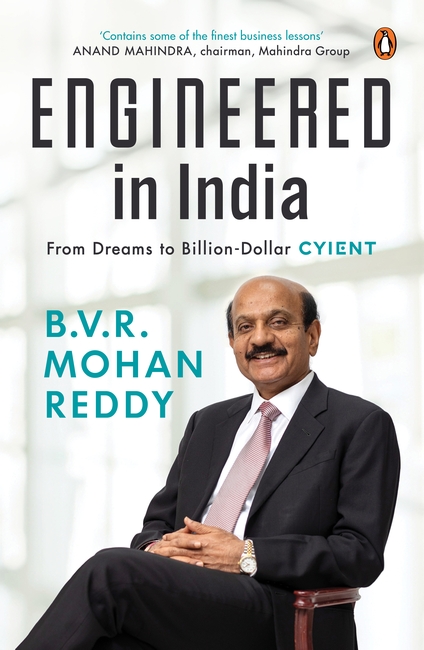
A young man steps out of the precincts of IIT Kanpur in 1974 with a dream in his heart-to become an entrepreneur and contribute to nation-building. Undaunted by the dearth of experience and means to capital in pre-Liberalization India, B.V.R. Mohan Reddy’s enterprising spirit takes the long and winding road, never losing sight of his ambition. He gains overseas education on a scholarship and dons multiple hats for eighteen long years before embarking on his life’s mission at forty. A mission that propels the company he incorporated, Cyient, to pioneer and excel in outsourced engineering services and introduce the brand ‘Engineered in India’.
Engineered in India takes readers on an entrepreneurial rollercoaster ride, allowing them to see human truths with tools that let them breathe life into their business aspirations and experiments.
**
‘Engineered in India faithfully chronicles Mohan Reddy’s journey and enumerates how catalysts like him can be able partners in nation-building’
NIRMALA SITHARAMANNIRMALA SITHARAMAN, finance minister, Government of India, India
‘Mohan’s biography is a heart-warming story of an indomitable young man who has risen from modest beginnings to become one of India’s first-generation IT billionaires’
PROFESSOR RAJ REDDY, winner of ACM A.M. Turing Award
‘This book brings out the DNA of Mohan’s personality-leadership, courage, determination, honesty, integrity, simplicity, conviviality and concern for the less fortunate’
N. NARAYANA MURTHY, co-founder, Infosys Limited, Limited

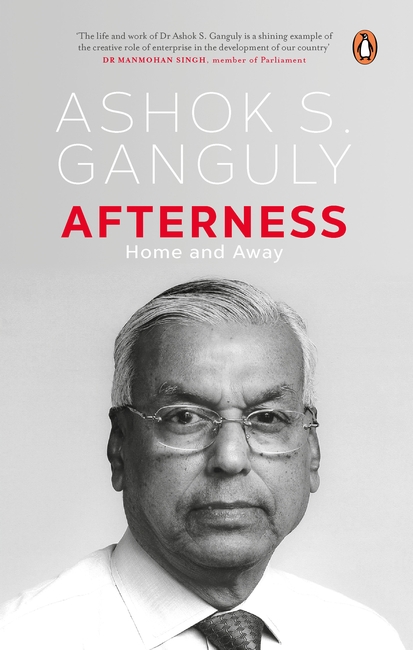
In his memoir, former Hindustan Unilever chairman Ashok Ganguly invites readers to journey with him as he looks back fondly on his extraordinary life – from his childhood to his upbringing in the metropolitan Bombay of the 1930s, to his PhD in Illinois and his eventual return to India. After joining Hindustan Unilever’s R&D department, Ganguly quickly rose up the ranks as a talented young professional, eager to discover and learn new things. The story spans across eighty years of his life, its edges tinged by the tumultuous events in India in the twentieth century, and interspersed with fascinating people, from the mysterious Kishen Khanna, who accurately predicted events in Ganguly’s life, to encounters and friendships with well-known historical figures such as Mother Teresa and Rajiv Gandhi.
Ashok Ganguly’s journey was interspersed with failures, but he doesn’t shy away from talking about these and the sacrifices that went on to define his life. Honest, reflective, personal and revelatory, Afterness provides valuable insight into his thinking process and decision-making skills that enabled Ganguly’s meteoric rise and sustained his legendary career.
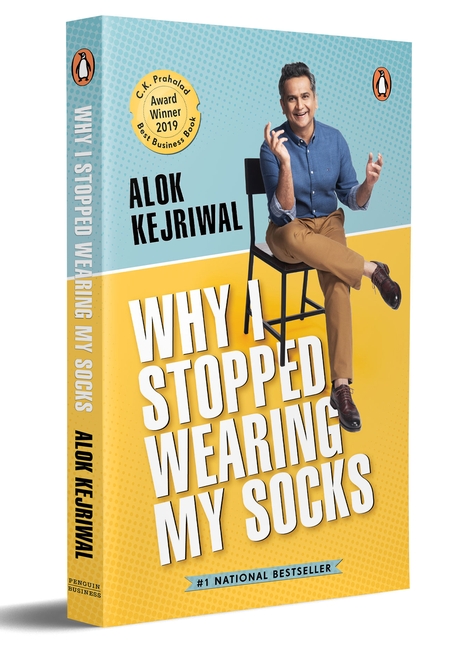
By the time he was twenty, Alok Kejriwal had his life pre-planned for him. He would inherit the family’s socks manufacturing business and be the hard-working, money-minting, quintessential Marwari businessman, forever. Except that it didn’t turn out that way. A few years after surviving the family set-up, something turned up that sent Alok on a completely different career path: the Internet! A crazy business idea Alok had turned out to be a winner. Soon, Alok was fighting and thriving in a world completely different from the one he had grown up in. A world where technology breakthroughs, VCs and out-of-the-box thinking decided the real winners.
Why I Stopped Wearing My Socks is Alok’s real-life story of starting up a business. It traces his roller-coaster ride as an aspiring entrepreneur, traversing through a variety of business ideas in the family business up to his big breakthrough as one of India’s first entrepreneurs to tap the power of the Internet. It details the amazing success of Mobile2win, a venture eventually acquired by the Walt Disney Company. The chapters in the book are actual stories, throbbing with memorable anecdotes that conclude with crisp learnings for the readers. Why I Stopped Wearing My Socks is a deeply compelling story about beating the odds, staying motivated and gung-ho entrepreneurship. It is an inspirational as well as a practical guide to emerging a winner.

Gauri Khan strikes the perfect balance between her sense of design and personality, and factors in the clients’ brief while transforming a space into something that the user can truly call their own. She uses her quiet, elegant style and charming-yet-sophisticated aesthetic to create a space the client can enjoy. A common thread that runs right through the process is the meticulous attention to detail, which juxtaposes the practical with the luxurious. Since its launch, design originality, intricate detailing and one-of-a-kind workmanship have been the foundations of Gauri Khan Designs.
In her coffee table book, My Life in Design, she charts out her journey as a designer with exclusive pictures of her and her family-Shah Rukh, Aryan, Suhana and AbRam. Unseen images of her Mumbai residence, Mannat, and the design thought-processes that went into it as well as other key projects are part of the book as well. She also imparts tips to those aspiring to get into her field of work and the laypeople who want to learn more about the fascinating and inspiring world of design.

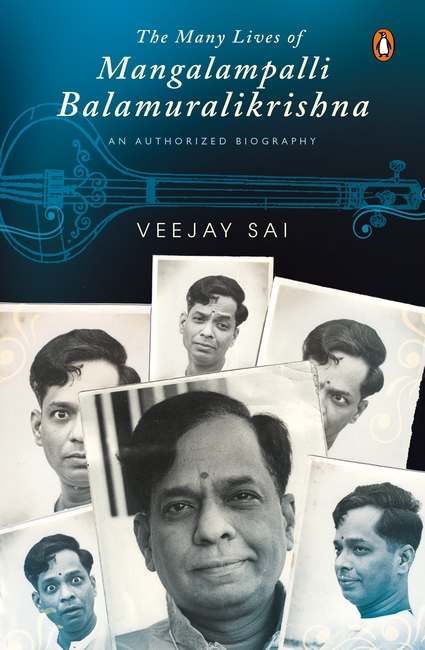
Mangalampalli Balamuralikrishna, an internationally renowned Carnatic musician from the illustrious musical lineage of composer Saint Tyagaraja, wore many hats in his lifetime. Having made a stage debut at the age of seven, he was hailed as a child prodigy. From then till the time he passed away, at age eighty-six in 2016, he continued to be in the spotlight, not just for his extraordinary talent and versatility as a vocalist and multi-instrumentalist, but as a composer, playback singer and even, briefly, as a character actor.
He was a primary school dropout, a teenage poet and composer, a restless mind, a polyglot, a legacy upholder, a wordsmith, an ice cream lover and a pathbreaker. This is a story of the many lives of Dr Mangalampalli Balamuralikrishna.
Veejay Sai’s in-depth research into his life and work led him deep into unseen archival material and across the Carnatic musical landscape of erstwhile Andhra Pradesh, Karnataka and Tamil Nadu. Fortified by interviews with his family members, disciples and peers, The Many Lives of Mangalampalli Balamuralikrishna, a definitive biography of the musical genius, is not only a revealing account of the personal traits and facets of an unparallelled genius, but is also a portrait of India’s classical music world, a place as much of beauty as of untrammelled egos.

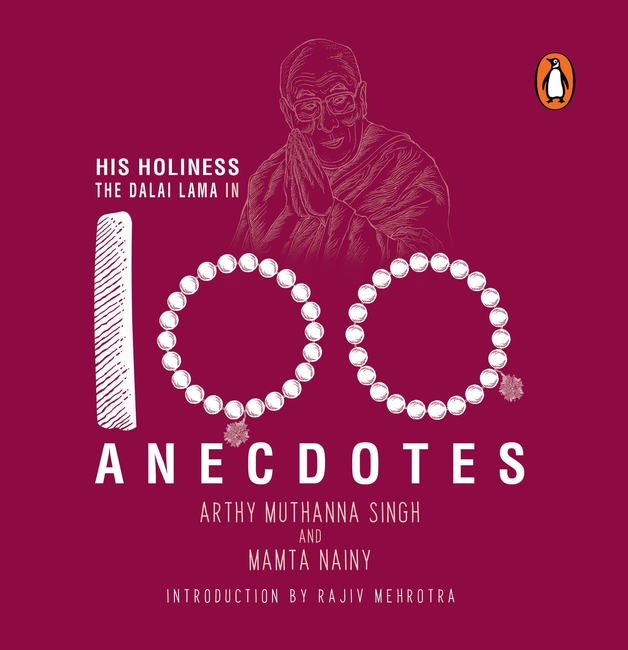
On 6 July 1935, a mischievous boy was born in a remote village in Tibet, who, at the age of two, was recognized as the fourteenth reincarnation of the Dalai Lama. His eventful boyhood in Lhasa, thrilling escape to India and subsequent exile in Dharamsala, captured the imagination of thousands. With an endearing smile and childish humour, he has become a symbol of optimism and hope for the oppressed.
Tracing his life through 100 lesser-known and inspiring incidents, unusual trivia and gorgeous illustrations, this one-of-a-kind book explores the Dalai Lama’s vision, teachings and philosophies. His Holiness the Dalai Lama in 100 Anecdotes is a classic tribute and a collectible edition that celebrates the various facets of an extraordinary spiritual leader from his birth through his eighty-seventh birthday.

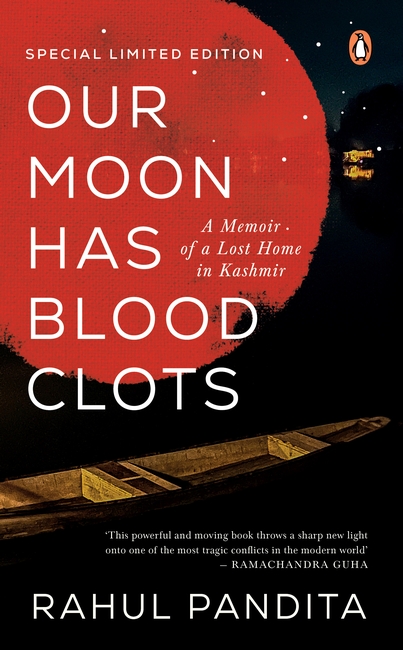
Rahul Pandita was fourteen years old when he was forced to leave his home in Srinagar along with his family. They were Kashmiri Pandits-the Hindu minority within a Muslim-majority Kashmir, which was by 1990 becoming increasingly agitated with the cries of Azaadi from India. Our Moon Has Blood Clots is the story of the Kashmir, in which hundreds of thousands of Kashmiri Pandits were tortured, killed and forced to leave their homes by Islamist militants and made to spend the rest of their lives in exile in their own country. Rahul Pandita has written a deeply personal, powerful and unforgettable story of history, home and loss.