Some said children were out of the question, but she is a mother of two boys.
Some said she couldn’t handle business life, but she has interviewed over a hundred CEOs, and counting.
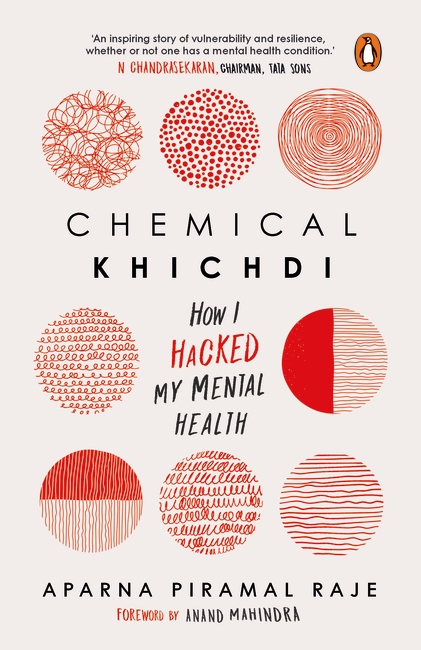
Some said she wouldn’t be able to write a book on mental health, but here it is.
Aparna Piramal Raje is happy, thriving and bipolar. And this is her story.
Part memoir and part self-help guide, Chemical Khichdi provides a pathway for anyone with a mental health condition and the family, friends, colleagues, and medical professionals that love and care for them.
Empathetic, candid and accessible, it outlines ‘seven therapies’ that have enabled Aparna to ‘hack’ her mental health and find equilibrium over the years, and shows how you or someone you know can also do the same.

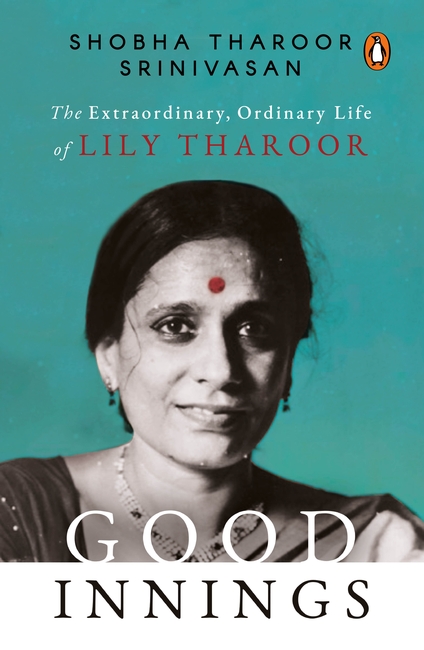
Lily Tharoor was born in a small village in Kerala in the mid-1930s. From this humble beginning, she would live around the world, raise three global citizens, and inspire multiple generations with her drive to learn and achieve. Fiercely independent and ambitious, she pushed her children, including her son Shashi, to always think outside the box. The only ground firm enough to stand on, she told them, is the one written into existence by your own hand.
In Good Innings, Shobha Tharoor Srinivasan tells her mother Lily’s ‘extraordinary, ordinary’ story through a combination of personal reflections, life lessons, and philosophical insights. The result is a collection of teachable vignettes aimed to galvanize a new generation into growth and action. Every chapter starts with an anecdote which will encourage conversations and transformations in the reader’s life. Good Innings is an intimate account of the life of a beloved matriarch with a modest background and an iron will-a woman who learned from the school of life and now has lessons to share of her own.

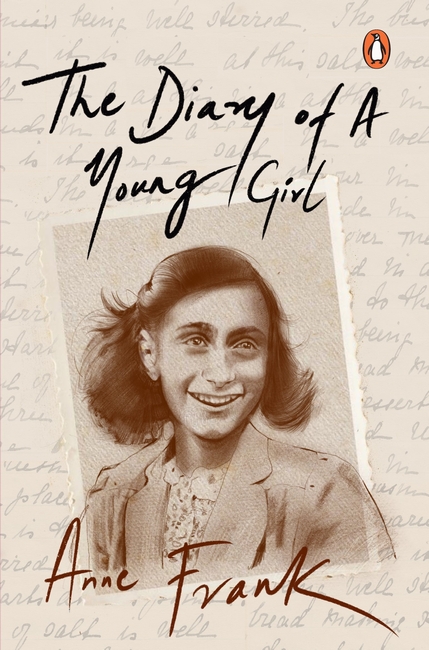
In the summer of 1942, thirteen-year-old Anne Frank found herself hiding with her family in the cramped attic of an old office building in Amsterdam. Outside, Jews all over Europe were being thrown into concentration camps.
Exiled from the outside world, the Frankfurt family battled hunger, boredom, confinement, and the ever-looming threat of discovery and death. As the second World War continued to rage, Anne turned to her diary and documented everything. The diary was accidentally discovered in the attic shortly after the family was arrested. In 1947, it was formally published in Dutch.
Since then, Anne Frank’s phenomenal diary has become a world classic, offering a terrifying glimpse of what it was like being a Jew in a war-ridden Europe. Honest, vulnerable, and tragic, Anne Frank’s story serves as a powerful reminder of the horrors of war, and as an eloquent testament to the indestructible nature of human spirit.

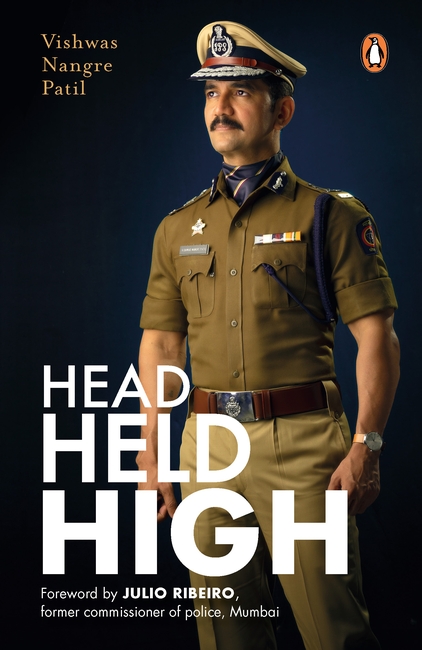
Whenever decorated officer Vishwas Nangre Patil recalls the memories of Diwali from his childhood days, the sounds of firecrackers often transform into the deafening grenade blasts from the night of 26/11. It was his grit, cultivated over the years from the neck-breaking labour of studying for the UPSC exams, that had enabled him to power on and gun down the terrorists inside the Taj Mahal Palace hotel during the 2008 Mumbai attacks.
Head Held High, translated from the Marathi book Mann Mein Hai Vishwas, is an account of IPS officer Vishwas Nangre Patil’s life-from his humble background, through school, college, long hours of studying for the UPSC examinations to the final selection to the IPS cadre and, eventually, his role in the counterterrorism operations during the Mumbai attacks. This moving and authentic account of the most formative and challenging years of his life is sure to strike a chord with those who aspire to join the Indian civil services.

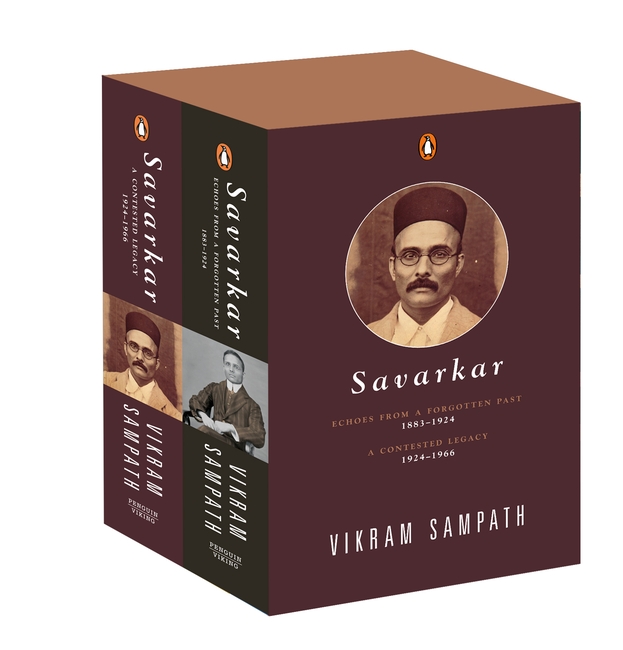
As the intellectual fountainhead of the ideology of Hindutva, which is in political ascendancy in India today, Vinayak Damodar Savarkar is undoubtedly one of the most contentious political thinkers and leaders of the twentieth century. From the heady days of revolution and generating international support for the cause of India’s freedom as a law student in London, Savarkar found himself arrested, unfairly tried for sedition, transported and incarcerated at the Cellular Jail, in the Andamans, for over a decade, where he underwent unimaginable torture.
Decades after his death, Savarkar continues to uniquely influence India’s political scenario. An optimistic advocate of Hindu-Muslim unity in his treatise on the 1857 War of Independence, what was it that transformed him into a proponent of ‘Hindutva’? What was it that transformed him in the Cellular Jail to a proponent of ‘Hindutva’, which viewed Muslims with suspicion?
This two-volume biography series, exploring a vast range of original archival documents from across India and outside it, in English and several Indian languages, historian Vikram Sampath brings to light the life and works of Vinayak Damodar Savarkar, one of the most contentious political thinkers and leaders of the twentieth century.
Comprehensive, definitive and absolutely unputdownable, this two-volume biography opens a window to previously unknown untold life of Vinayak Damodar Savarkar.

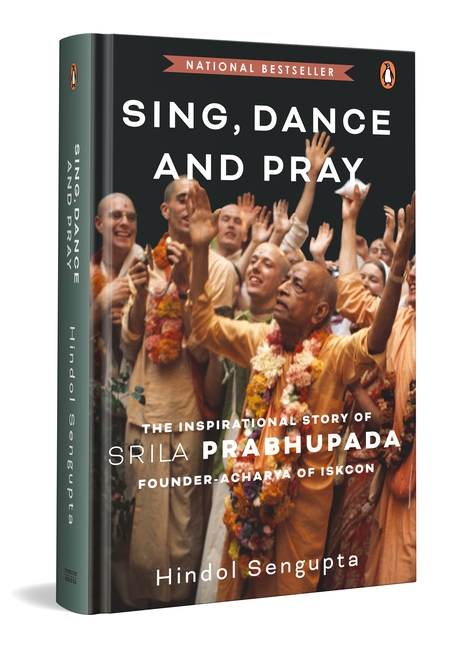
When A.C. Bhaktivedanta Swami Srila Prabhupada entered the port of New York City on 17 September 1965, few Americans took notice–but he was not merely another immigrant. He was on a mission to introduce ancient teachings of Vedic India to mainstream America. Before Srila Prabhupada passed away at the age of eighty-one on 14 November 1977, his mission was successful. He had founded the International Society for Krishna Consciousness (ISKCON), colloquially known as the ‘Hare Krishna Movement’, and saw it grow into a worldwide confederation of more than 100 temples, ashrams and cultural centers.
This is the inspirational story of Srila Prabhupada. As the founder of ISKCON, he ’emerged as a major figure of Western counterculture, initiating thousands of young Americans’.
He has been described as a charismatic leader who was successful in acquiring followers in many countries, including the United States, Europe and India. Srila Prabhupada’s story is bound to put you on a path of self-realization.

Against All Odds: The IT Story of India is an insider’s account and an anecdote-rich history of Indian IT over the last six decades. It taps into the first-hand experiences of Kris Gopalakrishnan and fifty other stalwarts
who built and shaped the IT industry. This is a tale of persistence and resilience, of foresight, of planning and being ready when luck knocks on the door, of a spirit of adventure and, above all, of an abiding sense of faith in technology and the belief that it would do good for India. It is a tale of triumph, and the best is yet to come!

Combined box set of all the bestselling books by Atul Gawande, acclaimed surgeon and writer
In The Checklist Manifesto, Gawande finds a remedy to tackle immensely complex problems with the humblest of techniques: the checklist. Through riveting stories from the fields of medicine to disaster response, investment banking to skyscraper construction and businesses, he demonstrates how the checklist can help anyone improve their own and others’ lives.
In Being Mortal, Gawande argues that an acceptance of mortality must lie at the center of the way we treat the dying. Using his experiences (and missteps) as a surgeon, comparing attitudes toward aging and death in the West and in India, he provides an extraordinary account of loss. Questioning, profound and deeply moving, Being Mortal is a masterpiece.
In Better, Gawande’s gripping stories take us to battlefield surgical tents in Iraq, delivery rooms in Boston, a polio outbreak in India, and malpractice courtrooms in the US. He discusses the ethical dilemma of lethal injections, examines the influence of money on modern medicine, and recounts the contentious history of hand-washing. And as in all his writing, he gives us an inside look at his own life as a surgeon.
In Complications, Gawande performs surgery on medicine itself, laying bare a science that is complicated, perplexing and profoundly human. Dramatic true stories explore how mistakes occur, why good surgeons go bad, and what happens when medicine comes up against the inexplicable.

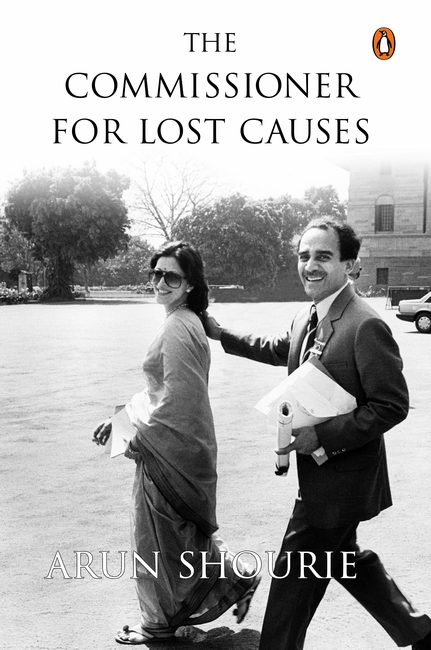
The work done by Arun Shourie and his colleagues rocked institutions and governments: the freeing of 40,000 undertrials; revealing the Bhagalpur blindings; purchasing Kamla; dislodging a ‘Sultan’; foiling ‘strikes’; controverting Judges; battling privilege motions; courting contempt of court charges; nailing corruption, forgeries, lies, and the opportunism of rulers; uncovering suppressed reports… What lay behind these and the consequences that followed?
A comprehensive account of dramatic incidents like getting governments to swallow legislation against the press, unseating of chief ministers, a prime minister unspooling himself even as manoeuvres to unseat him are scotched, a deputy prime minister trying to dislodge colleagues with fabricated documents, people’s movements ending up as rivulets in the sand, The Commissioner for Lost Causes discusses Shourie’s innings, the calumny hurled at him, his dismissal, and his being recalled and removed again.
Delicious tales of characters from the noble to the colourful to the short-sighted to outright bounders: from JP, to a president, to prime ministers, a deputy prime minister, chief ministers, a conman, indignant editors, and of course a great warrior, the press baron, feature in this honest retelling of the life of Arun Shourie, the writer, former editor and minister who was acclaimed as one of the fifty ‘World Press Freedom Heroes’.