



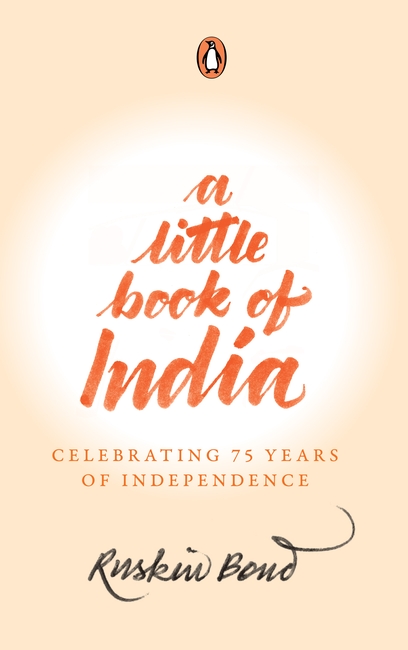
As India completes 75 years of independence, we bring to you a slice of our beloved country in the words of our favourite author, Ruskin Bond. Drawing on his own memories and impressions of this unique land, he pays homage to the country that has been his home for 84 years. Bond talks fondly about the diverse elements that make up this beautiful land-its rivers and forests, literature and culture, sights, sounds and colours. A Little Book of India is an amalgamation of the physical and spiritual attributes of our homeland, and takes you on a journey filled with nostalgia and devotion.
Catagory: Biographies, Diaries & True Accounts
Bose
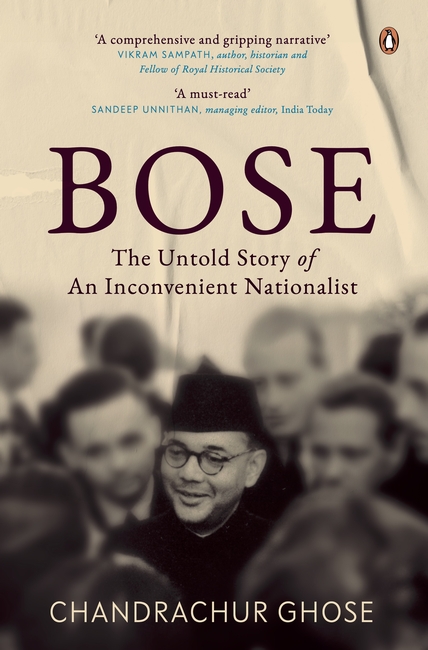
There are not many Indian heroes whose lives have been as dramatic and adventurous as that of Netaji Subhas Chandra Bose. That, however, is an assessment of his life based on what is widely known about him. These often revolve around his resignation from the Indian Civil Service, joining the freedom movement, to be exiled twice for over seven years, throwing a challenge to the Gandhian leadership in the Congress, taking up an extremist position against the British Raj, evading the famed intelligence network to travel to Europe and then to Southeast Asia, forming two Governments and raising two armies and then disappearing into the unknown. All this in a span of just two decades.
Now, new information throws light on Bose’s intense political activities surrounding the revolutionary groups in Bengal, Punjab, Maharashtra and United Provinces, his efforts to bridge the increasing communal divide and his influence among the splintered political landscape; his outlook and relations with women; his plunge into the depths of spirituality; his penchant for covert operations and his efforts to engineer a rebellion among the Indian armed forces. With this new information, what appeared to be dramatic now becomes more intense with plots and subplots under one man’s single-minded focus on freeing the motherland and envisioning its development in a new era.
Furthermore, one of the most sensitive issues that have prevented political parties and successive governments from talking much about Bose is his joining the Axis camp. While Jawaharlal Nehru and other prominent Congress leaders publicly denounced the move, the Communist Party of India went on to a prolonged vilification campaign. Sardar Patel issued instruction to Congress leaders to defend the INA soldiers without eulogizing their leader.
Was Bose really a Nazi sympathiser? Knowing very well about the strong public opinion that existed among the political leadership and the intelligentsia in India against Nazi Germany, Fascist Italy, and imperial Japan, why did he risk his own political image by allying with the Axis powers?
Pacey, thought-provoking and absolutely unputdownable, Bose: The Untold Story of an Inconvenient Nationalist will open a window to many hitherto untold and unknown stories of Netaji Subhas Chandra Bose.
Probably the first critical biography of Netaji Subhas Chandra Bose till date.
DIAMONDS ARE FOREVER SO ARE MORALS
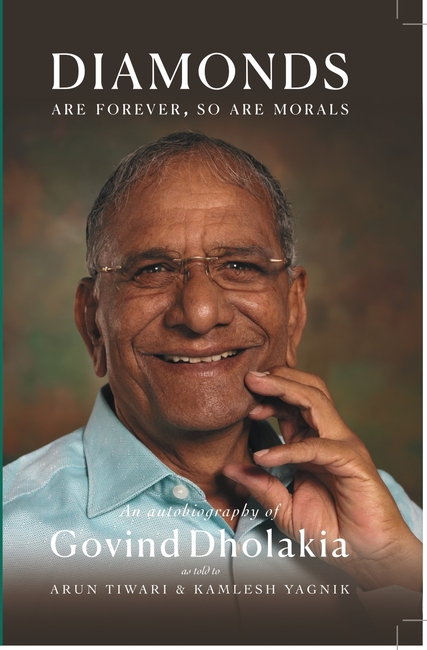
Diamonds Are Forever is a tongue-in-cheek narrative,which is penned meticulously by an engineer-scientist and an educationalist. This book is going to be a modern roll-in-one of Law of Successby Napoleon Hill, How to Win Friends and Influence People by Dale Carnegie, and Wings of Fire by APJ Abdul Kalam.
Split
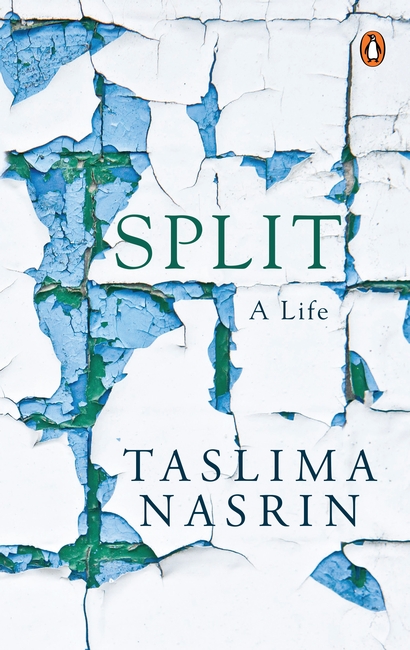
Taslima Nasrin is known for her powerful writing on women’s rights and uncompromising criticism of religious fundamentalism. This defiance on her part had led to the ban on the Bengali original of this book by the Left Front in West Bengal as well as the Government of Bangladesh in 2003. While the West Bengal government lifted the injunction after the ban was struck down by the Calcutta High Court in 2005, Nasrin was eventually driven out of Kolkata and forced to expunge passages from the book, besides facing a four-million-dollar defamation lawsuit. Bold and evocative, Split: A Life opens a window to the experiences and works of one of the bravest writers of our times.
More than Just Surgery
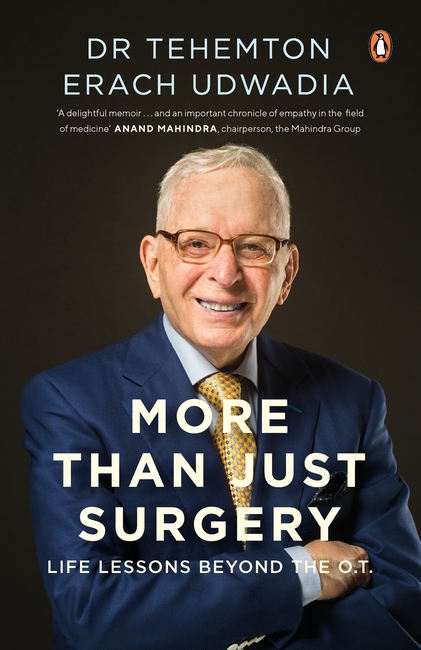
Awarded the Padma Shri, the Padma Bhushan and the OBE, Dr Tehemton Erach Udwadia is widely regarded as the father of laparoscopy in India. From 1951 as a medical student to the present day, he has not only witnessed first-hand the avalanche of surgical progress, but has also seen lives saved as a result of these advances, be it a disposable plastic syringe or a liver transplant.
In this, his memoirs, he painstakingly maps his journey from his student years through residency, research, surgical practice and surgical teaching with a view to sharing the lessons he has learnt. And what they can teach you.
More Than Just Surgery is a warm personal account of people, incidents, mentors, failures and absurdities against the backdrop of surgery. It is also an engrossing historical account through the eyes and hands of someone who has lived through the journey.
Scars of 1947
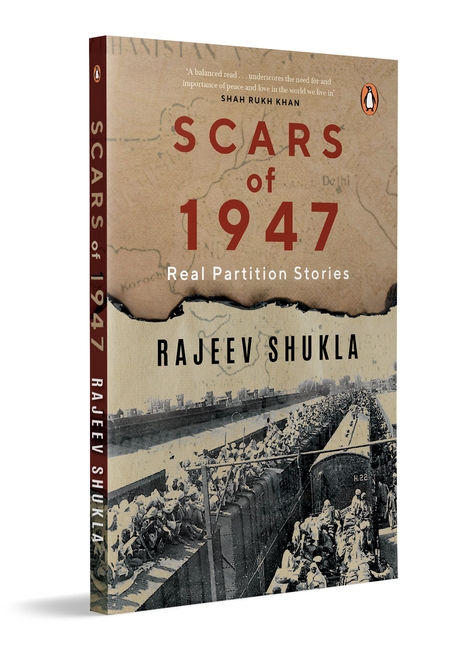
More than seven decades after the Partition of India in 1947, the burden of grief in the hearts and minds of those affected still bears heavy. With a mere stroke of ink on a map, a nation was divided into two, affecting families from one generation to the next, the resultant wounds of which run painfully deep even today.
People on either side of the dreaded Radcliffe line that divided India and Pakistan experienced unimaginable trauma. The horrific events which led to the displacement of millions of people is forever etched in the memories of those who survived this nightmare. Yet, despite the widespread devastation, there were also some uplifting stories of humanity, grit and determination, along with the memories of all that was lost and those who were lost. Through these real stories of Partition, Rajeev Shukla has captured inspiring tales of love, kindness and perseverance of the human spirit.
There are stories from people who went on to become prime ministers, presidents, industrialists, medical researchers and more. In the decades following Partition, these stories of how families rebuilt their lives from scratch are worth remembering.
From the stories of figures like Manmohan Singh and Muhammad Ali Jinnah, to Gauri Khan’s grandmother and Avtar Narain Gujral, Scars of 1947 is a moving and nostalgic collection of a journey back in time, of an unforgettable period that left two nations scarred forever.
The Burning Chaffees
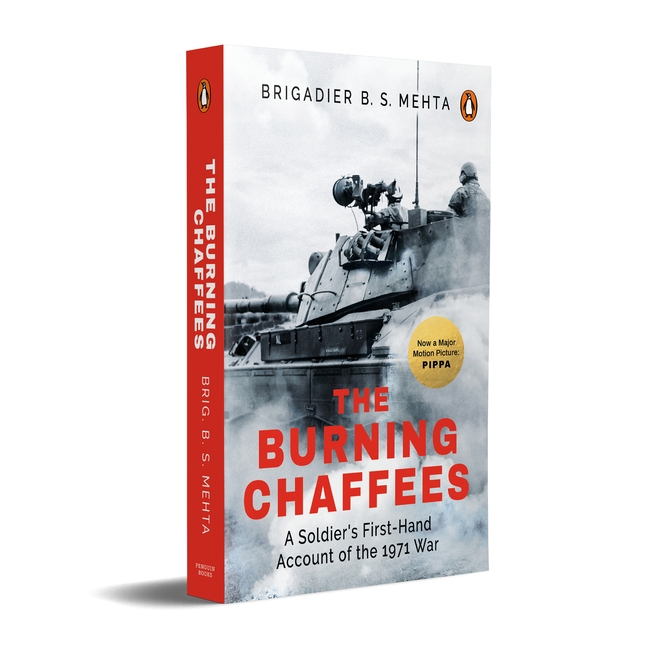
In 1971, India waged a momentous war against Pakistan. But before all-out war, an even more significant tank battle was fought on 21 November 1971 by the C Squadron 45 Cavalry, which demolished the Pakistani General A.A.K. Niazi’s plans of victory and set the stage for the utter routing of the Pakistani Army.
Equipped with the amphibious PT-76 tanks, the Indian Army’s C Squadron 45 Cavalry was unleashed to swim across the River Kabodak, near the Boyra salient (now in Bangladesh), to counter the threat from East Pakistan. On 21 November 1971, the two warring armies clashed in a tank versus tank battle at Garibpur. In one fell swoop, Pakistan’s 3 (Independent) Armoured Squadron, consisting of fourteen American M-24 Chaffee tanks, was completely destroyed and two of its infantry battalions were badly mauled. This was followed by the shooting down of three Sabre F-86 jets for the loss of two PT-76 tanks on the Indian side. And thus, the biggest attack planned by General A.A.K. Niazi to teach the Indians and the Mukti Bahini a lesson had gone up in smoke.
This battle was a victory and a decisive one at that. It was a trumpet call to the rest of the world of India’s intent to stand up for human liberty and dignity in this war of liberation.
On 3 December 1971, Pakistan declared war. The rest is history.
The Burning Chaffees is a thrilling account of the pivotal battle of 21 November by Brigadier B.S. Mehta.
Note: There is an error on Page 267. Brigadier Mehta was awarded Mention-in-Despatches for his gallant services, and not the MVC. The error is regretted and has been corrected in the new edition.
India’s Most Fearless 3
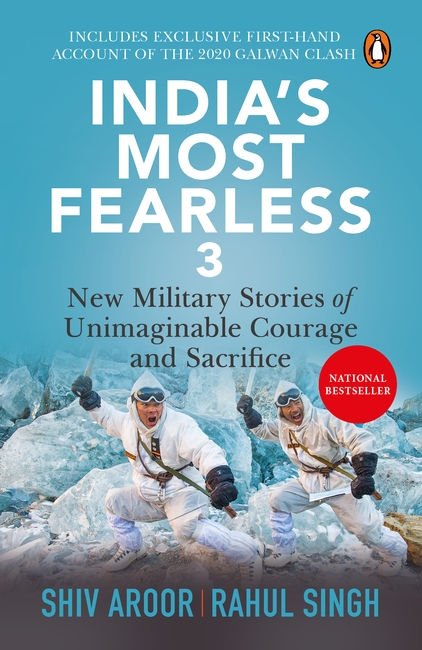
Includes exclusive first-hand account of the 2020 Galwan clash
An army medic who went beyond the call of duty amid a frenzy of treacherous bloodletting in Ladakh’s Galwan while his fellow soldiers fought the Chinese to death; the crew of an Indian Navy destroyer that put everything on the line to rescue hundreds from Cyclone Tauktae in the Arabian Sea; an Indian Air Force pilot who ejected from his doomed fighter less than two seconds before it hit the ground, only to find he was missing a leg.
This book presents their accounts, or of those who were with them in their final moments. India’s Most Fearless 3 features ten true stories of extraordinary courage and fearlessness, providing glimpses of the heroism Indian soldiers have displayed in unthinkably hostile conditions and under grave provocation.
A Place in My Heart
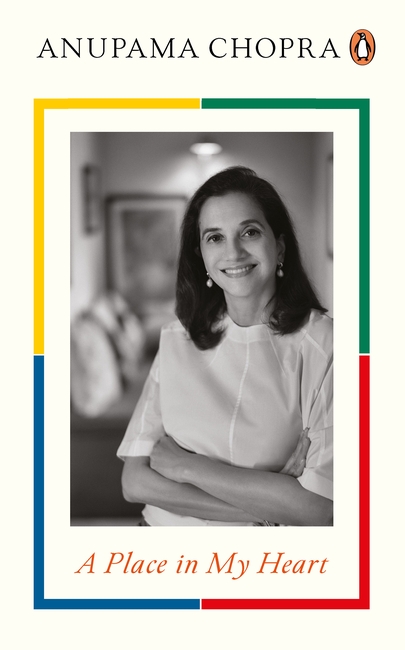
A Place in My Heart is a many-splendored thing. It is a listicle. It is a celebration of the power of storytelling. It is also an account of a life lived in the Bollywood trenches. National Award-winning author, journalist and film critic Anupama Chopra writes about fifty films, artistes and events that have left an indelible impression on her and shaped her twenty-five-year-long career. Shah Rukh Khan is here. So are Super Deluxe and the Cannes Film Festival. A Place in My Heart is a blend of recommendations and remembrances, nostalgia and narratives. It is a smorgasbord of cinematic delights, written, as Marie Kondo would say, to ‘spark joy.’ Above all, it is a testament to Chopra’s enduring love for all things cinema.
Women of Influence
Women of Influence is a compilation of the untold stories of ten women IAS officers who have walked the extra mile and made a difference despite facing major pressures in governance. Having worked in the civil services for thirty-seven years, Rajni Sekhri Sibal has been in a unique position to see things at close quarters, which is why she is able to present narratives that provide an insight into the challenges of being a woman IAS officer, and also highlight episodes where the protagonist displays immense courage and commitment during the most difficult of times.
The narratives span many generations-the oldest narrative is set at the Bikaner border during the 1965 Indo-Pak War and the latest recounts events that occured fifty years later in UP in 2015. They also deal with varied subjects and geographies, ranging from a panchayat election in Punjab during the height of militancy in the eighties, to Naxal-prone Chandrapur in Maharashtra, to joyful learning in Karnataka and right across to the orchid plantations in Arunachal. The book relates accounts of how different protagonists responded to threats of violence post a death in police custody, to illegal mining by a sand mafia and to resistance to the introduction of technology in a government organization. Strategies adopted for making India Polio-free in 2011 and interventions to deal with the scrouge of human trafficking also provide interesting insights in the book. The narratives are inspiring tales of ten strong and efficient women of substance, and their extraordinary careers wherein they made a difference.