‘An absorbing account of an almost unbelievably colourful life . . .’ AMITAV GHOSH, AUTHOR
‘An extraordinary character leaps off the pages of Marco Moneta’s book . . . ‘ MARIKA SARDAR, CURATOR, AGA KHAN MUSEUM, TORONTO
‘. . . irresistible . . . ‘ GIORGIO RIELLO, HISTORIAN
‘. . . rich and accessible . . .’ AMIN JAFFER, CURATOR AND AUTHOR
The man who witnessed India’s history in the making
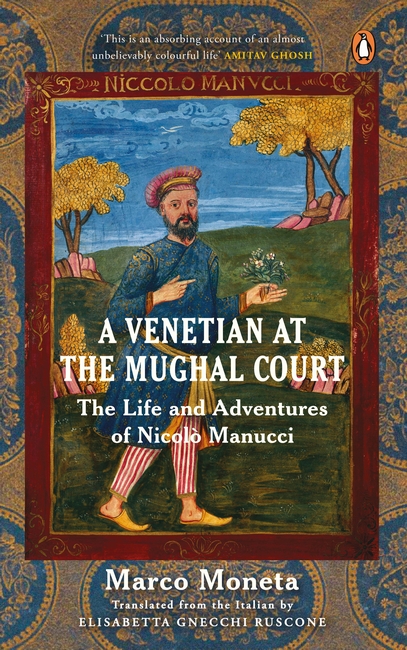
Venetian Nicolò Manucci’s story is distinct from those of other European travellers and adventurers who documented their stay in India. The young teenager, who arrived on Indian shores with little education and few connections, lived here till his death at the age of eighty-two. He was witness to some of the most dramatic events in the subcontinent’s history.
Living by his wits, he started his career as chief artilleryman in Dara Shukoh’s fratricidal battle against Aurangzeb for the Mughal throne. Thereafter, Manucci joined Rajput general Jai Singh in his campaign to subdue the Maratha leader Shivaji.
However, Manucci had no stomach for a prolonged military career. With a great capacity for learning and immense good fortune, he made his way into the Mughal court, incredibly, as a court physician to Aurangzeb’s son Shah Alam. In service of the future Mughal emperor, Manucci was to head back to the Deccan once again to meet the challenge posed by Shivaji’s son Sambhaji. Manucci would spend the rest of his life within European settlements in Madras and Pondicherry. And his in-depth knowledge of the Mughal court would prove useful in negotiations between the Europeans and the Mughal authorities.
Marco Moneta tells the gripping story of a man who was witness to the intrigues and rivalries in Mughal and European territories, and who not just survived but rose to a position of influence and respect in a hostile and alien world.

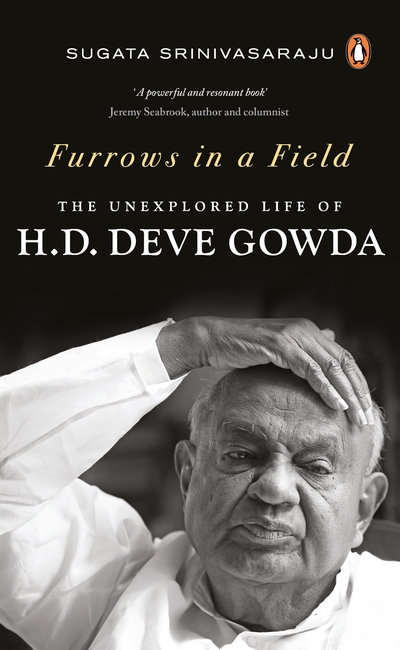
H.D. Deve Gowda has been in public life for nearly seven decades. He started at the very bottom, as a member of the Holenarasipur Taluk Development Board and reached the very top as India’s eleventh prime minister, in 1996. In between, he was an independent legislator, spent long years as leader of Opposition in the Karnataka Legislative Assembly, had been an effective irrigation and public works minister, and finally, chief minister in 1994 after many missed opportunities. Even twenty-five years after he stepped down as prime minister, he has remained relevant in Indian politics. Despite this long, arduous yet fascinating journey that began in a poor peasant household in the plains of Hassan, there has been no comprehensive assessment of his life and work. This biography endeavours to professionally fill the gap.
The book’s narrative is instructed by Gowda’s rich parliamentary record, archival material and interviews conducted with people associated with him at various stages of his life. The layered narrative is further nuanced by Gowda’s own voice, gargantuan memory, a close reading of the time when he made history and the currents of destiny that preceded it. Although Gowda has spent most of his years in Karnataka and has become a symbol of the federal idea, this book argues that the diverse national imagination and sincerity that he deployed as prime minister had magically lit up different corners of India.
When Gowda became prime minister, many people intuitively registered that our democracy had not been rigged or captured by elites and dynasts, and there was indeed space in our system to rise for a self-made person with no godfathers. It generated hope and continues to do so.

How did Tata transform itself from a family-owned business to one of the most professionally managed enterprises in the world? How did it become a world leader in an array of unrelated businesses-from steel and automobile manufacturing to hotels and IT consulting? What exactly is the ‘Tata Way’, which has earned it so much admiration and respect?
This brief history of the Tatas charts the contribution of every Tata chairman-from Jamsetji Tata, who set up the company in 1868, to Ratan Tata and Cyrus Mistry-and explores the values at the heart of the Tata Group, as well as the role played in its development by the philanthropic trusts that own two-thirds of the company.
For anyone curious about this Indian company that has become a leading global player, this book is the perfect introduction.
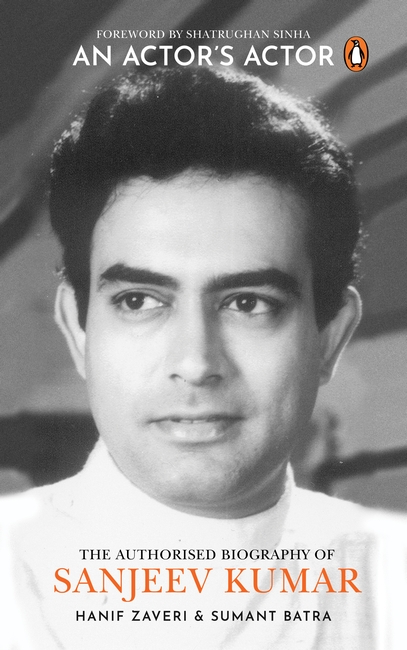
More than thirty-five years after his death, Sanjeev Kumar remains a role model for all aspiring actors. He could light up the screen in underpants, paunch showing, in one of Hindi cinema’s most lovable song sequences, ‘Thande thande paani se nahana chahiye’ (Pati Patni Aur Woh, 1977). Entirely unselfconscious of his image as a star, he would often be cast as the father figure to a number of his contemporaries, most famously Sharmila Tagore in Mausam (1975) and Amitabh Bachchan in Trishul (1978), or as the elderly Thakur in Sholay (1975) and yet leave an indelible mark with his presence and his acting prowess.
After starting out in B-films in the 1960s, he caught the eye in Sungharsh (1967), where the manner in which he held his own against Dilip Kumar is now stuff of Hindi film folklore. Equally adept at comedy (Angoor and Manchali, for example) and dramatic serious roles (Anubhav and Koshish), he was truly an actor’s actor.
Hanif Zaveri and Sumant Batra’s biography provides a glimpse of star’s personal and professional lives, taking off from the traditional business of the Zariwalas, his romantic involvement with some of Hindi cinema’s biggest names, his lifelong battle with loneliness and his glittering achievements on screen. An Actor’s Actor is a succinct introduction to the life and films of a star who left us tragically at the young age of forty-seven but who continues to live through his unforgettable and remarkable contribution to Hindi cinema.

KERALA SAHITYA AKADEMI AWARD WINNER
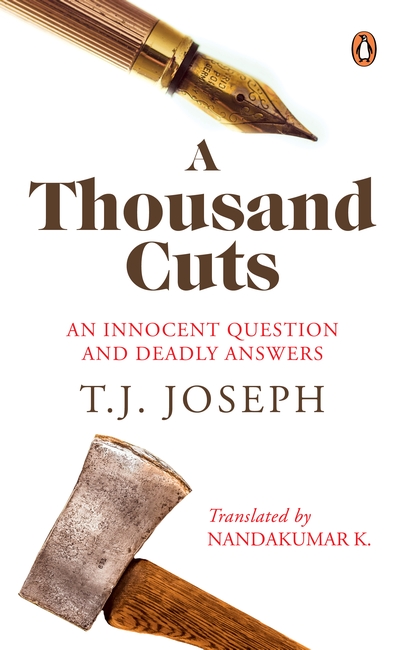
A Thousand Cuts is a harrowing, sobering and ultimately inspiring autobiography of Professor T.J. Joseph, who in 2010 became the victim of a brutal terrorist assault, accused of blasphemy after setting an exam question that enraged fundamentalists. This book is an important reminder of the pernicious effect of religious extremism and the duty of every person to speak out against those who would silence free expression’ SHASHI THAROOR
‘There is excruciating agony here, but also black humour and irony that enliven and lighten the narrative even at the height of anguish’ K. SATCHIDANANDAN
‘The poignant tale, with its sense of urgency and helplessness, has been sensitively translated as A Thousand Cuts‘ RANA SAFVI
A chilling account of religious extremism
In 2010, T.J. Joseph, a professor of Malayalam at Newman College, Kerala, framed an innocuous question for an internal examination that changed his life forever. Following a trumped-up charge of blasphemy, members of a radical Islamist organization set upon him in public, viciously maiming him and chopping off his right hand. His memoir, told with amazing restraint and wry humour, is the moving tale of his life and family as they went through hell and beyond. Here’s the extraordinary story of a man who survived dismembering only to be betrayed by his
own Church. Let alone stand by him, it robbed him of his livelihood and isolated him from his community, driving Joseph’s long-suffering wife to melancholia and eventual suicide. Joseph’s story is one of fortitude, will power, forgiveness and compassion, told with rare wit that will make readers chuckle through their tears.
This is a tale that will leave the reader seething, weeping and smiling by turns.

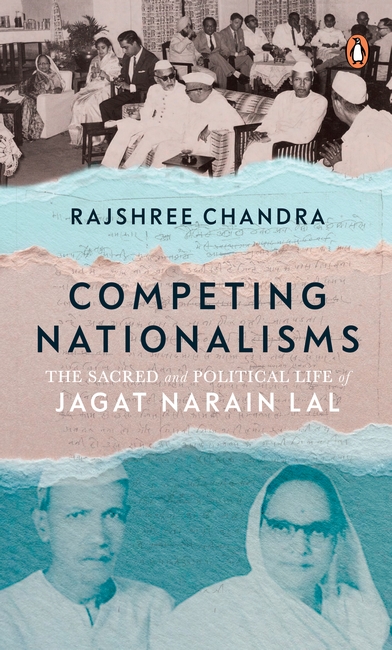
Competing Nationalisms is more than a political biography of Jagat Narain Lal-now forgotten by history, but once an influential member of the freedom movement in Bihar. As a member of the Congress and of the Hindu Mahasabha; as a Hindu nationalist who wanted to combine religion with civic virtues; as a Gandhian and an ‘ascetic nationalist’ seeking freedom in a political world, Jagat Narain Lal’s life becomes a mirror for the times in which a mix of religiosity, spirituality and ritual could not be separated from either the social or the political field.
The book travels with Jagat Narain Lal on his journey through four pathways-Ascetic, Hindu Nationalist, Anti-Colonial and Civic nationalisms. His life and times give us a glimpse into these intersecting, contesting and mutating idioms of nationalism. There are bigger leaders, taller nationalists, more valiant fighters of freedom, but none who perhaps so tortuously embodied the many possibilities and contradictions of Indian nationalism. In his anxieties, vulnerability, negotiations and truth-telling, we glimpse Indian nationalism’s own fraught relationship with questions of identity, faith and nationhood.
In leafing through her grandfather’s life, page by yellowed page, Chandra presents not just his political biography but, in a sense, a personal biography of Indian nationalism as well. In Jagat Narain Lal’s small story lies a bigger history of competing nationalisms, as well as a tale that
speaks to the present.

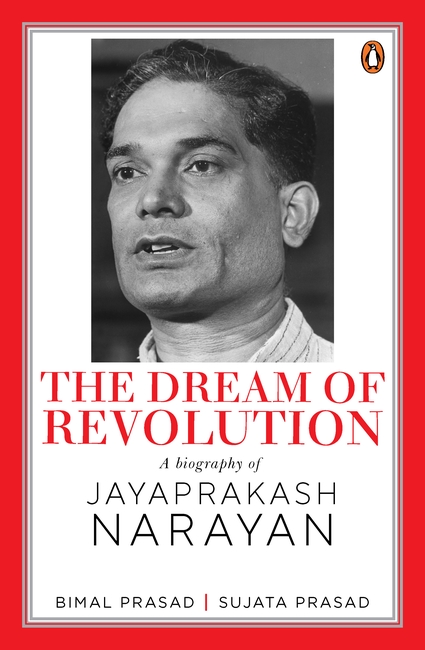
Few figures in modern India have enjoyed such acclaim and adoration as Jayaprakash Narayan. And yet, he has been equally vilified for all that went wrong in the unfinished post-colonial movement for freedom and democracy. Jayaprakash Narayan, or JP as he was universally known, epitomized the Marxian and Gandhian styles of political engagement, and famously brought a powerful government to its knees. Throughout his life, he channelled an emotional hunger for transformative politics, jettisoned easy options, shunned power and incubated revolutionary ideas.
A comprehensive study of JP’s life and ideas-from the radicalism of his thought process at American university campuses in the 1920s to his political coming of age in the 1930s and subsequent disenchantment with Gandhi’s leadership; from his infectious confidence about the future of socialism to his seemingly naive plans to outmanoeuvre powerful forces within the Congress; from his fractious friendship with Jawaharlal Nehru to his relentless crusade against the stifling of dissent-The Dream of Revolution, Bimal and Sujata Prasad’s rigorously researched biography of JP, dispenses with clichés, questions commonly held perceptions and pushes the limits of what a biographical portrait is capable of.
Rich in anecdotes and never-before-told stories, this book explores the ambiguities and ironies of a life lived at the barricades, and one man’s unremitting quest to usher in a society based on equality and freedom.

The true story of the ‘Iron Lady of Manipur’ who fasted for 16 years against AFSPA
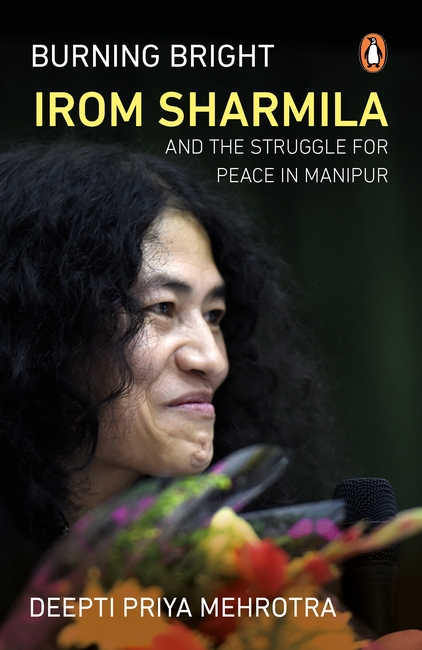
Ten innocent people were mowed down by security forces in Malom, a village near Imphal, in November 2000. The perpetrators were not punished, protected under the Armed Forces Special Powers Act which empowers military and para-military personnel to arrest, shoot, even kill, anyone on the grounds of mere suspicion. In response to this tragedy–one among many such atrocities–Irom Sharmila, a young Manipuri, began an indefinite hunger strike. The government arrested her and force-fed her through nasal tubes. She was released and re-arrested innumerable times, but she stood by her demand. In July 2016, Irom brought her sixteen years of hunger strike to an end, and decided to contest the elections.
Burning Bright is a hard-hitting account of a people caught between the crossfire of militants and security forces; of a once-sovereign kingdom whose culture has been brutally violated; of the many voices of dissent-from underground groups to the Meira Paibis, a women’s movement opposed to all forms of violence whether by the state or insurgents and a moving portrait of ‘the Iron Lady of Manipur’.

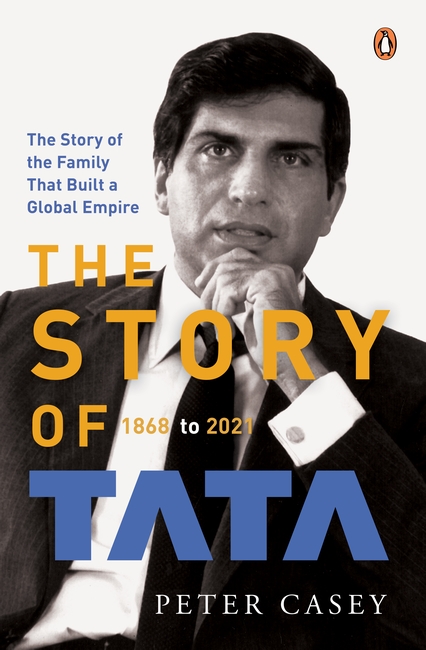
The first and only authorized biography on Tata Group including the Tata-Mistry legal battle, exclusive interviews with Ratan Tata, and never-before-seen photographs of the Tata family.
In 1868, Jamsetji Tata, a visionary of his time, lit the flame that went on to become Tata and its group of companies. This business grew into an extraordinary one. One that some may even call ‘the greatest company in the world’. Over the decades, the business expanded and prospered under the leadership of the various keepers of the flame, such as Sir Dorabji Tata, J.R.D. Tata and Ratan Tata, to name a few. But one day, the headlines boldly declared that the chairman of the board of Tata Sons, Cyrus Mistry, had been fired.
What went wrong?
In this exclusive and authorized book, insiders of the Tata businesses open up to Peter Casey for the first time to tell the story. From its humble beginnings as a mercantile company to its growth as a successful yet philanthropic organization to its recent brush with Mistry, this is a book that every business- minded individual must read.

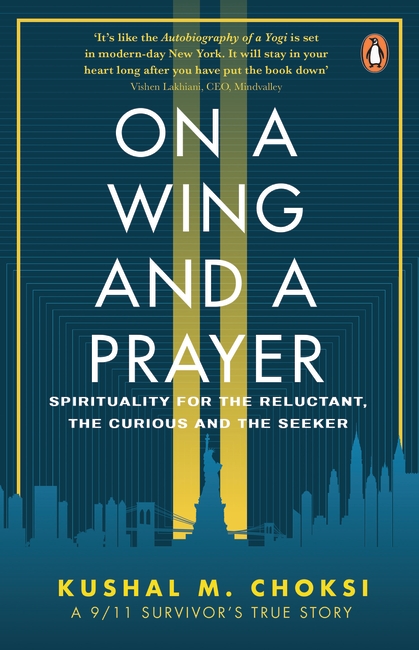
What would you do if your life turned upside down overnight?
Witnessing the devastation of 9/11 before his eyes and narrowly escaping death, Kushal’s life was never going to be the same again. Suddenly, all his pursuits felt meaningless and he felt a void within him like he had never felt before-until one day, when he reluctantly decided to spend an afternoon with a spiritual master in New York City.
From being a Wall Street trader immersed in the material world to embarking on a quest to find answers to life’s biggest questions, Kushal Choksi writes about his doubts, struggles and revelations on a spiritual path as a left-brained sceptic. On a Wing and a Prayer is one such (true) account of one man finding himself on a fifteen-year long journey shadowing the spiritual leader Gurudev Sri Sri Ravi Shankar.