



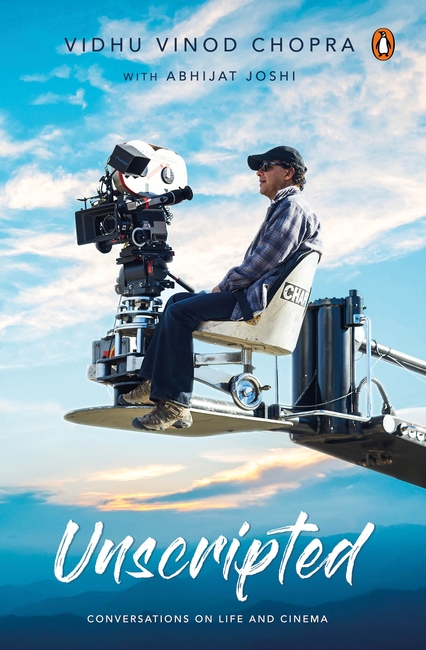
Starting in Wazir Bagh, a small mohalla in Kashmir, Vidhu Vinod Chopra’s life has been well and truly unscripted. Over the last thirty years, he has blazed a trail in Hindi cinema-even going on to direct a film in Hollywood. From someone who once released his student film though it was incomplete, because he ran out of money and film stock, he now has the distinction of heading one of the key production houses in India, VVC Films. The company has made some of the biggest blockbusters in recent times. Not only is he a film-maker par excellence, but he has also nurtured some of the brightest talents in the Hindi film industry, including directors Rajkumar Hirani, Pradeep Sarkar and Sanjay Leela Bhansali.
In Unscripted, Vidhu Vinod Chopra speaks to his long-time collaborator and scriptwriter Abhijat Joshi about his exceptional journey. Engaging and illuminating, the book provides a glimpse into the mind, method and madness of one of contemporary Hindi cinema’s best film-makers.
Catagory: Biographies, Diaries & True Accounts
Indians
‘Deepens our sense of the wonder that was India’ ~ Pankaj Mishra
‘A gem of a book that is a joy to read . . . You can almost touch and feel the centuries and millennia as they pass by’ ~ Tony Joseph
‘Arora explores how Indians lived, ate, loved, built, fought and made sense of the material, rational and spiritual world down the ages . . . [A] mega-ambitious project’ ~ The Hindu
‘A wonderfully evocative book. Arora invites the reader to reflect on the past, without overwhelming her with dry historical facts but luring her in with vivid human stories’ ~ Prof. Mohan Rao
A BRILLIANT, ORIGINAL BOOK THAT REVEALS INDIA’S RICH AND DIVERSE HISTORIES
What do we really know about the Aryan migration theory and why is that debate so hot?
Why did the people of Khajuraho carve erotic scenes on their temple walls?
What did the monks at Nalanda eat for dinner?
Did our ideals of beauty ever prefer dark skin?
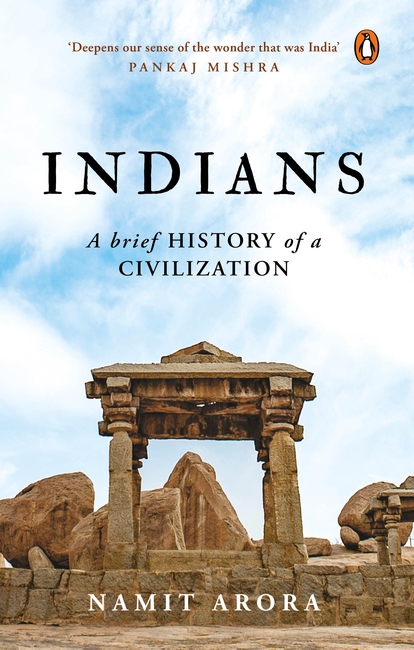
Indian civilization is an idea, a reality, an enigma. In this riveting book, Namit Arora takes us on an unforgettable journey through 5000 years of history, reimagining in rich detail the social and cultural moorings of Indians through the ages. Drawing on credible sources, he discovers what inspired and shaped them: their political upheavals and rivalries, customs and vocations, and a variety of unusual festivals. Arora makes a stop at six iconic places — the Harappan city of Dholavira, the Ikshvaku capital at Nagarjunakonda, the Buddhist centre of learning at Nalanda, enigmatic Khajuraho, Vijayanagar at Hampi, and historic Varanasi — enlivening the narrative with vivid descriptions, local stories and evocative photographs. Punctuating this are chronicles of famous travellers who visited India — including Megasthenes, Xuanzang, Alberuni and Marco Polo — whose dramatic and idiosyncratic tales conceal surprising insights about our land.
In lucid, elegant prose, Arora explores the exciting churn of ideas, beliefs and values of our ancestors through millennia — some continue to shape modern India, while others have been lost forever. An original, deeply engaging and extensively researched work, Indians illuminates a range of histories coursing through our veins.
Maverick Messiah
‘Excellent political biography of NTR. I enjoyed reading it. There is a lot of good stuff here’
SANJAYA BARU, author, political commentator
‘A very objective, lucid, truthful biography’
DR JAYAPRAKASH NARAYAN, founder, Lok Satta
‘…fair, even-handed and objective in assessing NTR’s political journey’
PARAKALA PRABHAKAR, author, political commentator
‘Found it impossible to put down the book till I completed it’
K. PADMANABHAIAH, chairman, Administrative Staff College of India
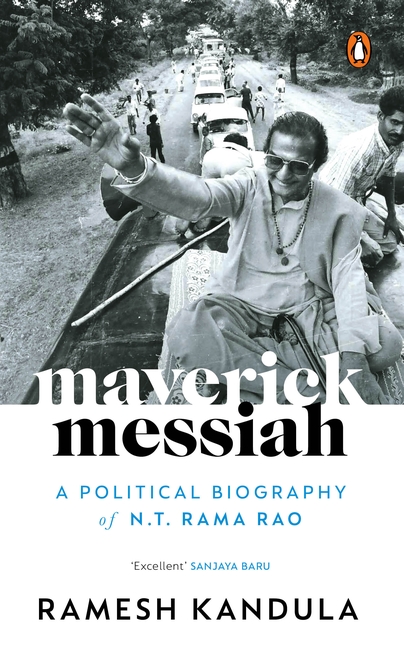
Nandamuri Taraka Rama Rao, widely known as NTR, was not merely a film star who strayed into politics and captured power in Andhra Pradesh. The actor-politician redefined the political culture in the state and scripted a new political idiom.
His rather dramatic entry into politics, the profound impact he left on the people of Andhra Pradesh and the vital role he played in national politics during his relatively short political life, however, have not received deserving recognition.
Maverick Messiah captures the different facets of NTR’s life in all their varied hues and puts in perspective the significant contribution of the actor-politician to the Indian political tapestry.
Ghalib: A Wilderness at My Doorstep
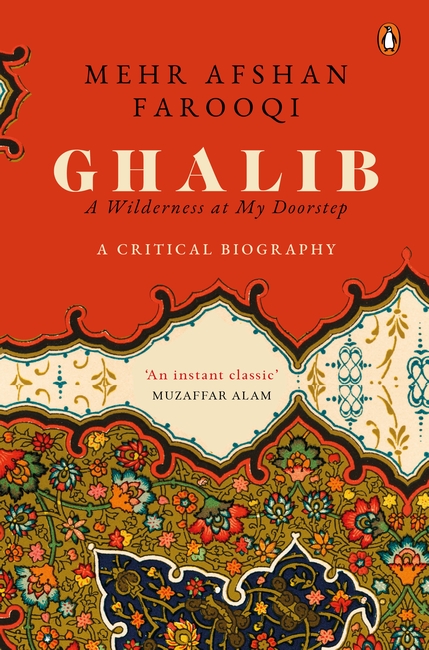
Mirza Asadullah Khan Ghalib was born in Agra in the closing years of the eighteenth century. A precocious child, he began composing verses at an early age and gained recognition while he was still very young. He wrote in both Urdu and Persian and was also a great prose stylist. He was a careful, even strict, editor of his work who took to publishing long before his peers. His predilection for writing difficult, obscure poetry peppered with complex metaphors produced a unique commentarial tradition that did not extend beyond his work. Commentaries on his current Urdu divan have produced a field of critical writing that eventually lead to the crafting of a critical lens with which to view the classical ghazal.
The nineteenth century was the height of European colonialism. British colonialism in India produced definitive changes in the ways literature was produced, circulated and consumed. Ghalib responded to the cultural challenge with a far-sightedness that was commendable. His imagination sought engagement with a wider community of readers. His deliberate switch to composing in Persian shows that he wanted his works to reach beyond political boundaries and linguistic barriers.
Ghalib’s poetic trajectory begins from Urdu, then moves to composing almost entirely in Persian and finally swings back to Urdu. It is nearly as complex as his poetry. However, his poetic output in Persian is far more than what he wrote in Urdu. More important is that he gave precedence to Persian over Urdu. Ghalib’s voice presents us with a double bind, a linguistic paradox. Exploring his life, works and philosophy, this authoritative critical biography of Ghalib opens a window to many shades of India and the subcontinent’s cultural and literary tradition.
The Hidden Garden
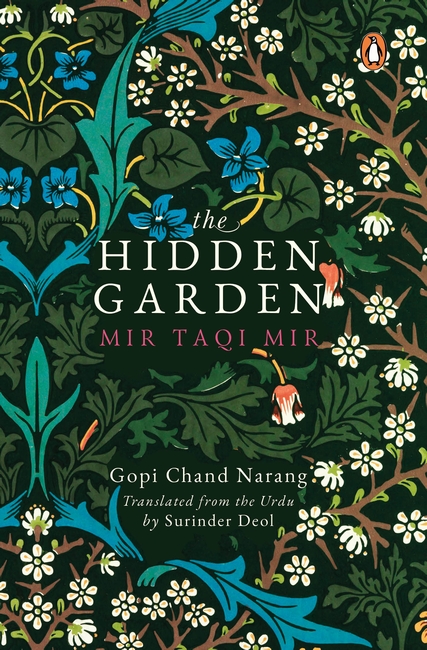
Mir Taqi Mir (1723-1810), known as the god of Urdu poesy (Khuda-e Sukhan), is widely admired for his poetic genius. The most prolific among all Urdu poets, he produced six divans. His deceptively simple poetry had an unusual mellowness and natural flow.Mir was the first poet to demonstrate the hidden beauty and genius of the Urdu language. From the raw Braj of Agra to the sophisticated Persian of Delhi and the mellow Awadhi of Lucknow, he wove them all into his verse. He took the half-baked Rekhta of the mid-eighteenth century to new heights, reaching the pinnacle of literary Urdu’s poetic and creative journey.
With a substantial selection of Mir’s most memorable ghazals, The Hidden Garden introduces readers to the life and poetry of the grossly misunderstood poet. This book is the perfect read for lovers of poetry and Urdu alike.
I Am No Messiah
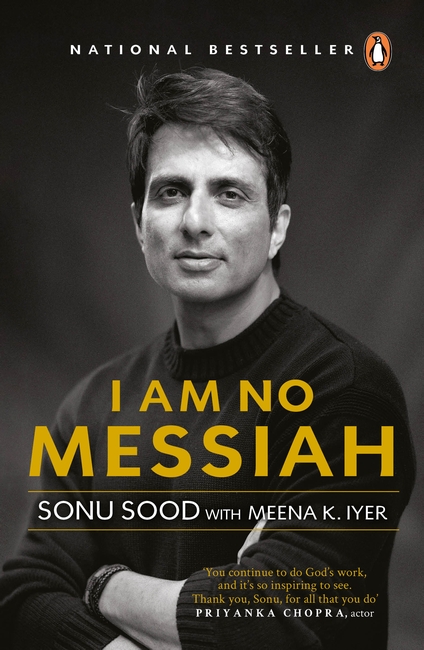
Sometimes, a little nudge from the universe pushes one to find his raison d’etre in life. If actor Sonu Sood had given in to the celebrity syndrome of sitting in his ivory tower and expressing his generosity by remote control, he would have never come face to face with the trauma of India’s migrant labourers or understood that a food packet was a woefully inadequate substitute for a ride back home.
During the nationwide lockdown, imposed in the wake of the COVID-19 pandemic, when a wave of poverty-stricken migrants set out on foot to make their arduous journey back home, the value of seva, service to mankind, instilled in him by his parents, spurred Sonu Sood into action. From taking to the streets and reaching out to the stranded, to setting up a dedicated team and making arrangements for national and international transport, Sonu managed to help thousands of helpless and needy workers. Thus, began his ‘Ghar Bhejo’ programme, carried out like a humanitarian mission. Chartered flights, buses and trains were sanitized and paid for. Distress calls from all over the world were answered. Soon, the movement snowballed into a campaign for providing jobs, medical facilities and educational aid to workers. The silver-screen villain transitioned into a real-life superhero.
In his memoir, I Am No Messiah, Sonu Sood combines the extraordinary experiences of his journey from Moga to Mumbai with the writing skills of veteran journalist and author Meena K. Iyer. Honest, inspirational and heart-warming, this is the story of Sonu Sood and of the people whose lives he continues to transform.
Bike Ambulance Dada
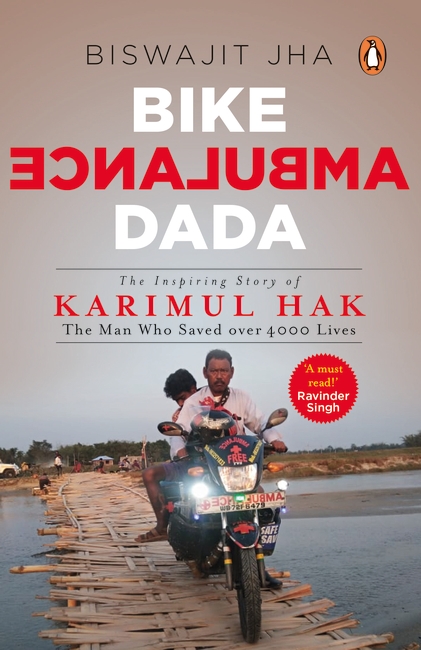
Twenty-five years ago, Karimul Hak lost his mother because he could not afford an ambulance and there was no other way to take her to a hospital. However, when his co-worker fell sick, Karimul resolved to ensure that history did not repeat itself.
Bike Ambulance Dada, the authorized biography of Padma Shri awardee Karimul Hak, is the most inspiring and heart-warming story you will read this year. It documents the extraordinary journey of a tea garden worker who saved thousands of lives by starting a free bike-ambulance service from his village to the nearest hospital in an attempt to fill the gap the insufficient rural healthcare created.
This book, about the extraordinary life of a man who has devoted his entire life to helping those around him and putting others before himself, is a must-read today, serving as an inspiration for us to do and be better.
Vajpayee
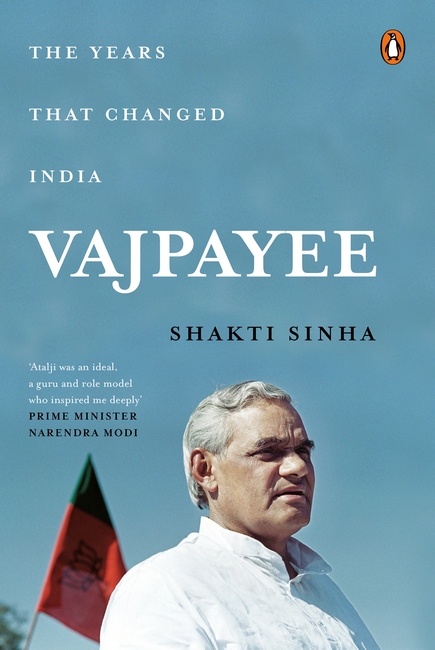
Former prime minister of India and member of the Bharatiya Janata Party, Atal Bihari Vajpayee was an understated and a singular politician of the kind rarely seen in contemporary times. His patriotism was uncompromising, forged out of the paradoxes of his life: the sensitive poet who summoned nerves of steel to conduct the Pokhran-II nuclear tests; the man from humble beginnings who envisioned a project as titanic as the Golden Quadrilateral
highway network. Devoid of any political pedigree or patronage, he harnessed his diplomatic acumen to transform India’s relations with the United States, which had long been mired in misunderstandings rooted in the Cold War. His calculated decisions led to key strategic and economic policy achievements.
In this book, Shakti Sinha, a close associate of Vajpayee, helps us understand Vajpayee as a decision-maker. The narrative focuses on the political challenges Vajpayee faced, and on his key initiatives in the strategic and economic fields during his first term as prime minister, which have had a lasting impact. Vajpayee fleshes out not only Vajpayee’s political philosophy but also provides an insider’s account of how the former PM thought and worked.
Till We Win
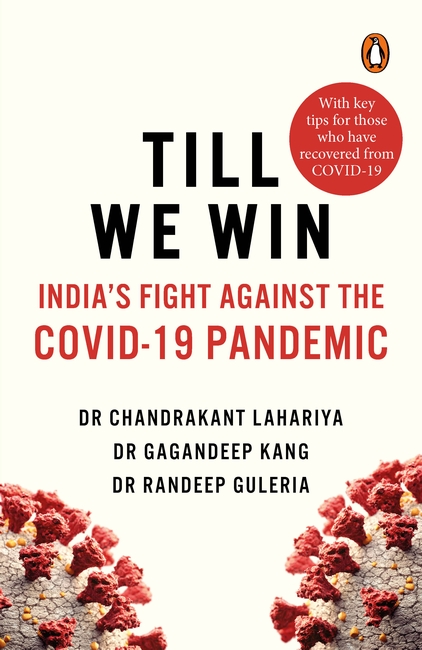
When will India win the fight against the COVID-19 pandemic?
How long do we have to use masks?
When can we expect a safe and effective vaccine? Do we need to wear masks even after we get a vaccine?
What if there is no definitive treatment against COVID-19?
How can we protect our family form this disease?
How should we respond to this ‘new normal’ as an individual and as a community?
What is the way forward?
Offering insights on how India continues to fight the pandemic, Till We Win is a must-read for everyone. It is a book for the people, for political leaders, policymakers and physicians, with the promise and potential to transform public health in India.
Unbound
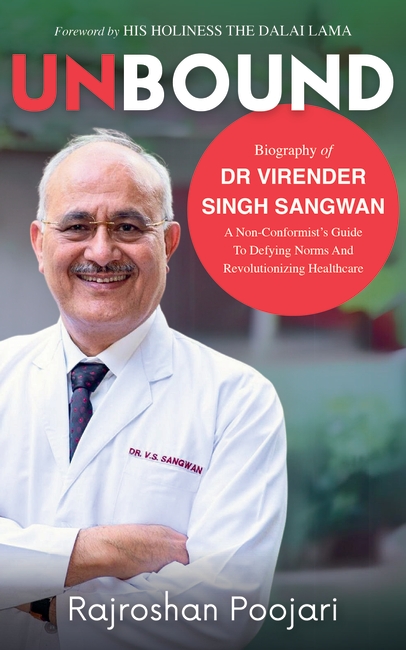
From a small Indian village to the forefront of global medical innovation, this book tells the inspiring story of Dr Virender S. Sangwan, a pioneer in regenerative medicine and stem cell research, whose work has revolutionized eye care around the world. Driven by a relentless passion for accessible healthcare, Dr Sangwan’s groundbreaking innovations—such as the simple limbal epithelial transplantation (SLET) technique—have transformed the lives of millions. It is a powerful narrative of resilience, compassion, and the transformative power of medical innovation.
This book is a must-read for anyone passionate about science, social impact, and the transformative potential of accessible healthcare. It offers an insightful and deeply emotional account of a man whose work continues to change the world, one patient at a time.