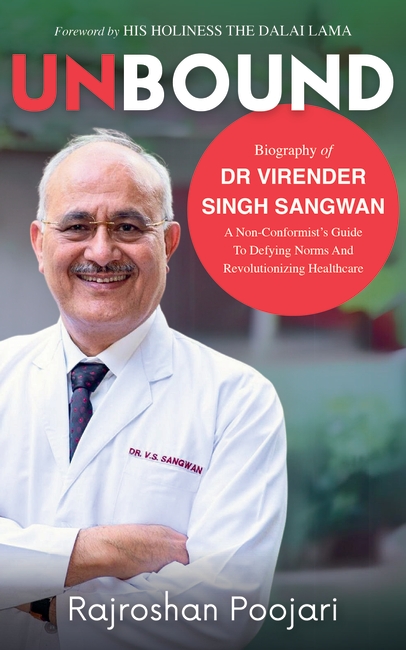
From a small Indian village to the forefront of global medical innovation, this book tells the inspiring story of Dr Virender S. Sangwan, a pioneer in regenerative medicine and stem cell research, whose work has revolutionized eye care around the world. Driven by a relentless passion for accessible healthcare, Dr Sangwan’s groundbreaking innovations—such as the simple limbal epithelial transplantation (SLET) technique—have transformed the lives of millions. It is a powerful narrative of resilience, compassion, and the transformative power of medical innovation.
This book is a must-read for anyone passionate about science, social impact, and the transformative potential of accessible healthcare. It offers an insightful and deeply emotional account of a man whose work continues to change the world, one patient at a time.
In Mrs Funnybones, Twinkle Khanna wittily explores the plight of the modern Indian woman who has a familiar family story. She organizes dinner each evening after having been at work all day, she runs her own life but has to listen to her mummyji and she worries about her weight and the state of the country. This is an extraordinary book with deliciously witty observations.

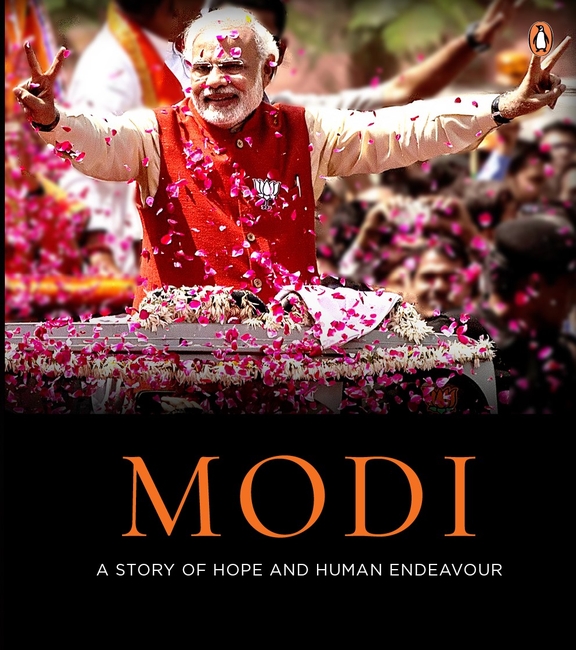
The story of a young boy with limited means becoming the Prime Minister of India is a true testament of democracy. Modi: A Story of Hope and Human Endeavour details the working of the Prime Minister’s mind: what inspires him, what motivates him, the experiences that shaped the man we see before us today, featuring unseen photographs and telling unheard stories.
Set in two volumes, The Life and The Leader, these two books tell the story of Narendra Damodardas Modi, from when he was a young boy in Vadanagar, Gujarat, to 7, Lok Kalyan Marg, the official residence of the Prime Minister of the world’s largest democracy. The first volume, The Life, shares his journey from his childhood to ascending the ladder of the BJP’s leadership, until his resounding mandate in the 2014 general elections. The second volume, The Leader, tells his story from then to now, the milestones India achieved under his visionary leadership.

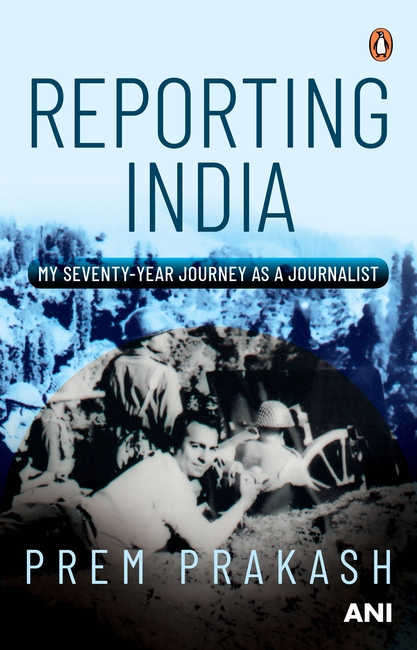
Reporting India is a fascinating account of the life and times of Prem Prakash, a pioneer in the field of Indian journalism. Over the course of his long and illustrious career as a photographer, film cameraman and columnist, Prakash covered major events, both in India and abroad, bearing witness to natural calamities, wars, military coups and insurgencies.
The book celebrates Prakash’s unparalleled body of work, providing a detailed account of his personal and professional life, along with his reminiscences of the most impactful stories that he covered-from the 1962 Indo-China war to the
1965 and 1971 wars against Pakistan; from the Emergency to the assassination of Indira Gandhi; from Lal Bahadur Shastri’s fateful Tashkent journey to the liberation of Bangladesh; from Jawaharlal Nehru’s demise to Narendra Modi’s rise. An intriguing read, Reporting India brings to life some of the defining moments in Indian history.

“I have always felt that life is a solitary journey, that we are each on a train, riding through our hours, our days, our years. We get on alone, we leave alone, and the decisions we made as we travel on the train are our responsibility alone.”
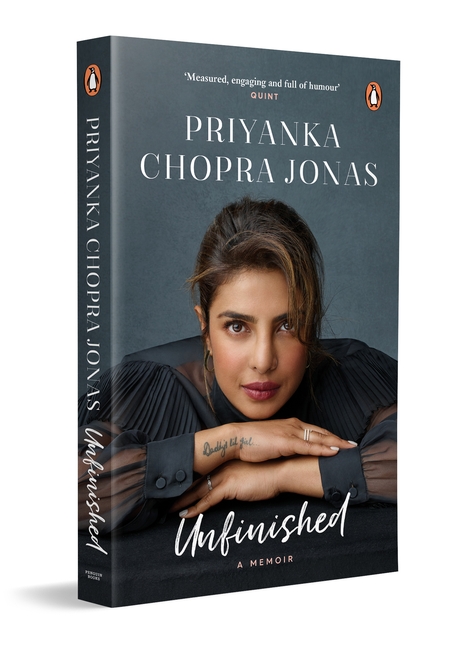
In this thoughtful and revealing memoir, readers will accompany one of the world’s most recognizable women on her journey of self-discovery. A remarkable life story rooted in two different worlds, Unfinished offers insights into Priyanka Chopra Jonas’s childhood in India; her formative teenage years in the United States; and her return to India, where against all odds as a newcomer to the pageant world, she won the national and international beauty competitions that launched her global acting career. Whether reflecting on her nomadic early years or the challenges she’s faced as she’s doggedly pursued her calling, Priyanka shares her challenges and triumphs with warmth and honesty. The result is a book that is philosophical, sassy, inspiring, bold, and rebellious. Just like the author herself.
From her dual-continent twenty-year-long career as an actor and producer to her work as a UNICEF Goodwill Ambassador, from losing her beloved father to cancer to marrying Nick Jonas, Priyanka Chopra Jonas’s story will inspire readers around the world to gather their courage, embrace their ambitions, and commit to the hard work of following their dreams.
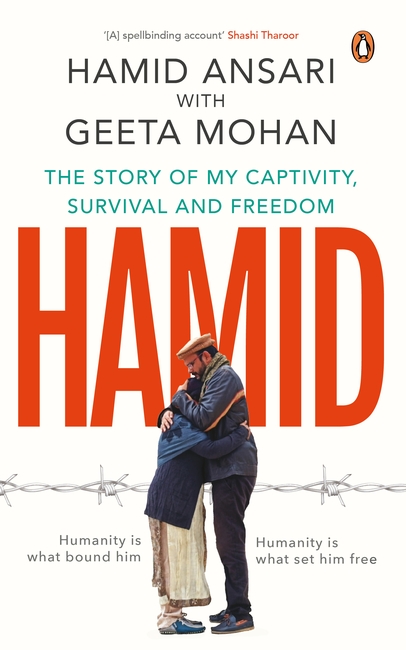
In November 2012, Hamid, a 27-year-old Mumbai-based techie, disappeared into thin air. What happened? Where did he go? All his parents knew was that he had gone to Kabul, Afghanistan, to explore a job opportunity. Upon some investigation, they found out that their son had been chatting online with some Pakistani friends, in particular a girl, across the border.
Authored by Hamid Ansari and Geeta Mohan, this is the definitive insider account of the man who saw no boundaries when it came to saving a girl from forced marriage under the wani custom. Nothing scared or stopped him; until he was betrayed by his friends in Pakistan. He became embroiled in a whirlwind of allegations made by the Pakistani authorities to break him and label him a spy. What followed were years of suffering during the investigations, along with long periods of solitary confinement and a struggle for survival.
In India, his mother, Fauzia Ansari, led a relentless fight, knocking on as many doors as it took, eventually moving three nations, India, Pakistan and Afghanistan, to get him back home, with the help of the then external affairs minister, Sushma Swaraj. On 18 December 2018, Hamid finally touched India soil again. Gritty, heart-wrenching and moving, this is s story of humanity, love, betrayal and hope against all odds.

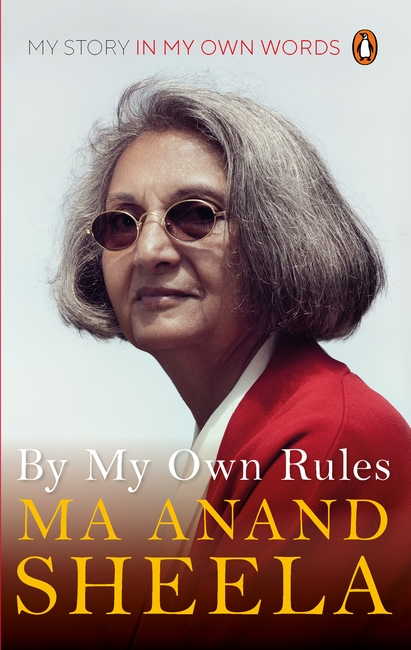
‘Everyone in the world has an opinion of me! I do not expect them to change. I accept life as it comes!’
There are few who can claim to have lived life on their own terms like the irrepressible, honest, bold and charming Ma Anand Sheela. Yet, controversy continues to follow her even today. Whether it be her portrayal in Wild Wild Country, or the Osho International Foundation’s take on the Netflix series, a wide spectrum of opinions has cloaked the real Sheela for too long. In the 1980s, she was the personal secretary of Bhagwan Shree Rajneesh and the manager of the Rajneesh commune in Wasco County, Oregon, USA. She was eventually sentenced to prison, where she served her time and walked out after three years. Adored and vilified at the same time by the world, she has seen it all-from rebuilding her life from scratch to being interviewed by Karan Johar on her grand return to India in 2019. More than three decades later, she is still in love with Bhagwan and his teachings. In By My Own Rules, Ma Anand Sheela bares it all-her lessons, her beliefs, her inspiration and the eighteen rules that define her life.

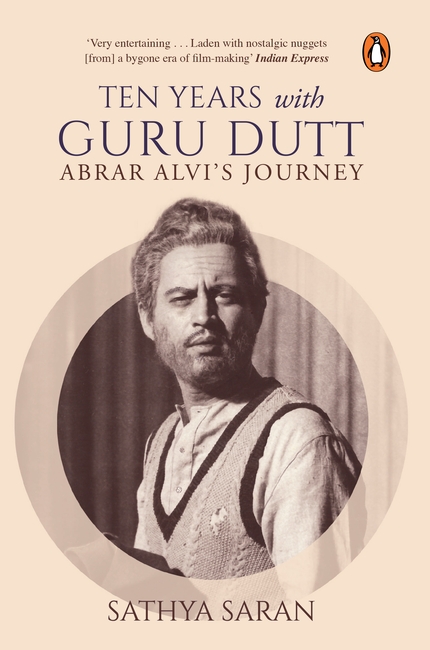
Guru Dutt is probably the only Indian film-maker who, within the parameters of the box office, made a personal statement with his cinema. His films stand testimony not only to his own genius but also to the creativity of his team, comprising stalwarts like cameraman V.K. Murthy, music director S.D. Burman and writer Abrar Alvi, among others. In Ten Years with Guru Dutt: Abrar Alvi’s Journey, Sathya Saran looks at the tumultuous yet incredibly fecund relationship between the mercurial director and his equally talented, albeit unsung, writer-a partnership that evolved over a decade until Dutt’s tragic death in 1964. Starting his career as a driver and chaperone to Dutt’s producer on the sets of Baaz, Abrar soon caught the attention of the director with his sharp ear for and understanding of film dialogue. With Aar Paar in 1954, Abrar rewrote the rules of dialogue-writing in Hindi cinema, until then marked by theatricality and artificiality. He followed it up with masterpieces like Mr and Mrs 55, Pyaasa and Kaagaz Ke Phool, before donning the director’s mantle with great success in Sahib Bibi Aur Ghulam. Brimming with lively anecdotes on how Abrar honed his skills by writing more than 300 love letters; how an accident involving a buffalo led to the discovery of Waheeda Rehman; and Guru Dutt’s visit to a kotha to get the ambience right for Pyaasa, this acclaimed book is a warm and insightful look at two remarkable artistes who inspired each other to create movie magic.
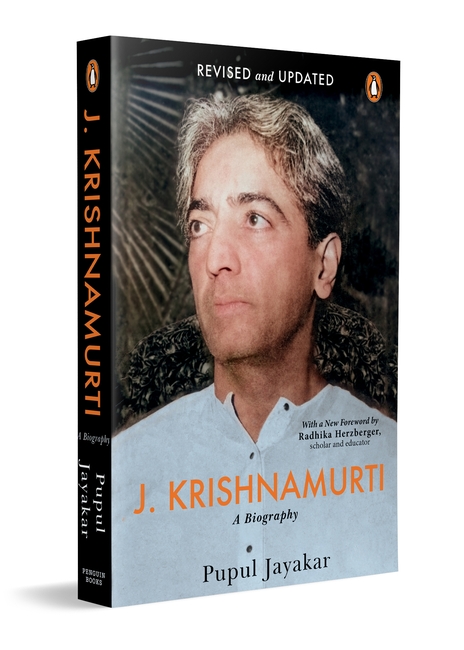
REVISED AND UPDATED WITH A NEW FOREWORD
A classic biography of one of the greatest spiritual teachers of our times
In 1909, when he was just fourteen, Krishnamurti was proclaimed the world teacher in whom Maitreya, the Bodhisattva of compassion, would manifest. The proclamation was made by Annie Besant, then president of the Theosophical Society, a movement that combined Western occult philosophy with Buddhist and Hindu teachings. Besant trained Krishnamurti in his role as the chosen one but twenty years later he chose to disband the order he was head of and set out alone on his endless journey.
As a contemporary of Krishnamurti and one of his closest associates, Pupul Jayakar offers an insider’s view of the fascinating life and thought of an extraordinary individual.
Frontline Reports From Sri Lanka And Other South Asian Flashpoints.
Island Of Blood Is A Distillation Of The Experiences And Insights Of One Of The Finest Journalists India Has Ever Produced. During The Eighties And Nineties, When The Indian Media Rarely Ventured Into Flashpoints Like Sri Lanka And Afghanistan, Anita Pratap Braved The Odds To Send In Reports From The Front, Over And Over Again. War, Ethnic Conflict, Earthquakes, Cyclones And Droughts, Wherever There Was A Story To Be Told, She Would Track It Down. First In India, Then In Sri Lanka, Anita Managed To Gain Access To Ltte Chief Pirabhakaran, And Her Interviews With Him Made Headlines Around The World. In Afghanistan, She Eluded The Taliban Militia To Discover The Frightening Reality Of Women&Rsquo;S Lives Under A Terrifying Fanatical Regime.
Wherever She Went, Anita Saw And Faithfully Reported The Consequences Of Racial And Historical Prejudice, Religious And Sexual Discrimination, And Mindless Hatred And Fear. And Each Time, She Returned To The Comfort Of Home And Family With A Renewed Determination To Appreciate And Celebrate The Ordinary.