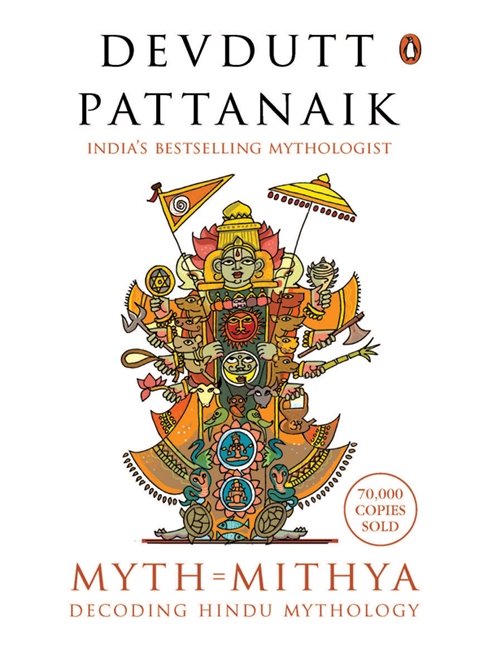
A decoding of Hindu mythology
Hindus have one God.
They also have 330 million gods: male gods; female gods; personal gods; family gods; household gods; village gods; gods of space and time; gods for specific castes and particular professions; gods who reside in trees; in animals; in minerals; in geometrical patterns and in man-made objects.
Then there are a whole host of demons.
But no Devil.
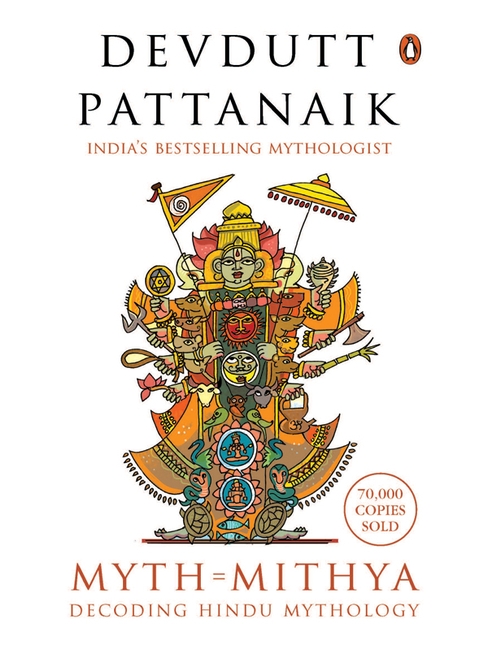
In this groundbreaking book Dr Devdutt Pattanaik; one of India’s most popular mythologists; seeks an answer to these apparent paradoxes and unravels an inherited truth about life and death; nature and culture; perfection and possibility. He retells sacred Hindu stories and decodes Hindu symbols and rituals; using a unique style of commentary; illustrations and diagrams. We discover why the villainous Kauravas went to heaven and the virtuous Pandavas (all except Yudhishtira) were sent to hell; why Rama despite abandoning the innocent Sita remains the model king; why the blood-drinking Kali is another form of the milk-giving Gauri; and why Shiva wrenched off the fifth head of Brahma.
Constructed over generations; Hindu myths serve as windows to the soul; and provide an understanding of the world around us. The aim is not to outgrow myth; but to be enriched and empowered by its ancient; potent and still relevant language.
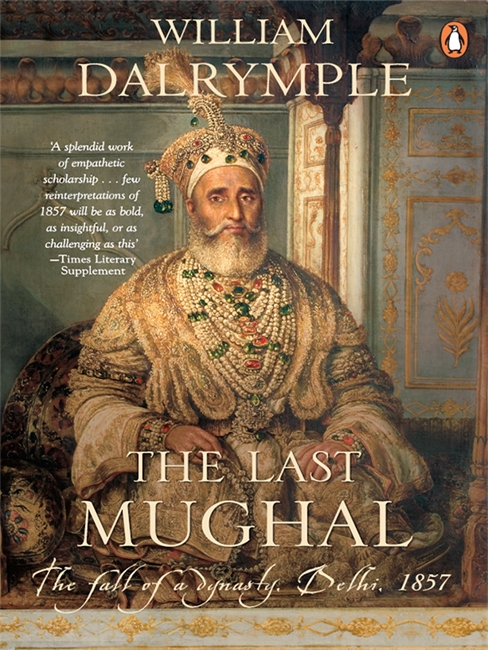
Winner of the Duff Cooper Prize for History 2007 Bahadur Shah Zafar II, the last Mughal Emperor, was a mystic, a talented poet, and a skilled calligrapher, who, though deprived of real political power by the East India Company, succeeded in creating a court of great brilliance, and presided over one of the great cultural renaissances of Indian history. In 1857 it was Zafar’s blessing to a rebellion among the Company’s own Indian troops that transformed an army mutiny into the largest uprising the British Empire ever had to face. The Last Mughal is a portrait of the dazzling Delhi Zafar personified, and the story of the last days of the great Mughal capital and its final destruction in the catastrophe of 1857. Shaped from groundbreaking material, William Dalrymple’s powerful retelling of this fateful course of events is an extraordinary revisionist work with clear contemporary echoes. It is the first account to present the Indian perspective on the siege, and has at its heart the stories of the forgotten individuals tragically caught up in one of the bloodiest upheavals in history.

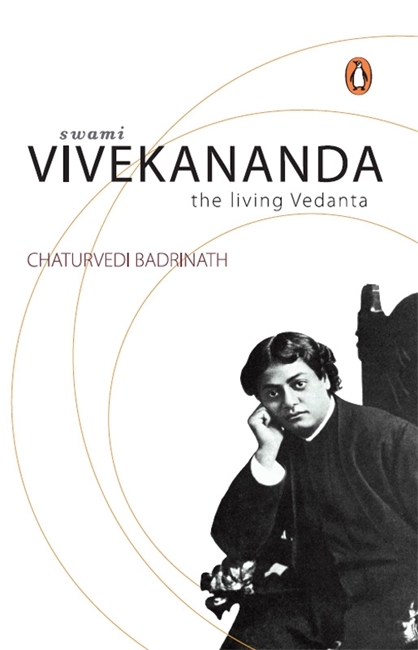
Religion is not in books, not in forms, not in sects, not in nation; religion is in the human heart…It is love alone that can conquer hatred…’- Swami Vivekananda A genius, a visionary, a writer, a dreamer, a teacher and an inspiration for generations of Indians—this was Swami Vivekananda. Born into a family of lawyers, Narendranath Dutta was an exceptionally intelligent child, a natural leader among his playmates, who impressed his teachers with his scholarship. The spirituality of his mentor Shri Ramakrishna and his own study of philosophy and logic influenced Narendranath to join the monastic order. Vivekananda was the spokesperson for India at the Parliament of Religions in Chicago where the magic of his words held his audience in thrall. He also instilled among the Indian youth self-confidence and the hope of regeneration. Devika Rangachari’s account of the life and times of Swami Vivekananda is both inspiring and absorbing. It is the remarkable story of a spiritual leader who worked against overwhelming odds to realize his vision of a free India.

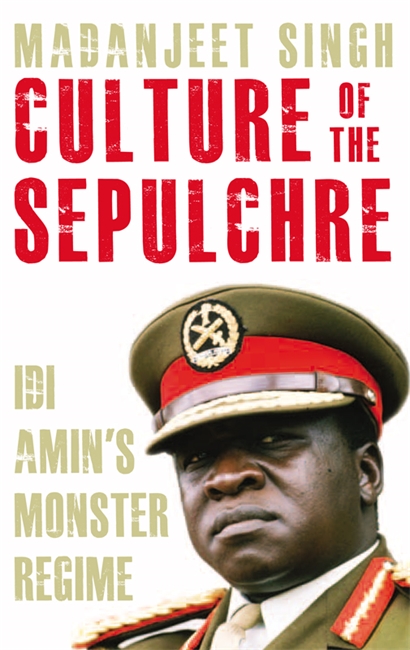
Culture of the Sepulchre is not only a retelling of Idi Amin’s brutality and buffoonery, which unfolded in the seventies, it is also a heart-rending saga of the forced evacuation of the Indian diaspora from Uganda and their trials against the backdrop of a fierce internal armed conflict.
Madanjeet Singh, the Indian High Commissioner to Uganda at the time, gives a first-hand account of the unimaginable violence and savagery unleashed by a man who designated himself ‘His Excellency President for Life, Field Marshal Al Hadji Doctor Idi Amin, VC, DSO, MC, Lord of All the Beasts of the Earth and Fishes of the Sea, and Conqueror of the British Empire in Africa in General and Uganda in Particular’ (and by some accounts even appointed himself the King of Scotland), as well as the ghastly and macabre events that followed Amin’s defeat by the rebel forces led by Museveni.
This is also an account of the extraordinary courage demonstrated by Madanjeet at a time of great personal turmoil—his sister died under mysterious circumstances and his trusted servant turned criminal—and the great risks he took to evacuate hundreds of families desperate to escape the murderous environment
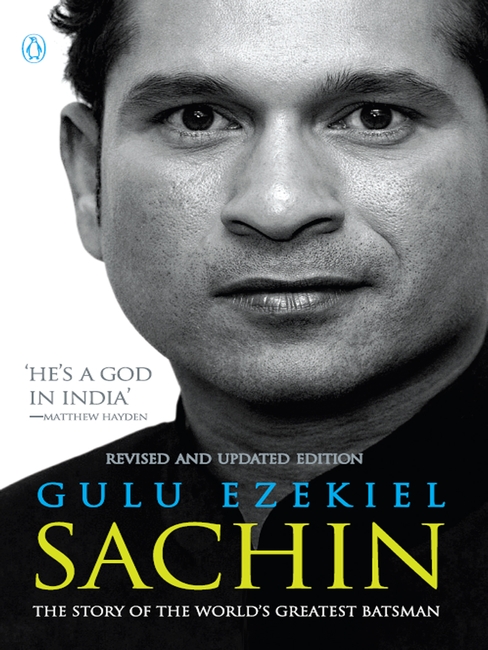
At the young age of 17, Sachin Tendulkar earned the title of being the second youngest man to score a hundred runs in international cricket. Sachin: The Story of The World’s Greatest Batsman is a book that traces the life and achievements of this individual, who is hailed as being the finest batsman in the world. He has made more than 33,000 runs in international cricket, which is the highest number of runs to be scored by any cricketer. He also has a total of one hundred international centuries in his kitty as well.
The author of this book provides a stunning account of the life of the best sportsperson in the world. The book gives its readers insight into the passion that Sachin had for the game, right from the time when he was very young, right till the time he stepped into superstardom.
Sachin: The Story of The World’s Greatest Batsman gives you details concerning Sachin’s life, which you have never known before. The book also highlights the matches that changed the course of Sachin Tendulkar’s career, making him what he is today.
Sachin: The Story of The World’s Greatest Batsman has been published by Penguin India, in the year 2012 and is available in paperback.

Many people dream of escaping the stresses and strains of urban life and moving to Goa. Katharina Kakar and her husband, the psychoanalyst and writer Sudhir Kakar, followed their dream and boldly took that plunge-buying a charming old house in a tranquil south Goa village, where they hoped to find a whole new way of living and working. Ten years later, they are still there, living the idyll-and the reality-of life in Goa. So which is the real Goa? Is it all about sun and sand, beaches and bikinis, feni and vindaloo? This book captures the allure of all these, as well as the festivals and rituals that punctuate the rhythm of village life. It portrays fascinating local characters, ranging from ageing hippies, beach boys and elusive workmen to the aristocratic residents of Goa’s grand old mansions. But it also reveals lesser-known aspects of Goa: the hidden-often shocking-histories of its colonial past; and the debates and fissures that engage and divide Goan society today. In part personal memoir and travelogue, in part an insightful look at Goan history and society, this book portrays Goa with all its paradoxes and problems, its seductive pleasures and, above all, its unique and enduring charm.
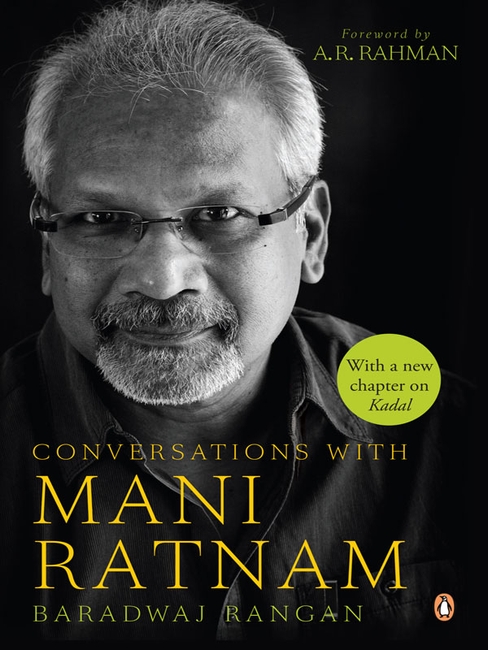
Mani Ratnam’s Nayakan is among Time’s ‘100 Best Movies Ever’; and Roja launched A.R. Rahman. This book, unique to Indian cinema, illuminates the genius of the man behind these and eighteen other masterly films. For the first time ever, Mani Ratnam opens up here, to Baradwaj Rangan, about his art, as well as his life before films.
In these freewheeling conversations—candid, witty, pensive, and sometimes combative—many aspects of his films are explored. Ratnam elaborates in a personal vein on his choice of themes, from the knottiness in urban relationships (Agni Natchatiram) to the rents in the national fabric (Bombay); his directing of children (Anjali); his artful use of songs; his innovative use of lighting; as also his making of films in Hindi and other languages. There are fond recollections of collaborations with stalwarts like Balu Mahendra, P.C. Sreeram, Thotta Tharrani and Gulzar, among many others. And delectable behind-the-scenes stories—from the contrasting working styles of the legendary composer Ilaiyaraaja and Rahman to the unexpected dimensions Kamal Haasan brought to the filming of Nayakan to what Raavan was like when originally conceived. In short, like Mani Ratnam’s films, Conversations surprises, entertains and stimulates.
With Rangan’s personal and impassioned introduction setting the Tamil and national context of the films, and with posters, script pages and numerous stills, this book is a sumptuous treat for serious lovers of cinema as well as the casual moviegoer looking for a peek behind the process.
A decoding of Hindu mythology Hindus have one God. They also have 330 million gods: male gods; female gods; personal gods; family gods; household gods; village gods; gods of space and time; gods for specific castes and particular professions; gods who reside in trees; in animals; in minerals; in geometrical patterns and in man-made objects. Then there are a whole host of demons. But no Devil. In this groundbreaking book Dr Devdutt Pattanaik; one of India’s most popular mythologists; seeks an answer to these apparent paradoxes and unravels an inherited truth about life and death; nature and culture; perfection and possibility. He retells sacred Hindu stories and decodes Hindu symbols and rituals; using a unique style of commentary; illustrations and diagrams. We discover why the villainous Kauravas went to heaven and the virtuous Pandavas (all except Yudhishtira) were sent to hell; why Rama despite abandoning the innocent Sita remains the model king; why the blood-drinking Kali is another form of the milk-giving Gauri; and why Shiva wrenched off the fifth head of Brahma. Constructed over generations; Hindu myths serve as windows to the soul; and provide an understanding of the world around us. The aim is not to outgrow myth; but to be enriched and empowered by its ancient; potent and still relevant language.

The memoir of one of Pakistan’s most prominent businessmen in exile
‘I reached to see not the beautiful hotel that we had so lovingly built, but a war zone. . . . We found bodies of our dear guests, colleagues, friends: faces I recognized, faces I had worked with and smiled at. The sight that stunned me was the crater-60 feet wide and 20 feet deep. It had been created by over 1000 kg of RDX. The hotel had not been attacked, it had been brutalized. Dead bodies and dismembered limbs, little pools of blood-it was a massacre. I had thought of myself as a hardened man who had seen violence and gristly sights-but what I saw that day left me shaken.’
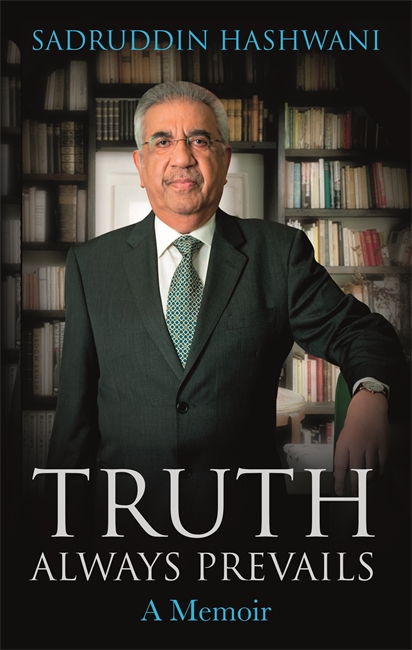
Truth Always Prevails is the memoir of one of Pakistan’s most prominent businessmen, Sadruddin Hashwani, chairman of the internationally renowned Hashoo Group.
From sleeping in the back of trucks in the cold deserts of Balochistan to now owning a brand of luxury hotels as well as numerous other businesses, Sadruddin Hashwani has led a remarkable life. He has struggled against corrupt politicians and uncooperative government officials to build and sustain an extensive business empire. He has faced near-death experiences, most remarkably the 2008 bombing of his own hotel, the Marriott Islamabad, and has overcome seemingly insurmountable odds.
Filled with fascinating anecdotes and telling sketches of prominent Pakistani personalities, his is an extraordinary story that will inspire and entertain readers.
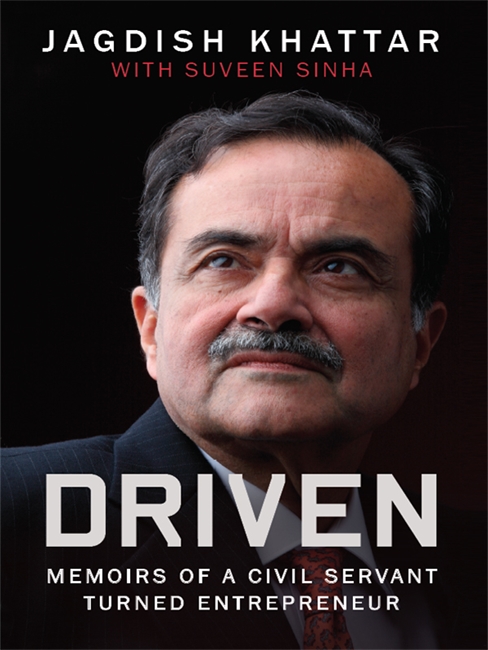
An epic triple treat-stories from a civil servant, corporate captain and businessmanA trained lawyer who became an IAS officer, Jagdish Khattar has had an astonishinglydiverse career. He was an agent of change in Uttar Pradesh through his roles as districtmagistrate and head of the cement and transport corporations. He also helmed India’sTea Board in London and played a key role in the ministry of steel. Elevated to the postof managing director at Maruti Udyog, a firm that was on the verge of a steep decline,Khattar braved labour unions, foreign competition and politicians as he led Maruti toa very successful IPO. Finally, at the age of sixty-five, Khattar turned entrepreneur withCarnation, India’s first multi-brand car sales and servicing network.Driven spreads across a sweeping national canvas from drought-hit villages to theShakespearean intrigues of politicians and bureaucrats. Written with flair and liberallypeppered with frank anecdotes, it is filled with lessons about leadership, friendship, jugaadstyleinnovation, resilience and values.