



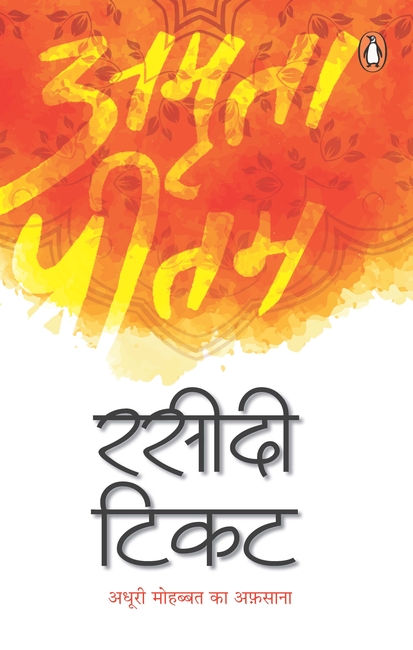
Raseedi Ticket is Amrita Pritam’s celebrated autobiography, which tells us how she felt distressed at the influence of hate; she was traumatised by the horrors of the Partition, out of which her poem ‘Vaaris Shah’ was born. Her autobiography says that a writer should not be afraid of criticism, no matter how hostile the world might become. The time between her intimacy with Sahir and deep friendship with Imroz is described beautifully. Reading this book is like being in a fever which takes you through every truth of the writer’s life.
Catagory: Biographies, Diaries & True Accounts
The Indian Business Box Set
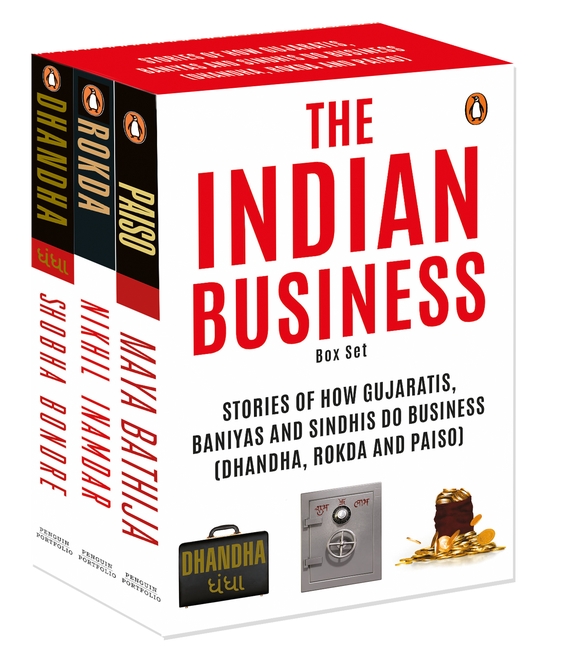
This collection of bestselling books Dhanda, Rokda and Paiso brings together renowned journalists Shobha Bondre, Nikhil Inamdar and Maya Bathija who delve into how empires such as Emami, Diamand Nagar and Embassy Group were built. These wonderful accounts show us the people behind these hugely successful companies and the entrepreneurial spirit and characteristics inherent to each community.
‘Highly readable . . . Nifty storytelling’ Business Standard
‘Well-structured and engaging . . . Each of these extraordinary stories has elements of some of the characteristic Sindhi ways of doing business’ Hindustan Times
‘Inamdar’s book offers a good insight into the ways of this remarkable community’ Business Standard
Tipu Sultan
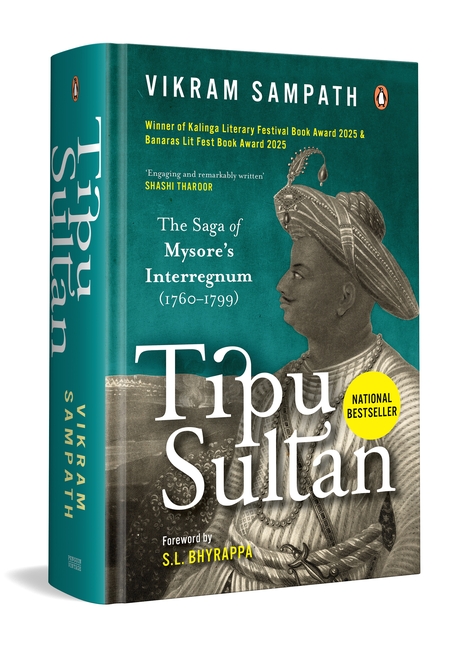
Over two centuries have passed since his death on 4 May 1799, yet Tipu Sultan’s contested legacy continues to perplex India and her contemporary politics. A fascinating and enigmatic figure in India’s military past, he remains a modern historian’s biggest puzzle as he simultaneously means different things to different people, depending on how one chooses to look at his life and its events.
Tipu’s ascent to power was accidental. His father Haidar Ali was a beneficiary of the benevolence of the Maharaja of Mysore. But in a series of fascinating events, the Machiavellian Haidar ran with the hare and hunted with the hounds; he ended up overthrowing his own benefactor and usurping the throne of Mysore from the Wodeyars in 1761. In a war-scarred life, father and son led Mysore through four momentous battles against the British, termed the Anglo-Mysore Wars. The first two, led by Haidar, brought the English East India Company to its knees. Chasing the enemy to the very gates of Madras, Haidar made the British sign such humiliating terms of treaties that sent shockwaves back in London.
In the hubris of this success, Tipu obtained the kingdom on a platter, unlike his father, who worked up the ranks to achieve glory. In a diabolical war thirst, Tipu launched lethal attacks on Malabar, Mangalore, Travancore, Coorg, and left behind a trail of death, destruction and worse, mass-conversions and the desecration of religious places of worship. While he was an astute administrator and a brave soldier, the strategic tact with opponents and the diplomatic balance that Haidar had sought to maintain with the Hindu majority were both dangerously upset by Tipu’s foolhardiness on matters of faith. The social report card of this eighteenth-century ruler was anything but clean. And yet, one simply cannot deny his position as a renowned military warrior and one of the most powerful rulers of Southern India.
Meticulously researched, authoritative and unputdownable, Tipu Sultan: The Saga of Mysore’s Interregnum (1760–1799) opens a window to the life and times of one of the most debated figures from India’s history.
Words From My Window
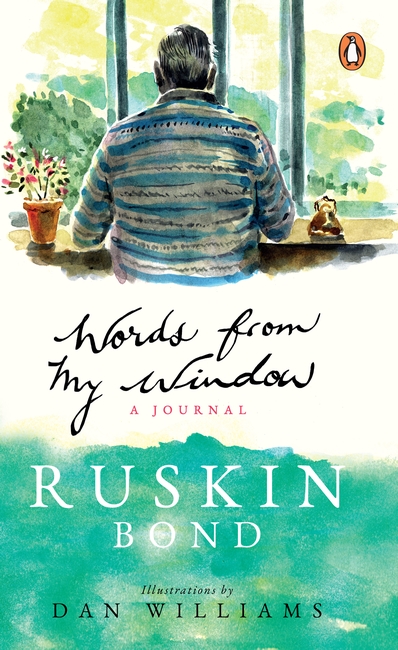
I need a window to look at the world without; for only then can I look at the world within. A room without a window is rather like a prison cell, and the soul is inclined to shrivel up in a confined space. … Car horns, children calling to each other as they return from school, a boy selling candyfloss, several crows chasing a hawk! Never a dull moment. And the magic mountain looks on, absorbing everything.
Mera Jeevan, Mera Mission
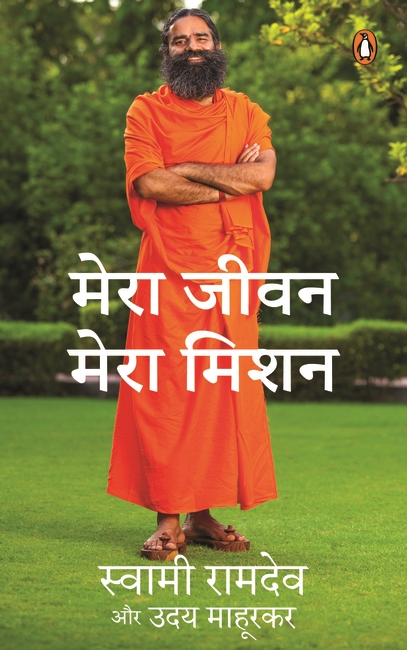
Swami Ramdev is a household name in India. But do you know where he was born?
Why did he take sanyas and get into spirituality?
What is his vision for India?
Fearless, driven and with a penchant for being outspoken, Swami Ramdev-for the first time-addresses the major controversies, turning points and achievements of his life. An autobiographical account, the book is written with senior journalist Uday Mahurkar and captures the seer’s journey from a small village in Haryana to the international stage. As we uncover the trials, tribulations and triumphs of his life, we realize that there is more to the ascetic than often meets the eye. The book provides insights into his childhood, his passion for yoga and good health, his friends and foes, and the Swadeshi campaign he has spearheaded. In 2006, the globally popular yoga teacher known for his work in Ayurveda, health and social issues, founded the Patanjali Group of Institutions that is now a major FMCG company with a turnover of about Rs 12,000 crores.
Engaging, revealing and inspiring, the book shows how determination, passion and tenacity can transform the ordinary into the extraordinary.
My Life, My Mission
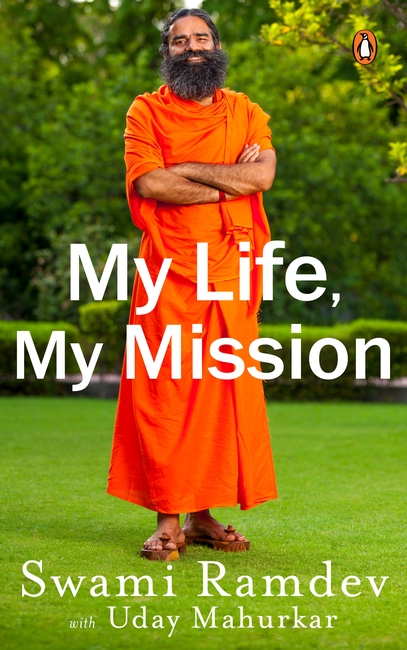
‘A lot has been written about me by other people. Now I will share with you the story of my life in my own words.’
Swami Ramdev is a household name in India. But do you know where he was born? Why did he take sanyas and get into spirituality? What is his vision for India?
Fearless, driven and with a penchant for being outspoken, Swami Ramdev-for the first time-addresses the major controversies, turning points and achievements of his life. An autobiographical account, the book is written with senior journalist Uday Mahurkar and captures the seer’s journey from a small village in Haryana to the international stage. As we uncover the trials, tribulations and triumphs of his life, we realize that there is more to the ascetic than often meets the eye. The book provides insights into his childhood, his passion for yoga and good health, his friends and foes, and the Swadeshi campaign he has spearheaded. In 2006, the globally popular yoga teacher known for his work in Ayurveda, health and social issues founded the Patanjali Group of Institutions that is now a major FMCG company with a turnover of about Rs 12,000 crore.
Engaging, revealing and inspiring, the book shows how determination, passion and tenacity can transform the ordinary into the extraordinary.
Facing the Mirror
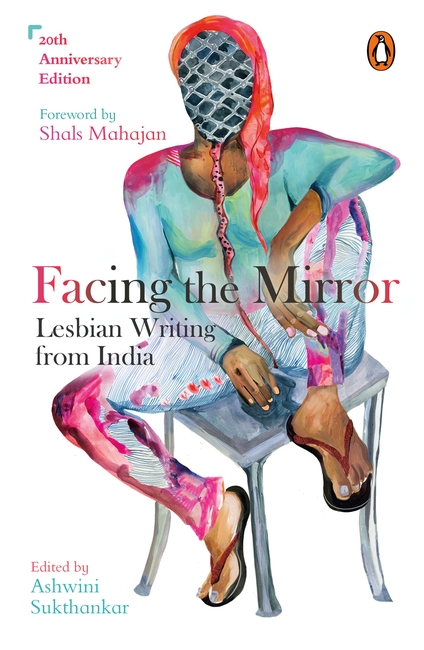
A groundbreaking book where lesbians found their voice for the first time
For decades, most lesbians in India did not know the extent of their presence in the country: networks barely existed and the love they had for other women was a shameful secret to be buried deep within the heart. In Facing the Mirror, Ashwini Sukthankar collected hidden, forgotten, distorted, triumphant stories from across India, revealing the richness and diversity of the lesbian experience for the first time. Going back as far as the 1960s and through the forms of fiction and poetry, essays and personal history, this rare collection mapped a hitherto unknown trajectory.
In celebration of the Supreme Court’s reading down of the draconian Section 377 of the Indian Penal Code, this twentieth-anniversary edition, with a foreword by author and activist Shals Mahajan, brings to readers a remarkable history that illuminates the blood and the tears, the beauty and the magic of the queer movement in India. The raw anger and passion in them still alive, the writings in Facing the Mirror proudly proclaim the courage, the sensuality, the humour and the vulnerability of being lesbian.
The Magnificent Diwan
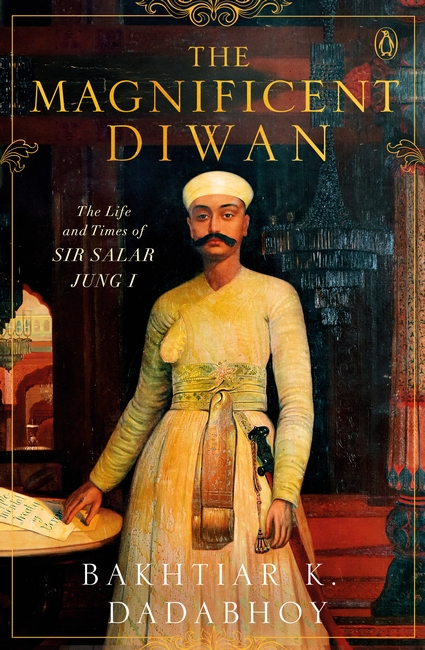
The Magnificent Diwan is the definitive biography of arguably India’s most influential and powerful statesman of the nineteenth century. Drawing on extensive archival material, this is a compelling account of the life and times of a remarkable Indian who, as diwan or prime minister, decisively shaped Hyderabad’s political and economic history for nearly three decades in the second half of the nineteenth century. It was Salar Jung who, by his reforms of the medieval oligarchy that was Hyderabad, ushered the state into the modern era. This account is not merely a chronicle of his life but also a history of Hyderabad-both social and governmental-and gives the reader an encompassing view of the man who has been called the founder of modern Hyderabad. Meticulously researched and engagingly written, this biography introduces Sir Salar Jung I to a new generation, even as it rekindles the memory of a man who has become the victim of collective amnesia.
An Autobiography or The Story of My Experiments with Truth
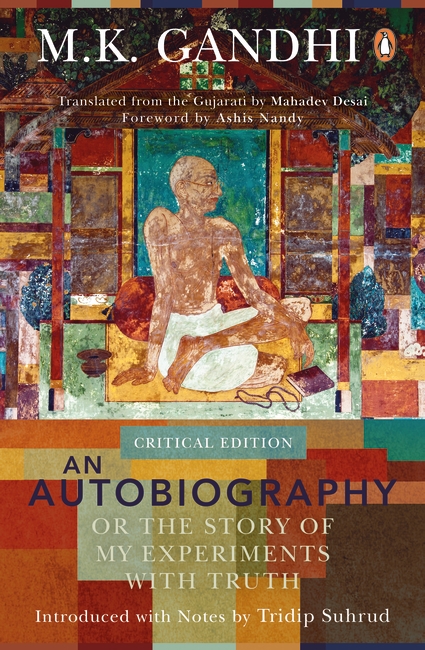
Mohandas Karamchand Gandhi is among the most enigmatic, charismatic, deeply revered and equally reviled figures of the twentieth century. His Autobiography, one of the most widely read and translated Indian books of all time, is a classic that allows us to glimpse the transformation of a well-meaning lawyer into a Satyagrahi and an ashramite.
In this first-ever Critical Edition, eminent scholar Tridip Suhrud shines new light on Gandhi’s life and thought. The deeply researched notes elucidate the contexts and characters of the Autobiography, while the alternative translations capture the flavour, cadence and quirkiness of the Gujarati. In the original and insightful introduction, Suhrud traces Gandhi’s evolution into a seeker of Truth as God, and explores possible modes of reading the Autobiography.
This Critical Edition of the Autobiography is an absorbing, illuminating text about the life-affirming journey of the most public and most complex figure of Indian history.
Kashmir and Beyond 1966-84
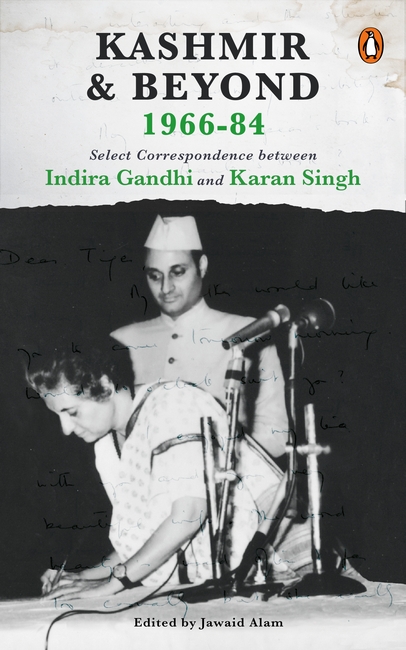
Dr Karan Singh became a member of Prime Minister Indira Gandhi’s Cabinet as minister for tourism and civil aviation, and worked closely with Gandhi for almost the entire duration of her tenure. They held each other in high esteem, shared great rapport as Cabinet colleagues and had mutual regard on a personal level as well.
Bringing together over 300 letters exchanged between Mrs Gandhi and Dr Singh, Kashmir and Beyond provides valuable insights into such historic events as the signing of the Tashkent Declaration, the Emergency and Operation Bluestar. Even as these letters map the important landmarks of recent Indian history, they also provide a fascinating glimpse into the inner workings of the government and the magnitude of the effort of running a country that houses ‘one-seventh of the human race’.
Kashmir and Beyond is an immensely important book for anyone who wants to make sense of the knotty issues that confront contemporary India.