



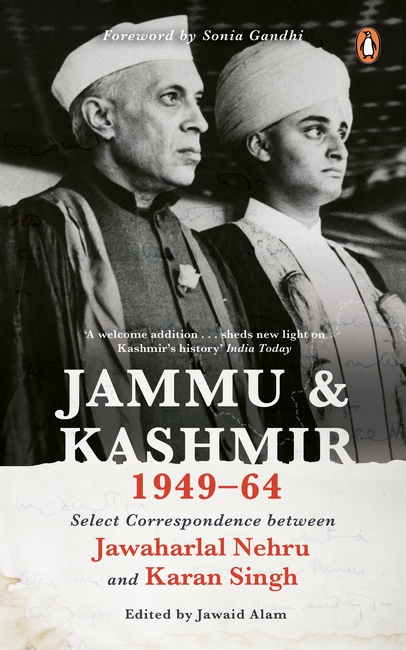
In 1949, Dr Karan Singh had just turned eighteen when he was appointed regent of Jammu and Kashmir, two years after his father, Maharaja Hari Singh, signed the Instrument of Accession merging the then independent state with India. Under the mentorship of Pandit Jawaharlal Nehru, Dr Singh was at the helm of affairs in the state for eighteen years, successively as regent, Sadar-i-Riyasat and governor.
This carefully conceived selection of over 200 letters exchanged between Dr Singh and Pandit Nehru sheds light on significant issues and events, including the teething problems of a fledgling country and a newly grafted state, the emerging conflicts between Pakistan and India, and the Chinese aggression of 1962. In addition to valuable insights into the political situation of the period, these letters also provide rare glimpses into the personal lives and thoughts of Pandit Nehru and Dr Singh. The memorandum submitted by Maharaja Hari Singh to President Rajendra Prasad in August 1952 is published in full, revealing how the identity and future of Kashmir were shaped.
A rare collection, Jammu and Kashmir offers an unmatched ringside view of the momentous events in Kashmir and the rest of India after Independence.
Catagory: Biographies, Diaries & True Accounts
Bahawalpur
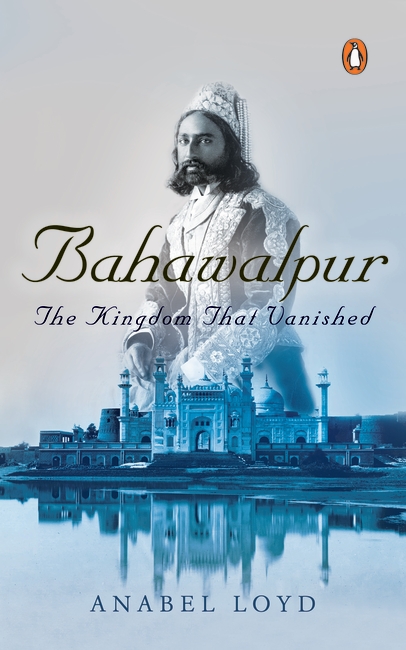
In the seventy or so years since Independence, much less has been written about the Princely States which acceded to Pakistan than those that remained in India. The name of the once great State of Bahawalpur is no longer remembered among its well-mapped peers over the border in Rajasthan.
This book is based on conversations with Salahuddin Abbasi, grandson of the last ruler of Bahawalpur and born a year before Partition. Starting with the history of his State and his family, his memories add light to stories of Bahawalpur’s princes from old records, letters, and the accounts of British travellers and civil servants. They also encompass a lifetime of first-hand experience of the political life of Pakistan and his relationships with the country’s leaders.
The nation’s troubled history has clouded a clear picture of it and shrouded its component parts. From the microcosm of Bahawalpur, this account helps to join the dots of a more coherent view of the macrocosm of Pakistan and queries the future route of the Islamic State.
Happy For No Reason
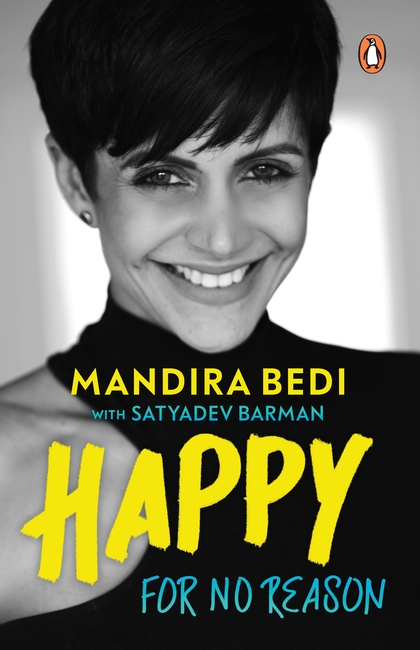
Mandira Bedi is a fitness icon.But behind the six-pack is also a snotty, complaining, can’t-get-out-of-bed-today girl who, in her own way, is still searching for true happiness. Not conditional, materialistic, transactional happiness, but just happiness. So has she cracked it yet? Mandira says ‘No’. But she genuinely believes that she’s headed in the right direction. In her own chaotic way, she seems to have discovered some kind of non-scientific, non-spiritual and as-yet-non-existent formula for finding peace in everything. Just being happy-for no reason. This book is about that.
Legal Confidential
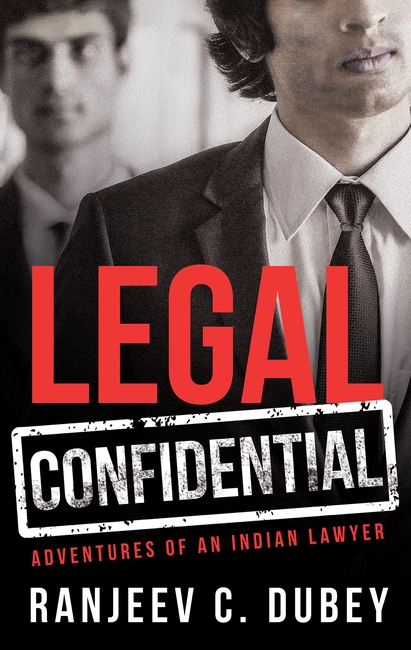
Nowhere are more laws at risk of being broken than in a courtroom
Rookie lawyer Ranjeev C. Dubey realizes this the hard way as he trudges through the corridors of Delhi’s trial courts and sees that the legal system is anything but fair. He stumbles upon a strange world of corruption, adultery, eloping couples and clients willing to pay for legal services ‘in kind’. He survives the ‘killing field’ of litigation for twelve long years, biding his time.
When he gets an offer to join a law firm, Dubey believes he has finally arrived. But has he? The world of Indian corporate law is one of intense power-play and the merciless pursuit of revenue. In this sinister ecosystem of destructive politicking, Ranjeev becomes enemies with the sharks circling the firm. What follows is an explosive showdown.
The now-well-known corporate lawyer exposes the world of the black robe in this dark and racy memoir with his trademark wit, leaving you wanting more.
If you read only one book about the world of lawyers and the Indian legal system, let Legal Confidential be it!
Madhavrao Scindia
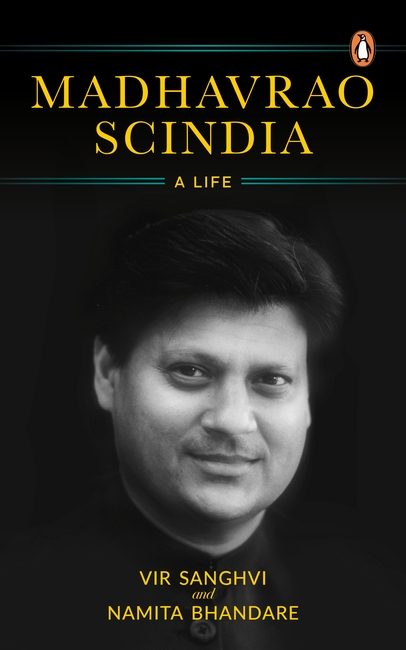
Suave, secular and known for his unwavering honesty, Madhavrao Scindia was no conventional politician. Born to the last king of Gwalior and conscious of his heritage, he espoused liberal and democratic values throughout his life. A nine-term member of the Lok Sabha and hugely successful minister, he remained a family man at heart.
Scindia was a beguiling figure because of the way he chose to live: His was a path that proved neither predictable nor easy. Perhaps that’s why his life reads like the plot of a grand novel, dotted with intriguing courtiers and wily politicians-in a bitter falling out with his mother, a powerful force of the Jana Sangh, in battles with at least two Congress governments, in his own tragic death. His captivating story emerges as the portrait of a fascinating life as much as a chronicle of contemporary Indian politics.
Women Of The Tagore Household
The story of an accomplished group of Women who, more than any others, moulded Bengal’s distinct ethos.
The Tagore family has long been the focus of public curiosity. Like its men, the women of this illustrious family have had a great and enduring influence on the life and people of Bengal.
Women of the Tagore Household portrays several generations of connoisseurs, aesthetes and lovers of literature who were nurtured under the umbrella of cultural richness and spiritual freedom that the extended family provided. We meet Rabindranath’s wife Mrinalini and his sister-in-law Kadambari, who had considerable influence on the young poet; the progressive Jnandanandini who sailed alone to England in the nineteenth century, presenting to ordinary women a vision of courage and daring; and Sushama, who broke out of the confines of music, literature and culinary arts to tread the path of women’s empowerment. This book reveals hitherto unknown aspects of
women’s emancipation in Bengal in which the women of the Jorasanko Tagore family were at the forefront-Chandramukhi and Kadambini were the first two female graduates of India, Protiva opened up music and dramatics to women by preparing musical notations for Brahmo sangeet and Hindustani classical music, and Pragya’s prefaces to her cookbooks are still considered storehouses of not only recipes but also homemaking skills.
This engaging narrative, spanning over three hundred years, highlights the Tagores’ influence on the Bengal Renaissance and brings out the special role the Tagore women played in Bengali history and culture.
The Inheritors
Now a strike, led by ageing Marxist trade union leader Hirenmoy Chakroborty, is destabilizing its Calcutta headquarters-and Aruna the bitter, power-hungry sister of Hari Lohia, the head of the dynasty, is using the opportunity to launch a covert takeover of the business with the help of her two ambitious sons. But Hari Lohia, who single-handedly built up Lohia & Co from a tiny jute trader in the crowded alleys of Barabazar to a sprawling global conglomerate, is not willing to let go of his empire so easily. He comes from a family of survivors, ancestors who moved across the country from Rajasthan with nothing and built their fortunes from scratch. And he discovers unlikely allies in this last great battle he has to fight-Anjali, his tough, cynical sister, a fiery opponent of Aruna’s; and Shivani, his beautiful, rebellious daughter who has always been too busy having love affairs to pay attention to her father’s business. Who will lose? Who will win? And most importantly-will the house of Lohia fall like a pack of cards? Moving from the crumbling offices of Calcutta to hedge funds in Hong Kong, from the Mumbai stock market to nineteenth century Rajasthan, and boasting an enormous cast of characters, The Inheritors is quite simply sensational.
Portrait Of India
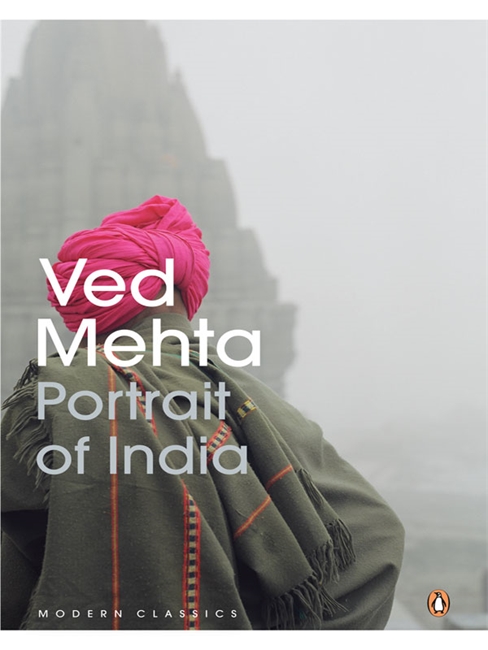
Portrait of India (1970) is a vivid account of 60s’ India and some of its most interesting figures – Indira Gandhi, Jaya Prakash Narayan and Satyajit Ray, among others. Travelling across the country from the Himalayas to Kerala, through its villages and cities, Ved Mehta’s observations of and insights into India remain relevant and thought provoking even today.
Mahatma Gandhi And His Apostles
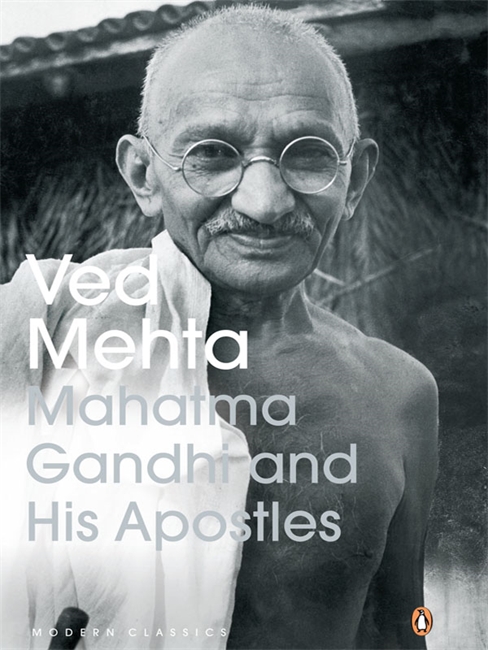
Ved Mehta’s book on Gandhi (1977) is one of the great portraits of the political leader. Travelling the world to talk to Gandhi’s family, friends and followers, drawing his daily life in exacting detail, Mehta gives us a nuanced and complex picture of the great man and brings him vividly alive.
The Essential Ved Mehta
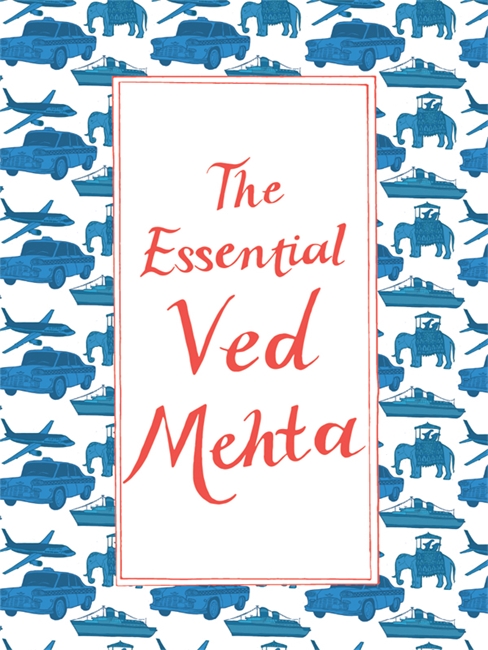
The Essential Ved Mehta is the definitive collection of the author’s work, containing excerpts from nearly all his writings, many of which first appeared in William Shawn’s New Yorker. It begins with his first book, the classic autobiography highlighting his blindness, Face to Face and goes on to feature, among others, his iconic books about India and his great family saga Continents of Exile. Each entry comes with a reflection by Mehta. Authoritative and illuminating, The Essential Ved Mehta is not just an introduction to this seminal writer but also a passionate record of a writer looking back upon his own work.