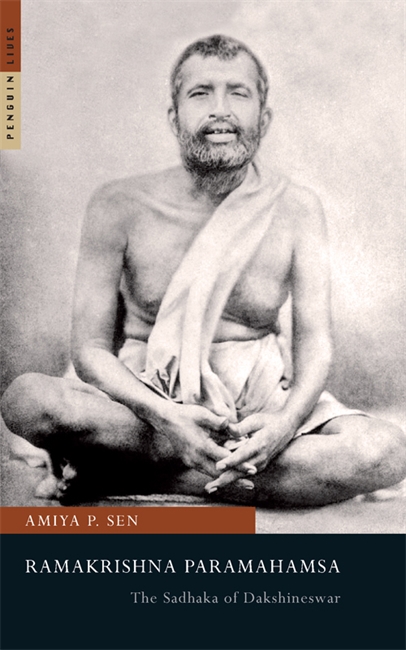
While Ramakrishna Paramhamsa has been the subject of innumerable volumes devoted to his life and teachings over the past century and a half, Ramakrishna Paramhamsa: The Sadhaka of Dakshineswar illuminates this enigmatic religious figure and stands out amidst the multitude of voices that crowd his story. It traces the several contradictions of nineteenth-century Bengal that the man embodied: between his Vaishnav roots and Sakti worship; between bhakti and gyan; and between a guru and sadhaka (spiritual practitioner).
Amiya P. Sen situates Sri Ramakrishna within the emerging social and cultural anxieties of the time as also the larger Hindu-Brahminical world that he was born into. This book also carries a brief but critical introduction to the moral and philosophical underpinnings of Ramakrishna’s vibrant theology that will be of interest to lay readers as well as those especially interested in the cultural and religious history of modern Bengal.
See also Amiya Sen’s His Words: The Preaching and Parables of Ramakrishna Paramahamsa

‘I found that I had begun to take a great liking for the man . . . Oddly, this did not grow out of any feeling of veneration . . . for that would have implied my being overawed and somewhat fearful in the presence of someone vastly superior. Rather, my feelings grew spontaneously and from the very depths of my heart. I simply revelled in the man’s company.’-Mahendra Nath Dutta (Swami Vivekananda’s brother) on Ramakrishna
Press reports in the 1870s Calcutta marvelled at the way ‘highly educated’, ‘civilized’ and ‘reasoning’ men, like Mahendra Nath Dutta, were drawn to the ‘ill clad’, ‘illiterate’, ‘friendless’ and ‘unpolished’ Ramakrishna. The progressive press, which had first brought Ramakrishna to public attention, scoffed at his use of ‘vulgar’ speech, while acknowledging its effectiveness in religious communication. Despite these critiques, Ramakrishna came to occupy an important place in the cultural life of late-nineteenth-century Bengal.
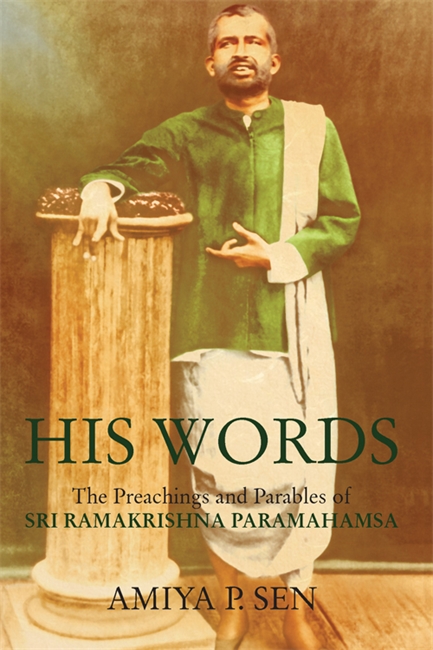
Amiya P. Sen’s lucid introductions and fluent translations of the interactions between Ramakrishna and his followers in His Words make for an engaging and illuminating account of Ramakrishna’s teachings. Compiled from a variety of contemporary and near-contemporary sources, this book brings out the dramatic simplicity of Ramakrishna’s incisive commentaries on profound religious ideas.
See also by Amiya Sen Ramakrishna Paramahamsa: The Sadhaka of Dakshineswar

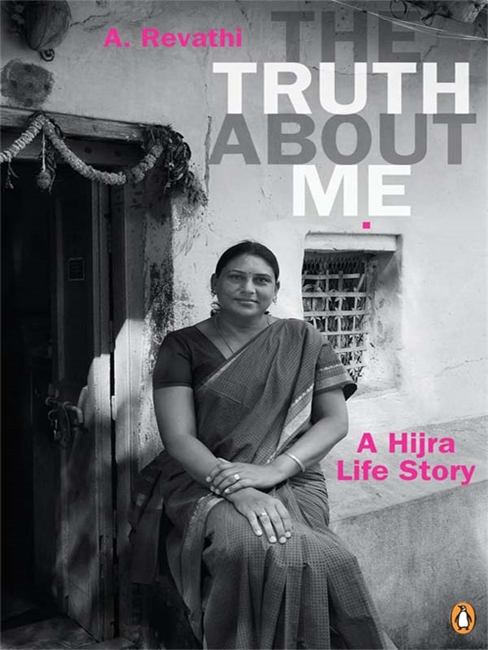
Revathi was born a boy, but felt and behaved like a girl. In telling her life story, Revathi evokes marvellously the deep unease of being in the wrong body that plagued her from childhood. To be true to herself, to escape the constant violence visited upon her by her family and community, the village-born Revathi ran away to Delhi to join a house of hijras. Her life became an incredible series of dangerous physical and emotional journeys to become a woman and to find love. The Truth about Me is the unflinchingly courageous and moving autobiography of a hijra who fought ridicule, persecution and violence both within her home and outside to find a life of dignity.

On 26 November 2008 ten heavily armed terrorists entered Mumbai. They headed for the city’s iconic landmarks and the mayhem they unleashed lasted nearly 60 hours.
The audacious terror attacks jolted Mumbai like never before. Even as they mourned; the residents of Maximum City demanded answers. But the information they got in return-accounts of the investigation; government rhetoric; newspaper reports; television features; books and even a film-was sketchy at best. Meanwhile; the courts continued with their prosecution of Mohammed Ajmal Amir Kasab; the lone surviving 26/11 gunman.
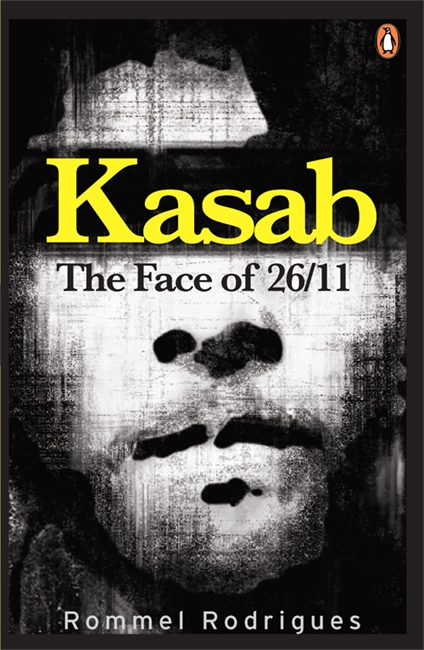
The broad picture available to the public is of the Pakistan-based terrorist organization Lashkar-e-Taiba and its ringleaders such as Hafiz Muhammad Saeed and Zaki-ur-Rehman Lakhvi training; arming and dispatching ten young men in a boat to attack India’s commercial capital. All we have been told about Kasab is that he was just another recruit brainwashed into carrying out the plot against Mumbai. Kasab: The Face of 26/11 breaks new ground by painstakingly piecing together Kasab’s terror trail. The narrative follows Kasab through the bylanes of Pakistani villages and cities as he made his way towards PoK; the dense forests where the terrorist-training camps are situated; the trains; buses and jeeps he boarded; the Indian vessel he and the others hijacked en route to Mumbai’s shores; Kasab’s capture and incarceration.
Rommel Rodrigues’ path-breaking investigative journalism fleshes out for the first time the well thought-out planning and organization that lay behind the attacks of 26/11.
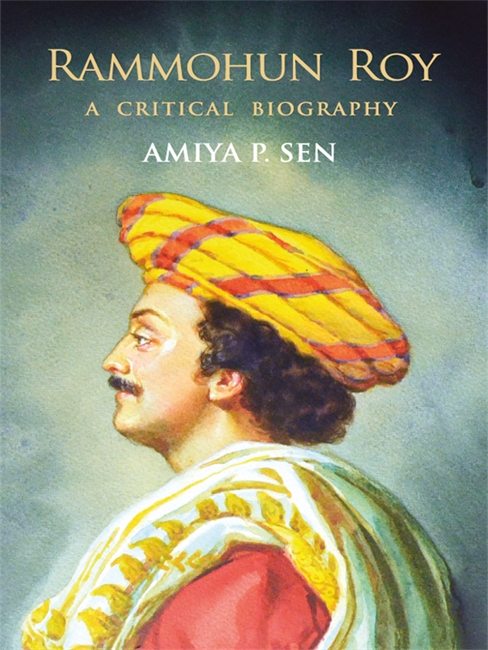
Raja Rammohun Roy (1774—1833) was a great champion of liberty and civil rights in colonial India. He was also a true cosmopolitan who envisioned a world without borders. A tireless crusader for religious and social reform, Rammohun attempted a progressive reinterpretation of Hinduism and tried to improve the lot of socially marginalized groups such as women.
Yet, in spite of his lofty public presence, Rammohun was a hugely controversial figure. He shocked the Hindu orthodoxy by his support to the abolition of Sati, offended evangelists by separating the moral message of Christ from the purely theological, and was often dragged into legal disputes over family property. By the time of his death in Bristol, he was as much resented as respected, both at home and abroad.
Using relatively unexplored sources, this elegant and accessible new biography by Amiya P. Sen paints a fascinating portrait of one of the legendary makers of modern India.
The only man ever to direct two major orchestras in North America at once, Zubin Mehta is a true maestro. A musical prodigy who appeared on the cover of Time magazine at the age of thirty-one, Zubin Mehta looks back at his illustrious life as a conductor, drawing links with the symphony in music and life. The book follows his relationship with Western classical music, his training and his refinement of the art. Weaving in and out of the narrative are anecdotes and the memories of his younger brother, Zarin, one of the best music administrators in the world today, and his son, Mervon. If you love music, this legend’s story is sure to hit the right notes.

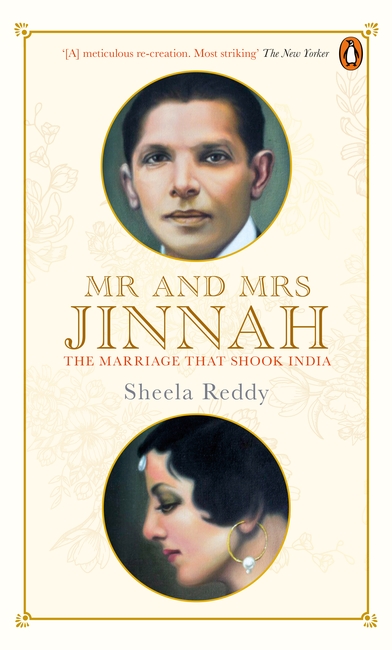
When Ruttie Petit fled from her father’s castle to wed Mohammed Ali Jinnah in 1918, their marriage outraged society at large. They were divided by community, religion and an age gap of twenty-four years. Well-known journalist Sheela Reddy uses never-before-seen personal letters and papers as well as accounts left by contemporaries and friends to portray this unusual relationship with a sympathetic, discerning eye. A product of intensive and meticulous research in Delhi, Bombay and Karachi, Reddy not only brings the solitary, misunderstood Jinnah and the lonely, wistful Ruttie to life, but also the society and politics of the times their story was set in. A must-read for all those interested in politics, history, and the power of an unforgettable love story.

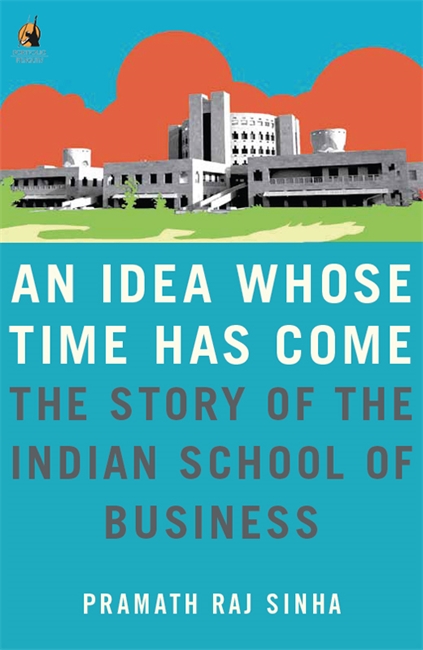
Ten years ago, the founders of the Indian School of Business, Hyderabad articulated a vision that was as daunting to execute as it was simple to state: to build a world-class business school in India.
The rest is history: within a decade the ISB grew from a start-up venture to globally top-ranked business school, named among the top twenty business schools in the world three years in a row, with the distinction of being the youngest business school ever to enter the world top twenty rankings.
An Idea Whose Time Has Come traces the ISB’s eventful history and also examines the reasons that account for the institute’s success. What emerges is a tale of perseverance and dedication, of challenges met and rewards reaped, and of an unshakeable idea that was painstakingly transformed into an invincible institution. It is no wonder that the ISB continues to attract thousands of confident, purposeful men and women every year and moulds them into talented professionals.

This is not a biography.
Nor is it a linear march of a man from childhood to success.
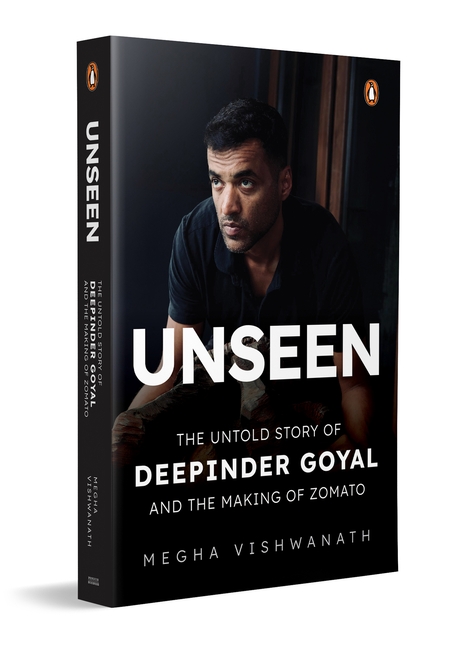
Unseen is the anatomy of a founder who doesn’t chase stability but thrives in contradictions—restless yet laser focused, flirting with high stakes and uncertain outcomes.
In July 2021, as Zomato became India’s first tech unicorn to go public, its founder, Deepinder Goyal, was largely untouched by the reverberating glory. Unseen begins where most stories end, at the peak, only to pull you into the shadows that shaped it.
Through the eyes of former journalist Megha Vishwanath, this is the deeply personal journey of a stuttering boy from small-town Punjab who grew into the reluctant face of a billion-dollar brand. Vishwanath pieces the narrative through hundreds of interviews, capturing the voices of those who worked with Deepinder, fought with him and followed him—through years of watching him build, break and build again.
Assembled from fragments of private battles, impossible questions and split-second decisions that altered the course of one of the largest companies of our generation, this book reveals what happens when ambition is stripped of vanity, brilliance sheds its theatre and success arrives without peace.
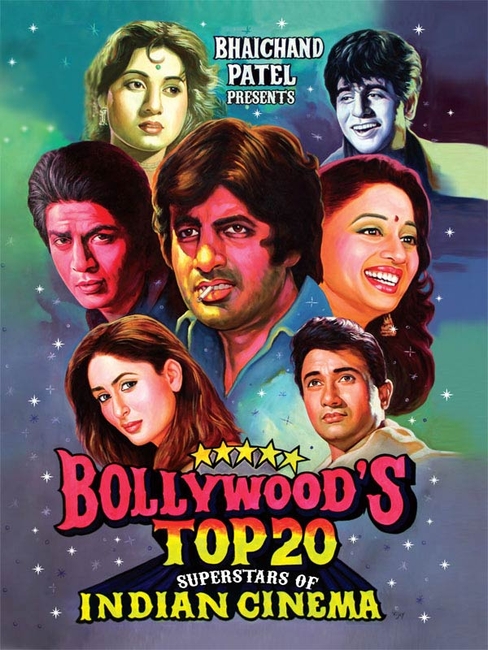
Hindi cinema has cast a seductive spell over its spectators for close to a century now. Visually arresting, dynamic in outlook and pulsating with life, Bollywood has entertained and enthralled moviegoers over the years with its melodious music, its colourful drama and its lively plotlines. At the very heart of the Bollywood mystique is the towering presence of its galaxy of stars-demigods and divas who have shaped and defined popular cinema, and popular imagination, from one generation to the next.
Bollywood’s Top 20 is an exciting collection of brand new essays by renowned writers that pays tribute to Hindi popular cinema’s biggest stars of all time-from Ashok Kumar, Dilip Kumar, Dev Anand, Raj Kapoor, Nargis and Madhubala to Rajesh Khanna, Amitabh Bachchan, Aamir Khan, Shah Rukh Khan, Kajol and Kareena Kapoor-who are indispensable to the Bollywood pantheon. Each piece offers unique insights into the lives of Bollywood’s most exceptional legends-their struggles and triumphs, downfalls and scandals, and the inscrutable x-factor that made them carve a niche for themselves in an industry bursting with talented professionals and desperate hopefuls.