



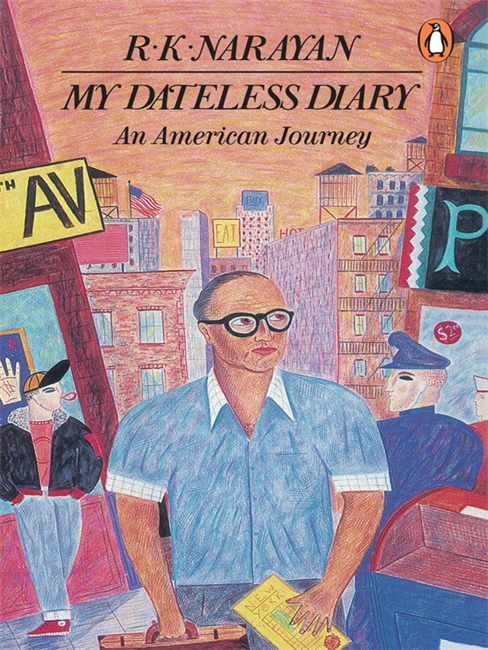
At the age of fifty, when most people have settled for the safety of routine, R. K. Narayan left India for the first time to travel through America. In this account of his journey, the writer’s pen unerringly captures the clamour and energy of New York city, the friendliness of the West Coast, the wealth and insularity of the Mid-West, the magnificence of the Grand Canyon…Threading their way through the narrative are a host of delightful characters-from celebrities like Greta Garbo, Aldous Huxley, Martha Graham, Cartier Bresson, Milton Singer, Edward G. Robinson and Ravi Shankar to the anonymous business tycoon on the train who dismissed the writer when he discovered Narayan had nothing to do with India’s steel industry. As a bonus, there are wry snapshots of those small but essential aspects of American life-muggers, fast food restaurants, instant gurus, subway commuters, TV advertisements, and American football. An entrancing and compelling travelogue about an endlessly fascinating land.
Catagory: Biographies, Diaries & True Accounts
Penguin Gandhi Reader
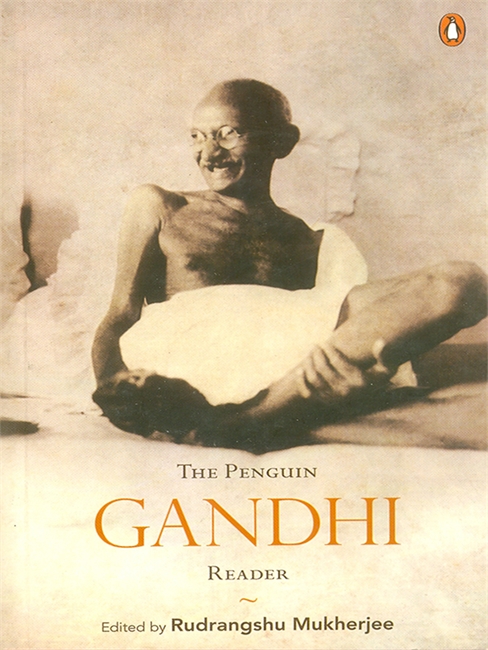
Mohandas Karamchand Gandhi (1869-1948) was born in Porbander on the western coast of India. His childhood and early upbringing were undistinguished but as an adult he initiated and was involved in a series of novel forms of peaceful protests which established him as one of the most important leaders of the twentieth century and one whose message and relevance transcended national boundaries. This meticulously edited volume culled from the Collected Works of Gandhi contains a representative selection of his writings focusing on themes which were central to Gandhi’s philosophy.
The Battle for Bihar
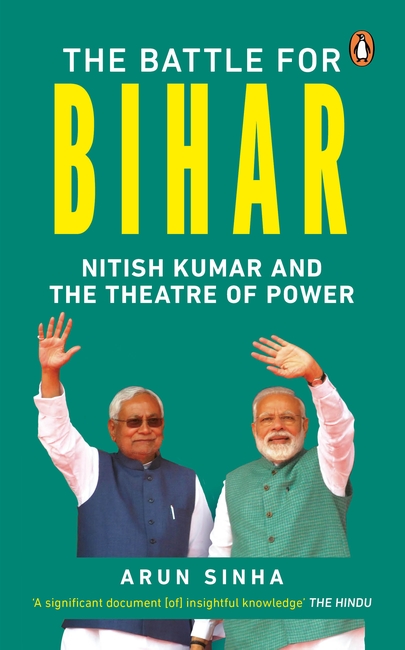
At the centre of India’s social churn and high political drama is Bihar, a state with great untapped potential. After bursting on to the scene in the late 1980s and becoming Bihar’s uncrowned ruler, Lalu Prasad Yadav was challenged by his erstwhile comrade Nitish Kumar. Unable to oust Lalu from power with his small, new party, Nitish made an alliance with the Bharatiya Janata Party (BJP). A quiet but canny politician, Nitish Kumar, as the chief minister, brought back law and order, roads, education and health to the fore of governance, aspects sorely lacking during Lalu’s long rule. But the entry of Narendra Modi into the national political scene in 2013 rocked the alliance’s boat. Nitish’s switching of alliance between the Rashtriya Janata Dal (RJD) and the BJP around that time cost him enormously in terms of political goodwill.
Will Nitish be able to restore his esteem by making Bihar a model state for India’s post-Independence journey? In this riveting narrative, seasoned journalist Arun Sinha tells the intertwined stories of Bihar’s political theatre and Nitish’s rule with incisive candour and in-depth research. The Battle for Bihar is a clear-sighted study of the turbulent state that could show India’s politics its way forward.
Dare to Dream
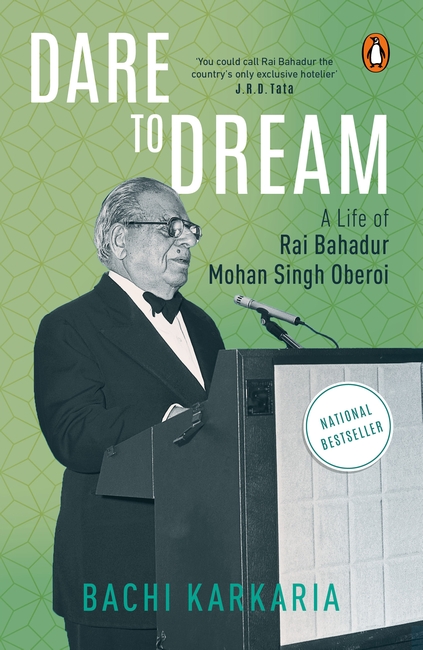
Born in a small village in Punjab at the turn of the century, Rai Bahadur Mohan Singh Oberoi began his career in the industry at Shimla’s Cecil Hotel on a monthly wage of Rs 50. But he was not destined to remain in that position for long. With a combination of clear-sighted thinking, frugality and sheer hard work, he managed to put together a plan and the finances necessary to acquire his first hotel, Clarkes. That was only the beginning. Decades later, the Oberoi Group has over thirty-one luxury hotels and two river cruise ships in six countries, and is acknowledged as a standard to aspire for. In this well-researched and candid biography, written with the cooperation of the late M.S. Oberoi, Bachi Karkaria describes how a man from modest beginnings became the head of an internationally celebrated hotel chain. It also shows how a major business is built up, run and kept at the top.
Dhandha
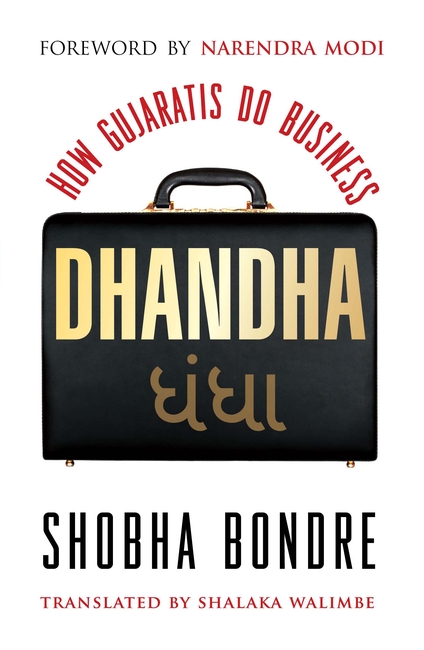
‘Dhandha’, meaning business, is a term often used in common trade parlance in India. But there is no other community that fully embodies what the term stands for than the Gujaratis. Shobha Bondre’s Dhandha is the story of a few such Gujaratis: Jaydev Patel, the New York Life Insurance agent credited with having sold policies worth $2.5 billion so far; Bhimjibhai Patel, one of the country’s biggest diamond merchants and co-founder of the ambitious ‘Diamond Nagar’ in Surat; Dalpatbhai Patel, the motelier who went on to become the mayor of Mansfield County; Mohanbhai Patel, a former sheriff of Mumbai and the leading manufacturer of aluminium collapsible tubes; and Hersha and Hasu Shah, owners of over a hundred hotels in the US.
Travelling across continents-from Mumbai to the United States-in search of their stories and the common values that bind them, Dhandha showcases the powerful ambition, incredible capacity for hard work, and the inherent business sense of the Gujaratis.
Working Out of the Box
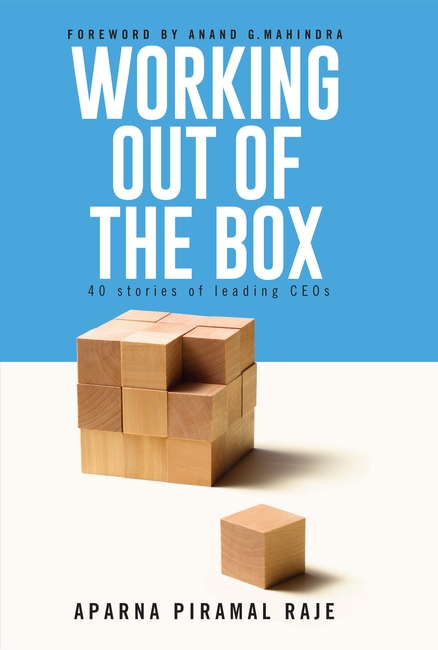
Do you know which business leader plays a game of sudoku every night before going to bed? Never uses a computer to write down important thoughts? Likes to stand and work?
In Working Out of the Box, Aparna Piramal Raje gives us an intimate peek into the lives of forty progressive leaders by exploring the connections between their workspaces and working styles. Capturing quirks, individual styles of working, motivations and leadership traits, and tracing the patterns exhibited by these leaders, she unravels their defining qualities and explains how they reflect in their workspaces. Divided into four sections, personal energy, organizational capital, brand values, environment and sustainability, the book provides insight into what makes these CEOs tick and how they manage their most valuable assets.
The Executors
‘If you produce what you have promised to, no one would want to come in your way’ S. Ramadorai, former vice chairman, Tata Consultancy Services
‘Relying on conventional wisdom is never a smart idea in an emerging business’ Akhil Gupta, vice chairman, Bharti Enterprises
‘Do your duty to the best of your ability, without attachment to the results, and remain calm in both success and failure’ Venkatesh Kini, president, Coca-Cola India and south-west Asia
‘Planning is academic. Action decides the winner’ Rahul Bhasin, managing partner, Baring Private Equity Partners
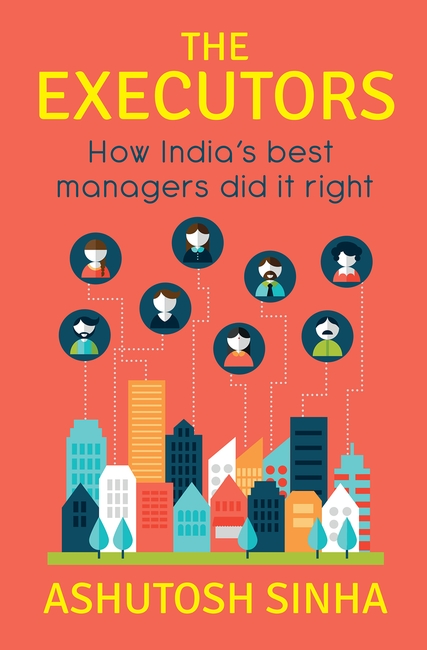
These are some of the life lessons that 30 of India’s most celebrated managers share in The Executors, a personal account of how they came to run influential companies such as Bharti, Bennett Coleman, Tech Mahindra, Apollo Munich, Convergys, Yum! Brands and Max Life Insurance, among others. Packed with inspiring stories of struggle, this book culls out the wisdom that these leaders have imbibed over the years and are keen to impart to others. Ashutosh Sinha insightfully explores their management style, philosophy and how they lead from the front.
The Modern Monk
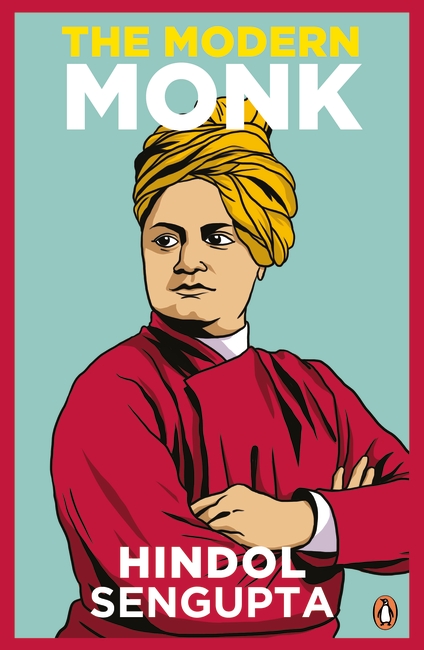
He loved French cookbooks, invented a new way of making khichdi, was interested in the engineering behind ship-building and the technology that makes ammunition. More than 100 years after his death, do we really know or understand the bewildering, fascinating, complex man Swami Vivekananda was? From his speech in Chicago that mesmerised America to his voluminous writings and speeches that redefined the idea of India, Vivekananda was much more than a monk. His work sweeps through Indian politics, economics, sociology, arts and culture, and of course religion. So ubiquitous are his sayings that they pop everywhere from the speeches of politicians to t-shirts and mugs. It may perhaps be said about Vivekananda that he rarely had a boring idea – and even when he did, he never expressed it boringly! We see and hear so much about Vivekananda that we have almost forgotten how critical he is to our understanding of ourselves as Indians, and indeed, as human beings. Vivekananda is one of the most important figures in the modern imagination of India. He is also an utterly modern man, consistently challenging his own views, and embracing diverse, even conflicting arguments. It is his modernity that appeals to us today. He is unlike any monk we have known. He is confined neither by history nor by ritual, and is constantly questioning everything around him, including himself. It is in Vivekananda’s contradictions, his doubts, his fears and his failings that he recognize his profoundly compelling divinity – he teaches us that to try and understand God, first one must truly comprehend one’s own self. This book is an argument that it is not just because he is close to God but also because he is so tantalizingly immersed in being human that keeps us returning to Vivekananda and his immortal wisdom.
The Game Changers
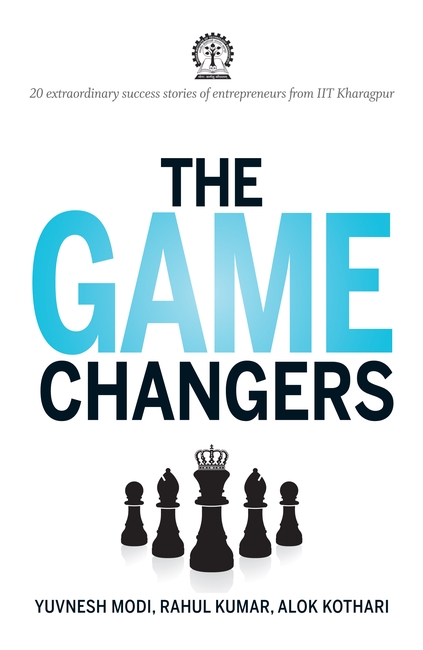
Entrepreneurship is not about breaking free from the 9 to 5 humdrum, not about being your own boss, and definitely not glorious. The entrepreneur shuns the comfort of a cushy corporate job and six-figure salaries to set sail on uncharted waters with a single-minded zeal and only an idea as an anchor. But it is this idea and passion that makes all the difference and catapults them into a world of infinite possibilities. The Game Changers brings to you 20 success stories of IITians who went on to live the big dream. These include: Suhas Patil, Vijay Kumar, Vinod Gupta, Sam Dalal, Sridhar Mitta, Arjun Malhotra, Kiran Seth, Prabhakant Sinha, Ranbir Singh Gupta, Bikram Dasgupta founder of Globsyn, Praful Kulkarni, Sunil Gaitonde, Anand Deshpande, Arvind Kejriwal, Harish Hande, Anuradha Acharya, Venkata Subramanian, Bikash Barai, Vikram Kumar, and Krishna Mehra.
With a foreword by Dr Duvvuri Subbarao, governor, Reserve Bank of India, and introduction by Damodar Acharya, director, IIT Karagpur, this book marks 60 golden years of India’s finest institute. Come, be a part of their journey, get inspired to dream and make your own story.
Barons of Banking
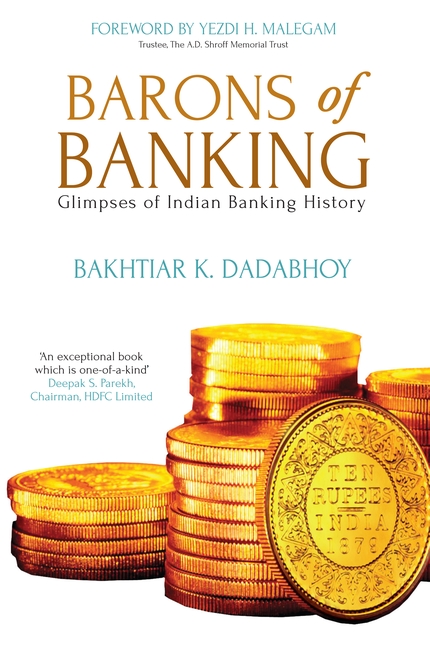
Barons of Banking highlights the contributions of six distinguished personalities from the world of banking: Sir Sorabji Pochkhanawala, Sir Purshotamdas Thakurdas, Sir Chintaman D. Deshmukh, A.D. Shroff, H.T. Parekh, and R.K. Talwar. They not only played a pioneering role in the growth of the institutions they founded or were actively associated with, but also left an indelible mark on the banking industry as a whole. Through the narration of the history of five key institutions: the Central Bank of India; the Reserve Bank of India; the State Bank of India; the Industrial Credit and Investment Corporation of India Ltd; and the Housing Development and Finance Corporation Ltd, the author gives us a keen insight into the contributions of these luminaries to banking in India. Also included is a narration of the recommendations of important committees and commissions which influenced the course of Indian banking.