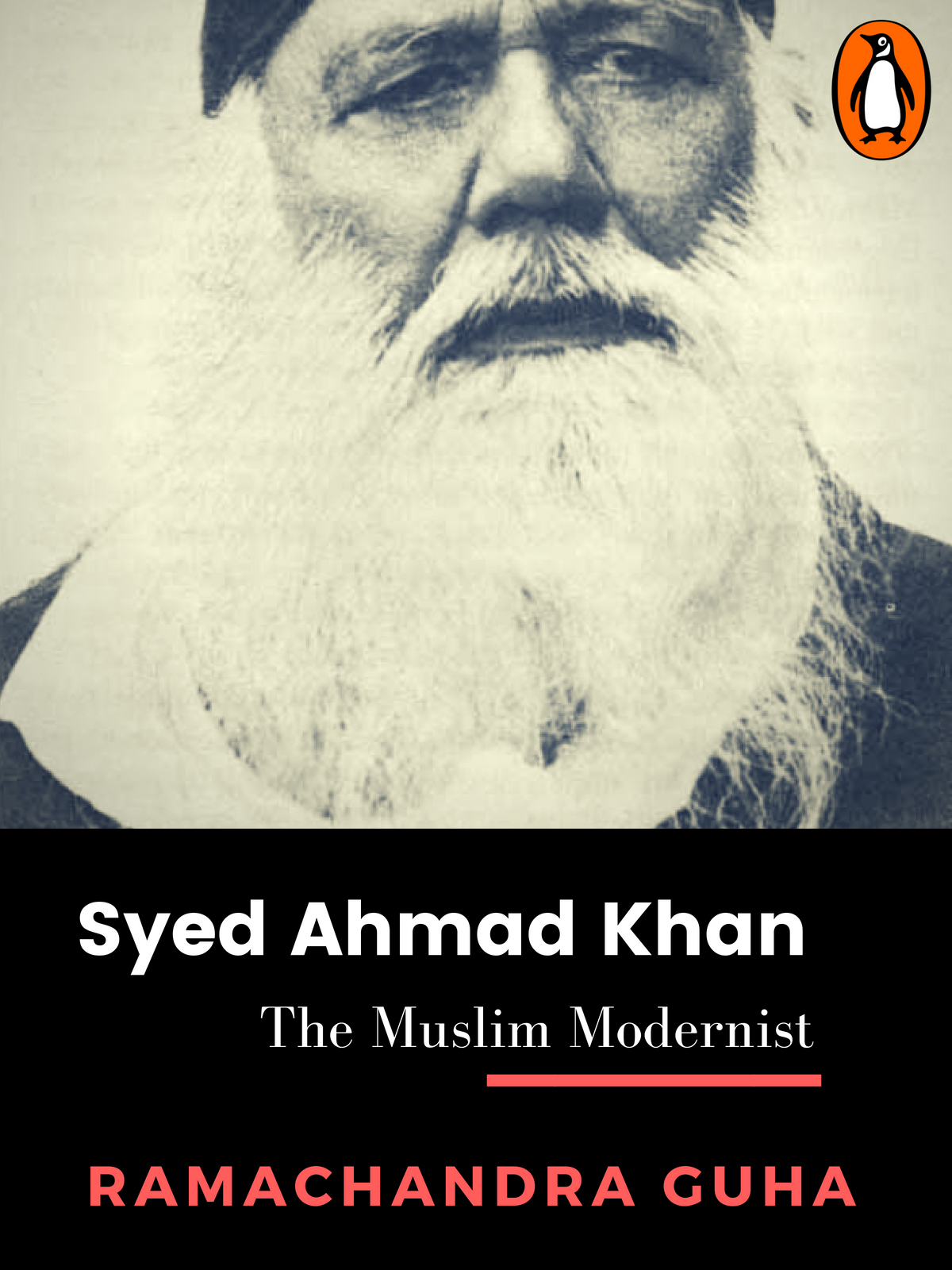
Syed Ahmad Khan was no ordinary man. His unorthodox upbringing led to his prolific writing in many languages interspersed with radical thoughts.
He gave importance to Western education and promoted the need for communal harmony. Like writings of other Indian thinkers of the nineteenth and early twentieth centuries, his thoughts and ideas continue to remain relevant.
In ‘Syed Ahmad Khan: The Muslim Modernist’, Ramachandra Guha captures the flavour of Khan’s intellectual and political legacy.
Raja Rammohan Roy is well-known for abolishing the regressive practice of Sati, fighting for other social reforms, and founding a new religious order within the Indian society. His contributions to building a liberal mindset are many.
Roy was perhaps the first Indian thinker who engaged with the challenges posed by both colonial rule and Indian conservatism. Roy was a liberal, quite ahead of his times, who fought for the freedom of press and promoted modern education. His writing set the tone for reformers and activists.
‘Rammohan Roy: The First Liberal of India’ by Ramachandra Guha is a glimpse into the thoughts and ideas of Raja Rammohan Roy.
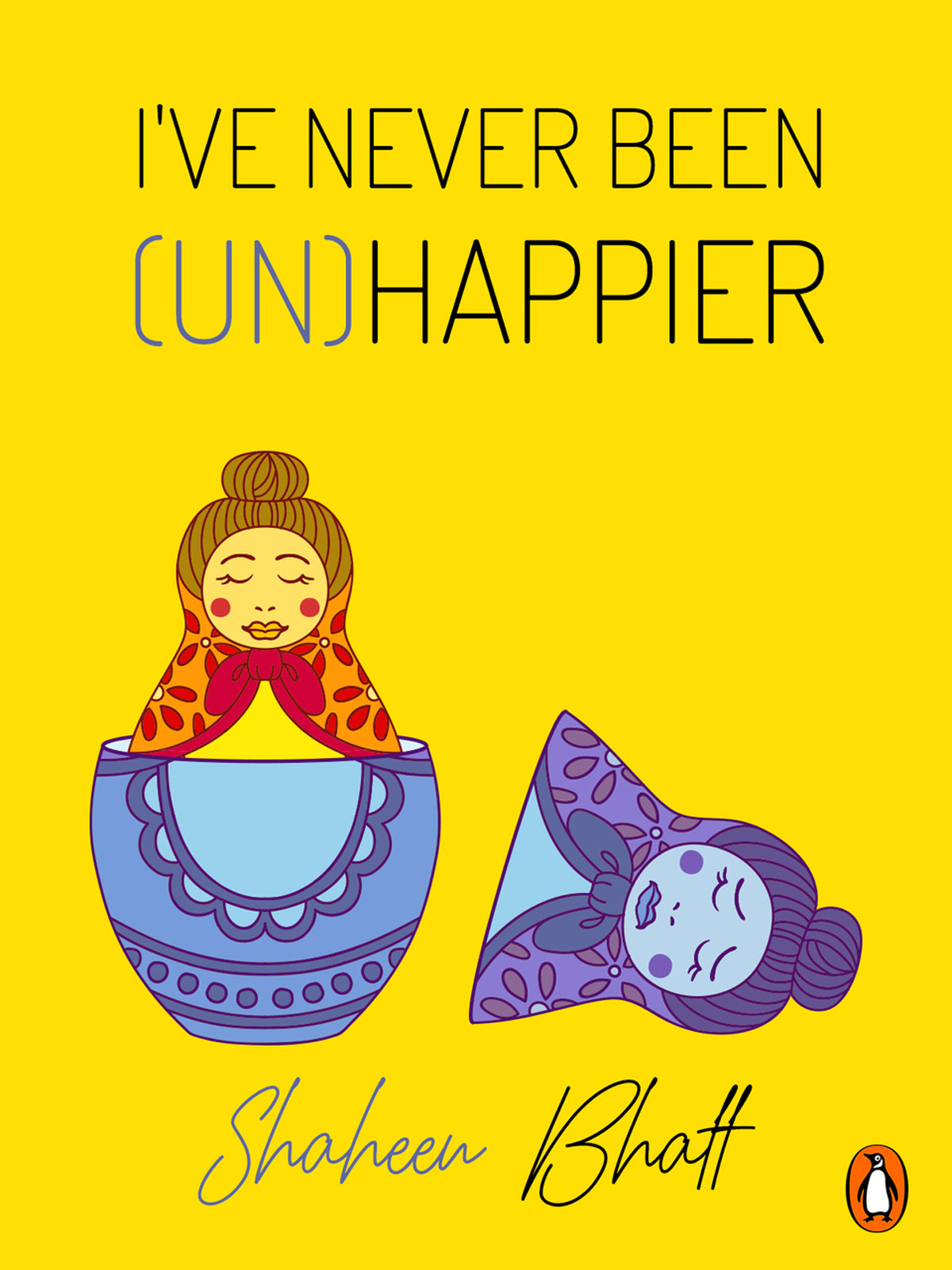
Lights, Camera . . . Inaction
Unwittingly known as Alia Bhatt’s older sister, screenwriter and fame-child Shaheen Bhatt has been a powerhouse of quiet restraint—until now. In a sweeping act of courage, she now invites you into her head.
Shaheen was diagnosed with depression at eighteen, after five years of already living with it. In this emotionally arresting memoir, she reveals the daily experiences and debilitating big picture of one of the most critically misinterpreted mental illnesses in the twenty-first century. Equal parts conundrum and enlightenment, Shaheen takes us through the personal pendulum of understanding and living with depression in her privileged circumstances. With honesty and a profound self-awareness, Shaheen lays claim to her sadness, finding it a home in the universal fabric of the human condition.
In this multi-dimensional, philosophical tell-all, Shaheen acknowledges, accepts and overcomes the peculiarities of this way of being alive. A topic of massive interest to anyone living with mental health disorders, I’ve Never Been (un)Happier stretches out its hand to gently provide solace and solidarity.
When Bharat takes over his father’s shop, he doesn’t know that the factory sends over the ‘defect’ goods to a charity, as a gift. The system has been in place for years, but yet when he sees his goods leaving without his permission, he demands that Sudha Murty come to him in person and make a request anew. Sudha knows that he is acting out, a child having to fill his father’s shoes, desperate to be seen as important, to earn respect. What should she do? Emotionally compelling and subtly generous, Sudha Murty beautifully articulates the difference between fighting and forgiving.
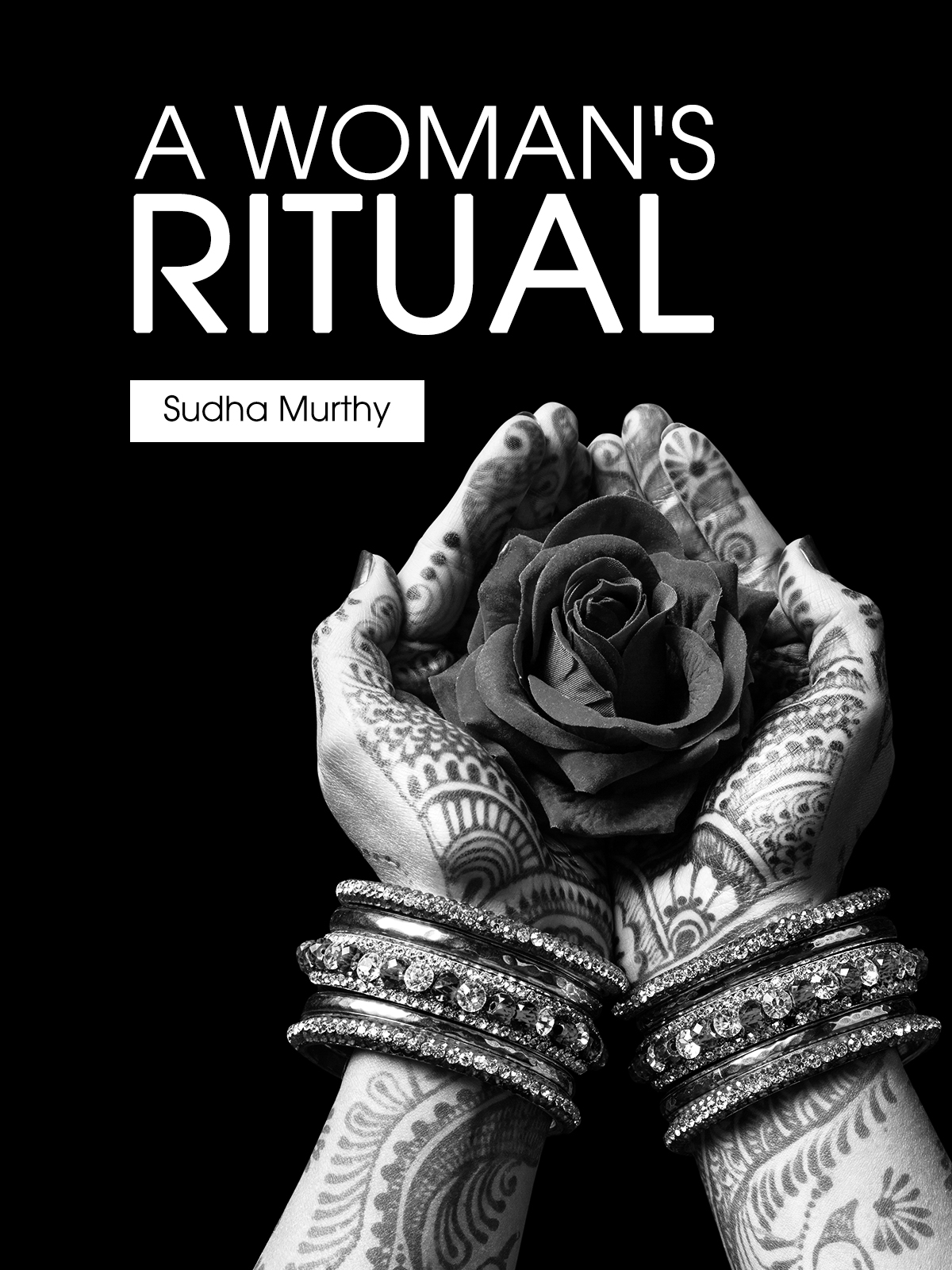
Shraddha is a ritual where once a year, three generations of elders who have passed away are venerated by their loved ones. When Sudha Murthy went to perform the shraddha for her father, she was turned away, because she was a woman. “No woman has ever performed this ritual,” the pandit said.
Sudha Murty questions the importance of meaningless ritual while still being devoted to tradition – what does it mean to be a religious woman in the 21st century? A searching and powerful piece on reaching a balance between old and the new as a woman.
How deep is the love of a good woman? Sudha Murty unpacks the love of three different women, in how they go against society’s demands for selfless acts. Each woman knows the struggles they face to find water every day. Each woman knows that the power to bring water to homes lies only in the hands of powerful men. Each woman does what is needed to make sure that happens anyway. The struggle and pain of being a good woman in rural India is brought to life beautifully by Sudha Murty.
When a farmer invites another to come live with him and help with his farm, he thought it would be easy. But their wives cannot get along. Kashibai is hard working with a temper, and Fatimabai is lazy with a gentle nature. Through years of irreconcilable strife, a sudden tragedy pulls the life of these women inextricably together. Can a woman really surpass her own unhappiness for the sake of her enemy’s child? Sudha Murty gently tells this eternal tale of struggle and redemption through the power of a mother’s love.
Sudha Murty explores how a single moment of kindness can change an entire life. Chitra was an abandoned girl alone on a train without a ticket. Sudha couldn’t bear to leave a girl alone on the railway station late at night. What could she do? How much responsibility can one woman take for a the life of a strange girl child? Sudha Murty deftly explores the tenderness of selfless, small actions, and how a single person can make all the difference in the world.

When Jamsetji Tat started a trading firm in 1868, few could have guessed that he was also starting an important chapter in the making of modern India. Jamsetji saw that the three keys to India’s industrial development were steel, hydroelectric power, and technical education and research. A century and a half later, the Tatas can claim with justice to have lined up to the vision of their founder.
This edition includes the story of how the Tatas, with Ratan Tata at the helm, have had to grapple with change in the post-1992 era of economic reforms, when the opening up of India to the world came as both a challenge and a blessing. In a frank epilogue, Ratan Tata talks about the difficulties he faced in implementing change, including resistance from his colleagues. This new edition also has a postscript on the Nano, which has given the most global prominence to the Tata brand.
The Creation of Wealth is R.M. Lala’s bestselling account of how the Tatas have been at the forefront in the making of the Indian nation-not just by their phenomenal achievements as industrialists and entrepreneurs but also by their significant contributions in areas like factory reforms, labour and social welfare, medical research, higher education, culture and arts, and rural development.
An exhaustive and unforgettable portrait of India’s greatest and most respected industrialist. Written with J.R.D. Tata’s co-operation, this superb biography tells the J.R.D. story from his birth to 1993, the year in which he died in Switzerland. The book is divided into four parts: Part I deals with the early years, from J.R.D’s birth in France in 1904 to his accession to the chairmanship of Tatas, India’s largest industrial conglomerate, at the age of thirty-four; Part II looks at his forty-six years in Indian aviation (the lasting passion of J.R.D’s life) which led to the initiation of the Indian aviation industry and its development into one of India’s success stories; Part III illuminates his half-century-long stint as the outstanding personality of Indian industry; and Part IV unearths hitherto unknown details about the private man and the public figure, including glimpses of his long friendships with such people as Jawaharlal Nehru, Mahatma Gandhi, Indira Gandhi and his association with celebrities in India and abroad.