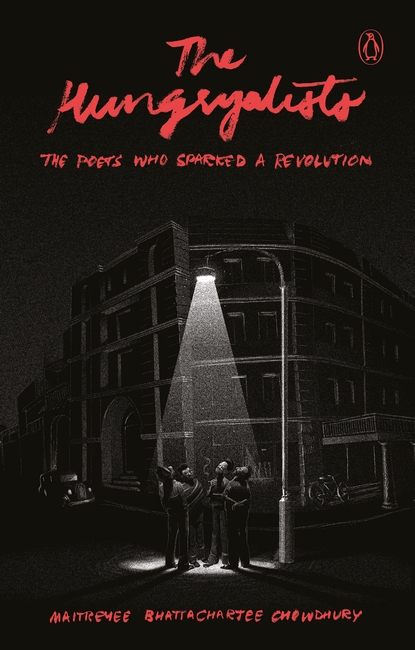
What happens to a highbrow literary culture when its fault lines-along caste, class and gender-are brutally exposed? What happens to the young iconoclasts who dare to speak and write about these issues openly? Is there such a thing as a happy ending for revolutionaries? Or are they doomed to be forever relegated to the footnotes of history?
This is the never-before-told true story of the Hungry Generation (or ‘the Hungryalists’)-a group of barnstorming, anti-establishment poets, writers and artists in Bengal in the 1960s. Braving social boycott, ridicule and arrests, the Hungryalists changed the literary landscape of Bengal (and many South Asian countries) forever. Along the way, they also influenced iconic poets, such as Allen Ginsberg, who struck up a lifelong friendship with the Hungryalists.

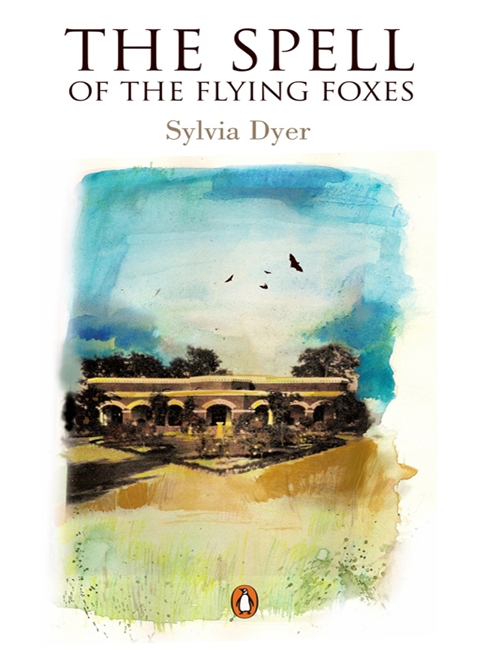
Champaran, 1845. Drawn to the rich, fertile land to farm Blue Gold, indigo, Alfred Augustus Tripe settles by the river Baghmati. A whole village of workers emerges nearby as Tripe starts a family with an Indian heiress. Nearly a century later, Tripe’s sprawling home and most of his family are destroyed in the devastating Bihar earthquake of 1934. Now his only granddaughter, Gladys, must find a way to stop her unscrupulous cousin Harry from usurping her entire inheritance and turning her young children destitute. A formidable dacoit leader miraculously comes to her rescue, India gains independence, and the flying foxes, the bearers of good fortune, disappear.
In sparkling, lyrical prose, Sylvia Dyer, Gladys’s daughter, brings to life a world of picturesque beauty, love and hope intertwined with social ills, and a time when the passionate freedom struggle threatened the very existence of Anglo-Indians in India.

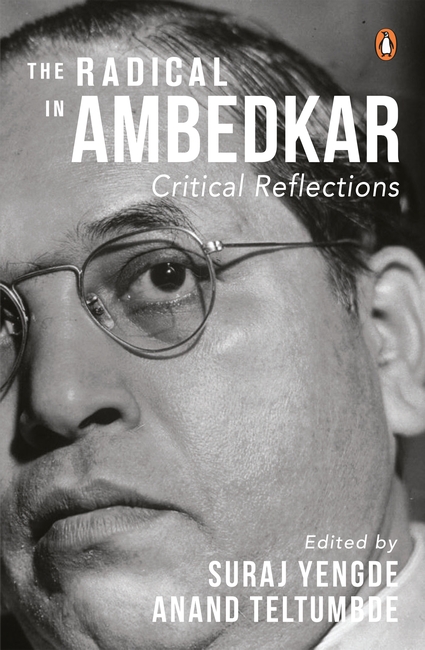
This landmark volume, edited and introduced by Anand Teltumbde and Suraj Yengde, establishes B.R. Ambedkar as the most powerful advocate of equality and fraternity in modern India. While the vibrant Dalit movement recognizes Ambedkar as an agent for social change, the intellectual class has celebrated him as the key architect of the Indian Constitution and the political establishment has sought to limit his concerns to the question of reservations. This remarkable volume seeks to unpack the radical in Ambedkar’s legacy by examining his life work from hitherto unexplored perspectives.
Although revered by millions today primarily as a Dalit icon, Ambedkar was a serious scholar of India’s history, society and foreign policy. He was also among the first dedicated human rights lawyers, as well as a journalist and a statesman. Critically evaluating his thought and work, the essays in this book-by Jean Drèze, Partha Chatterjee, Sukhadeo Thorat, Manu Bhagavan, Anupama Rao and other internationally renowned names-discuss Ambedkar’s theory on minority rights, the consequences of the mass conversion of Dalits to Buddhism, Dalit oppression in the context of racism and anti-Semitism, and the value of his thought for Marxism and feminism, among other global concerns.
An extraordinary collection of immense breadth and scholarship that challenges the popular understanding of Ambedkar, The Radical in Ambedkar is essential reading for all those who wish to imagine a new future.

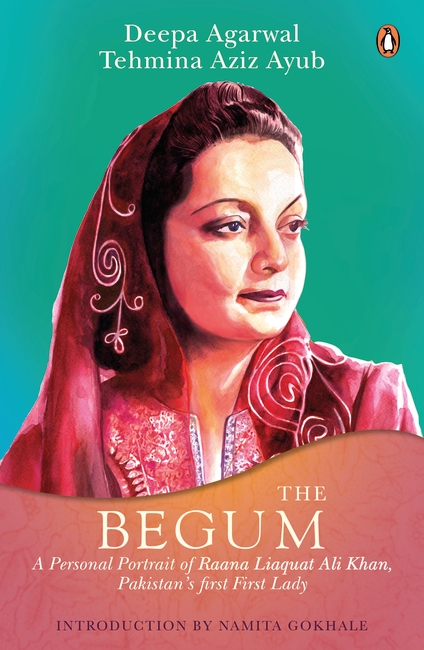
Begum Ra’ana Liaquat Ali Khan was the wife of Pakistan’s first prime minister. She was born
Irene Margaret Pant in Kumaon in the early twentieth century. A generation earlier, her family
had converted to Christianity, and Irene grew up in the shadow of the Brahmin community’s still
active outrage. Always intelligent, outgoing and independent, she was teaching economics in a
Delhi college when she met the dashing Nawazada Liaquat Ali Khan, a rising politician in the Muslim
League and an ardent champion of the cause for Pakistan.
She was immediately inspired by both the man and the idea; they married in 1933 and Irene Pant
became Ra’ana Liaquat Ali Khan. In August 1947 they left for Pakistan-led by Liaquat’s mentor
and friend, Mohammad Ali Jinnah. Ra’ana threw herself into the work of nation building, but in
1951 Liaquat Ali Khan was assassinated, and the reasons for his murder are still shrouded in mystery.
Ra’ana continued to be active in public life-and her contribution to women’s empowerment in
Pakistan is felt to this day.
Ra’ana’s life story embodies all the major tropes of the Indian subcontinent’s recent history.
Three religions-Hinduism, Christianity and Islam-had an immense impact on her life,
and she participated actively in all the major movements of her time-the freedom struggle,
the Pakistani movement and the fight for women’s empowerment. She could see clearly what went
wrong after 1947 and wasn’t afraid to say so. She spoke out openly against the rise of religious
conservatism in Pakistan and the growing role of corruption. She occasionally met with opposition,
but she never gave up. It is this spirit that The Begum captures.

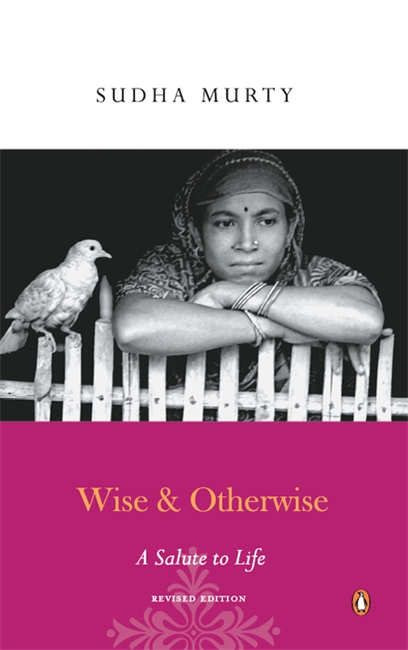
Fifty vignettes showcase the myriad shades of human nature A man dumps his aged father in an old-age home after declaring him to be a homeless stranger, a tribal chief in the Sahyadri hills teaches the author that there is humility in receiving too, and a sick woman remembers to thank her benefactor even from her deathbed. These are just some of the poignant and eye-opening stories about people from all over the country that Sudha Murty recounts in this book. From incredible examples of generosity to the meanest acts one can expect from men and women, she records everything with wry humour and a directness that touches the heart.
First published in 2002, Wise and Otherwise has sold over 30,000 copies in English and has been translated into all the major Indian languages. This revised new edition is sure to charm many more readers and encourage them to explore their inner selves and the PBI – World around us with new eyes.

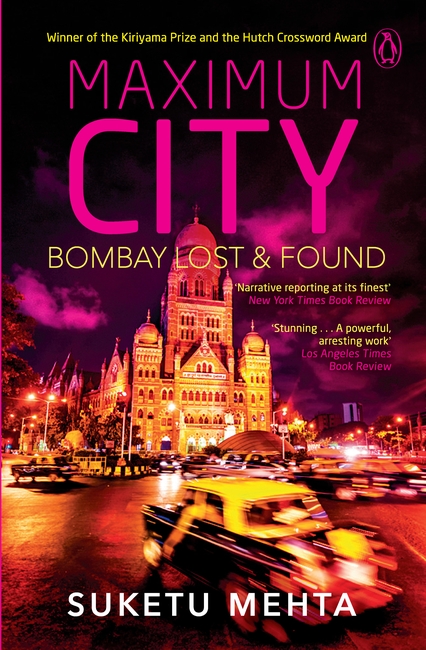
A native of Bombay, Suketu Mehta gives us an insider’s view of this stunning metropolis. He approaches the city from unexpected angles, taking us into the criminal underworld of rival Muslim and Hindu gangs, following the life of a bar dancer raised amid poverty and abuse, opening the door into the inner sanctums of Bollywood, and delving into the stories of the countless villagers who come in search of a better life and end up living on the sidewalks.
As each individual story unfolds, Mehta also recounts his own efforts to make a home in Bombay after more than twenty years abroad. Candid, impassioned, funny, and heartrending, Maximum City is a revelation of an ancient and ever-changing world.

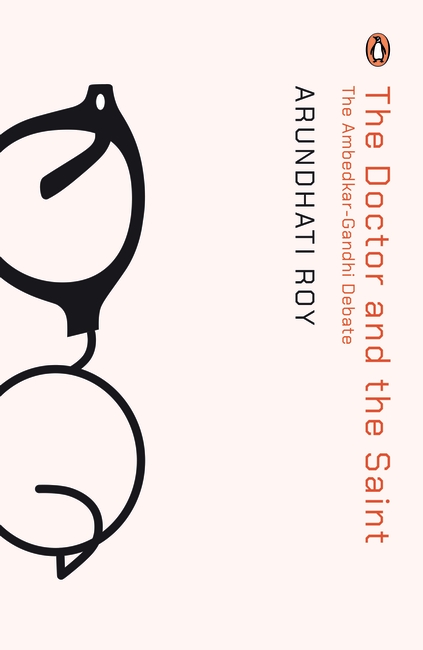
To best understand and address the inequality in India today, Arundhati Roy insists we must examine both the political development and influence of M.K. Gandhi and why B.R. Ambedkar’s brilliant challenge to his near-divine status was suppressed by India’s elite. In Roy’s analysis, we see that Ambedkar’s fight for justice was systematically sidelined in favor of policies that reinforced caste, resulting in the current nation of India: independent of British rule, globally powerful, and marked to this day by the caste system.
This book situates Ambedkar’s arguments in their vital historical context-namely, as an extended public political debate with Mohandas Gandhi. ‘For more than half a century-throughout his adult life-[Gandhi’s] pronouncements on the inherent qualities of black Africans, untouchables and the laboring classes remained consistently insulting,’ writes Roy. ‘His refusal to allow working-class people and untouchables to create their own political organizations and elect their own representatives remained consistent too.’
In The Doctor and the Saint, Roy exposes some uncomfortable, controversial, and even surprising truths about the political thought and career of India’s most famous and most revered figure. In doing so she makes the case for why Ambedkar’s revolutionary intellectual achievements must be resurrected, not only in India but throughout the world.

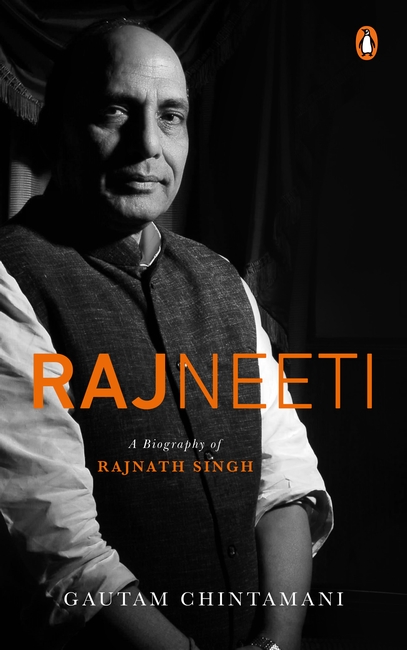
Rajneeti mein “neeti” hai, to “aneeti” kyon?’ – Rajnath Singh
Rajnath Singh rose from a Swayamsevak in the RSS to the Chief Minister of Uttar Pradesh, and also served as a Cabinet Minister in the Vajpayee Government. Jailed during the Emergency, Singh was the president of the BJP’s youth wing, the Bharatiya Janata Yuva Morcha. A two-term President, Singh saw the elevation of Narendra Modi as the party’s PM candidate and delivered BJP’s biggest elections victory in 2014. Since then, as India’s Home Minister, he has ushered in a new phase in the country’s security where both internal and external threats have been minimised. Under Singh, the Red menace from Naxalites and Maoists has been nearly wiped out, and the state of Jammu and Kashmir saw the first local body elections in over a decade.
Read on to know more about one of the tallest politicians in present-day India. In a career spanning nearly fifty years, Rajnath Singh has not only witnessed but also played a significant role in shaping the history of this country. Drawing from a vast amount of research and in-depth interviews, Gautam Chintamani’s engaging narrative reveals for the first-time a politician who never shied away from doing the right thing.
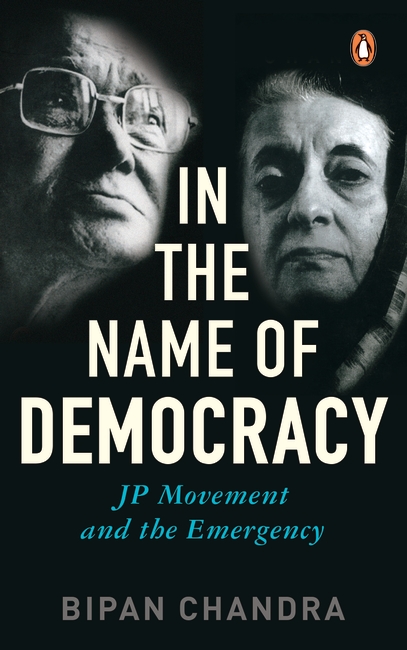
An unusual and insightful perspective of Indian democracy’s dark hour
‘When Jayaprakash Narayan, the leader of the JP movement in north India, pressed for the resignation of Prime Minister Indira Gandhi, it prompted her to impose internal Emergency. In this fascinating account, Bipan Chandra traces the events that led up to this moment and makes some startling revelations. He finds that there was a real danger of the JP movement turning fascist, given the fuzzy ideology of Total Revolution, its confused leadership and dependence on the RSS for its organization. At the same time, despite the authoritarianism inherent in the Emergency, particularly with the rising power of Sanjay Gandhi and his Youth Congress brigade, Indira Gandhi did end it and call for elections.
Finely argued, incisive and original, this book offers significant insight into those turbulent years and joins the ever-relevant debate on the acceptable limits of popular protest in a democracy.
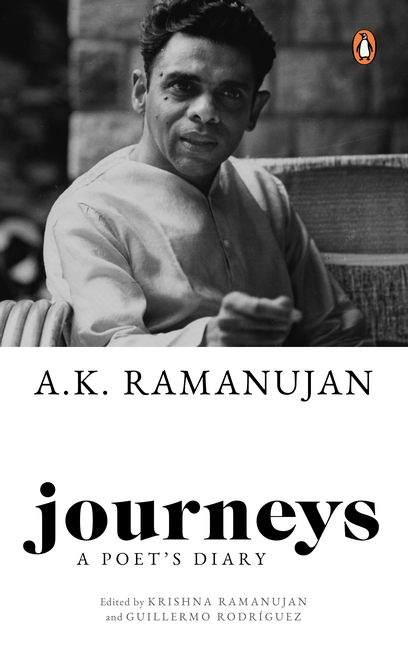
A.K. Ramanujan (1929-1993), one of India’s finest poets, translators, folklorists, essayists and scholars of the twentieth century, is a stalwart in India’s literary history. His translations of ancient Tamil and medieval Kannada poetry, as well as of UR Ananthamurthy’s novel Samskara, are considered as classics in Indian literature. A pioneering modernist poet, during his lifetime he produced four poetry collections in English, and he had also intended to publish the journals he had kept throughout the decades. After his premature death 25 years ago, his journals, diaries, papers and other documents-spanning fifty years from 1944 to 1993-were given by his family to the Special Collections Research Center at the Regenstein Library of the University of Chicago in June 1994. These unpublished writings, meticulously preserved and catalogued at the University of Chicago, were waiting for someone to unveil them to a wider readership.
Edited by Krishna Ramanujan and Guillermo Rodríguez, Journeys offers access to Ramanujan’s personal diaries and journals, providing a window into his creative process. It will include literary entries from his travels, his thoughts on writing, poetry drafts, and dreams. His diaries and journals served as fertile ground where he planted the seeds for much of his published work.