



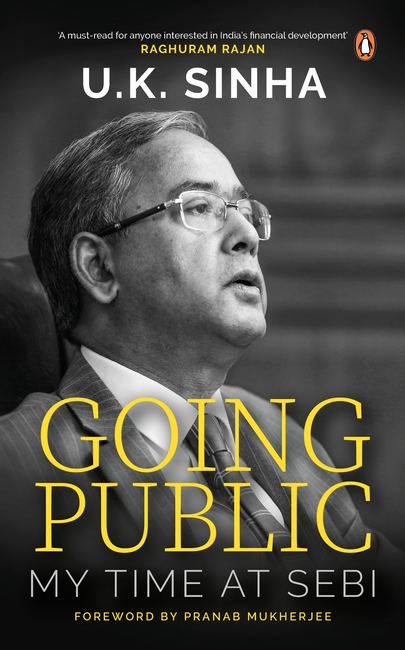
As chief of SEBI, Upendra Kumar Sinha guided the regulatory body through some of its most crucial years. Successive governments appointed him on this crucial post-making him one of the longest-serving heads of the organization. Under his leadership, SEBI successfully fought a long legal battle with Sahara, and led the crackdown on institutions such as PACL, Rose Valley, Saradha and the MPS groups which conducted unauthorized deposit collections.
Upendra Kumar Sinha has contributed significantly to shaping India’s capital markets in multiple roles, including as chairman of UTI Mutual Fund and head of the Capital Markets division in the Ministry of Finance. He’s been the guiding force behind reforms to protect the rights of investors, make stock exchanges more secure, and introduce alternate investment funds (AIFs), real estate investment trusts (REITs) and infrastructure investment trusts (InvITs). He is credited with the current revival and growth of the mutual funds industry in the country. This candid and historically important memoir reminisces on his journey through India’s changing financial landscape.
Catagory: Biographies, Diaries & True Accounts
Sridevi
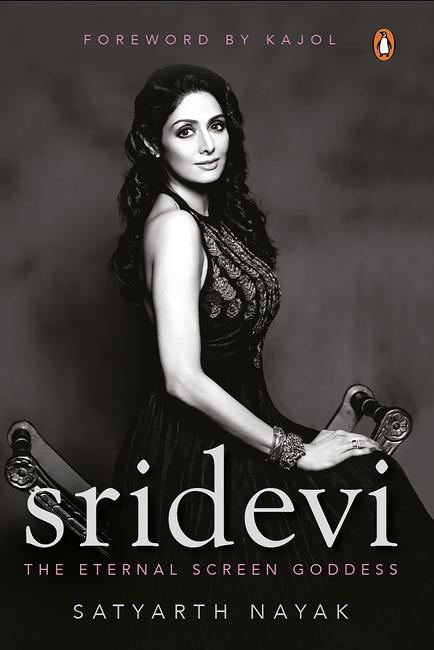
Hailed as the first pan-Indian female superstar in an era which literally offered actresses crumbs, Sridevi tamed Hindi cinema like no other. Beginning her affair with the camera when she was four, this doe-eyed beauty conquered Tamil, Telugu, Malayalam and Kannada industries with performances etched in gold. Taking Hindi cinema by storm with Himmatwala in 1983, Sridevi emerged as one of the most iconic screen goddesses of India, playing characters that went on to become cultural touchstones.
A supreme artiste who had mastered all the nine rasas, her comedy was peerless, her dances legendary, her histrionics awe-inspiring and her life a study in contrast, electric on screen, strangely reticent off it. Besides reigning as queen bee for the longest spell among Hindi heroines, she also remains the only actress who was No.1 in Tamil and Telugu cinema as well.
Such was Sridevi’s megastardom that she emerged as the ‘hero’ at the box office, towering above her male co-actors. Challenging patriarchy in Bollywood like no other, she not only exalted the status of the Hindi film heroine but also empowered a whole generation of audiences. After a hiatus of fifteen years, she shattered the rules again by becoming the only Bollywood diva to make a triumphant comeback in 2012 with the globally acclaimed English Vinglish.
If her life played out forever in the limelight, so did her sudden demise in 2018. Charting five decades of her larger-than-life magic, this book celebrates both the phenomenon and the person Sridevi was. This is her journey from child star to one of our greatest movie luminaries who forever changed the narrative of Indian cinema.
Breath of Gold

Fights, action, music, romance, secret trysts-renowned classical musician Pandit Hariprasad Chaurasia’s life reads almost like a film script. Wrestler in the morning, student during the daytime and flute player in secret, he lived more than a double life through his early years, till he broke away from his wrestler father’s watchful eye to join All India Radio as a flautist.
His marriage, relocation to Bombay and his foray into films were events rich in drama. As were his meetings with other musical greats, including Pandit Shiv Kumar Sharma, his dearest friend and music partner, with whom he composed the music for films like Silsila, Lamhe and Chandni. His reminiscences about his journey as a student of the reclusive Annapurna Devi, daughter of the famed Allauddin Khan of Maihar, give deep insights into his nature as well as that of his guruma.
Hariprasad Chaurasia has also been a guru to innumerable students in his Mumbai and Bhubaneswar gurukuls, and at the World Music Department, Rotterdam Music Conservatory, the Netherlands, where he is artistic director. His mesmerizing flute can be heard in some of Hindi cinema’s most popular songs, in a composition by the former Beatle George Harrison, as well as in recordings with renowned musicians from across the world.
A plethora of awards, including the Padma Vibhushan, sits lightly on the man, who has taken the humble flute to international renown as an instrument that can hold its own. Hariprasad Chaurasia and his Breath of Gold will inspire and amaze everyone who reads the life story of this much-loved flautist.
A Chequered Brilliance
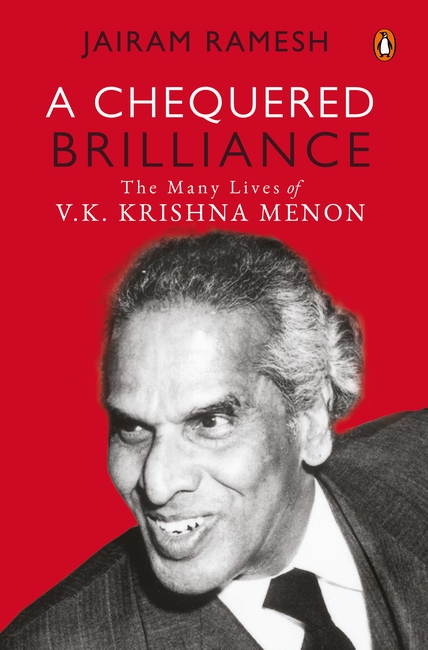
This is a compelling biography of one of India’s most controversial and consequential public figures. V.K. Krishna Menon continues to command our attention not just because he was Jawaharlal Nehru’s confidant and soulmate but also for many of his own political and literary accomplishments. A relentless crusader for Indian independence in the UK in the 1930s and 1940s, he was a global star at the United Nations in the 1950s before he was forced to resign as defence minister in the wake of the India-China war of 1962.
Meticulously researched and based entirely on new archival material, this book reveals Krishna Menon in all his capabilities and contradictions. It is also a rich history of the tumultuous times in which he lived and which he did so much to shape.
Excellence Has No Borders
As a fledgling doctor, what would you choose: practising medicine in rural India or going abroad in search of financial security?
How would you face the people who depend on you if your wealth is wiped out in the stock market?
How would you pursue a dream project, knowing the many challenges that lie ahead?
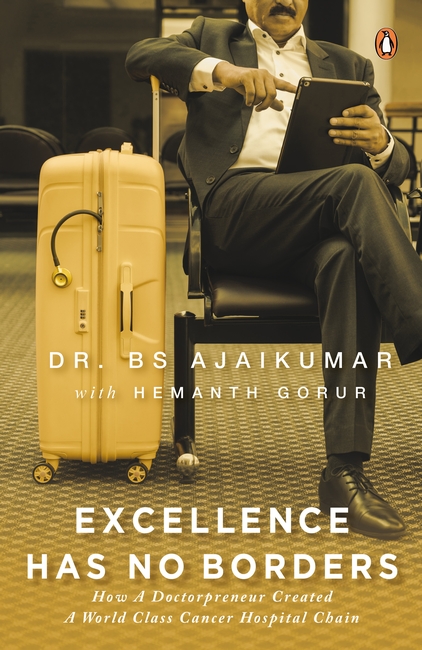
In Excellence Has No Borders, Dr B.S. Ajaikumar, an oncologist, answers these questions in an inspiring and fascinating narrative. He details how he has made cancer treatment accessible to all and created a chain of world-class cancer hospitals across India. Providing a captivating account of his entrepreneurial journey, Dr Ajaikumar recounts the challenges and successes on the path to becoming a doctorpreneur. The book, containing lessons from his life, shows how tenacity, hard work and self-confidence can go a long way in achieving the unimaginable. It is a must-read for anyone looking for inspiration.
Cricket Country
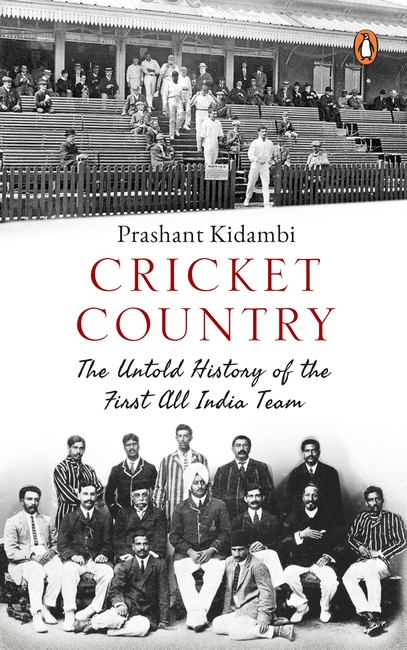
WISDEN INDIA BOOK OF THE YEAR 2019
WINNER OF SPORTS BOOK AWARD OF THE YEAR AT EKAMRA SPORTS LITERATURE FESTIVAL 2019
On the morning of 6 May 1911, a large crowd gathered at Bombay’s Ballard Pier. They were there to bid farewell to a motley group of sixteen Indian men who were about to undertake a historic voyage to London. The persons whom the crowd cheered that sultry Saturday morning were members of the first All-India cricket team.
Conceived by an unlikely coalition of imperial and Indian elites, it took twelve years and three failed attempts before an ‘Indian’ cricket team made its debut on the playing fields of imperial Britain in the blazing coronation summer of 1911.
This is a capacious tale with an improbable cast of characters set against the backdrop of revolutionary protest and princely intrigue. The captain of the Indian team was nineteen-year-old Bhupinder Singh, the embattled Maharaja of Patiala. The other cricketers were selected on the basis of their religious identity. Most remarkable, for the day, was the presence in the side of two Dalits: the Palwankar brothers, Baloo and Shivram.
Drawing on an unparalleled range of original archival sources, Cricket Country is the untold story of how the idea of India was fashioned on the cricket pitch in the high noon of empire.
A Taste Of Life
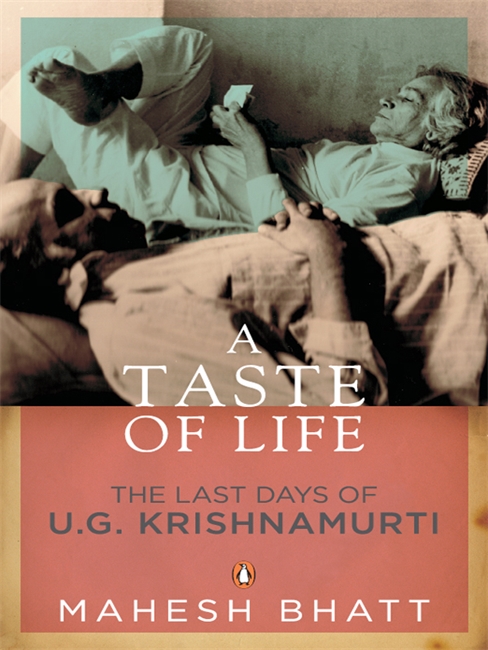
U.G. Krishnamurti famously described enlightenment as a neurobiological state of being with no religious, psychological or mystical implications. He did not lecture, did not set up organizations, held no gatherings and professed to have no message for mankind.
Known as the ‘anti-guru’, the ‘raging sage’ and the ‘thinker who shuns thought’, U.G. spent his life destroying accepted beliefs in science, god, mind, soul, religion, love and relationships—all the props man uses to live life. Having taken away all support systems from those who came to him, he refused to replace them with those of his own; always insisting that each must find his own truth.
And when U.G. knew that it was time for him go, he refused all attempts to prolong life with medical help. He let nature, and his body, take their course.
On the afternoon of 22 March 2007, U.G. Krishnamurti passed away in Vallecrosia, Italy.
Our Moon Has Blood Clots
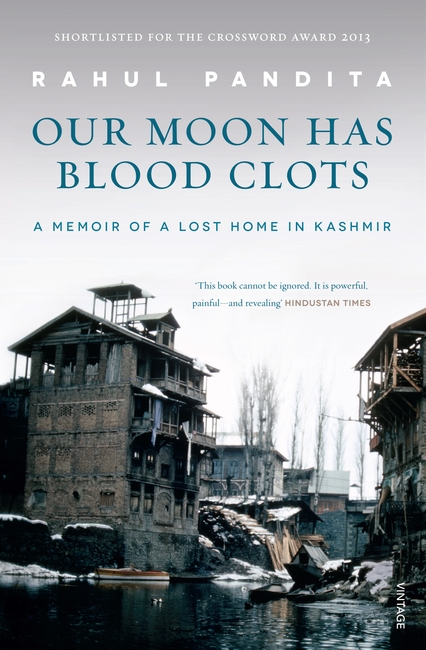
SPECIAL LIMITED EDITION
Rahul Pandita was fourteen years old in 1990 when he was forced to leave his home in Srinagar along with his family, who were Kashmiri Pandits: the Hindu minority within a Muslim-majority Kashmir that was becoming increasingly agitated with the cries of ‘Azadi’ from India.
The heartbreaking story of Kashmir has so far been told through the prism of the brutality of the Indian state, and the pro-independence demands of separatists. But there is another part of the story that has remained unrecorded and buried.
Our Moon Has Blood Clots is the unspoken chapter in the story of Kashmir, in which it was purged of the Kashmiri Pandit community in a violent ethnic cleansing backed by Islamist militants. Hundreds of people were tortured and killed, and about 3,50,000 Kashmiri Pandits were forced to leave their homes and spend the rest of their lives in exile in their own country.
Rahul Pandita has written a deeply personal, powerful and unforgettable story of history, home and loss.
Building the Greatest Company in the World

Tatalog: Eight Modern Stories from A Timeless Institution provides readers with an insider glimpse of the challenges faced by Tata companies and how they rose above them all and carved a name for themselves. The book vividly brings forth never-before-heard-of actual cases.
Beyond the Last Blue Mountain: Written with J.R.D. Tata’s cooperation, this superb biography tells the JRD story from his birth to his death in 1993 in Switzerland. Divided into four parts, the book explores JRD’s life-from his birth in France to his accession to the chairmanship of the Tata Group-his passion for aviation, his half-century-long stint as the outstanding personality of Indian industry and glimpses of his friendships with personalities like Jawaharlal Nehru, Mahatma Gandhi and Indira Gandhi, among others.
For the Love of India: The Life and Times of Jamsetji Tata provides an account of the unerring instinct of Jamsetji Nusserwanji Tata, a man who knew what it would take to restore the pride of a subjugated nation and help it prepare for a place among the leading nations of the world once it came into its own. The book draws upon fresh material from the India Office Library in London and other archives, as also Jamsetji’s letters, to portray the man and his age. It is an absorbing account that makes clear how remarkable Jamsetji’s achievement truly was, and why, even now, one hundred years after his death, he seems like a man well ahead of his time.
A Good Wife

At fifteen, Samra Zafar had big dreams for herself. She was going to go to university, and forge her own path. Then with almost no warning, those dreams were pulled away from her when she was suddenly married to a stranger at seventeen and had to leave behind her family in Pakistan to move to Canada. Her new husband and his family promised that the marriage and the move would be a fulfilment of her dream, not a betrayal of it. But as the walls of their home slowly became a prison, Samra realized the promises were empty ones.
In the years that followed she suffered her husband’s emotional and physical abuse that left her feeling isolated, humiliated and assaulted. Desperate to get out, and refusing to give up, she hatched an escape plan for herself and her two daughters. Somehow she found the strength to not only build a new future, but to walk away from her past, ignoring the pleas of her family and risking cultural isolation by divorcing her husband.
But that end was only the beginning for Samra. Through her academic and career achievements, she has gone on to become a mentor and public speaker, connecting with people around the world from isolated women in situations similar to her own, to young schoolgirls in Kenya who never allowed themselves to dream to men making the decisions to save for their daughters’ educations instead of their dowries. A Good Wife tells her harrowing and inspiring story, following her from a young girl with big dreams, through finding strength in the face of oppression and then finally battling through to empowerment.