The phenomenal international bestseller – 2 million copies sold – that will change the way you make decisions
‘A lifetime’s worth of wisdom’ Steven D. Levitt, co-author of Freakonomics
‘There have been many good books on human rationality and irrationality, but only one masterpiece. That masterpiece is Thinking, Fast and Slow‘ Financial Times
Why is there more chance we’ll believe something if it’s in a bold type face? Why are judges more likely to deny parole before lunch? Why do we assume a good-looking person will be more competent? The answer lies in the two ways we make choices: fast, intuitive thinking, and slow, rational thinking. This book reveals how our minds are tripped up by error and prejudice (even when we think we are being logical), and gives you practical techniques for slower, smarter thinking. It will enable to you make better decisions at work, at home, and in everything you do.

Impactful Communication is a highly practical and useful book based on the author’s first-hand experience in the field of communication. In today’s world of artificial intelligence and social media, where organizations demand sharp communication skills, this book carries tools to effectively deal with the conventional and nonconventional aspects of verbal and nonverbal communication in varied situations and with different stakeholders. It discusses the art of communication by evaluating its barriers and the seven vital Cs of communication. While highlighting the importance of listening, the book explores the challenges of communication in the era of artificial intelligence and shares insights into how one can maintain the personal touch of communication in a highly non-personalized world. Impactful Communication is a user-friendly guide with numerous enlightening illustrations for new professionals and managers entering the corporate world.
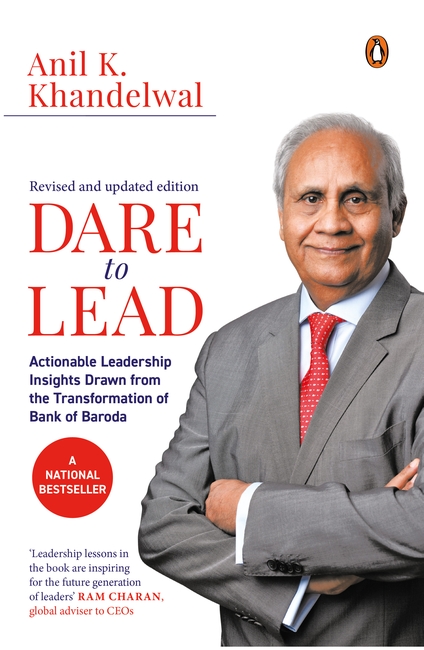
Dare to Lead is the fascinating story of how Anil K. Khandelwal transformed Bank of Baroda (BOB) from being just another public sector bank into one of the most valuable brands in Indian banking.
This is the story of the leadership challenges, management solutions and personal and professional excitement the author experienced in transforming the 97 year old bank into a modern, tech-savvy, customer-centric bank.
This book is an excellent blueprint for undertaking transformation in large, geographically dispersed public sector enterprises. It describes how a large-sized bank was transformed on all parameters with clear vision, execution discipline, customer centricity and people engagement. The author emphasizes that large-scale transformation can be undertaken successfully only if the CEO shows courage to change the status quo and mobilize the human effort within the organization.
The story of BOB’s transformation has captured international attention and finds its mention in Harvard Business Review, Human Resources Development International and the book The India Way by the Wharton School faculty.

Change is hard but does it need to be painful? What if there was a more intrinsically motivating and nourishing way to drive change?
Play to Transform is a book that challenges the traditional mindset of business leaders and encourages them to tap into their inner child to accelerate transformation with purpose. The book argues that we are all born creative geniuses with an innate ability to empathize deeply with others, but somewhere along the way, we have lost touch with these qualities. In the post-pandemic world, leaders need to be more empathetic and agile than ever before, and a conscious shift in mindset is required to achieve this.
Drawing on real-life examples, contemporary shift strategies and key implications for organizations, the book demonstrates how play can be used as a catalyst for transformation and innovation. By providing a psychologically safe and co-creative environment that normalizes failure, the book shows how organizations can encourage their employees to express themselves more freely and make the necessary shifts to embrace change and find harmony in chaos. The book challenges the myth that play is frivolous and cannot be used for serious work, offering a fresh perspective on how to conduct business with more heart and soul.
Karma Sutras decodes the secrets of effective leadership in these uncertain times. It is a blueprint for success in the organizational and personal sphere. The book contains management mantras from one of India’s foremost thought leaders. It will help you navigate the technology-driven culture of 21st century business. Karma Sutras throws light on the leadership practices needed for the VUCA world. It vividly encapsulates the scientific and spiritual truths about organization, work, self-mastery and the purpose of leadership in the post-Covid world. Laced with small, insightful narratives from current issues to motivating stories and relatable quotes, the book caters to aspiring leaders and first-time managers alike. It provides deep anchors in spirituality for managers struggling in a disruptive world. Finally, Karma Sutras will teach you the art of effective followership. As the author rightly says, ‘. . . in each follower there is an emerging leader’.

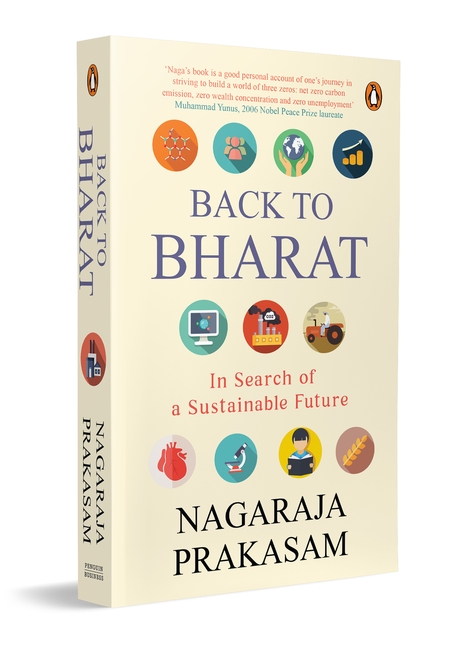
Back to Bharat: In Search of a Sustainable Future is a book that addresses the present economic dilemma for Indian entrepreneurs and consumers, looking at the past and present situation of both India and the developed world to find a way forward.
Written in an engaging and anecdotal style, the book is enriched with case studies from Nagaraja’s investment career. It consolidates many observations and insights from the experience he has as a professional, investor and mentor for entrepreneurs across the country. It strongly expresses the belief that India’s strengths are its people, problems and technology (PPT).
As it draws on real-life examples of struggle and success, the book illuminates many questions that are most relevant to our present dilemma, both in terms of economic development as well as environmental threats that compel us to look at more sustainable alternatives to patterns of production and consumption.

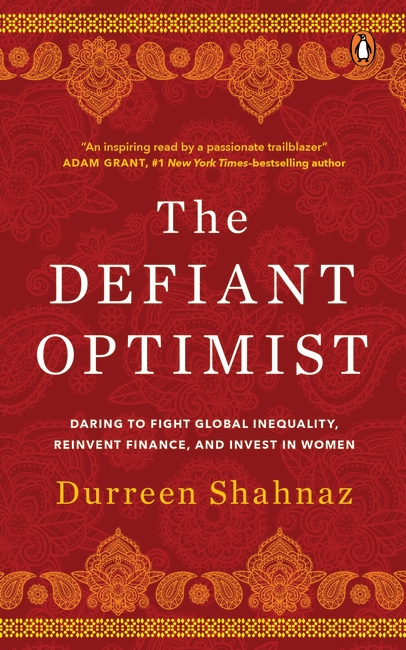
Global inequality is growing. Financial markets disenfranchise women, the 99 percent, and the planet itself. But what if we found the source of power and turned it inside out? What if we made the tools of the system available to all?
When she launched the world’s first stock exchange for social enterprises, Durreen Shahnaz started more than a new financial system; she sparked a movement. Defiant optimism-the stubborn belief that systems that enrich the few can be transformed for the good of the many-requires an indomitable spirit. In these pages, Shahnaz illuminates what investing in those excluded from networks of power and opportunity requires.
From growing up with constrained life chances, to working as the first Bangladeshi woman on Wall Street, to becoming a global leader in impact investing, Shahnaz takes us on a mesmerizing trek of innovation, compassion, and enterprise. We accompany her to villages in Bangladesh where she helps women entrepreneurs learn to proudly sign their names, and on visits to venture capitalists who walk past her to shake her male employees’ hands. We go to a garment factory where women labour for low wages, and to a town in India where microfinance offers women enough capital to run grocery stores and tailor shops. Along the way, the birth of her two daughters only fuels her relentless pursuit of a world where girls are valued. Finally, armed with financial backers and a plan, Shahnaz successfully launches the Women’s Livelihood Bond™ Series, the world’s first tradable financial product for investing in underserved women’s livelihoods.
Changing how systems work-and who they work for-isn’t for the faint of heart. But The Defiant Optimist offers strategies for placing women, the underserved, and the planet at the heart of systems. Together we can locate the levers of power and pull them defiantly in a new direction.

Water, water, everywhere, nor any drop to drink,
Data, data, everywhere, no time to stop and think!
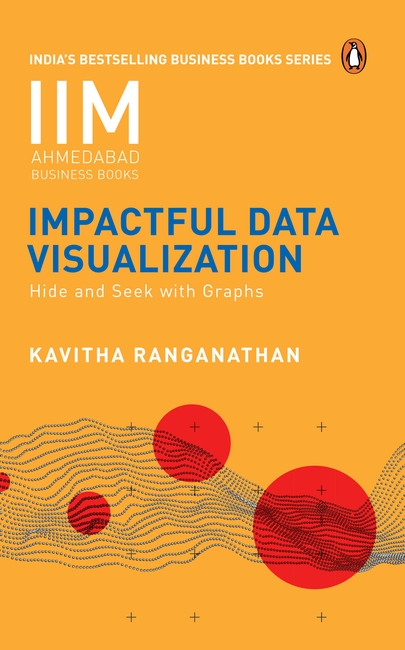
There is scarcely a role that does not require us to understand, analyse and present data. Charts, graphs and maps are everywhere. However, many of these data visuals leave the viewer bewildered, confused or (even worse) with an incorrect understanding of the data. In contrast, if designed well, data visualizations help us make sense of data and communicate our insights better.
Bringing her clear classroom-teaching style, which has helped hundreds of data wranglers, to this book, the author walks you through the myriad ways that graphs can mislead, helping to spot visualization traps and prevent misinterpretations. She illustrates core design principles for creating truthful and effective data visualizations, assisting you to master the art and science behind creating impactful and accurate graphs. Packed with examples to clearly explain the dos and don’ts of data visualization and backed by empirical research, this book will transform the way you create and analyse graphs and charts.

The corporate masks we wear hide many a secret. The most potent are not the secret financial numbers or confidential strategy documents hidden away in locked drawers or in safes but the simple ones-good filter coffee, generosity and thirty minutes of me-time.
This book offers a selection of fascinating and useful secrets that can help you be far more successful at your workplace. As a bonus, they can make you happier as well. You will find within a range of subjects-whether the best methods of fighting exhaustion, organizing your work desk, the power of listening, why kindness is so important, workplace lessons from Hercule Poirot and what you can learn from the cookies that your colleagues eat.
Harish Bhat wields his pen with his signature insight to delight, inspire, provoke and change the way you see offices forever.

Independent India has so far witnessed twenty-eight finance ministers. But only a handful of them could leave their mark on the exchequer or North Block, the headquarters of the Indian finance ministry. From Independence to Emergency: India’s Finance Ministers 1947-1977 is the story of India’s unforgettable finance ministers who shaped India’s economy in the first thirty years after Independence. The book highlights the significant difference that these finance ministers made to the management of the Indian economy and to the policy evolution of the government, and who thus left an indelible mark on the psyche of Indian citizens. It attempts to measure the impact these decisions left, not only on India’s economic system but also on its political system, and looks at to what extent the decisions were influenced by the socio-economic backgrounds of the finance ministers.
Full of interesting anecdotes, the book is the first in-depth account of the crucial role these finance ministers have played in the functioning of India’s economy.