One of Thinkers50’s Ten Best Management Books of 2023
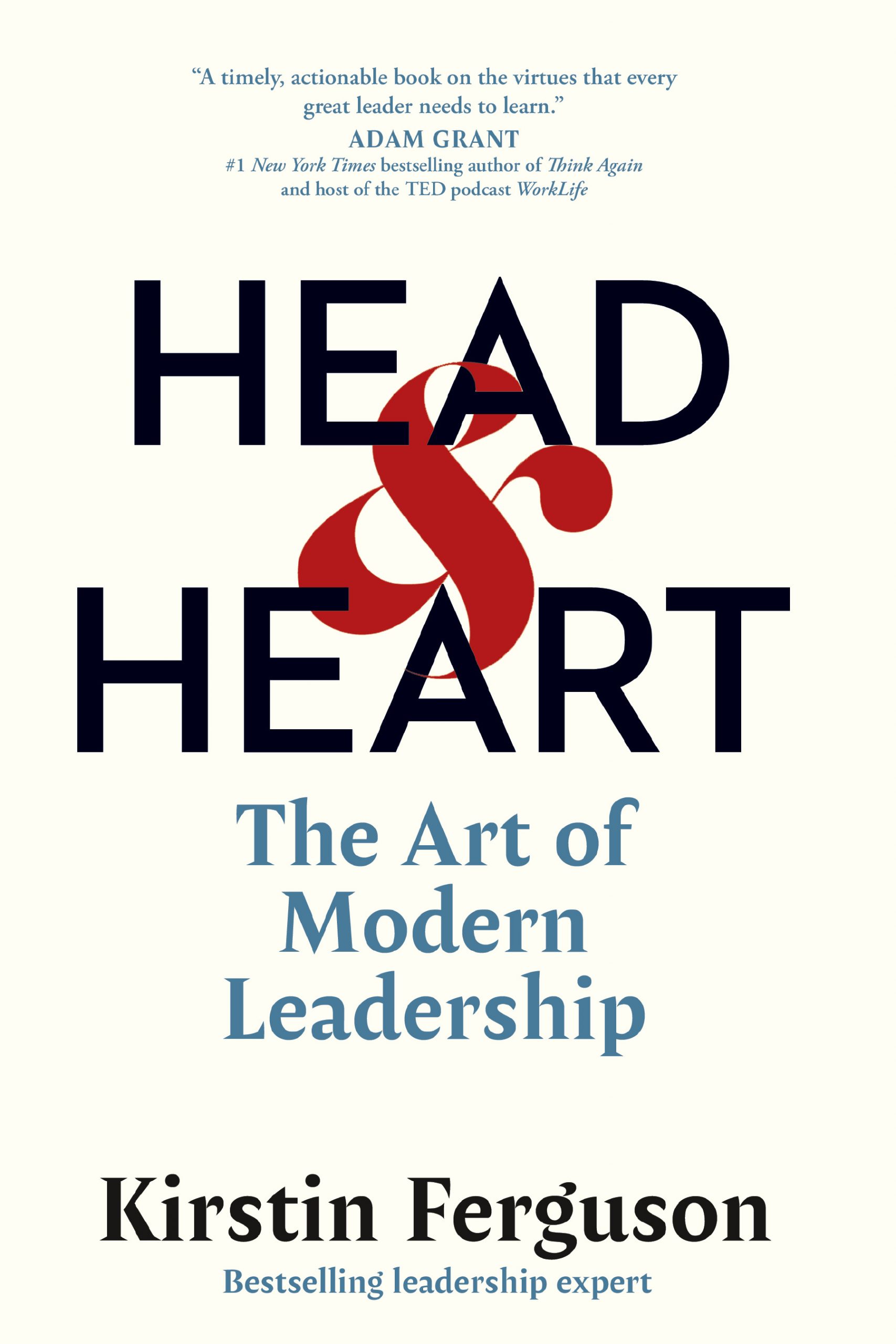
“A timely, actionable book on the virtues that every great leader needs to learn.”
—ADAM GRANT, #1 New York Times bestselling author of Think Again and host of the TED podcast WorkLife
Leadership is simply a series of moments, and this book gives you the tools to turn each moment into an opportunity to leave a positive legacy for those you lead.
In this ground-breaking book, award-winning leadership expert and business leader Kirstin Ferguson has written a much-needed practical guide for every modern leader. Whether you are the head of one of the largest companies in the world, supervising a small team, or guiding your family, it will be your ability to integrate your head and heart that will influence your success in leading others and navigating our complex world.
Combining studies from leading thinkers in the field with her own research, and more than three decades of personal experience, Kirstin explains the 8 key attributes of a head and heart leader and provides the tools to measure your own approach. Along the way, she shares her conversations with modern leaders from a broad range of backgrounds whose stories will surprise you, challenge your thinking and inspire you to be the type of leader the world needs.

The unknown history of economic conservatism in India after independence.
Neoliberalism is routinely characterized as an antidemocratic, expert-driven project aimed at insulating markets from politics, devised in the North Atlantic and projected on the rest of the world. Revising this understanding, Toward a Free Economy shows how economic conservatism emerged and was disseminated in a postcolonial society consistent with the logic of democracy.
Twelve years after the British left India, a Swatantra (“Freedom”) Party came to life. It encouraged Indians to break with the Indian National Congress Party, which spearheaded the anticolonial nationalist movement and now dominated Indian democracy. Rejecting Congress’s heavy-industrial developmental state and the accompanying rhetoric of socialism, Swatantra promised “free economy” through its project of opposition politics.
As it circulated across various genres, “free economy” took on meanings that varied by region and language, caste and class, and won diverse advocates. These articulations, informed by but distinct from neoliberalism, came chiefly from communities in southern and western India as they embraced new forms of entrepreneurial activity. At their core, they connoted anticommunism, unfettered private economic activity, decentralized development, and the defense of private property.
Opposition politics encompassed ideas and practice. Swatantra’s leaders imagined a conservative alternative to a progressive dominant party in a two-party system. They communicated ideas and mobilized people around such issues as inflation, taxation, and property. And they made creative use of India’s institutions to bring checks and balances to the political system.
Democracy’s persistence in India is uncommon among postcolonial societies. By excavating a perspective of how Indians made and understood their own democracy and economy, Aditya Balasubramanian broadens our picture of neoliberalism, democracy, and the postcolonial world.

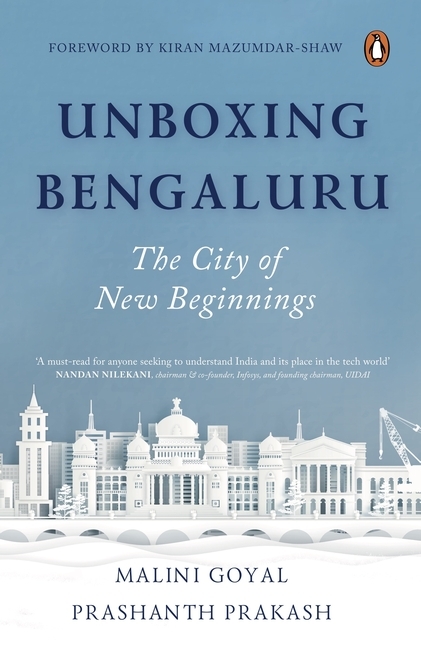
India’s tech/startup industry today is estimated to be worth over $0.5 trillion, employing over 5 million people. And the stage for this incredible ‘tech-tonic’ rise and transformation of the country into the world’s software powerhouse, is Bengaluru.
Being the backdrop to this dramatic transition, Bengaluru has changed irrevocably. The city has been through many avatars—pensioner’s paradise, PSU capital, garden city, India’s Silicon city and pub capital. Once known for secure state and federal government jobs, it is now a buzzing startup hub attracting job-seekers from India and abroad. And the new monikers will continue. From ed-tech to health-tech, mobility to EVs, Bengaluru is at the heart of the multiple shifts underway in the digital era.
Truly, it is the city of new beginnings.
In Unboxing Bengaluru—the first ever deep-dive into the city—Malini Goyal and Prashanth Prakash ably unravel the city’s journey and the ensuing social, behavioural, technological and consumptive changes. They look at why people are drawn to the city; how the cosmopolitan culture and multi-linguistic society gives it a distinct flavour; the parallel economies that have cropped up; how the influx of young workers have changed the city; and the fault-lines of unplanned and poorly managed growth over the decades.
Richly researched and vividly written, Unboxing Bengaluru is filled with absorbing vignettes, extensive reportage and solid data. A fascinating book and a must-read for anyone interested in understanding the city, and indeed, India.

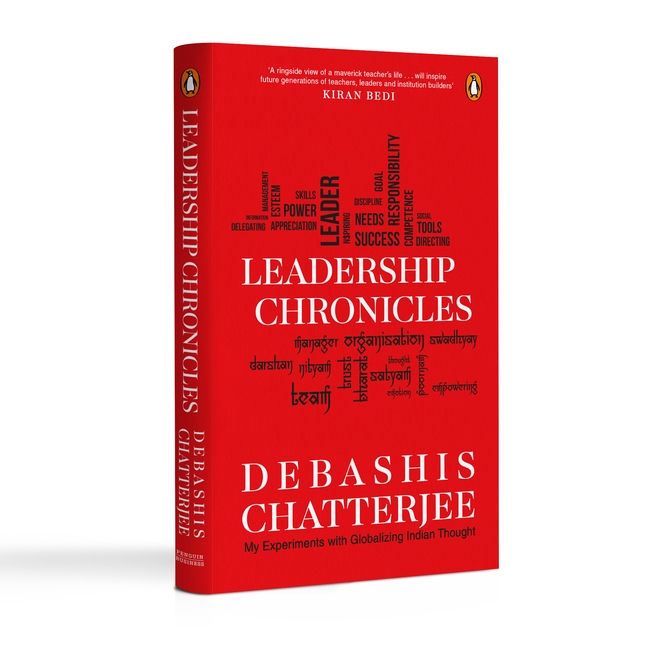
Leadership Chronicles decodes some of the deep secrets of leadership. It tells the story of a lifetime of teaching, learning and institution-building like never before. This book is a voyage of discovery of those unseen facets and mysteries of a maverick teacher’s life.
Debashis Chatterjee shares authentic insights from his personal and professional journey of nearly three
decades. The perspectives, stories and anecdotes reframe and shed light on the global application of classical Indian thought. This work presents transformative wisdom in a way that would stimulate your mind.
Told with candour, sensitivity and humour, the chronicles present a rich harvest of insights and ideas on the making of a leader.

Anirudh Rathore believes the stock market is for everyone—you shouldn’t need a degree in finance to be able to invest and grow your money. Led by this tenet, he distils his learnings in Investment Decoded, based on classic treatises on value investing and years of experience from growing his own portfolio. This is the definitive beginner’s guide to acquiring the tools and mindset required to start securing your financial future.

How to Thrive in the New World of Work
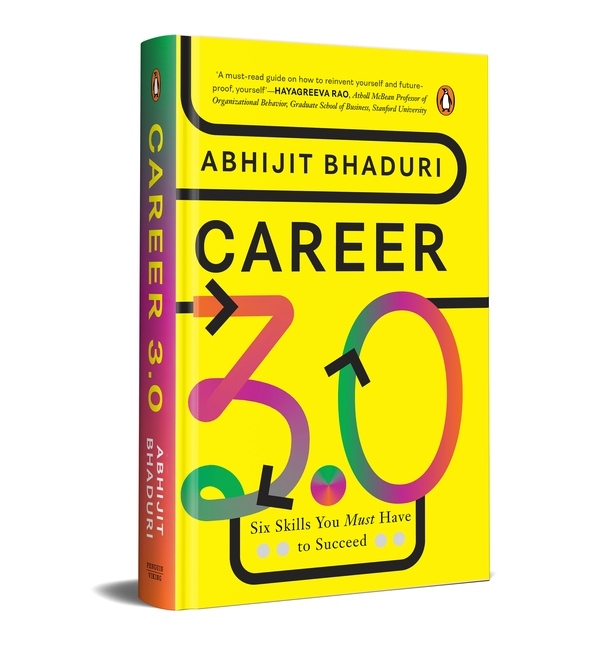
The old model of learn, earn and retire is no longer viable. We are living longer, working longer and facing constant changes in the skills and industries that demand them. We need a new approach to navigate the complex and uncertain landscape of work.
What does it mean to have a career in the 21st century?
We need to master the rules of Career 3.0.
In this book, Abhijit Bhaduri, a renowned expert on talent and leadership, shows you how to develop the six key skills that will make you future-ready and successful in Career 3.0. Whether you work for an organization, run your own business or do both, you will discover how to adapt to change, learn new skills, and lead with impact.
Career 3.0 is a guide that will help you stay relevant. The book is filled with inspiring stories that will challenge you to rethink your career vision, strategy and action. It will give you the tools and techniques to thrive in the new world of work.
You may be surprised to find out that you already have a Career 3.0 mindset. Now you know what it is called.

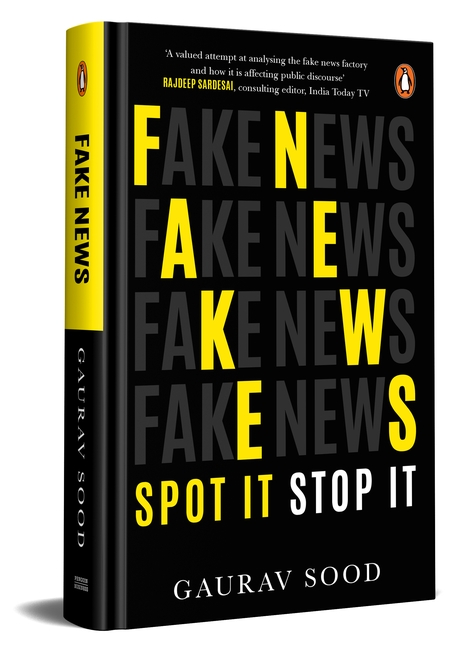
The news is a public good and needs to be handled with care and integrity. Even though lies and misinformation campaigns have been around for years—maybe since the dawn of journalism—the rate at which fake news is being spread these days is both alarming and preposterous. Almost every institution—public or private—uses fake news to further its own agenda. Governments and corporate houses spread fake news either through their own agencies or by influencing the popular media. In the business sector, fake news manifests itself in the form of exaggerated company returns and false data.
This book analyses the impact of fake news both on products and personalities. Foregrounded in rigorous research, it examines how fake news is used by companies, political parties, and leaders to create, amplify, and even tarnish a brand’s image and equity. It emphasizes how the customers’ perception of a brand impacts and influences its reputation, and acts as a decisive force in them gaining or losing competitive advantages. Elucidating how brands can interact both directly and indirectly with fake news, it brings to the readers’ notice how sometimes brands are the victims of fake news and other times, the purveyors.

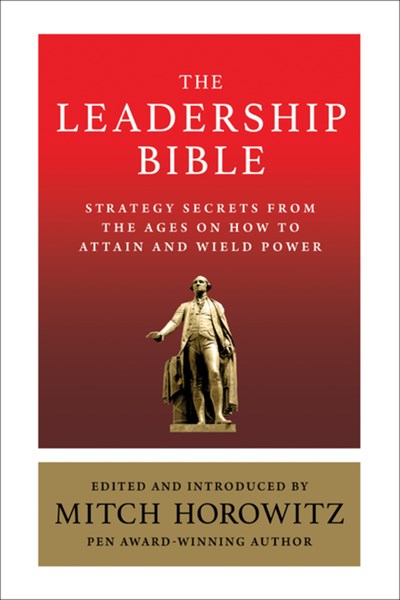
Discover the secrets of true leadership, including stealth, self-sufficiency, even-temper, training strategies, and justice. You will learn how to lead from those who actually did.
WHAT MAKES A LEADER?
“Leadership is an elusive concept. Nearly everyone is certain that he or she would like the mantle of leadership—whether at home, at work, in competitive events, or all three—but we rarely think through the implications. One of the first questions that requires asking is: Who do you seek to lead and why?”
With the opening words of his introduction, popular voice of alternative spiri¬tuality Mitch Horowitz begins his journey into some of history’s greatest ideas and insights about what makes a leader—and what is required of you to earn that appellation. These works are designed to help you distinguish between function¬ing as a mere boss and being a true leader, a title to which many aspire but few understand. The insights in The Leadership Bible help place you among the few. In this collection, Mitch assembles:
•“LEADERSHIP” by Major C.A. Bach
•THE ART OF WAR by Sun Tzu, translated by British sinologist Lionel Giles
•“THE LIFE OF CAESAR” by Plutarch, translated by classics scholar Bernadotte Perrin
•THE PRINCE by Niccolò Machiavelli, abridgement based on the translation by Renaissance scholar N.H. Thomson
•“RULES OF CIVILITY” by George Washington
•“POWER” by Ralph Waldo Emerson
•“INITIATIVE AND LEADERSHIP” by Napoleon Hill
•“DECISION” by Napoleon Hill
•THE SCIENCE OF BEING GREAT by Wallace D. Wattles
•A MESSAGE TO GARCIA by Elbert Hubbard
•“THE MAJOR ATTRIBUTES OF LEADERSHIP” by Napoleon Hill
•“THE SURPRISINGLY NOBLE PATH TO POWER” by Mitch Horowitz
MITCH HOROWITZ is a PEN Award-winning historian whose books include Occult America, One Simple Idea, The Miracle Club, Daydream Believer, and Uncertain Places. His work has been translated into Italian, Korean, Chinese, Spanish, French, and Portuguese. He is censored in China.
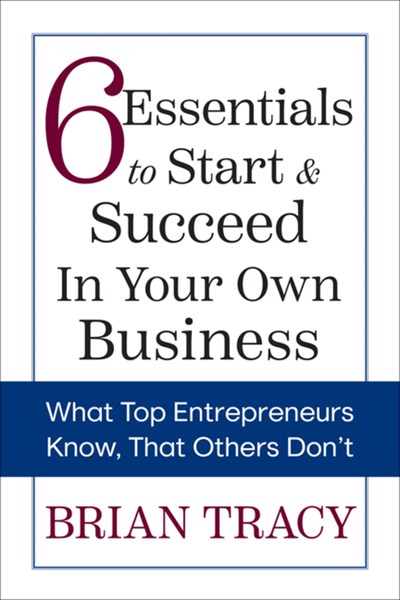
Let Brian Tracy, one of the world’s foremost authori¬ties on the subject, introduce you to 6 Essentials To Start and Succeed in Your Own Business, and expose you to the most innovative, current—and most importantly—proven ideas on how to become successful.
The world that we live in today favors the person who organizes and operates a business, and takes on greater than normal financial risks to do so. That person is the entrepreneur.
The average worker holds ten different jobs before age forty, and this number is projected to grow. If you’re in your twenties and thirties, you may forge a second or third career as an entrepreneur; and if you’re in your forties, fifties, or beyond, you will decidedly favor the idea of starting and owning your own business. In fact, fifty-two percent of all small businesses are home-based, and many of those are started and run by people in their mid-career.
So whether you are early in your career or are in mid-career, whether you have ambitions to run a larger business or a very small business, and whether you start a business because it’s your desire or you’re forced to by automation and layoffs, entrepreneurship is more likely than ever to be a part of your future.
Let Brian Tracy, one of the world’s foremost authorities on the subject, introduce you to 6 Essentials To Start and Succeed in Your Own Business, and expose you to the most innovative, current—and most importantly—proven ideas on how to become successful.
Use your knowledge of The 6 Essentials to race ahead of the competition and take advantage of all of the modern options readily available to you . . . and create a busi¬ness that is successful and sustainable for the long term.
Today, every business is talking about digital transformation. With the acceleration of new technologies, every organization knows it must adapt to survive. But by their own admission, 70 percent of businesses are failing to transform. Across industries, established companies are held back by bureaucracy, inertia, and old ways of working. How can businesses break through to drive real change?
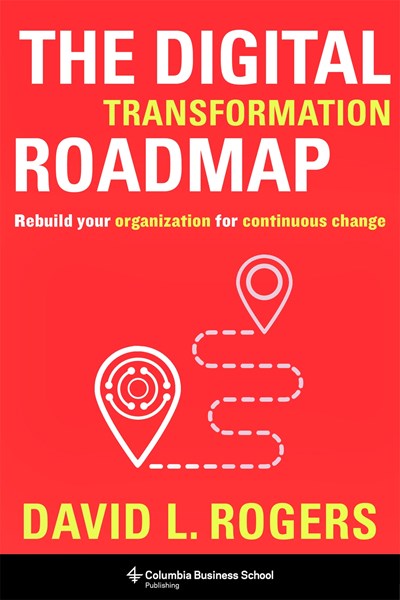
The Digital Transformation Roadmap provides every leader with the answer. Acclaimed author and C-suite advisor David L. Rogers argues that businesses must transform not just products and business models—they must transform the organization itself. Based on two decades of research and advising companies around the world, Rogers identifies the five biggest barriers to digital transformation: vision, priorities, experimentation, governance, and capabilities. He then shows how any business can evolve by heeding the lessons of companies such as Disney, Walmart, Mastercard, Air Liquide, and the New York Times Company.
The Digital Transformation Roadmap provides a practical blueprint for organizational change, illustrated with real-world case studies and step-by-step planning tools. Rogers shows every leader how to think beyond the churn of new technologies and rebuild their organization for a world of constant change.