Back to Bharat: In Search of a Sustainable Future is a book that addresses the present economic dilemma for Indian entrepreneurs and consumers, looking at the past and present situation of both India and the developed world to find a way forward.
Written in an engaging and anecdotal style, the book is enriched with case studies from Nagaraja’s investment career. It consolidates many observations and insights from the experience he has as a professional, investor and mentor for entrepreneurs across the country. It strongly expresses the belief that India’s strengths are its people, problems and technology (PPT).
As it draws on real-life examples of struggle and success, the book illuminates many questions that are most relevant to our present dilemma, both in terms of economic development as well as environmental threats that compel us to look at more sustainable alternatives to patterns of production and consumption.

Global inequality is growing. Financial markets disenfranchise women, the 99 percent, and the planet itself. But what if we found the source of power and turned it inside out? What if we made the tools of the system available to all?
When she launched the world’s first stock exchange for social enterprises, Durreen Shahnaz started more than a new financial system; she sparked a movement. Defiant optimism-the stubborn belief that systems that enrich the few can be transformed for the good of the many-requires an indomitable spirit. In these pages, Shahnaz illuminates what investing in those excluded from networks of power and opportunity requires.
From growing up with constrained life chances, to working as the first Bangladeshi woman on Wall Street, to becoming a global leader in impact investing, Shahnaz takes us on a mesmerizing trek of innovation, compassion, and enterprise. We accompany her to villages in Bangladesh where she helps women entrepreneurs learn to proudly sign their names, and on visits to venture capitalists who walk past her to shake her male employees’ hands. We go to a garment factory where women labour for low wages, and to a town in India where microfinance offers women enough capital to run grocery stores and tailor shops. Along the way, the birth of her two daughters only fuels her relentless pursuit of a world where girls are valued. Finally, armed with financial backers and a plan, Shahnaz successfully launches the Women’s Livelihood Bond™ Series, the world’s first tradable financial product for investing in underserved women’s livelihoods.
Changing how systems work-and who they work for-isn’t for the faint of heart. But The Defiant Optimist offers strategies for placing women, the underserved, and the planet at the heart of systems. Together we can locate the levers of power and pull them defiantly in a new direction.

Water, water, everywhere, nor any drop to drink,
Data, data, everywhere, no time to stop and think!
There is scarcely a role that does not require us to understand, analyse and present data. Charts, graphs and maps are everywhere. However, many of these data visuals leave the viewer bewildered, confused or (even worse) with an incorrect understanding of the data. In contrast, if designed well, data visualizations help us make sense of data and communicate our insights better.
Bringing her clear classroom-teaching style, which has helped hundreds of data wranglers, to this book, the author walks you through the myriad ways that graphs can mislead, helping to spot visualization traps and prevent misinterpretations. She illustrates core design principles for creating truthful and effective data visualizations, assisting you to master the art and science behind creating impactful and accurate graphs. Packed with examples to clearly explain the dos and don’ts of data visualization and backed by empirical research, this book will transform the way you create and analyse graphs and charts.

The corporate masks we wear hide many a secret. The most potent are not the secret financial numbers or confidential strategy documents hidden away in locked drawers or in safes but the simple ones-good filter coffee, generosity and thirty minutes of me-time.
This book offers a selection of fascinating and useful secrets that can help you be far more successful at your workplace. As a bonus, they can make you happier as well. You will find within a range of subjects-whether the best methods of fighting exhaustion, organizing your work desk, the power of listening, why kindness is so important, workplace lessons from Hercule Poirot and what you can learn from the cookies that your colleagues eat.
Harish Bhat wields his pen with his signature insight to delight, inspire, provoke and change the way you see offices forever.

Independent India has so far witnessed twenty-eight finance ministers. But only a handful of them could leave their mark on the exchequer or North Block, the headquarters of the Indian finance ministry. From Independence to Emergency: India’s Finance Ministers 1947-1977 is the story of India’s unforgettable finance ministers who shaped India’s economy in the first thirty years after Independence. The book highlights the significant difference that these finance ministers made to the management of the Indian economy and to the policy evolution of the government, and who thus left an indelible mark on the psyche of Indian citizens. It attempts to measure the impact these decisions left, not only on India’s economic system but also on its political system, and looks at to what extent the decisions were influenced by the socio-economic backgrounds of the finance ministers.
Full of interesting anecdotes, the book is the first in-depth account of the crucial role these finance ministers have played in the functioning of India’s economy.

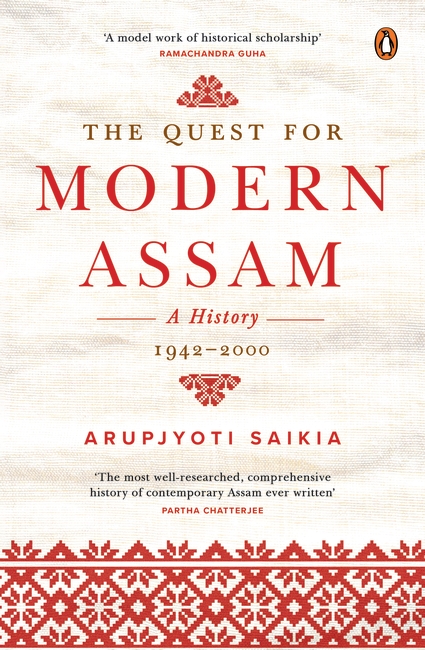
‘A model work of historical scholarship’-Ramachandra Guha
‘The most well-researched, comprehensive history of contemporary Assam ever written’-Partha Chatterjee
The crucial battles of World War II fought in India’s north-east-followed soon after by Independence and Partition-had a critical impact on the making of modern Assam. In the three decades following 1947, the state of Assam underwent massive political turmoil, geographical instability, and social and demographic upheaval, among others. Later, the truncated state suffered widespread unrest as various groups believed their cultural identity and political leverage were under threat. New social energies and political forces were unleashed and came to the fore.
Definitive, comprehensive and unputdownable, The Quest for Modern Assam explores the interconnected layers of political, environmental, economic and cultural processes that shaped the development of Assam since the 1940s. It offers an authoritative account that sets new standards in the writing of regional political history. Not to be missed by any one keen on Assam, India, Asia or world history in the twentieth century.
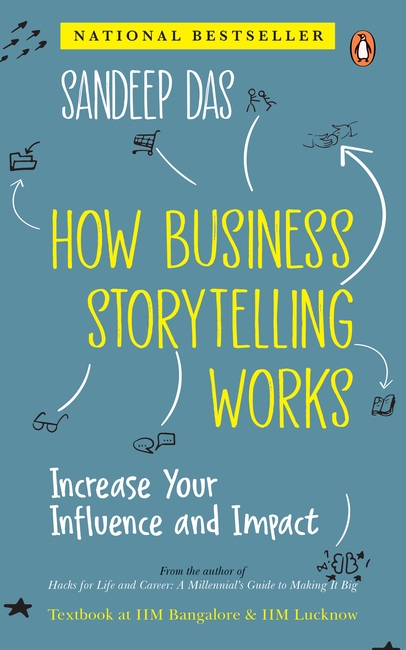
Why are you alive today and reading this book?
How will you, a corporate professional, be relevant in the future?
The #1 answer to both is storytelling.
Business storytelling is the #1 skill you need to succeed in your professional lives amidst all the noise, competition and massive technological disruption. In this book, Sandeep looks at human evolution, behavioural psychology and the world of movies to identify the golden principles of storytelling.
Whether you are a corporate professional, an entrepreneur, a tech guru, a marketer, a strategy consultant, a social media influencer or a student, the book tells you how to succeed in the REAL world. Sandeep brings in nuggets from his numerous storytelling workshops at leading corporates and business schools, and intersperses it with illustrations and hordes of popular culture references, making the book
as engaging as a good story. So, what are you waiting for? Head to the checkout counter.

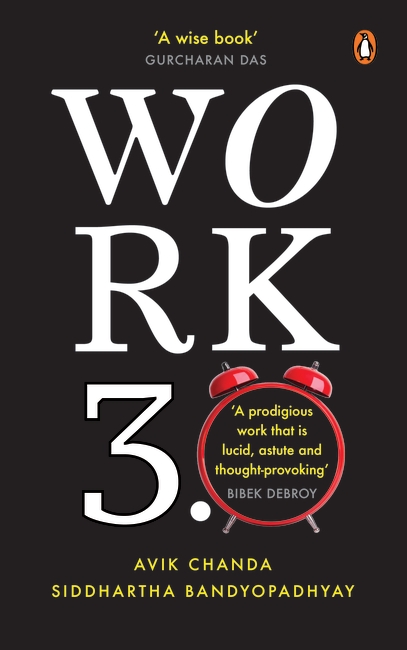
What will the worker, workplace and work itself look like in the future?
Work 3.0 tackles this and some of the other most pressing and complex questions of the present age, head-on. Avik Chanda and Siddhartha Bandyopadhyay employ rigorous research supplemented with industry reports, business case studies, expert interviews, anecdotes, their personal expertise and insights, to present a rich multi-disciplinary brew that spans economics, statistics, public policy, history, sociology, psychology, law, political science, literature and philosophy. Highly ambitious in scope, astonishingly rich in analytical detail and far-reaching in its conclusions, the book will change the way you think about the future and how the past and present still shape it.
Conceived as the ultimate future of work preparation guide, this book is essential reading for our tenuous and unpredictable times.

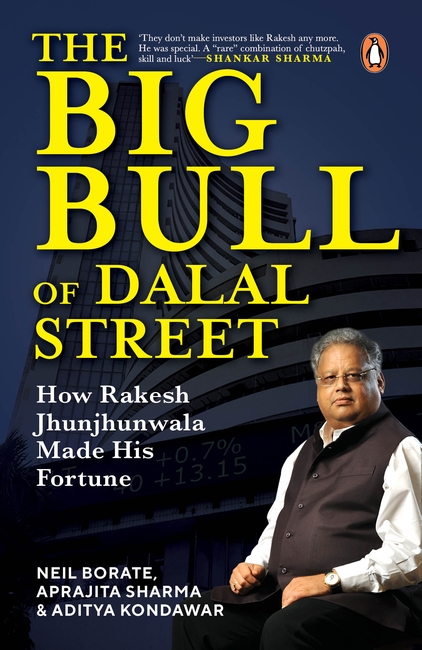
‘Respect the market. Have an open mind. Know what to stake. Know when to take a loss. Be responsible,’ this is what Rakesh Jhunjhunwala, India’s iconic stock market investor, often used to say.
This book looks at the life of India’s big bull, as Rakesh was famously known, both as a person and as a professional. Providing a fascinating account of his journey, it analyses the records of Jhunjhunwala’s investments and interviews he has given over the years. More than just a biography, a large section of the book is devoted to understanding the stocks that made him rich and the mistakes he made. Looking at the journey of the legendary investor, the book offers retail investors some useful insights—-benefits of long-term investing, mistakes one should avoid in the stock market, risk associated with leveraged trades, among others.

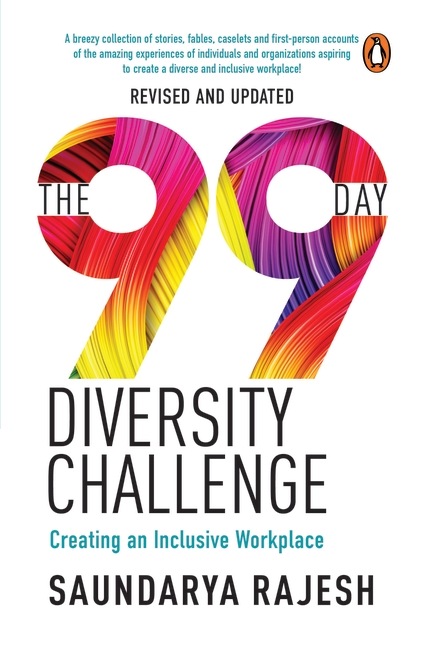
Is it really possible for an individual or an organization to develop an inclusion and diversity mindset within the
proverbial 99 days?
Award-winning social entrepreneur Dr Saundarya Rajesh, one of India’s most prominent diversity strategists who is credited with having ushered in the ‘second-career’ revolution for women professionals, believes it is.
In an engaging, gentle, often light-hearted way, Dr Rajesh demystifies this vast subject of Diversity and Inclusion (D&I) for the business leader, the diversity enthusiast and even the young professional who is interested in this topic. Over a set of 99 stories, anecdotes and thought blogs, this book sequentially uncovers the meaning of D&I and how this can be absorbed by just about everyone.
At the core of the 99 Day Diversity Challenge is the belief that the organizational practice of inclusion actually results in us becoming better human beings. For when we break down differences and create greater connectedness between people, we are building a better world.