A CLASSIC OF REPORTAGE FROM RURAL INDIA BY AWARD-WINNING AUTHOR, WITH A FOREWORD BY GOPALKRISHNA GANDHI
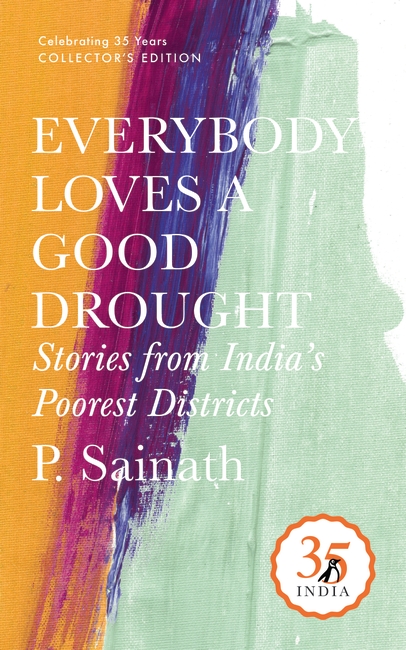
Acclaimed across the world, prescribed in over 100 universities and colleges, and included in part in The Century’s Greatest Reportage (Ordfront, 2000), alongside the works of Gabriel Garcia Marquez, Studs Terkel and John Reed, Everybody Loves a Good Drought is the established classic on rural poverty in India. Twenty years after publication, it remains unsurpassed in the scope and depth of reportage, providing an intimate view of the daily struggles of the poor and the efforts, often ludicrous, made to uplift them.
An illuminating introduction accompanying this twentieth-anniversary edition reveals, alarmingly, how a large section of India continues to suffer in the name of development so that a small percentage may prosper. Besides exposing chronic misgovernance, it is also a devastating comment on the media’s failure to speak for the voiceless.

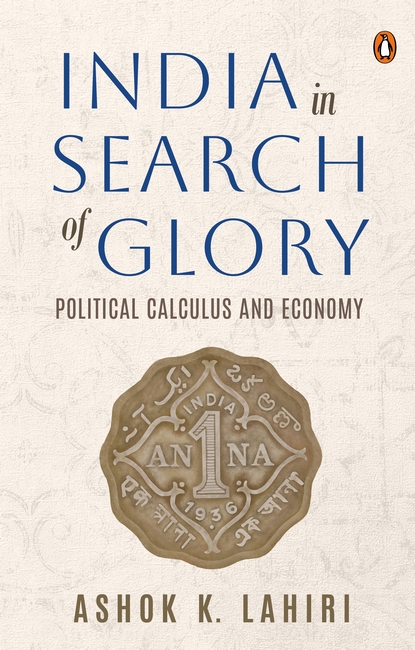
India and the Indians have made some progress in 75 years after Independence. The number of literates has gone up. The Indians have become healthier and their life expectancy at birth has gone up. The proportion of people below the poverty line has also halved. But the shine from the story fades when India is compared with that of the East Asian Tigers and China. It looks good but not good enough. India looks far away from the glory it seeks. This issue forms the core subject matter of this book. It tries to argue why India could not achieve more and what all it could have achieved. It paints a picture of its possible future and highlights the areas that need immediate attention.

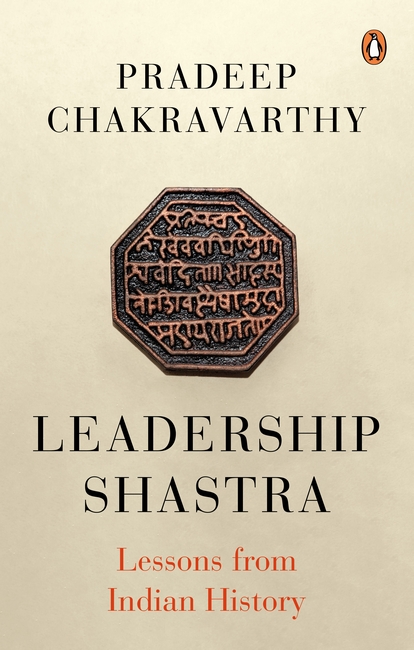
History is the past. Surely, it’s irrelevant today. Is it, though? What if history could be made to work for us in very real ways? In Leadership Shastra, Pradeep Chakravarthy does just that. He studies the lives of well-known historical figures like Shivaji, Babur, Ahilyabai Holkar, Sankaradeva and many others with a view to understand their motivations, actions and legacies. The book examines how developing a comprehension of our past could be the key to understanding our own selves, our actions, motivations and of those around us. This view of history as both useful and inspirational is unconventional: it is revealed here as a discipline that can be used for self-assessment and self-motivation. Engaging and enthralling, this is a book that will leave history buffs with much to think about, as much as it will serve as an introduction to the newbie.

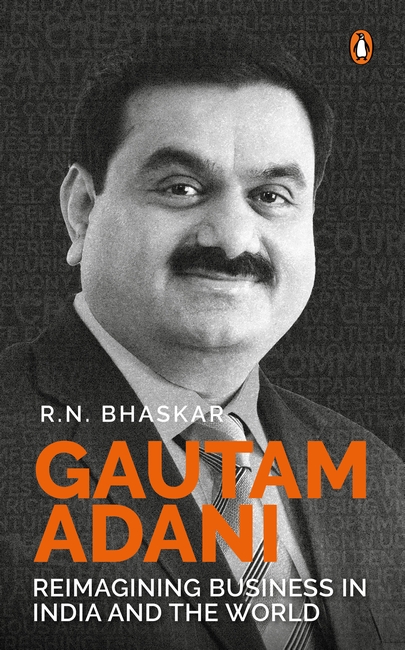
Gautam Adani needs no introduction. One of the richest men in the world, he also helms a business empire that is now India’s largest player in ports and renewable energy. He is also the country’s largest private sector player in sectors like airports, city gas distribution, power transmission, thermal power, edible oil, and railway lines. Yet, look beyond these facts, and startlingly little is known about Gautam Adani, the maverick businessman; about his motivations and vision; about his life, and the episodes, minor and major, that propelled him to make the choices he did.
This book sheds light on all that we have never known, but should know, about Gautam Adani. It delves deep, detailing a range of fascinating anecdotes from Gautam Adani’s life, illuminating his early childhood, his initiation into business, and the learnings and opportunities he exploited.
But beyond biography, this book is committed to analysing those business strategies of Gautam Adani that have intrigued all. It marries biography and business data, storytelling and hard numbers. Besides, it has been authored by one of India’s most senior journalists who has long followed Gautam Adani’s career.

Are maestros born or made?
By making ideas mate, can you create new ones?
How do you develop a mindset that helps you thrive?
Can you nudge yourself into being more productive at work?
Is it possible for you to debunk bullshit from the clutter all around?
…
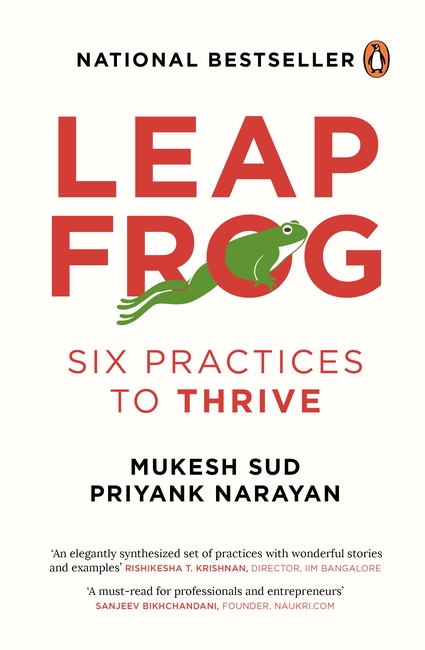
Find the answers to these questions and several more in Leapfrog
Leapfrog-in the context of thriving at work-is a scenario when a new entrant outperforms others. How do they achieve this? Are high performers born or made? Is there a way to nudge yourself into being more successful at work and also in life? With its six evidence-based insights, this book is poised to help you to advance your career at an incredible pace.
To begin with, the first step is to develop grit along with the ability to embrace boredom. The second practice, leaning on behavioral economics, focusses on nudging yourself to make better choices. The third practice is about being intellectually humble by accepting limits to what you know. The chapter on dancing with disciplines celebrates the magic of ideas colliding to create new ones. In a world full of noise and bullshit, you will need to curate choices to maintain a focus on what is relevant to you. The last practice helps you think like an entrepreneur and develop the ability to ask for what you want.
Based on their extensive experience of teaching and mentoring students, the authors have developed a framework called the Personal Journey Map (PJM), which will help you imbibe and implement the six practices by capturing your current repertoire, scanning the landscape ahead, and curating a path to a career in which you can prosper.
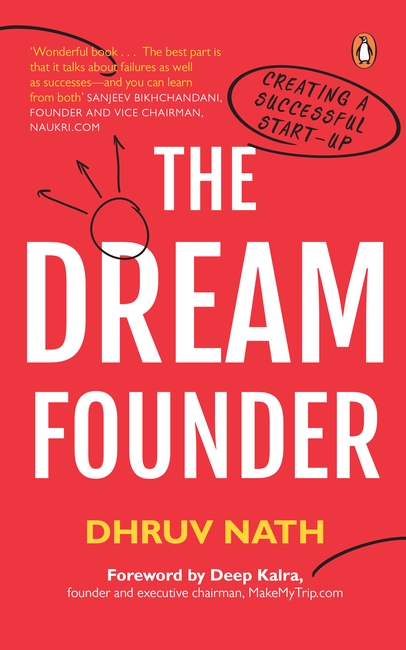
The DREAM Founder is an essential entrepreneurship guide for early-stage Indian start-ups. It also has interviews with some of the most successful entrepreneurs in the world of start-ups, such as Sanjeev Bikhchandani of Naukri.com, Deepinder Goyal of Zomato, Meena Ganesh of Portea Medical and Dr Annurag Batra of Businessworld.
It includes start-ups that have succeeded and also those who have failed, as you can learn so much from failures.
Dhruv Nath shares how you can become a DREAM Founder with these simple steps:
· Dream big
· Right team
· Execution
· Attitude
· Make opportunities out of crises

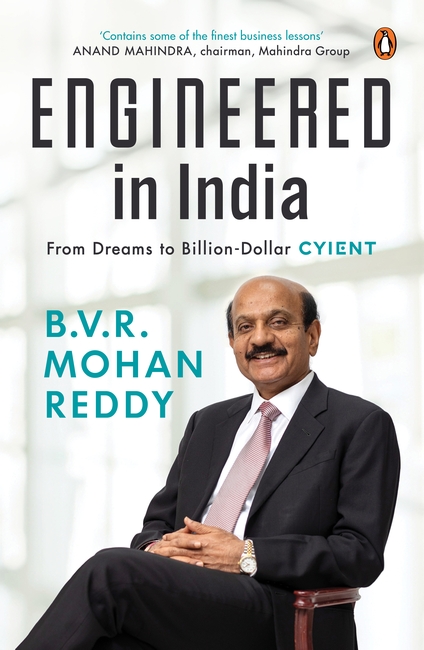
A young man steps out of the precincts of IIT Kanpur in 1974 with a dream in his heart-to become an entrepreneur and contribute to nation-building. Undaunted by the dearth of experience and means to capital in pre-Liberalization India, B.V.R. Mohan Reddy’s enterprising spirit takes the long and winding road, never losing sight of his ambition. He gains overseas education on a scholarship and dons multiple hats for eighteen long years before embarking on his life’s mission at forty. A mission that propels the company he incorporated, Cyient, to pioneer and excel in outsourced engineering services and introduce the brand ‘Engineered in India’.
Engineered in India takes readers on an entrepreneurial rollercoaster ride, allowing them to see human truths with tools that let them breathe life into their business aspirations and experiments.
**
‘Engineered in India faithfully chronicles Mohan Reddy’s journey and enumerates how catalysts like him can be able partners in nation-building’
NIRMALA SITHARAMANNIRMALA SITHARAMAN, finance minister, Government of India, India
‘Mohan’s biography is a heart-warming story of an indomitable young man who has risen from modest beginnings to become one of India’s first-generation IT billionaires’
PROFESSOR RAJ REDDY, winner of ACM A.M. Turing Award
‘This book brings out the DNA of Mohan’s personality-leadership, courage, determination, honesty, integrity, simplicity, conviviality and concern for the less fortunate’
N. NARAYANA MURTHY, co-founder, Infosys Limited, Limited

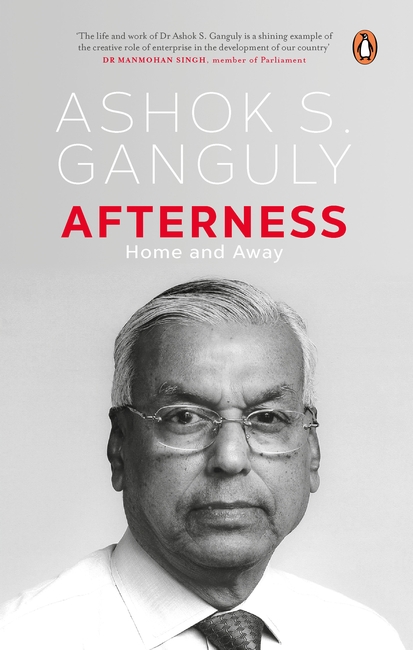
In his memoir, former Hindustan Unilever chairman Ashok Ganguly invites readers to journey with him as he looks back fondly on his extraordinary life – from his childhood to his upbringing in the metropolitan Bombay of the 1930s, to his PhD in Illinois and his eventual return to India. After joining Hindustan Unilever’s R&D department, Ganguly quickly rose up the ranks as a talented young professional, eager to discover and learn new things. The story spans across eighty years of his life, its edges tinged by the tumultuous events in India in the twentieth century, and interspersed with fascinating people, from the mysterious Kishen Khanna, who accurately predicted events in Ganguly’s life, to encounters and friendships with well-known historical figures such as Mother Teresa and Rajiv Gandhi.
Ashok Ganguly’s journey was interspersed with failures, but he doesn’t shy away from talking about these and the sacrifices that went on to define his life. Honest, reflective, personal and revelatory, Afterness provides valuable insight into his thinking process and decision-making skills that enabled Ganguly’s meteoric rise and sustained his legendary career.

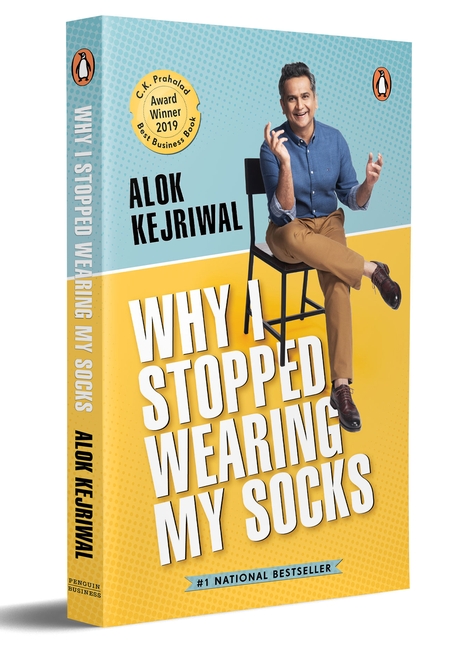
By the time he was twenty, Alok Kejriwal had his life pre-planned for him. He would inherit the family’s socks manufacturing business and be the hard-working, money-minting, quintessential Marwari businessman, forever. Except that it didn’t turn out that way. A few years after surviving the family set-up, something turned up that sent Alok on a completely different career path: the Internet! A crazy business idea Alok had turned out to be a winner. Soon, Alok was fighting and thriving in a world completely different from the one he had grown up in. A world where technology breakthroughs, VCs and out-of-the-box thinking decided the real winners.
Why I Stopped Wearing My Socks is Alok’s real-life story of starting up a business. It traces his roller-coaster ride as an aspiring entrepreneur, traversing through a variety of business ideas in the family business up to his big breakthrough as one of India’s first entrepreneurs to tap the power of the Internet. It details the amazing success of Mobile2win, a venture eventually acquired by the Walt Disney Company. The chapters in the book are actual stories, throbbing with memorable anecdotes that conclude with crisp learnings for the readers. Why I Stopped Wearing My Socks is a deeply compelling story about beating the odds, staying motivated and gung-ho entrepreneurship. It is an inspirational as well as a practical guide to emerging a winner.

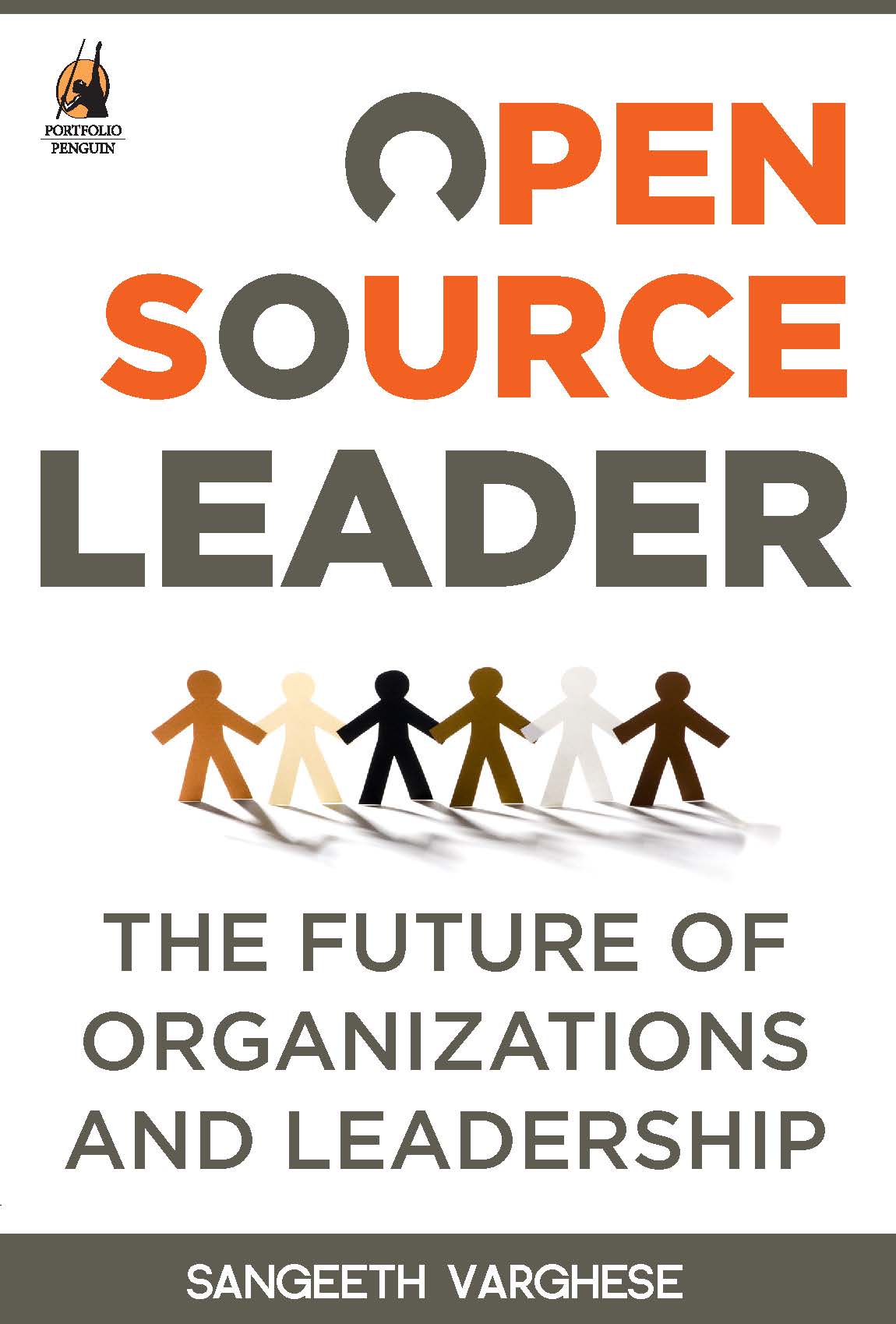
An evolutionary change in the world of leadership has arrived. In this era of increasing complexities, leadership is evolving faster than ever before. More forward-looking organizations are moving away from the traditional closed forms towards an Open Source Leader model, where people are nurtured across layers by opening unto them the power and authority associated with leadership. If organizations and leaders do not keep up with this evolution, they will be left in the lurch. But if they manage to keep pace, they will live another day, to tell the tale of their success. Open Source Leader tells the story of such organizations that have managed to evolve ahead of their contemporaries. Sangeeth Varghese has woven together eight defining attributes that are most commonly observed in such organizations, helping them survive and thrive during the most challenging of times. In this book, entities as diverse as the Indian national cricket team, Wikipedia, BCG Consulting and the Art of Living reveal their most closely held secrets of success. It draws together the wisdom gleaned from some of the greatest thought-leaders across the world, as well as from multiple disciplines. Open Source Leader will keep you ahead of the evolutionary curve, irrespective of whether you are leading a Fortune 500 corporation, a start-up or a government institution. It will help you understand the future of leadership. Most importantly, it will help you keep your mind as well as your organization fertile enough to nurture leaders across layers. Those who embrace Open Source leadership are not only the winners of today, but the survivors of tomorrow.