



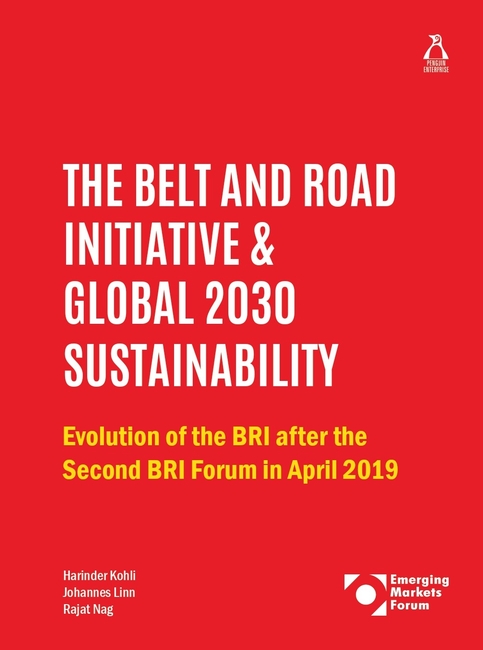
This book discusses the progress of the BRI as it enters its tenth year after being launched in 2013 and becoming by far the biggest bilateral development assistance program in the world. The analysis offered herein is based on eleven detailed ‘inside-out’ country studies by independent experts and the studies presented here explain in an accessible manner how the pace and direction of the BRI has been impacted by the pandemic, the debt distress faced by many countries and the policies adopted by the Chinese authorities to navigate these new challenges.
Catagory: Business & Economics
The Ultimate Sales Accelerator

ONE SALES STRATEGY TO WIN IN BOTH BUSINESS AND LIFE
There are 7.7 billion sales owners in the world. Everyone is selling either a product, a service or an idea. The fact that everyone is selling brings its own unique challenges and possibilities.
How can high-growth companies and start-ups win clients amid unprecedented competition?
How can one close large deals virtually?
How does one become a great storyteller and influence others?
How can one communicate effectively in life scenarios such as parenting, hiring or asking for a raise?
What is the higher purpose of sales?
Sharing forty-two practical business, consumer and real-life experiences, this book reveals one simple and powerful sales strategy that is the perfect answer to all the above questions. In an engaging manner, Amit provides you with a clear and easy-to-implement blueprint for this strategy.
The Updated and Expanded Edition includes
Virtual Selling Readers’ Case Studies 10 Videos Embedded as QR codes
The Financial Independence Marathon
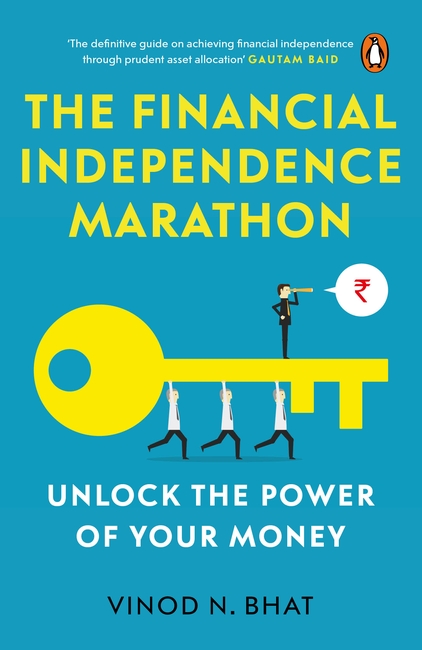
‘Time is money’. But the opposite is also true, i.e., ‘money is time’. Money, if used wisely, gives us the free time to do what makes us happy. It is crucial to understand the concept that money creates time because time is a non-renewable resource. And becoming financially independent is akin to finding a hidden treasure of time. It’s similar to discovering a gold mine, because it gives us the ability to live life on our own terms.
The key is not to think of financial independence as a goal but as a marathon, which we need to enjoy. This book is an easy, entertaining and actionable guide to becoming financially independent and avoiding any pitfalls on the journey.
The Company We Keep
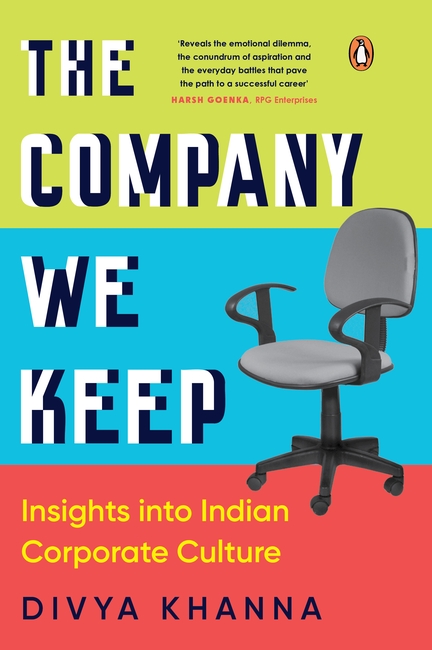
There are many challenges facing business corporations today-the pandemic we have barely moved on
from, economic recession, rapid changes in consumer behaviour and technological and competitive disruptions. These challenges stick out like the visible tip of an iceberg, while culture, the biggest challenge, is like the slow-moving, gigantic mass that lurks deep under the surface. We cannot deal sufficiently with superficial problems if we do not understand the depths that drive them.
‘Culture eats strategy for breakfast’ is a widely accepted saying in the business world, often attributed to Peter Drucker. This is as true for corporate India as it is for its consumers. Yet, we spend more time and money studying our consumers and their cultures than we do ourselves.
The Company We Keep is a market research-based exploration of Indian corporate culture. It looks beyond the glamour and jargon of the business world to individual stories that share real personal insights into the aspirations, vulnerabilities, pressures and possibilities of corporate careers and lives. These are urgent conversations we need to keep having as we reflect, review and decide where we can go from here.
Unfinished Business
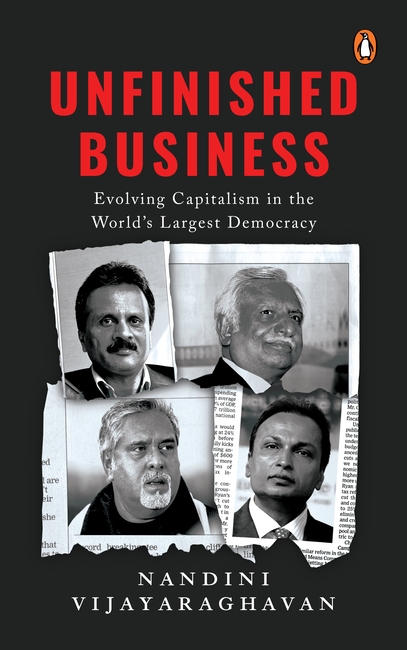
Unfinished Business is a chronicle of contemporary Indian corporate history, narrated through the professional trajectories of four high-profile businessmen: Anil Ambani, Naresh Goyal, V.G. Siddhartha and Vijay Mallya.
By no means unique in their proclivity for debt and penchant for politics, these four men belonged to a rarefied club of entrepreneurs, who could raise a sizeable quantum of financing with ease despite their businesses not generating adequate cash flows and/or possessing sufficient collateral.
So, what competitive advantage(s) did this guild of Indian entrepreneurs have? What caused their enterprises to struggle, while other similar organizations whose CEOs shared these attributes survived and even flourished? How did the Indian business ecosystem, regulatory norms, lenders’ underwriting practices and investor due diligence influence the organizations helmed by this quartet?
Following these four entrepreneurs’ careers and professional decisions, Unfinished Business throws light on the evolution of Indian capitalism during the first two decades of the twenty-first century, set against the backdrop of a dynamic political, regulatory and business climate in India. And, with great insight, clarity and analysis, Nandini Vijayaraghavan explores the takeaways for entrepreneurs, regulators, lenders and investors in this compelling, illuminating read.
Doglapan
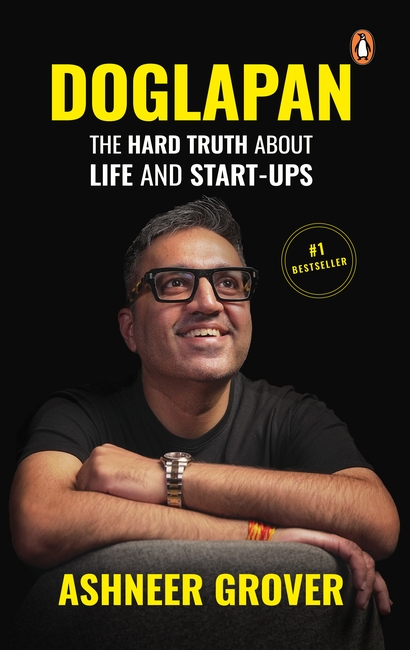
This is the unfettered story of Ashneer Grover-the favourite and misunderstood poster boy of Start-up India.
Raw, gut-wrenching in its honesty and completely from the heart, this is storytelling at its finest.
A young boy with a ‘refugee’ tag growing up in Delhi’s Malviya Nagar outpaces his circumstances by becoming a rank-holder at the pinnacle of academic excellence in India-IIT Delhi. He goes on to do an MBA from the hallowed halls of IIM Ahmedabad, builds a career as an investment banker at Kotak Investment Banking and AmEx, and is pivotal in the making of two unicorns-Grofers, as CFO, and BharatPe, as co-founder.
As a judge on the popular TV show Shark Tank India, Ashneer becomes a household name even as his life turns upside down. Controversy, media spotlight, garrulous social media chatter descend, making it difficult to distinguish fact from fiction.
Welcome to the World of the Tatas
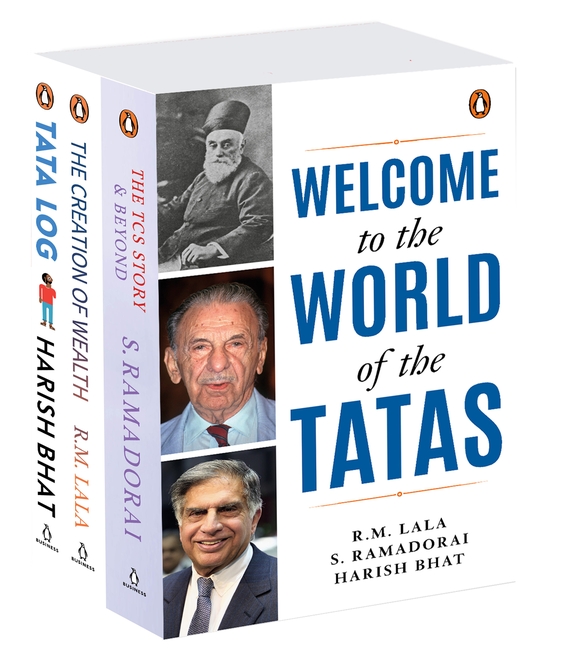
The Creation of Wealth is R. M. Lala’s bestselling account of how the Tatas have been at the forefront in the making of the Indian nation-not just by their phenomenal achievements as industrialists and entrepreneurs but also by their singular contributions in areas like factory reforms, social welfare, medical research, higher education, arts and rural development.
In The TCS Story and Beyond, S. Ramadorai, one of the country’s most respected business leaders, recounts the steps to the extraordinary success of Tata Consultancy Services, one of the world’s largest IT software and services companies, and outlines a vision for the future where the quality initiatives he undertook can be applied to a larger national framework.
Tatalog: Eight Modern Stories from a Timeless Institution provides readers with an insider’s glimpse of the challenges faced by the Tata companies and how they rose above it all and carved a name for themselves.
Build, Don’t Talk
School taught us specific subjects, like maths and history.
But we weren’t taught:
How to sell
Or how to build relationships
Or how to negotiate
Or how to take care of our mental health
Or how to network
Or how to deal with personal finance
These most important situations we face as adults were never discussed with us when we were students. We weren’t taught these skills in school, and this makes all the success stories we hear about seem out of reach; it makes us feel dumb. We aren’t dumb, we just don’t know how to work the system.
Your school taught you how to run in the race; it didn’t teach you how to win. And that’s what this book is for. To help you win the race. Packed with useful advice gleaned from his own journey as an entrepreneur and content creator, this book by Raj Shamani is a must-read.
Fifteen Judgments
This book examines fifteen judgments that have influenced the financial destiny of India. With significant macroeconomic dimensions, these judgments, when explored, show a long-term impact on the economy. In doing so, judgments from different times of history have been examined to give the reader a flavour of the jurisprudential philosophies at different times in the country since Independence.
Forks in the Road
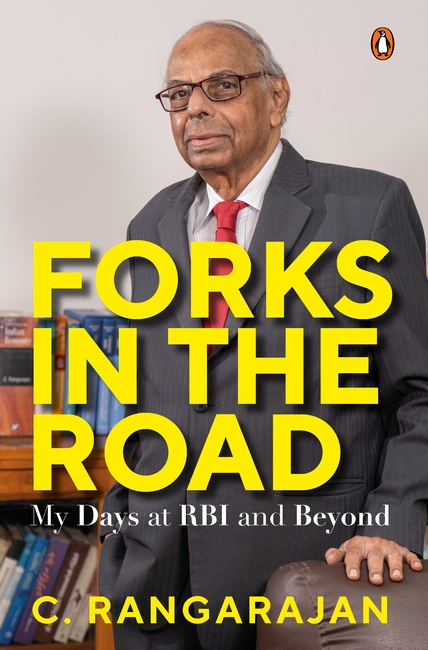
‘One doesn’t plan one’s life fully. Some of it is planned, but some of it is purely accidental. Much of my life is a matter of circumstance,’ says C. Rangarajan.
In this book, the veteran economist and policymaker provides a captivating account of his professional journey, starting with his purely accidental entry into the RBI in 1982. Rangarajan, regarded as one of the tallest figures in the history of India’s economic reforms, provides crucial insights into the role he played as part of the team which initiated far-reaching reforms in India’s economy in the early 1990s. The path-breaking reforms that he implemented during his tenure as governor of RBI included deregulation of interest rates, strengthening of the banking system by a gradual tightening of prudential norms, creation and nurturing of financial markets, giving them depth and vibrancy, shifting to market-determined exchange rates, making the rupee convertible on the current account and the cessation of automatic monetization of budget deficit.
Rangarajan describes the key events between 1982 and 2014, particularly in the areas of money and finance, explaining not only what happened but also the motivations and processes behind them. As a public figure and an architect of economic change in India, he also ruminates about his interactions with both political and economic actors. Forks in the Road is not only a memoir of a man who shaped India’s economy and positively impacted the lives of many, but also a fascinating account of India’s growth story. It is a description of what we did and what we did not, and where we succeeded and where we failed.