An accessible and useful guide to climb the corporate ladder by G.S. Rattan, former CEO of Tata Bearings.
There is no linear path to reach the top. In today’s day and age, when there is so much competition and nepotism that is being spoken about, one has to wonder: Does talent and merit have a chance? In my opinion, they do. So how does one knock on the door of success and reach the boardroom?
This book takes you through the crucial ten steps you need to climb as you progress in your career to reach the top via the author’s own personal journey. Each chapter deals with one specific quality that a CEO is required to have and is accompanied with a worksheet next to it that will help you chart your growth. Peppered with wisdom and experience, each story will help you understand the implications of your decisions and the right career stage that one should look at making a move. An absolute must-have for anyone looking to make a mark in their corporate career.

There are plenty of self-improvement books out there-books that claim they can change your life. Yet, what makes us better human beings are stories and real-life observations, which can help us get ahead in our careers and, in turn, enrich our lives.
From the bestselling author of The Habit of Winning and The Secret of Leadership comes a new book on life and success. In How Come No One Told Me That?, bestselling author Prakash Iyer shares the stories and observations that have made an immense impact on his life.
The book is divided into ten sections, exploring life lessons, ways of improving oneself, leadership and the importance of doing small things right, among other subjects. Through powerful anecdotes and charming essays, followed by practical, actionable advice, this book will help you make those minor adjustments to your professional and personal lives that can truly make you unstoppable.

What, according to you, is a family business? What are its benefits? Why do a majority of family businesses fail? Can a family business be turned to your advantage?
Set around the backdrop of an enterprise that has been around for over a hundred years – the Baidyanath Group, these questions, and many more, are answered in this book on what makes family businesses tick specially beyond the third generation.
As any business passes through generations and each generation passes through these various stages of life – Brahmacharya, Grihastha, Vanaprastha and Sanyas – the transition is not just difficult, but also painful, both financially and emotionally. The resultant losses of this generational paradigm are not only monetary, but also familial. Do family businesses suffer from elder son syndrome, or is early division seen as taboo? When to plan succession and should one part with ownership?
Surprisingly, the business behaves as per the behaviour of the generation that manages it. Given an identical situation, the decision would vary as per the generation taking the call. Life is all about the choices we make, our decision, if right, becomes a ‘virtue’ for the family and the business. If not right, it becomes a ‘sin’.
The book serves as a guide to what not to do by every member and every generation of a family. Identifying thirty actions which are the biggest sins that hinder the prosperity and continuity of any family business, Ajay Sharma, a third-generation businessman, weaves his own experiences with in-depth research and knowledge on the subject of family business. He believes that this book will be helpful to everyone – not just the stakeholders of family businesses, but also the millions who work with these family businesses, people who are the real lifeforce.
Does success happen by chance or are there certain ways to achieve it?
Who determines your success?
1. That nosy relative who pesters you with questions
2. Friends whose social media posts reflect their ‘perfect’ lives
3. You
Success holds different meanings for different people, but the feeling of wanting success is universal. However, most students end up being their own greatest enemy when they start comparing their life story with others’ achievements.
In this well-researched self-help book, Chandan Deshmukh unpacks five simple and insightful mantras, which are easy to put into action from Day 1, for you to conquer the world!
– Written by the bestselling author of 7 Dreams Jobs and How to Find Them and 6 Secrets Smart Students Don’t Tell You
– Includes step-by-step methods and tips for smart studying and achieving academic success
– Narrated through interactive graphs and fun artworks that are tailor-made for future school and college toppers
– Perfect for students who like learning beyond textbooks

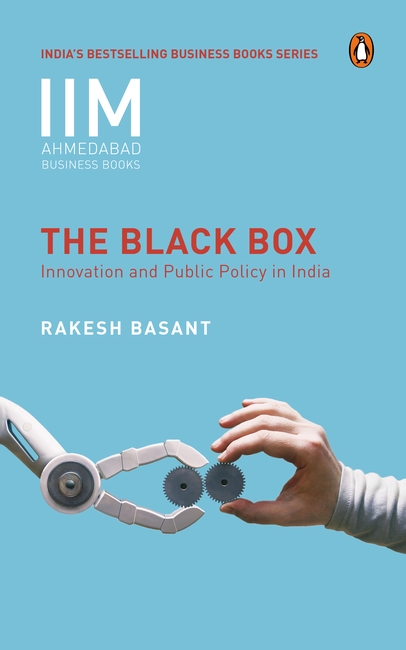
What policies should India pursue for fostering innovation? Taking the perspective that all policies that influence technology-related choices of firms should be considered part of innovation policy, the book analyses the impact on innovation of various policies, including those related to industry, trade, R&D, foreign direct investment, intellectual property rights, start-ups and higher education. It brings together conceptual and empirical literature from diverse intellectual streams to analyse the linkages between innovation and public policy. Combining insights from the disciplines of economics and management, the book highlights the complexity of policy choices, identifies certain focus areas and argues for consistency across various policy instruments to create an appropriate environment for innovation in India.
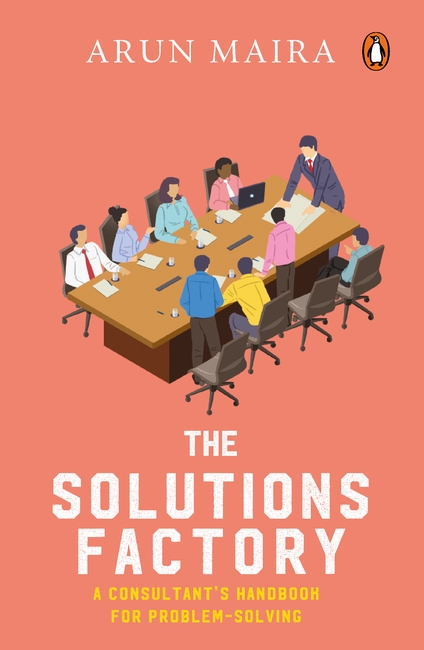
A must-read for Indian consultants and managers from the management expert Arun Maira!
In The Solutions Factory, Arun Maira digs deep into his experiences as a consultant and presents twenty human-led business stories that cover all kinds of problem-solving techniques told through carefully picked personal experiences and anecdotes. By distilling the essence of the work that consultants do, he offers a management handbook that is unique to Indian business practices. From cultural understanding to communication skills, this book illustrates the applicability of simple tips for a diverse range of business roles and levels.
Maira’s down-to-earth and insightful approach, keenly oriented towards respectful and ethical business practices, illustrates his signature mix of idealism and pragmatism-be it is about managing an unexpected crisis or about learning more about another company’s culture. In this age of financial uncertainty due to the pandemic, a book like this is as essential for small-business owners as it is for the heads of major corporations. Maira’s focus on excellence through ethics, success through learning, and valuation through value brings to the fore his people-centric and back-to-basics approach-an approach that every modern corporation will need in order to prepare for the future ahead of us.

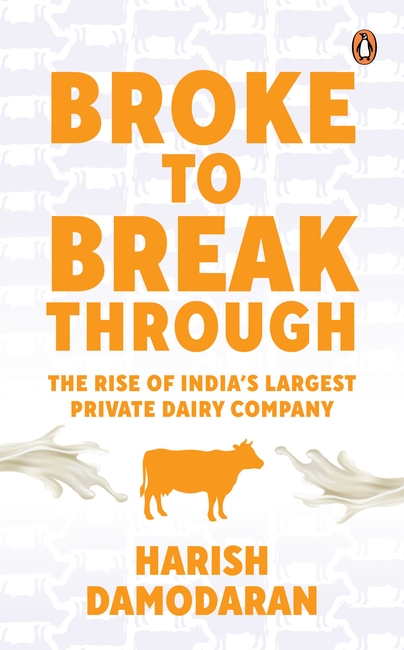
Broke to Breakthrough is a business biography of India’s largest dairy products company – Hatsun Agro – and its founder R.G. Chandramogan.
Hailing from Virudhunagar district of Tamil Nadu, Chandramogan started this venture in 1970 as a twenty-one-year-old, making ice candies with three people in a 250 sq. ft. rented place and selling in pushcarts. By the mid-1980s, ‘Arun’ ice cream had become the market leader in the state. But Chandramogan didn’t stop at that – he branched into the dairy business by leveraging his brand-building experience with ‘Arun’ and forging connections with farmers.
Thus was born Hatsun Agro Product. It is today a Rs 5,500 crore-plus company that also has pioneered a unique model of directly procuring milk from over 4 lakh farmers (B2F) and selling only branded consumer-facing products (B2C).

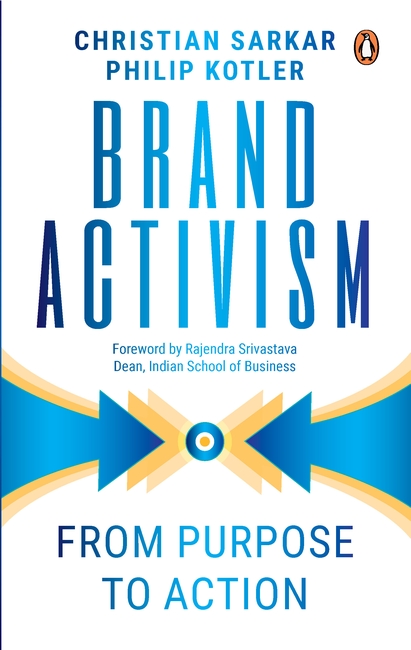
What happens when businesses and their customers don’t share the same values? Or, for that matter, when employees of a company don’t share the same values as their executives? Welcome to the world of Brand Activism.
Companies no longer have a choice. Brand Activism consists of business efforts to promote, impede, or direct social, political, economic, and/or environmental reform or stasis with the desire to promote or impede improvements in society. It is driven by a fundamental concern for the biggest and most urgent problems facing society.
Brand Activism: From Purpose to Action is about how progressive businesses are taking stands to create a better world.
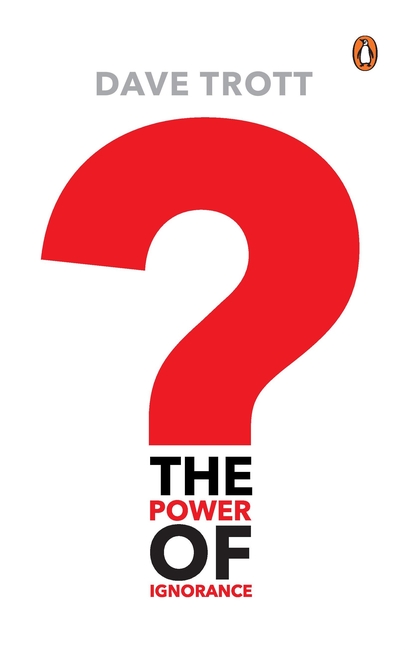
“The wise man knows he doesn’t know. The fool doesn’t know he doesn’t know.” – Lao Tzu
What’s the most important step in fixing a puncture? It isn’t jacking up the car, or taking the wheel off, or finding the puncture.
There’s something more fundamental than any of those. Something without which you can’t even begin to fix a puncture.
The most important step is finding out you’ve got a puncture. Without that you can’t do anything. Instead of saying, “It’s just a bit bumpy, must be the road,” and carrying on, you must acknowledge that something has changed and you don’t know what that is.
If you don’t admit you don’t know what’s happening, you can never find out. If you don’t find out, you can never change it. The most important step, always, is admitting you don’t know. That’s the power of ignorance.
In this latest collection of real-life stories, Dave Trott provides lessons about problem solving and creative thinking that can be applied in advertising, business, and the wider world.

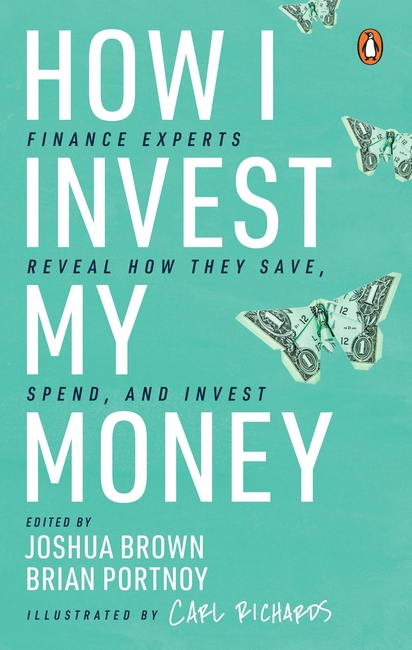
The world of investing normally sees experts telling us the “right” way to manage our money. But how often do these experts pull back the curtain and tell us how they invest their own money? Never. How I Invest My Money changes that.
In this unprecedented collection, 25 financial experts share how they navigate markets with their own capital. In this honest rendering of how they invest, save, spend, give, and borrow, this group of portfolio managers, financial advisors, venture capitalists and other experts detail the “how” and the “why” of their investments. They share stories about their childhood, their families, the struggles they face and the aspirations they hold. Sometimes raw, always revealing, these stories detail the indelible relationship between our money and our values.
Taken as a whole, these essays powerfully demonstrate that there is no single “right” way to save, spend, and invest. We see a kaleidoscope of perspectives on stocks, bonds, real assets, funds, charity, and other means of achieving the life one desires. With engaging illustrations throughout by Carl Richards, How I Invest My Money inspires readers to think creatively about their financial decisions and how money figures in the broader quest for a contented life.