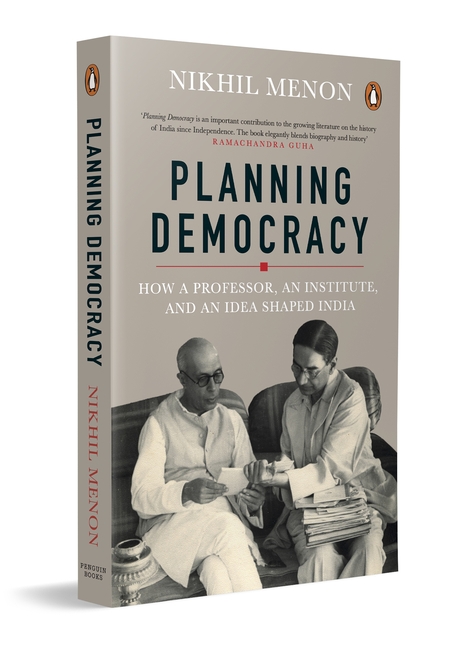
India’s Five-Year Plans were one of the developing world’s most ambitious experiments. After nearly two centuries of colonial rule, planning the economy was meant to be independent India’s route from poverty to prosperity. Planning Democracy explores how India married liberal democracy to a socialist economy. Planning not only built India’s data systems, it even shaped the nature of its democracy. The Five-Year Plans loomed so large that they linked surprisingly far-flung contexts-from computers to Bollywood to Hindutva.
In this compelling history, Nikhil Menon brings the world of planning to life through the intriguing story of a gifted scientist known as the Professor, a trail-blazing research institute in Calcutta, and the alluring idea of ‘democratic planning’. Set amidst global conflicts and international debates, Menon reveals how India walked a tightrope between capitalism and communism. Planning Democracy recasts our understanding of the Indian republic, uncovering how planning came to define the nation and revealing the ways in which it continues to shape our world today

India rightly aspires to be an upper-middle-income economy with its vast workforce gainfully employed
to have a decent standard of living. This, however, is a challenging proposition as India continues to
grapple with major economic policy issues. This book discusses the present state of India’s economy. It thematically explores the critical policy issues India faces today and suggests reforms for India to become a $10-trillion economy
by the mid-2030s. The book presents a wide-angled and comprehensive view of the state of the Indian economy. It analyses India’s macroeconomy in the light of its evolution since Independence and covers the performance of the Indian economy on macro parameters of growth, inflation, monetary management, credit management, foreign capital inflows, fiscal management and other important macroeconomic fundamentals. Covering major sectors of the economy, such as agriculture, industry and services, the book also captures India’s progress towards becoming a digital economy.

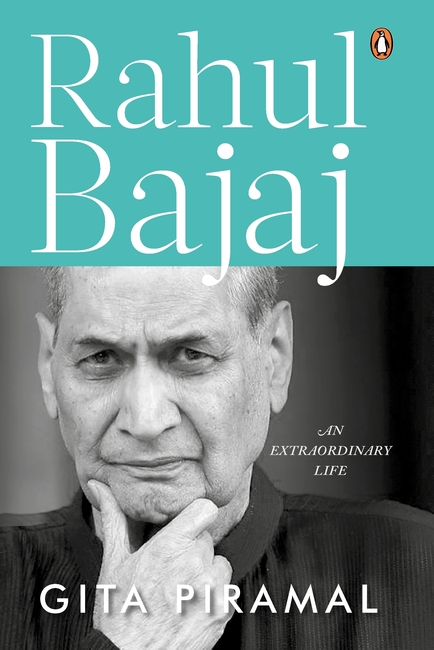
‘Integrity and character matter. Without them, no amount of ability can get you anywhere. In addition, you need courage–courage to make difficult decisions and courage to oppose something if your conscience tells you that you are right’–Rahul Bajaj
Rahul Bajaj is a billionaire businessman, the chairman emeritus of the Bajaj Group and a former member of Parliament. This book is not just the story of Rahul Bajaj but the story of India. The author takes us through the country’s transformation from the time Rahul Bajaj’s mother was imprisoned during the freedom struggle to the prism of his eventful life.
Based on unrestricted interviews, the book is full of anecdotes, business learnings and political asides. It is, at its core, a moving human story.

Society tends to glorify the get-rich-quick entrepreneur–who builds a company, takes it public and then (maybe) contributes to charity.
In Leadership to Last, Geoffrey Jones and Tarun Khanna interview iconic leaders in India who have demonstrated leadership to last. There are leaders from South Asia and other emerging markets as well to illustrate that the ideas Indian entrepreneurs speak about are echoed by their counterparts in the Global South. All these magnates–Ratan Tata, Anu Aga, Adi Godrej, Kiran Mazumdar-Shaw, Devi Shetty and Rahul Bajaj, to name a few–have built, to general acclaim and acknowledgement, organizations that are seen as forward-looking and innovative. They subscribe to a code of ethics and contribute to the betterment of society. The authors demonstrate that this is a lot harder to achieve than unicorn status.
The authors corroborate how these stories are less about building a get-rich-quick organization and much more about triggering foundational and institutional change in society. These interviews, encapsulating the history of recent decades, eloquently lay out the opportunities and challenges of today and the future. The profiled leaders inspire awe by displaying audacity of intent, humility of demeanour and steadfastness of purpose.
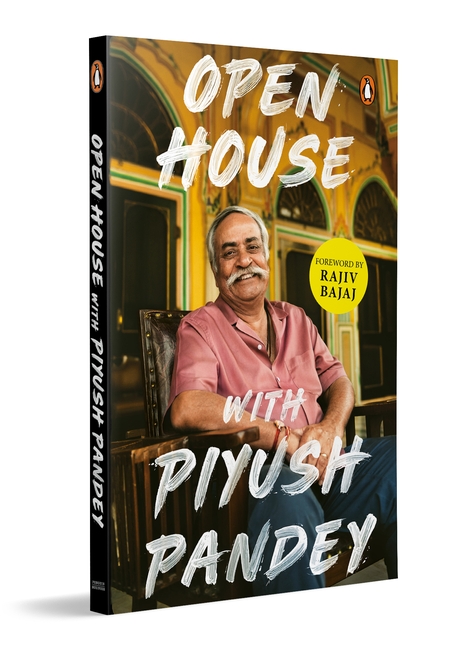
In Open House, Piyush Pandey takes the readers on a journey into his mind-his work, thoughts and experiences. He answers questions posed to him by people over the decades. Serious questions, incisive questions and frivolous questions. Is advertising a good career option? Should ad agencies work for political parties? Why does Ogilvy work for the BJP? Should citizens take the law into their own hands if they don’t like the advertising? Is Ogilvy a lala company? What is the future of advertising? Is Piyush Pandey too old to be in this business?
Honest, irreverent and informative, this is a roller-coaster ride with Piyush Pandey and Anant Rangaswami who has skilfully curated the book. With its practical wisdom and deep insights,
Open House will both entertain and enlighten you.

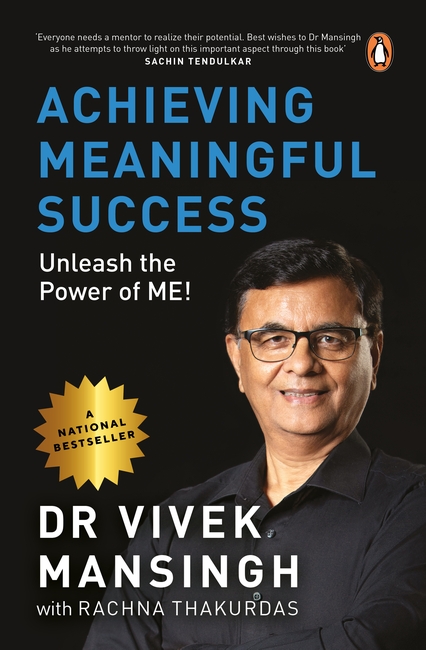
This book will be an adept lifetime mentor faithfully by your side to guide you through various stages of life. It guides you in achieving meaningful success including tremendous professional success through multidimensional and balanced life goals, which are the key to happiness and fulfilment. The book first focuses on defining the person you aspire to be through a step-by-step process to define your aspirational life goals. Then it guides you in becoming the best version of yourself and worthy of realizing your aspirations. The ideas shared are relevant to people of ages fifteen years onwards, from high school students to early and senior professionals to CEOs. It also includes insights from exclusive interviews with Ratan Tata, Narayan Murthy, Kiran Majumdar-Shaw, Sadhguru, John Chambers, Dr Devi Shetty, Rahul Dravid, Prakash Padukone, Vinita Bali, Vani Kola, and more. These distinguished people have achieved amazing success by passionately pursuing their goal-based journeys and have underlined the ideas shared in the book.

What is the common theme in the following true-life experiences?
An organization becomes an iconic brand by retaining only 3 per cent of its products.
A CEO gets more done by organizing ten-minute focused meetings.
TED talk speakers inspire millions within eighteen minutes.
A father adopts a three-day workweek to spend quality time with his daughters.
A tired person transforms his life by embracing one micro habit of waking up at 5 a.m.
Observe Closely
These choices say YES to a small set of things that matter and say NO to everything else.
These choices remove clutter.
These choices find meaning and joy in little things.
And this is the essence of Small Is Big.
Using extensive research, life experiences, and hands-on exercises, this book reveals the Small Is Big source code and outlines how to apply it.
When you harness Small Is Big, fulfilment, productivity and extraordinary results are inevitable.

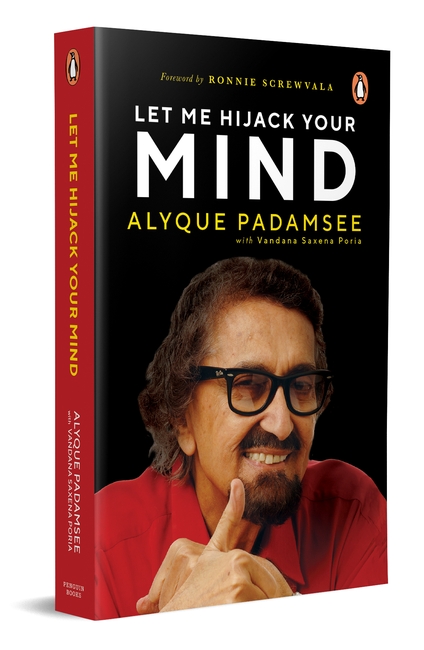
In this one-of-its-kind book by the late Alyque Padamsee, he invites us to re-examine and think afresh about some of our most deeply held beliefs, from love, marriage, terrorism, leadership, money, gender, faith to education. Let Me Hijack Your Mind is Alyque’s parting gift to Indians, exhorting them to throw out the old and embrace new ways of approaching everything, which will lead them towards a more exciting and contented life-and a better society and country. It is a way to open windows in their mind to think about life aside from greed, power and money. This is a book designed to throw everyone off-balance in a good way, because it is crammed with fresh ideas on how to live, how to dream and how to completely reset our mindset and attitudes. As Alyque says in his inimitable style: ‘Get people out of stuffy thinking.’
Some of the provocative questions he asks are:
– Why should marriage be ’till death do us part’?
– Why are terrorists breaking the law of their very own holy books?
– Why are multinational companies obsessed with GNP (Gross National Product) instead of GNH (Gross National Happiness)?
– Why do men fear women? And why do women hate themselves?
A fun, racy and often shocking read, the book busts some of the most well-known taboos, includes life hacks drawing on his experiences in advertising and theatre, as well as new ‘commandments’ for the present generation.

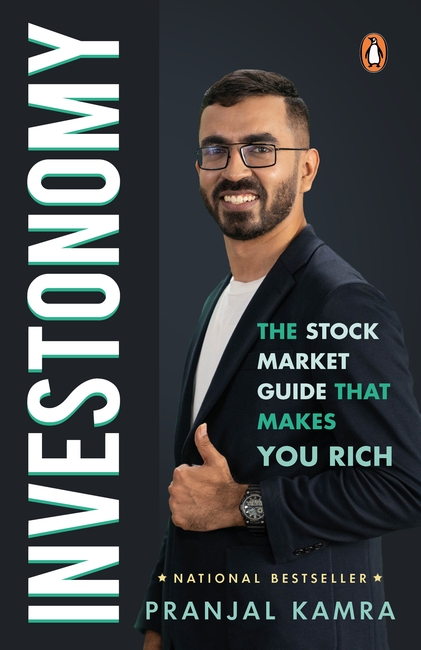
Are you inspired by billionaires around the world but think becoming a billionaire is too far out of your reach?
Are you confused about the behaviour of the stock market and the implications of investing in it?
Are you actually scared of investing in the stock market? If yes, then Investonomy is a must-read for you!
Investonomy not only explains modern value investing principles but also unveils certain secrets of the stock market. It busts popular myths and misconceptions as well. A thorough reading of this book will enable you to chart your own investment plans, and soon, you’ll be all set for your personal wealth-creation journey through equity investment. Investonomy is an initiative to empower existing, as well as potential, investors like you.