Publish with Us

Follow Penguin

Follow Penguinsters

Follow Penguin Swadesh

The Right Choice

Should money be the primary factor in picking a job? When do I pursue an MBA or a second MBA? Should I switch industries to move ahead?

The Right Choice delves deep into the ten frequently faced dilemmas in a person’s career, such as the ones listed above. The author shares his wisdom and experiences from his illustrious career as one of India Inc’s longest-serving CEOs. In his trademark straightforward and lucid style, he shares lessons and learnings on each of the ten dilemmas. The book also contains insights and perspectives from twenty-four highly experienced professionals.

A successful career is not a straight line; it has many twists and turns where you are faced with difficult choices. Practical and inspiring, The Right Choice is a must read corporate management book and a career guide that will help you navigate these difficult situations-and win in your career.

ANUSHA SHETTY – BHAVYA MISRA – CHANDRAMOULI
VENKATESAN – DEBJANI GHOSH – HARI MENON –
HARISH DEVARAJAN – KIRTHIGA REDDY – M. DAMODARAN –
MEENA GANESH – PAVITRA SINGH – PIYUSH PANDEY –
PRAKASH NEDUNGADI – PRIYANKA VIJAYAKUMAR –
RAKESH KUMAR – RAMA BIJAPURKAR – ROHIT KALE –
R.R. NAIR – RUCHIKA GUPTA – SONNY IQBAL –
SUDHANSHU VATS – SUJATHA DUVVURI – BALARAMAN V. –
VANI GUPTA DANDIA – VIVEK GAMBHIR

Customer to Human

Modern business has changed forever, becoming more customer-centric, and we need clear road-maps to navigate this world. Customer experience-or CX-is every interaction a customer has with your business. It’s neither the product nor the service-it’s a combination of both.

Murali Balaraman has over twenty-five years of experience in multiple roles, as a banker, as part of the IT industry
and as a management consultant and adviser, interacting with global leadership across five continents. Customer to
Human weaves together the learnings he has drawn from the industry, ranging from Fortune 500 companies to tiny neighbourhood businesses. In this anecdotal account of successes and failures in CX, it becomes clear that
customers are the most important part of any business structure.

With over 150 individual, easy-to-read and diverse case studies, it presents a revolutionary approach to CX and
the individual customer journey. The book provides a practitioner’s point of view, with actionable suggestions
and pragmatic concepts that will come in handy no matter what part of the business you work in.

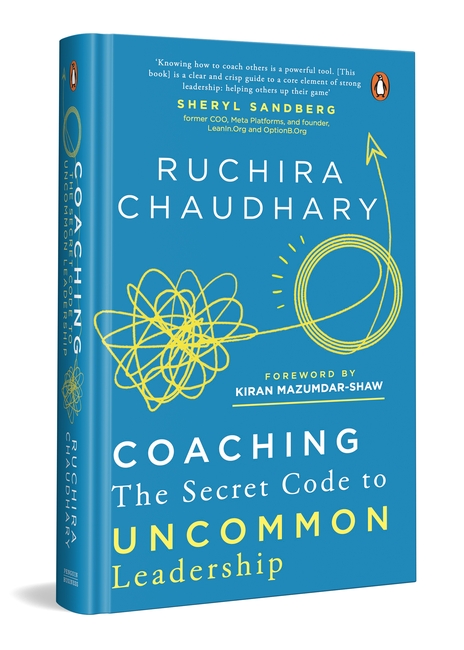
Coaching

This book lucidly illustrates how a leader can bring out the very best in people by coaching them, and how coaching can unleash creativity as well as innovation while inspiring teams to play to their potential. It also examines how coaching helps leaders maintain a fine balance between managing and guiding, and between appraising and supporting their teammates. While many excellent books have been written about leadership, talent and coaching, this is a rare book that stands boldly at the intersection of leadership and coaching.

This is a book for our times. Businesses are facing a new reality, characterized by a VUCA (volatile, uncertain, complex and ambiguous) world. This new reality has forced organizations to depart from conventional command-and-control practices to a completely new model – a model in which leaders support and guide, rather than instruct and control, their team members.

Exploring some of the key ingredients of impactful leadership, Coaching offers tips and tricks, backed by research and incisive insights, on how to become an effective leader-coach. Peppered with interesting anecdotes and analogies, drawn from sports, performing arts and other walks of life, the book is a breezy read. Interviews with corporate leaders and academics further enrich the narrative. Guaranteed to make for a very interesting read, the book will be useful to leaders, aspiring leaders and especially those that wish to transition from being just good leaders to extraordinary ones.

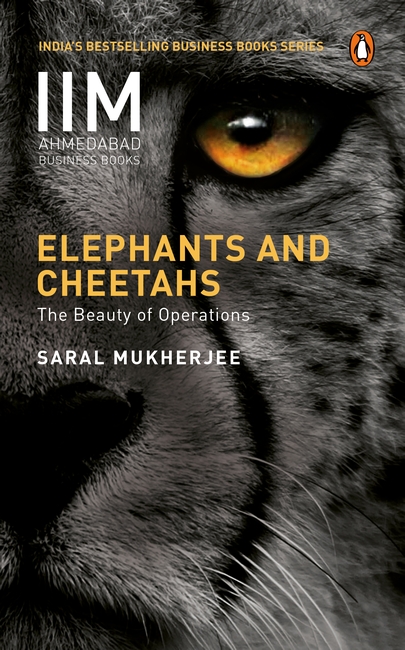
Elephants and Cheetahs

Do systems have souls? This book, based on a popular elective at IIM Ahmedabad, looks for answers in the hard trade-offs inherent in the design of operating systems and business models. It encourages business leaders to ask two different sets of existential questions: Does the organization that I am managing have a soul, and if so, what are the strategic choices that enable its synthesis (external orientation)? And, do I have a soul, and if so, who am I (internal orientation)? In the process, it uncovers a beauty inherent in patterns of strategic choices that enables an organizational soul to emerge, and an appreciation of the diversity of such souls.

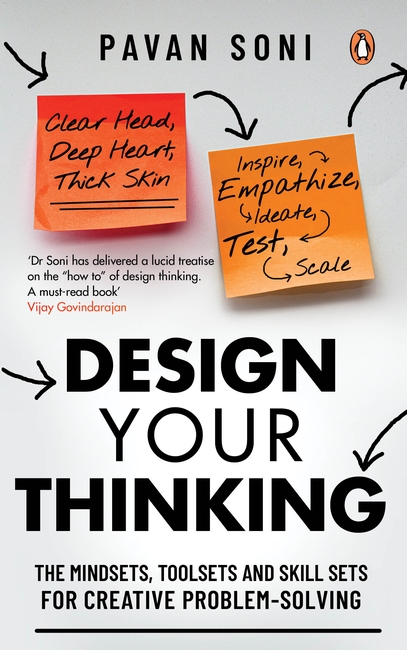
Design Your Thinking

Creative problem-solving is at the heart of innovation, and some of the world’s most innovative companies are very systematic in following this approach. Most people would assume that creativity and discipline can’t coexist, and that only when resources are replete and the talent best-in-class can one be creative. But nothing could be further from the truth. In fact, creativity thrives amid constraints and calls for great discipline.

Pioneered by IDEO and Stanford d.school, design thinking is one such approach that draws inspiration from the realm of product design. However, it shouldn’t be narrowly associated with the world of start-ups and technology or thought of as something limited to product development. The method is increasingly being used in a wider context and can help us address a vast array of problems.

This book attempts to offer a practitioner’s perspective on how the tenets, methods and discipline of design thinking can be applied across a range of domains, including to everyday problems, and help us become expert problem-solvers through the use of the appropriate toolsets, skill sets and mindsets.

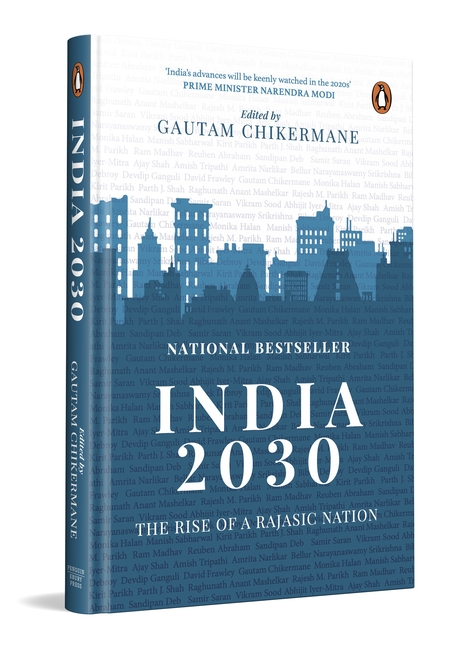
India 2030: Rise of a Rajasic Nation

A collection of essays by experts across fields and their thoughts on the future of India in the next decade

Thought leaders from twenty diverse fields, ranging from politics, economics and foreign policy to health care and energy, predict what 2030 will look like for India and how the nation will evolve in this decade.

Editor Gautam Chikermane has masterfully weaved together essays by Abhijit Iyer-Mitra, Ajay Shah, Amish Tripathi, Amrita Narlikar, Bibek Debroy, David Frawley, Devdip Ganguli, Justice B.N. Srikrishna, Kirit S. Parikh, Manish Sabharwal, Monika Halan, Parth J. Shah, Raghunath Anant Mashelkar, Rajesh Parikh, Ram Madhav, Reuben Abraham, Samir Saran, Sandipan Deb and Vikram Sood into a single volume that looks towards India’s future.

A handbook for citizens, a road map for policymakers and a guide for scholars, this collection captures the many aspects of a future that will see India becoming the world’s third-largest economy and a regional power before the decade gets over.

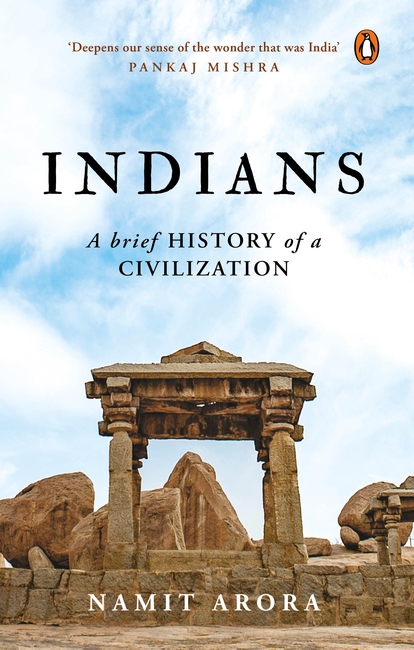
Indians

‘Deepens our sense of the wonder that was India’ ~ Pankaj Mishra

‘A gem of a book that is a joy to read . . . You can almost touch and feel the centuries and millennia as they pass by’ ~ Tony Joseph

‘Arora explores how Indians lived, ate, loved, built, fought and made sense of the material, rational and spiritual world down the ages . . . [A] mega-ambitious project’ ~ The Hindu

‘A wonderfully evocative book. Arora invites the reader to reflect on the past, without overwhelming her with dry historical facts but luring her in with vivid human stories’ ~ Prof. Mohan Rao

A BRILLIANT, ORIGINAL BOOK THAT REVEALS INDIA’S RICH AND DIVERSE HISTORIES

What do we really know about the Aryan migration theory and why is that debate so hot?
Why did the people of Khajuraho carve erotic scenes on their temple walls?
What did the monks at Nalanda eat for dinner?
Did our ideals of beauty ever prefer dark skin?

Indian civilization is an idea, a reality, an enigma. In this riveting book, Namit Arora takes us on an unforgettable journey through 5000 years of history, reimagining in rich detail the social and cultural moorings of Indians through the ages. Drawing on credible sources, he discovers what inspired and shaped them: their political upheavals and rivalries, customs and vocations, and a variety of unusual festivals. Arora makes a stop at six iconic places — the Harappan city of Dholavira, the Ikshvaku capital at Nagarjunakonda, the Buddhist centre of learning at Nalanda, enigmatic Khajuraho, Vijayanagar at Hampi, and historic Varanasi — enlivening the narrative with vivid descriptions, local stories and evocative photographs. Punctuating this are chronicles of famous travellers who visited India — including Megasthenes, Xuanzang, Alberuni and Marco Polo — whose dramatic and idiosyncratic tales conceal surprising insights about our land.

In lucid, elegant prose, Arora explores the exciting churn of ideas, beliefs and values of our ancestors through millennia — some continue to shape modern India, while others have been lost forever. An original, deeply engaging and extensively researched work, Indians illuminates a range of histories coursing through our veins.

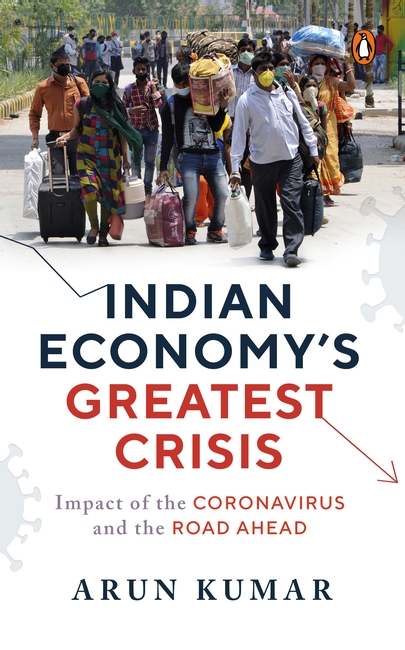
Indian Economy’s Greatest Crisis

‘Desperate times call for desperate measures.’ The outbreak of COVID-19 aptly justifies this expression as the world faces an unprecedented situation. But what is so unusual about the coronavirus, especially since viral attacks-H1N1, Ebola and Nipah-have taken place earlier as well? How has it affected India and the world? What are the socio-economic implications for India? How has India’s response been to the coronavirus? What is more important-life or livelihood? How can India recover from the sudden economic shock caused by the pandemic?
This book is an attempt to answer these and many more such questions.
The coronavirus hit the world in December 2019 like a hurricane. What started as a medical emergency soon turned into an economic one. No global financial crisis has ever hit humanity as hard as COVID-19. The world, therefore, was caught ill prepared when the pandemic struck. The situation, to say the least, is worse than a war. The situation in India is no different: In terms of the number of cases reported, it is second only to the United States.
This book highlights the enormity of the impact of the coronavirus pandemic on India. It critically examines the government’s efforts to control the disease and mitigate its adverse effects on Indian economy and society. Making a compelling argument that an economy is not like a rubber ball, which, if dropped on a hard surface, will bounce back to its original position, the author provides incisive reasons to why economic recovery will be slow and not ‘V-shaped’. He, however, cogently suggests that good governance, a robust public-health system, and clean and representative politics are key to bringing India’s economy back on track.

Nine Timeless Nuggets

Nine Timeless Nuggets is a knowledge accelerator for young marketers and an absorbing update for experienced ones. It provides a 2020 perspective on timeless marketing ideas. Arranged in three sections-‘How to Think of People’, ‘How to Craft Your Brand’ and ‘How to Go to Market’-the book casts new light on eternal marketing fundamentals and makes us rethink some basic questions. Who are we talking to? Why do they buy? Where do brands come from? Where are brands going? How can marketers talk to people? How can they create strong customer connections? How can they build thriving customer relationships? The answers are all here.

In Nine Timeless Nuggets, Bharat Bambawale proposes new models for customer motivation, customer relationship and twenty-first-century brand building. Together, these models can provide a strong foundation to any brand’s marketing strategy. Through his career, Bharat has helped shape the fortunes of many national, regional and global brands. This gave him a vantage point to observe and experience the underlying principles that drive customers, no matter where they live and which languages they speak. Nine Timeless Nuggets is a distillation of these ideas and concepts.

What the Customer Wants You to Know

In What the Customer Wants You to Know, Ram Charan explains how the crisis of a broken selling system can be tackled. According to the author, today selling has become a war of prices. Conducting a business transaction is no longer fun since most customers feel cheated by their respective vendors. Charan says that the easiest way to avoid the hassle is to understand the customer’s point of view. Instead of feeling cheated, the consumer should look to the seller for assistance in today’s cost-effective times. The author brings in a new aspect of selling, which he calls value creation selling.

error: Content is protected !!