Nine Timeless Nuggets is a knowledge accelerator for young marketers and an absorbing update for experienced ones. It provides a 2020 perspective on timeless marketing ideas. Arranged in three sections-‘How to Think of People’, ‘How to Craft Your Brand’ and ‘How to Go to Market’-the book casts new light on eternal marketing fundamentals and makes us rethink some basic questions. Who are we talking to? Why do they buy? Where do brands come from? Where are brands going? How can marketers talk to people? How can they create strong customer connections? How can they build thriving customer relationships? The answers are all here.
In Nine Timeless Nuggets, Bharat Bambawale proposes new models for customer motivation, customer relationship and twenty-first-century brand building. Together, these models can provide a strong foundation to any brand’s marketing strategy. Through his career, Bharat has helped shape the fortunes of many national, regional and global brands. This gave him a vantage point to observe and experience the underlying principles that drive customers, no matter where they live and which languages they speak. Nine Timeless Nuggets is a distillation of these ideas and concepts.

In What the Customer Wants You to Know, Ram Charan explains how the crisis of a broken selling system can be tackled. According to the author, today selling has become a war of prices. Conducting a business transaction is no longer fun since most customers feel cheated by their respective vendors. Charan says that the easiest way to avoid the hassle is to understand the customer’s point of view. Instead of feeling cheated, the consumer should look to the seller for assistance in today’s cost-effective times. The author brings in a new aspect of selling, which he calls value creation selling.

Why are all the good mangoes exported from India? Why should we pay our house help more? Why do we hesitate to reach out for that last piece of cake in a gathering? Are more choices really better? Why do many of us offer a prayer but are reluctant to wear a seatbelt while driving? Are Indians hardwired to get grumpy at a peer’s success? What’s common between a box of cereal and your résumé?
Can economics answer all these questions and more? According to Dr Sudipta Sarangi, the answer is yes.
In The Economics of Small Things, Sarangi using a range of everyday objects and common experiences like bringing about lasting societal change through Facebook to historically momentous episodes like the shutting down of telegram services in India offers crisp, easy-to-understand lessons in economics. The book studies the development of familiar cultural practices from India and around the world and links the regular to the esoteric and explains everything from Game Theory to the Cobra Effect without depending on graphs or equations-a modern-day miracle!
Through disarmingly simple prose, the book demystifies economic theories, offers delightful insights, and provides nuance without jargon. Each chapter of this book will give you the tools to meaningfully engage with a subject that has long been considered alienating but is unavoidable in its relevance.

The journey of a business-from a small start-up to a large company ready for an initial public offering (IPO)-is fraught with pitfalls and landmines. To scale a company, one needs to do more than just expand distribution and ramp up revenue. Scale entails a long-term vision that includes putting in place a timeline to achieve anticipated milestones, hiring and managing the right talent, sourcing capital to support expansion and building in simple yet effective processes as well as technology. Scaling requires the founders and the leadership team to understand the different pieces of the puzzle of scale and the components of organization-building.
From Pony to Unicorn lucidly describes the X-to-10X journey that every start-up aspiring to become a unicorn has to go through. The book effortlessly narrates the fundamental principles behind scaling. Peppered with anecdotes, insights and practical wisdom, the book is a treasure trove of lessons derived from the authors’ rich personal experiences in both building and guiding several start-ups that went on to attain the ‘unicorn’ status and became public-listed companies. Guaranteed to make for a very interesting read, the book will be useful to entrepreneurs, leaders and investors involved in scaling start-ups.
Harpreet Grover and Vibhore Goyal met in college and then spent the next decade of their lives building a company before exiting successfully.
One way to tell their story is this: they had a dream, they followed it and, then, through perseverance, they made it come true.
But that’s not really the truth. Like everything in life-at least everything worth having-it wasn’t that simple. There was blood, sweat and tears, there was loss of capital, loss of friendship and even a loss of faith along the way.
It started with a phone call from Harpreet’s mother introducing him to an uncle who wanted some help. Or maybe it started when Vibhore and Harpreet met as roommates in Room 143 at IIT Bombay. What remains true is that soon both had quit their jobs and launched CoCubes. From no money in their bank accounts for eight years after graduating to becoming dollar millionaires two years later in 2016, this is a tale of grit-of a company built in India by two Indian-middle-class-twenty-somethings-turned-entrepreneurs-written in the hope that you can avoid the mistakes they made and learn from what they did right.
This is that story-the story that you don’t always hear. But if you want to be an entrepreneur, and you prefer straight talk to sugar-coating, it’s one you should read.
The Indian Economy: Problems and Prospects, first published in 1992, looks at the country’s economy and the resolved fiscal crisis from a historical perspective. Edited and updated with a new Introduction by Bimal Jalan, the book retains the thirteen essays written by eminent economic thinkers in 1991 and 1992 in their original form as they provide a comprehensive overview of India’s economic development since Independence and answer questions on key economic issues that are as relevant today as they were at that time. Bipan Chandra conducts a historical survey of fiscal developments during the colonial period, the late V.M. Dandekar evaluates India’s economic performance from 1950 to 1990, and Rakesh Mohan traces the history of industrial controls from the pre-independence era. Also included are essays by C.H. Hanumantha Rao, C. Rangarajan and Narendra Jadhav, Raja Chelliah, Sudipto Mundle and M. Govinda Rao, Jyoti and Kirit Parikh, Pravin Visaria, T.S. Papola, Pranab Bardhan and Kaushik Basu. In his revised Introduction, Bimal Jalan assesses the country’s economic progress since 1991, examines crucial events and their relative significance. Exploring diverse aspects of the Indian economy as well as the political, institutional and legal implications of economic reforms, these insightful and revelatory essays will be of enormous interest to experts and the general reader alike.

What should you wear when your American colleague invites you to an informal dinner? What is the correct way to address a business associate you are meeting for the first time? When should you shake hands, and when is the right time to bow or do namaste? How can you manage as an Indian abroad when you are faced with unfamiliar food? What clicks with a German client, and how do you win over a Japanese partner? If you get an important business call in the middle of an equally important meeting, should you take it? Is it possible to be succinct in an email without being curt?
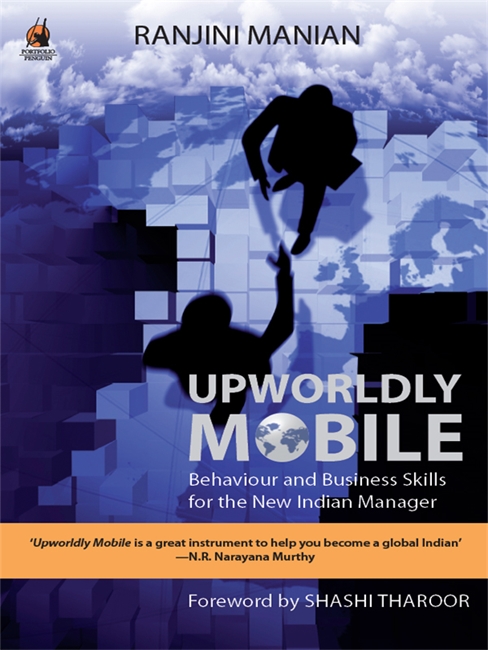
With real-life examples from world leaders that inspire emulation and featuring an easy ‘pick-a-page’ format, Upworldly Mobile is the ideal companion for Indian managers dealing with expatriate colleagues and global workplaces. It is equally useful for foreign managers looking to decode Indian work practices. Drawing on the author’s business interactions with C-level executives of thousands of multinationals across seventy-six nationalities, this book aims to help develop a culturally sensitive outlook that will cement relationships with international counterparts most effectively. Upworldly Mobile tells you everything they don’t teach at business schools-how to hold your own in the global work environment today.

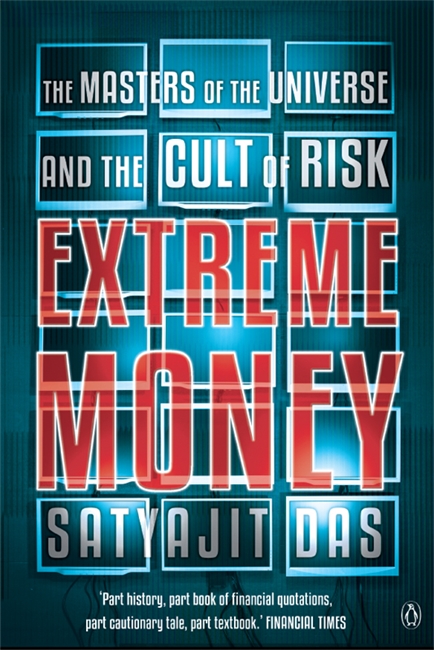
The human race created money and finance. But our inventions re-create us. Mankind mistook money-a lubricant of society and human well-being-for an end in itself. Finance, the monetary shadow of real things, came to dominate human reality. Extreme Money tells the story of how this happened. In so doing; it also tells the story of the modern world. Bestselling author Satyajit Das draws on thirty-three years of personal experience at the heart of modern global finance to narrate this story. Das reveals the spectacular, dangerous money games that have generated increasingly massive bubbles of fake growth, Ponzi prosperity, sophistication and wealth, while endangering the jobs, possessions and futures of virtually everyone outside the financial industry. You’ll learn how everything from home mortgages to climate change has become financialized, as vast fortunes are generated by individuals who build nothing of lasting value. Das shows how ‘extreme money’ has become even more unreal; how ‘voodoo banking’ continues to generate massive phony profits even now; and how a new generation of ‘Masters of the Universe’ has come to dominate the world.

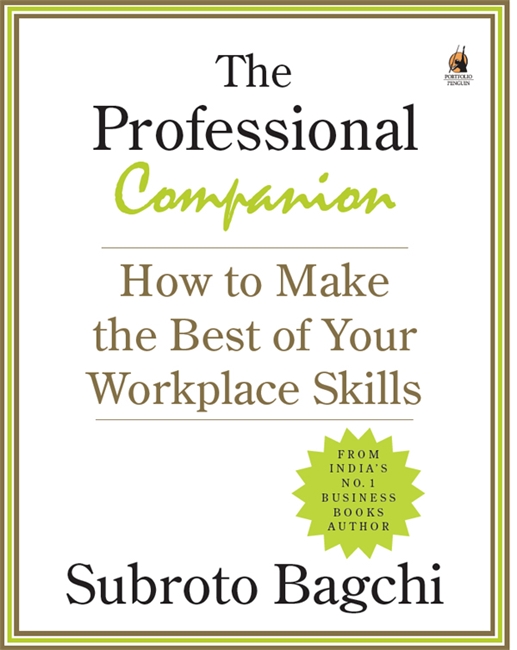
Are you a true professional? Would you like to become one? In The Professional, Subroto Bagchi showed how one can behave professionally-or otherwise-in diverse situations, and asked the key question: What does it mean to be a professional? Inspired by that game-changing book, many aspiring professionals wanted to test their mettle using Bagchi’s tools. The Professional Companion fulfils that need. In this do-it-yourself workbook that is meant as a companion volume to The Professional, Bagchi takes you through simple exercises that allow you to understand how professional your approach is in a given context, and helps you develop a wider skill set and a more committed outlook.The Professional Companion is your very own personalized guide to excelling in today’s world.
An adman constantly strives to connect market research data to insight on a winning campaign. Ambi Parmeshwaran has developed a fascination for how Indians are becoming more religious, but also more consumption driven. Combining his thirty- year experience as an adman with a lifelong passion for religious studies, Ambi seeks to answer questions like: Why has the bindi disappeared from advertisements? How did Akshaya Trithaya become such a big deal? What makes Lord Shiva so cool? How did a Chennai-based department store start the New Year’s Sale phenomenon? Are Muslims more open-minded shoppers? Why do people who have no interest in using an MBA degree still get an MBA degree? How did the Manusmriti do a disservice to Hindu women? What can Harvard Business School learn from the Kumbh Mela? Ambi has filled this book with personal stories, anecdotes, lessons and excerpts from research and other publications. This book is a treat for anyone interested in how religion has evolved and how clever marketers have ridden the wave by tailoring their products and services.