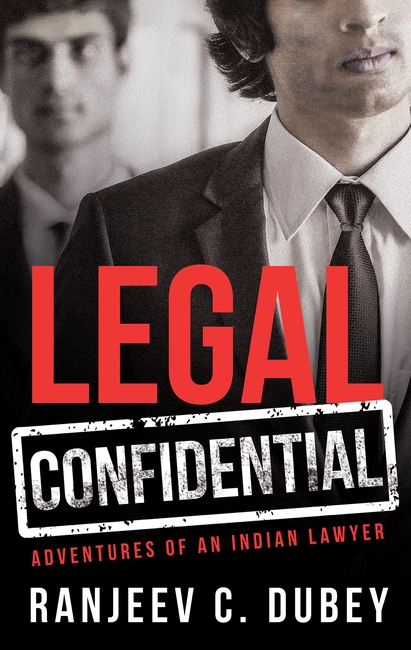
Nowhere are more laws at risk of being broken than in a courtroom
Rookie lawyer Ranjeev C. Dubey realizes this the hard way as he trudges through the corridors of Delhi’s trial courts and sees that the legal system is anything but fair. He stumbles upon a strange world of corruption, adultery, eloping couples and clients willing to pay for legal services ‘in kind’. He survives the ‘killing field’ of litigation for twelve long years, biding his time.
When he gets an offer to join a law firm, Dubey believes he has finally arrived. But has he? The world of Indian corporate law is one of intense power-play and the merciless pursuit of revenue. In this sinister ecosystem of destructive politicking, Ranjeev becomes enemies with the sharks circling the firm. What follows is an explosive showdown.
The now-well-known corporate lawyer exposes the world of the black robe in this dark and racy memoir with his trademark wit, leaving you wanting more.
If you read only one book about the world of lawyers and the Indian legal system, let Legal Confidential be it!

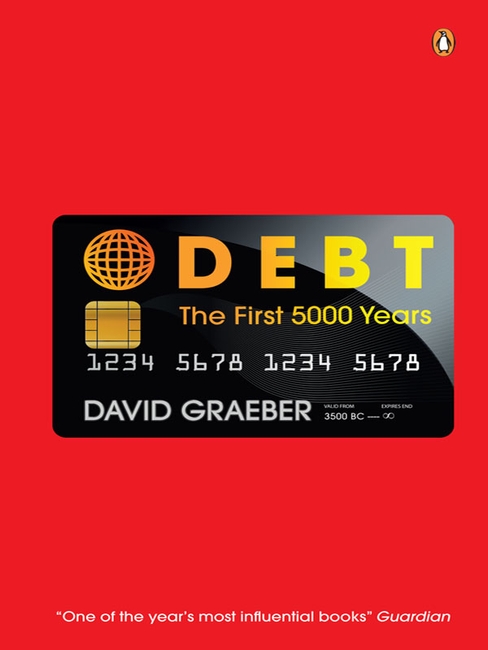
Must we always repay our debts?
Wasn’t money invented to replace ancient barter systems?
Apparently not, according to Yale-bred anthropologist David Graeber.
In a stunning reversal of conventional wisdom, Graeber radically challenges our understanding of debt. He illustrates how, for more than 5000 years—long before the invention of coins or bills—there existed debtors and creditors who used elaborate credit systems to buy and sell goods. He argues that Madagascar was held to be indebted to France because France invaded it, reminds us that texts from Vedic India included God in credit systems and shows how the dollar changed European society forever in the sixteenth century. He also brilliantly demonstrates how words like ‘guilt’, ‘sin’ and ‘redemption’ derive in large part from ancient debates about debt, and shape even our most basic ideas of right and wrong.
Debt: The First 5000 Years is a fascinating chronicle of this little known history—of how it has defined the evolution of human society, and what it means for the credit crisis of the present day and the future of our economy.

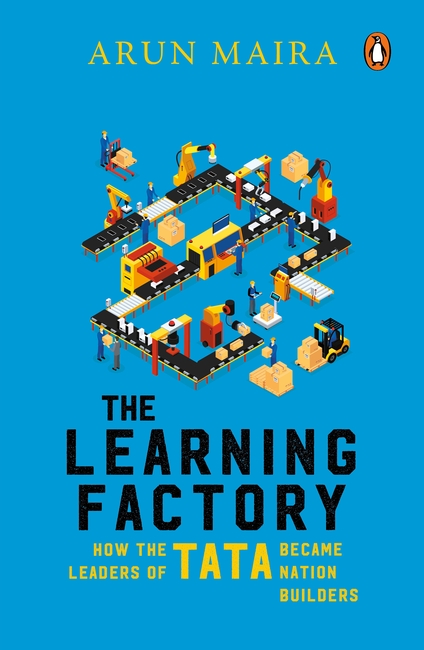
‘The Learning Factory is a book full of anecdotal stories that offers different teachings and lessons for students, business professionals, as well as those curious about the Tata way of business. This firsthand narration of interactions and incidents with Tata leaders gives a new insight into the group’s leadership and strategy and helps better understand its value-driven business.’ – Ratan Tata
Founded in 1868 by Jamshetji Tata, the Tata Group symbolizes the great Indian story of hope, growth and phenomenal success.The group played the role of a nation builder in post- independent India. Its companies were headed by legendary chairpersons, all of whom firmly believed in the importance of continuously learning and growing. What can we learn from the individual stories that come together to form this inspiring narrative? Like all great successes, this isn’t one story-it is many accounts that are so powerful that the whole is so much greater than the sum of all its parts.
In The Learning Factory, Arun Maira narrates people-centric episodes that bring alive the values of the Tata Group, standards that combine the high-velocity practices as well as the old-fashioned principles that make the Tata Group the giant it is today. With insightful stories of conduct that are as practically implementable as they are inspiring, this is a blueprint for the individual as well as the business that seeks success through its community of leaders, workers and thinkers.

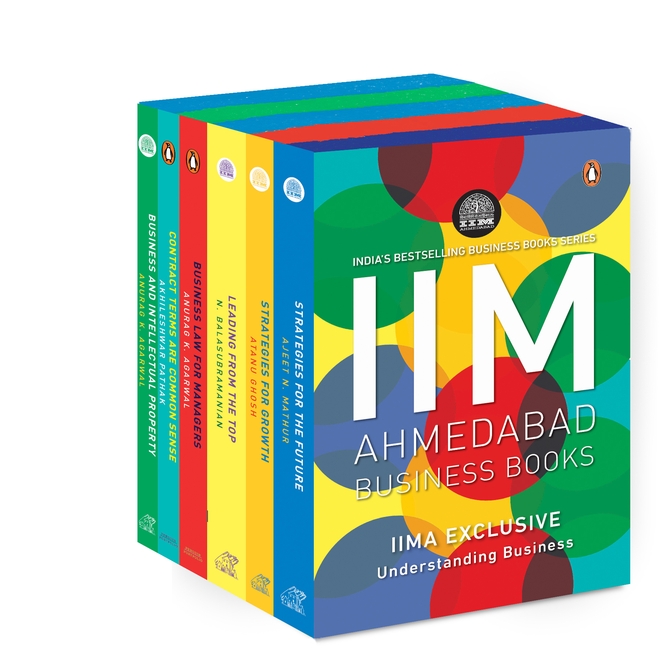
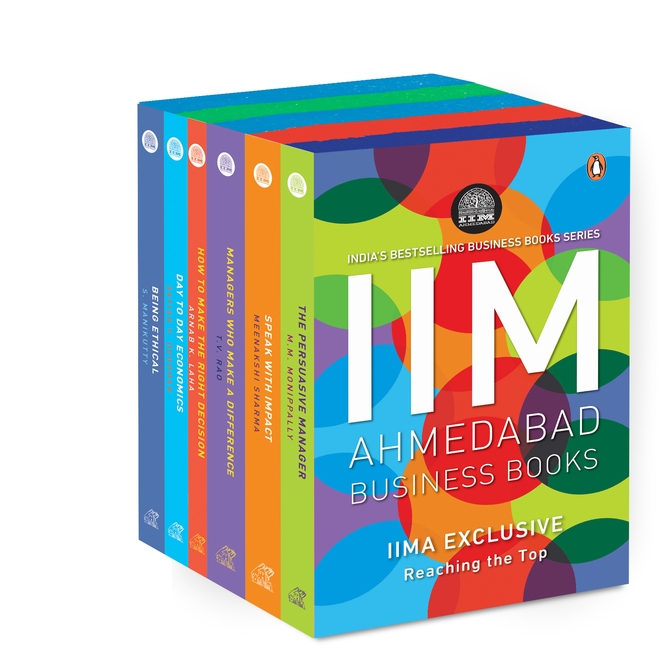
The bestselling IIMA business books are now available in an Exclusive boxset. It brings together wisdom from top professors at the premier management institute of the country, IIM Ahmedabad. It includes books, which cover subjects like contracts, laws, strategy and growing your business. Comprehensive and in simple terms, these books provide a wealth of information to every businessperson.
This set includes:
1.Strategies for growth
2.Leading from the top
3.Strategies for the future
4.Business and intellectual property
5.Business law for managers
6.Contract terms are Common Sense
The bestselling IIMA business books are now available in an Exclusive boxset. It brings together wisdom from top professors at the premier management institute of the country, IIM Ahmedabad. It includes books, which cover subjects like how to be ethical at work, how to come to the right decision, what can managers do to grow and basic economics which all managers are expected to know. Forward-looking and discerning, these books become a guide for every manager on his way to the top.
This set includes:
1.Day to Day Economics
2.Managers who make a difference
3.Being ethical
4.speak with impact
5.How to make the right decision
6.The persuasive manager

Nobel Laureate Amartya Sen is one of the world’s best-known voices for the poor and the downtrodden, and an inspiration for the proponents of justice across the globe. He has contributed almost without peer to the study of economics, philosophy and politics, transforming social choice theory, development economics, ethics, political philosophy and Indian political economy, to list but a few.
This book offers a much-needed introduction to Amartya Sen’s extraordinary variety of ideas. Lawrence Hamilton provides an excellent, accessible guide to the full range of Sen’s writings, contextualizing his ideas and summarizing the associated debates. In elegant prose, Hamilton reconstructs Sen’s critiques of the major philosophies of his time, assesses his now famous concern for capabilities as an alternative for thinking about poverty, inequality, gender discrimination, development, democracy and justice, and unearths some overlooked gems. Throughout, these major theoretical and philosophical achievements are subjected to rigorous scrutiny.
How to Read Amartya Sen is a major work on one of the most influential economists and philosophers of the last few centuries. It will be illuminating for readers keen to understand the breadth of Sen’s vision, and an invaluable resource for scholars, policy makers and global activists.

Now a strike, led by ageing Marxist trade union leader Hirenmoy Chakroborty, is destabilizing its Calcutta headquarters-and Aruna the bitter, power-hungry sister of Hari Lohia, the head of the dynasty, is using the opportunity to launch a covert takeover of the business with the help of her two ambitious sons. But Hari Lohia, who single-handedly built up Lohia & Co from a tiny jute trader in the crowded alleys of Barabazar to a sprawling global conglomerate, is not willing to let go of his empire so easily. He comes from a family of survivors, ancestors who moved across the country from Rajasthan with nothing and built their fortunes from scratch. And he discovers unlikely allies in this last great battle he has to fight-Anjali, his tough, cynical sister, a fiery opponent of Aruna’s; and Shivani, his beautiful, rebellious daughter who has always been too busy having love affairs to pay attention to her father’s business. Who will lose? Who will win? And most importantly-will the house of Lohia fall like a pack of cards? Moving from the crumbling offices of Calcutta to hedge funds in Hong Kong, from the Mumbai stock market to nineteenth century Rajasthan, and boasting an enormous cast of characters, The Inheritors is quite simply sensational.

The Shape of the Beast is our world laid bare by a mind that has consistently and unhesitatingly engaged with its changing realities and often anticipated the way things have moved in the last decade.
In the fourteen interviews collected here, conducted between January 2001 and March 2008, Arundhati Roy examines the nature of state and corporate power as it has emerged during this period, and the shape that resistance movements are taking. As she speaks about people displaced by dams and industry, the genocide in Gujarat, Maoist rebels, the war in Kashmir and the global War on Terror, she raises fundamental questions about democracy, justice and non-violent protest.
Unabashedly political, this is also a deeply personal collection that talks about the necessity of taking a stand and about the dilemma of guarding the private space necessary for writing in a world that demands urgent, unequivocal intervention.

Now with a new introduction by the author discussing the election of India’s new prime minister, Narendra Modi.
In eleven powerful, and closely argued, linked essays, Arundhati Roy takes a hard look at the underbelly of the world’s largest democracy. Beginning with the state-backed killing of Muslims in Gujarat in 2002, she writes about how ‘progress’ and genocide have historically gone hand in hand; about the murky investigations into the 2001 attack on the Indian Parliament; about the dangers of an increasingly powerful and entirely unaccountable judiciary; and about the collusion between large corporations, the government and the mainstream media. The volume ends with an account of the August 2008 uprising in Kashmir and an analysis of the November 2008 attacks on Mumbai. ‘The Briefing’, included as an appendix, is a compelling fictional text that brings together many of the issues central to the collection.

This second volume of Arundhati Roy’s collected non-fiction writing brings together fourteen essays written between June 2002 and November 2004. In these essays she draws the thread of empire through seemingly unconnected arenas, uncovering the links between America’s War on Terror, the growing threat of corporate power, the response of nation states to resistance movements, the role of NGOs, caste and communal politics in India, and the perverse machinery of an increasingly corporatized mass media. Meticulously researched and carefully argued, this is a necessary work for our times.