



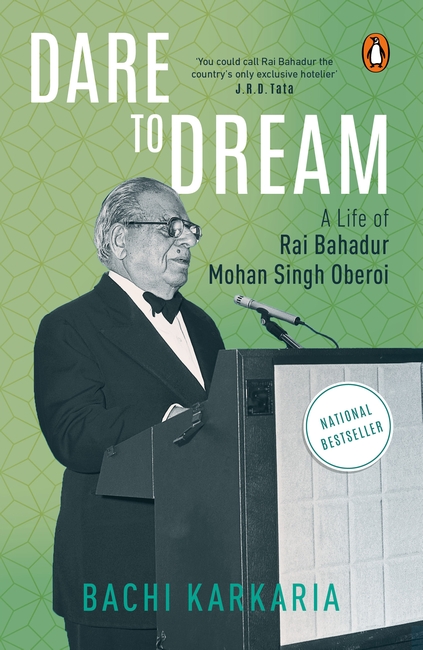
Born in a small village in Punjab at the turn of the century, Rai Bahadur Mohan Singh Oberoi began his career in the industry at Shimla’s Cecil Hotel on a monthly wage of Rs 50. But he was not destined to remain in that position for long. With a combination of clear-sighted thinking, frugality and sheer hard work, he managed to put together a plan and the finances necessary to acquire his first hotel, Clarkes. That was only the beginning. Decades later, the Oberoi Group has over thirty-one luxury hotels and two river cruise ships in six countries, and is acknowledged as a standard to aspire for. In this well-researched and candid biography, written with the cooperation of the late M.S. Oberoi, Bachi Karkaria describes how a man from modest beginnings became the head of an internationally celebrated hotel chain. It also shows how a major business is built up, run and kept at the top.
Catagory: Business & Economics
Grit, Guts And Gumption
This is the story of the carefully planned resurgence of the State Bank of India (SBI) from a laid-back incumbent under threat from private players to a customer-oriented competitive organization that has outperformed rivals despite several constraints. The leadership at SBI succeeded in reshaping perspectives and profitability at the bank, which employs a staggering 200,000 people, not withstanding salary restrictions and regulatory bottlenecks. While the primary thrust was on changing employee attitude towards their own organization and, of course, its customers, the transformation exercise was broad-based encompassing fundamental changes in technology, processes and business-mix alike. In about three years beginning 2006, SBI not only defended its own lair against the siege of younger, leaner, meaner rivals but actually took the battle to the attacker’ domains. SBI’s size and setting make the story an inspiring example to other organizations, particularly in the public sector.
Written in a fluid and engaging style, and backed by facts, figures, analysis and anecdotes, the book challenges several stereotypes and dogmas common in today’s management circles.
Riding the Tiger
How can one survive in a market that is volatile and uncertain?
Which strategies have and have not worked in the past?
What does it take to be successful in India?
What are the successful strategies applied by the likes of HUL, Godrej, Adani Ports and redBus?
So what does it take to ‘ride the tiger’? Sound and flexible strategy, operational excellence, and dedication to customer-centric innovation. But what does that really mean? How have successful Indian companies managed challenges in an extremely price-sensitive market? In this book, Wilfried Aulbur and Amit Kapoor look at successful and sometimes not-so-successful strategies, operations and innovations in India. They have distilled lessons from their decades of practical work experience in the country. From large family conglomerates like Tata and Godrej to newer additions like Adani, from MNCs like Maruti Suzuki to start-ups in Bangalore and Gurgaon-the book explores key learnings from all four kinds of companies in an Indian context and provides useful insights into how business is done in India.
Fetch your own Coffee
We do our best thinking when our minds are free to wander, and our minds are most free when we do routine tasks like fetching ourselves a cup of coffee or watering the plants. Fetch Your Own Coffee is a compilation of such profound thoughts – that offer an alternative view of everything around us. Written and published as separate blogs over three years, each chapter included in this book has been widely read and discussed online before being handpicked and compiled in this one book of invaluable life lessons.
101 Myths and Realities @ the Office
What do you need to do to be valued as an employee, and respected as a manager?
Every organization knows that human resources are its greatest asset. To really work well as a team, managers need to think like employees, and employees need to know what management really thinks.
But how?
This book presents 101 typical workplace situations, distinguishing Myth (perceived wisdom) from Reality (what actually happens on the ground) and describing the best approach to take in each scenario, both for managers and employees.
101 Myths and Realities @ the Office reveals the secrets that are key to optimizing your potential in the workplace.
7 Dream Jobs and How to Find Them
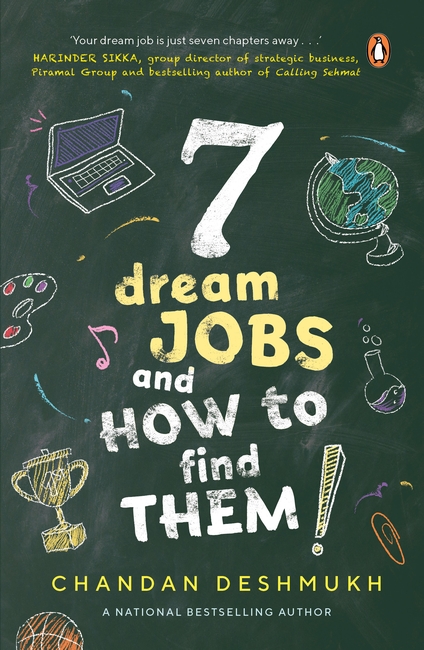
On an average, eleven hours a day for the rest of your life, you’ll either be working or travelling to your workplace. Now imagine being stuck in the wrong job! A study says that 80 per cent of Indians are unhappy with their jobs. Then how can we find a job that makes us happy? Is there a formula we can use to find our dream job?
Here is the answer!
Go on a journey with national bestselling author Chandan Deshmukh as he guides you through the various opportunities, challenges and turning points of any career. Learn about human personalities and how they’re suited for certain jobs; how to turn your ‘side hustle’ into opportune ventures and, most of all, how to find a job in which you’ll be happy.
Dhandha
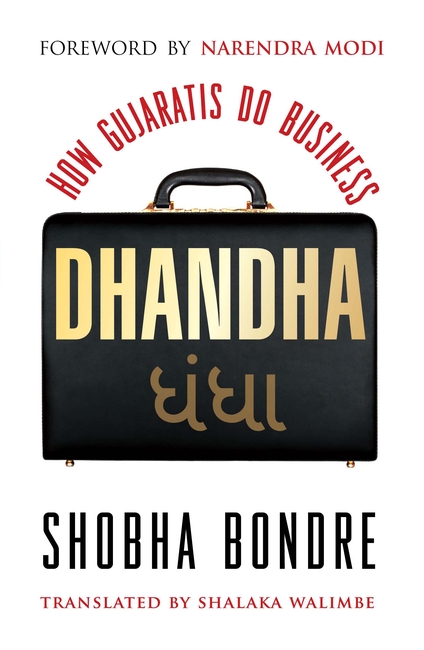
‘Dhandha’, meaning business, is a term often used in common trade parlance in India. But there is no other community that fully embodies what the term stands for than the Gujaratis. Shobha Bondre’s Dhandha is the story of a few such Gujaratis: Jaydev Patel, the New York Life Insurance agent credited with having sold policies worth $2.5 billion so far; Bhimjibhai Patel, one of the country’s biggest diamond merchants and co-founder of the ambitious ‘Diamond Nagar’ in Surat; Dalpatbhai Patel, the motelier who went on to become the mayor of Mansfield County; Mohanbhai Patel, a former sheriff of Mumbai and the leading manufacturer of aluminium collapsible tubes; and Hersha and Hasu Shah, owners of over a hundred hotels in the US.
Travelling across continents-from Mumbai to the United States-in search of their stories and the common values that bind them, Dhandha showcases the powerful ambition, incredible capacity for hard work, and the inherent business sense of the Gujaratis.
Why I Failed
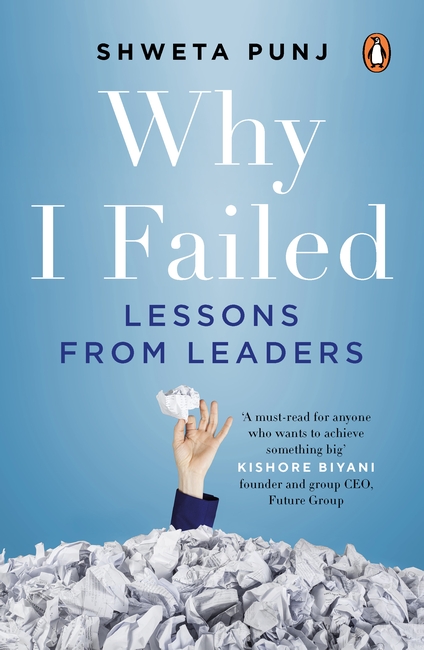
Fail! And we are stamped for life. Don’t we try and run from failure all our lives? But, ‘spontaneous doing has to go through failures’. Acknowledging failure is singularly the most difficult thing to do. It takes tremendous courage to come out and say, yes, I failed. Shweta Punj chronicles sixteen leaders who have celebrated their failure as much as their success. Each story is an anatomy of failure. So whether it was the difference between ‘need’ and ‘want’ that led Abhinav Bindra to miss that winning shot, or whether it was a suicide attempt that pushed Sabyasachi Mukherjee into fully realizing his potential-these stories will encourage you to look at failure differently.
Ascent
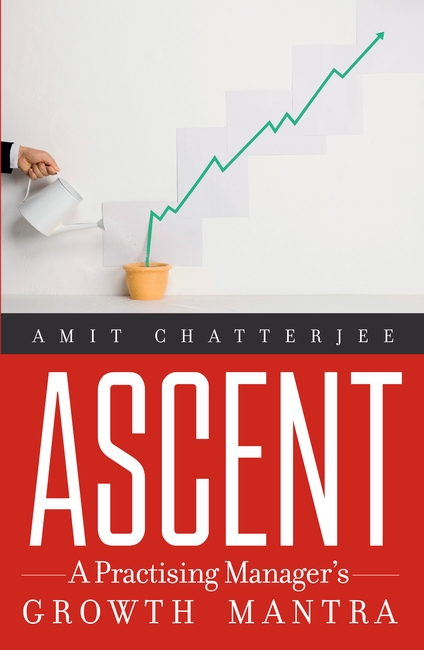
You don’t need an MBA or a job with a top company to be a good manager. Amit Chatterjee, in his provocative and contemplative book, explains how managers can excel beyond expectations. He urges managers to act of their own volition and shows how to transcend from being managers to leaders. Through illustrations and useful graphs, the author offers purposeful practices for leadership. Ascent provides a growth mantra for managers and how they can emerge as leader-managers through investment in complexity and volition. It is a must-read for all managers who want to grow and become effective leaders.
Working Out of the Box
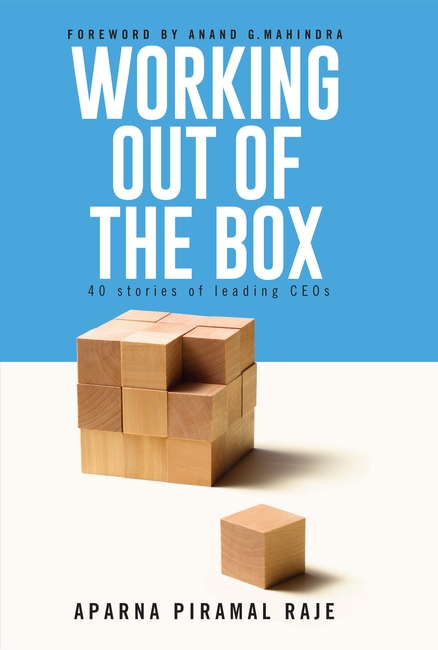
Do you know which business leader plays a game of sudoku every night before going to bed? Never uses a computer to write down important thoughts? Likes to stand and work?
In Working Out of the Box, Aparna Piramal Raje gives us an intimate peek into the lives of forty progressive leaders by exploring the connections between their workspaces and working styles. Capturing quirks, individual styles of working, motivations and leadership traits, and tracing the patterns exhibited by these leaders, she unravels their defining qualities and explains how they reflect in their workspaces. Divided into four sections, personal energy, organizational capital, brand values, environment and sustainability, the book provides insight into what makes these CEOs tick and how they manage their most valuable assets.