Is Shah Rukh Khan an effective actor? Is Naresh Trehan an effective doctor? Was A.P.J. Abdul Kalam an effective nation builder?
Are you an effective person?
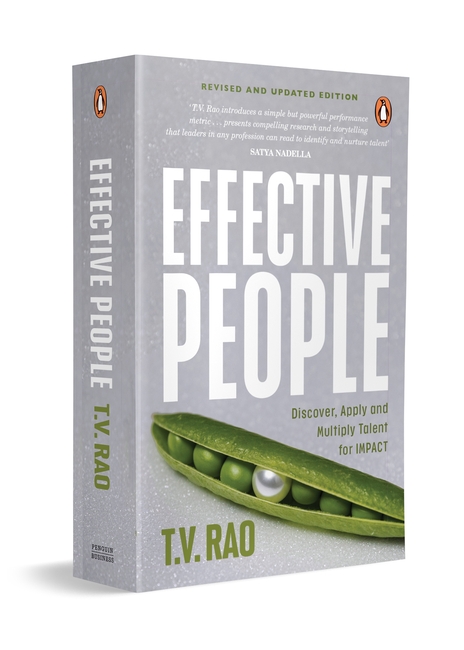
In this book, bestselling author T.V. Rao studies and analyses effective doctors, actors, civil servants, social workers, educationists, nation builders and entrepreneurs. Some of them seem to go beyond the tenets of effectiveness and shine out as what the author calls Very Effective People and Super Effective People.
His diverse examples and cases range from A.P.J. Abdul Kalam, Devi Shetty, Anil Gupta to Kangana Ranaut, Sachin Tendulkar, Anupam Kher to ordinary people whose lives are no less effective.
Hugely readable, with self-assessment tools at the end of each chapter, Effective People will propel you to leap forward and discover the best in you.

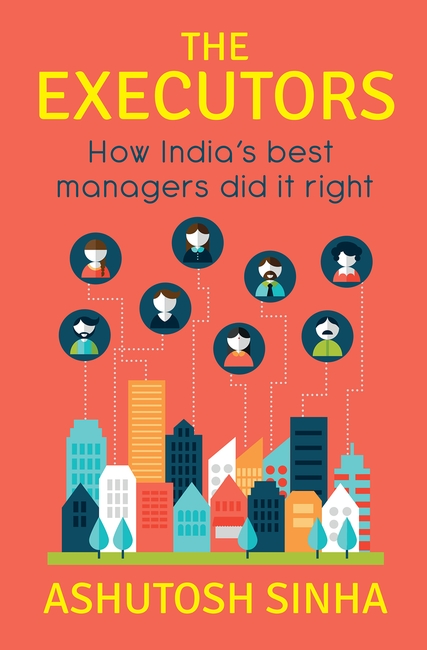
‘If you produce what you have promised to, no one would want to come in your way’ S. Ramadorai, former vice chairman, Tata Consultancy Services
‘Relying on conventional wisdom is never a smart idea in an emerging business’ Akhil Gupta, vice chairman, Bharti Enterprises
‘Do your duty to the best of your ability, without attachment to the results, and remain calm in both success and failure’ Venkatesh Kini, president, Coca-Cola India and south-west Asia
‘Planning is academic. Action decides the winner’ Rahul Bhasin, managing partner, Baring Private Equity Partners
These are some of the life lessons that 30 of India’s most celebrated managers share in The Executors, a personal account of how they came to run influential companies such as Bharti, Bennett Coleman, Tech Mahindra, Apollo Munich, Convergys, Yum! Brands and Max Life Insurance, among others. Packed with inspiring stories of struggle, this book culls out the wisdom that these leaders have imbibed over the years and are keen to impart to others. Ashutosh Sinha insightfully explores their management style, philosophy and how they lead from the front.

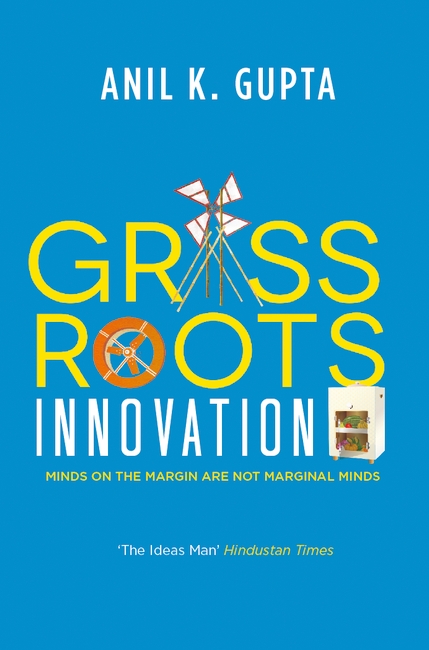
A moral dilemma gripped Anil K. Gupta when he was invited by the Bangladeshi government to help restructure their agricultural on-farm research sector in 1985. He noticed how the marginalized farmers were being paid poorly for their otherwise unmatched knowledge. The gross injustice of this constant imbalance led Gupta to found what would turn into a resounding social and ethical movement-the Honey Bee Network-bringing together and elevating thousands of grassroots innovators.
For over two decades, Gupta has travelled through rural lands, along with hundreds of volunteers of the Network, unearthing innovations by the ranks-from the famed Mitti Cool refrigerator to the root bridge of Meghalaya. He insists that to fight the largest and most persistent problems of the world, we must not rely only on expensive research labs but also look towards ordinary folk, and eventually build bridges between the formal and informal sectors. Innovation-that oft-flung-around word-is stripped to its core in this book.
Poignant and personal, Grassroots Innovation is an important treatise from a social crusader of our time.

Management insights culled from the Mahabharata, one of the greatest books of all time, is not simply the story of a fratricidal war or a fount of wisdom for philosophers; it is also a comprehensive manual on strategy. From this storehouse of knowledge, Meera Uberoi selects the most pertinent shlokas to reveal the secrets of leadership and the path to success. She shows that the Mahabharata is equal, if not superior, to other management bibles such as The Art of War, The Prince and Go Rin No Sho, The Book of Five Rings. The aphorisms in Leadership Secrets from the Mahabharata have been selected from the Santi Parva, the Bhagvad Gita Parva and the Adi Parva.
As Bhishma lies dying on the battlefield of Kurukshetra, Krishna realizes that with Bhishma’s death, the world will lose ‘all knowledge’. To prevent this, Krishna asks him to impart to Yudhisthira all he knows. These teachings, coming as they do from Bhishma, the wisest of them all, contained in the Santi Parva, form the core of Uberoi’s book. Apart from detailing how to apply the craft of kingship to modern business practices, the book also explores the analogy between kingship and leadership. Pithy and insightful, Meera Uberoi’s selection is a practical guide to leadership in any field of life. The aphorisms, grouped under heads like Duty, War, Espionage and Conduct, deal with eternal values and truths that are as relevant today as they were 3000 years ago.
Extraordinary: 5 Steps to Achieve Success will help you realize your dream and be extraordinary! Are you leading an ordinary life? Many people go through life struggling with daily frustrations, making compromises all the time and feeling sorry for themselves. They never get to do what they really want. Soon, they begin to see themselves as failures. Is success just a matter of luck? Is the path of achievement open only to a few? Are most of us doomed to lead unfulfilled lives, without ever realizing our true potential? Certainly not, says Atul Magoon. Through inspiring real-life stories, this book shows you how success is simply a matter of putting in hard work, overcoming your fears and making full use of the opportunities before you.

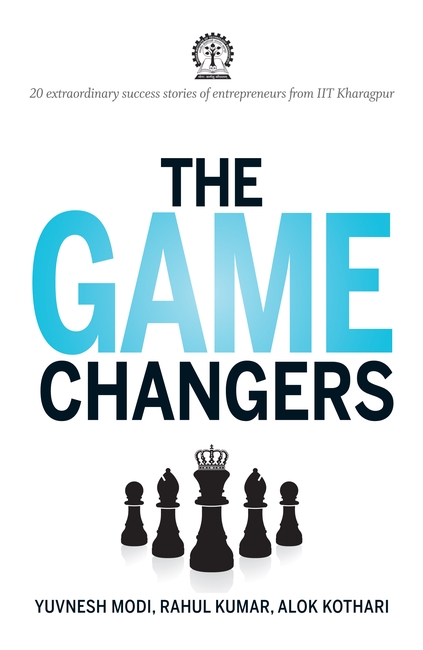
Entrepreneurship is not about breaking free from the 9 to 5 humdrum, not about being your own boss, and definitely not glorious. The entrepreneur shuns the comfort of a cushy corporate job and six-figure salaries to set sail on uncharted waters with a single-minded zeal and only an idea as an anchor. But it is this idea and passion that makes all the difference and catapults them into a world of infinite possibilities. The Game Changers brings to you 20 success stories of IITians who went on to live the big dream. These include: Suhas Patil, Vijay Kumar, Vinod Gupta, Sam Dalal, Sridhar Mitta, Arjun Malhotra, Kiran Seth, Prabhakant Sinha, Ranbir Singh Gupta, Bikram Dasgupta founder of Globsyn, Praful Kulkarni, Sunil Gaitonde, Anand Deshpande, Arvind Kejriwal, Harish Hande, Anuradha Acharya, Venkata Subramanian, Bikash Barai, Vikram Kumar, and Krishna Mehra.
With a foreword by Dr Duvvuri Subbarao, governor, Reserve Bank of India, and introduction by Damodar Acharya, director, IIT Karagpur, this book marks 60 golden years of India’s finest institute. Come, be a part of their journey, get inspired to dream and make your own story.

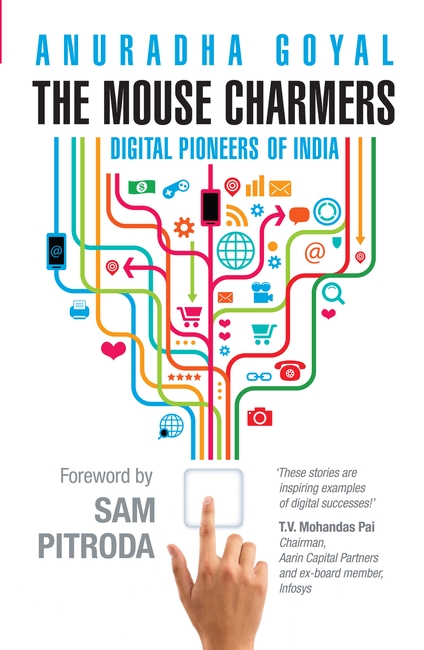
The advent of the Internet has been a significant game changer. The Mouse Charmers are a new breed of entrepreneurs in emerging India powered by the Internet and the opportunities that it offers to create new markets and to cater to old markets in new ways. Some of them have already achieved success where they can be called iconic and inspiring while others have powerful ideas that put them on the same path.
Anuradha Goyal tells the stories of digital entrepreneurs like Flipkart, Zomato, ImagesBazaar and IndiBlogger; how they started out, the innovations and technologies involved, their business models, and unique marketing strategies. Inspiring and useful, The Mouse Charmers is an essential guide for aspiring entrepreneurs.

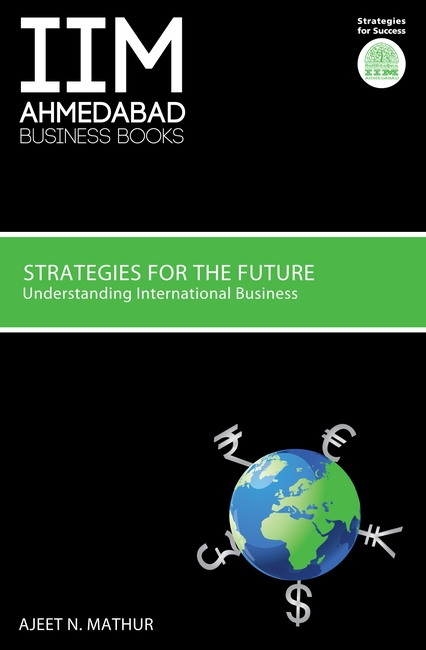
Have you wondered why international business seems magically simple in text books but inescapably complex in reality? With international business pushing horizons, cross-border activity is rampant and national boundaries are getting blurred. Economies have opened their doors and globalization is the watchword of the hour. Strategies for the Future explores the opportunities of a mingling world with remarkably discerning anecdotes and hands you the tools to master international trade. Professor Ajeet N. Mathur helps you formulate assumptions and make decisions under uncertainty in response to differences in business environments, national competitiveness, and regional and global strategies of other business players. As part of a competitive global village, this book is indispensable for any manager or entrepreneur bounding forward in the promising world of international business.

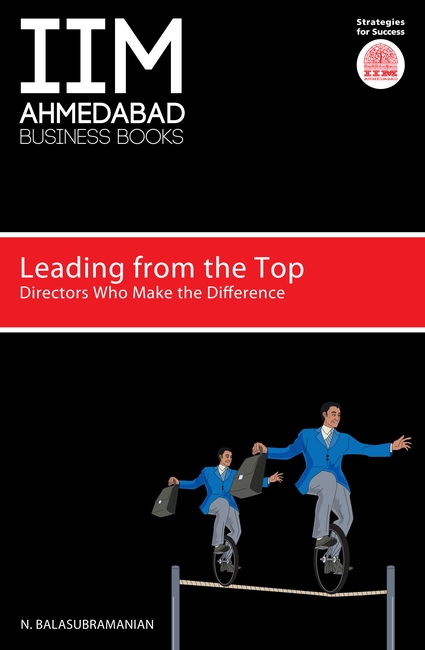
Although corporations have been around for well over half a millennium, corporate governance as a distinctive field of study and specialization is of relatively recent origin. With corporate footprints escalating across industry and service sectors over different geographies around the world, governing the corporation has become an increasingly complex exercise. Professor Balasubramanian explains the three pillars of governance — the shareholders, the board and the executive management — including the dynamics of managing board effectiveness, through real-life case studies and interactive examples.
The author aims to encourage dialogue about leading corporations in an ethical and sustainable manner. In the wake of corporations like Satyam, Sahara, Sardha, SKS Microfinance and National Spot Exchange making headlines for all the wrong reasons, this is essential reading.

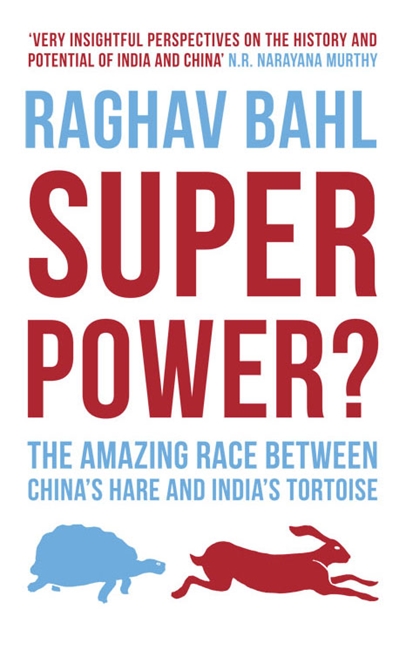
In his career as a journalist and one of India’s top entrepreneurs, Raghav Bahl has often faced a barrage of questions from visiting businesspeople bewildered by India: Why are Indian regulations so weak and confusing? Why is your foreign investment policy so restrictive? How is it that you speak such good English? Inevitably, the questions are followed by the observation: But, you know, that’s not the way it is in China.
Indeed, even as the two economies are together projected to dominate the world, there is a palpable difference in the way China and India work on the ground. China is spectacularly effective in building infrastructure and is currently investing almost half its GDP. Meanwhile, India is a ‘promising’ economy: more than half its GDP is consumed by its billionplus population; half its population is younger than twenty-five, giving it a unique demographic advantage; 350 million Indians understand English, making it the largest English-using country in the world
In the race to superpower status, who is likely to breast the tape-China’s hare or India’s tortoise? For anyone looking to understand China and India and the ways in which these two nations are about to change the history of the world, this is the book to read.