




Financial Affairs of the Common Man presents a collage of the various aspects of personal finance management that every individual should pay heed to. It introduces the concepts that you must understand to effectively plan your finances, and provides the tools and the knowledge needed to do so.
Read this book, written with the common man in mind using easy-to-understand language, to understand the power of compounding and the effects of inflation on investments. It’s time to familiarize yourself with mutual funds and SIPs, and to gain a deeper insight into the making of personal balance sheets and income tax provisions.
Catagory: Business & Economics
Habit Of Winning
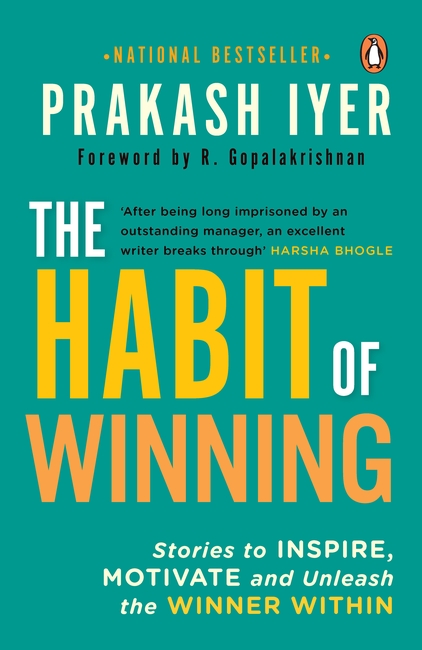
Do you feel like throwing in the towel, but want to be a great leader? Would you like to build an organization? Do you want your child to be the best she can be? If you answered yes to any of these questions, The Habit of Winning is the book for you. It is a book that will change the way you think, work and live, with stories about self-belief and perseverance, leadership and teamwork-stories that will ignite a new passion and a renewed sense of purpose in your mind.
The stories in The Habit of Winning range from cola wars to cricketing heroes, from Michelle Obama’s management techniques to Mahatma Gandhi’s generosity. There are life lessons from frogs and rabbits, sharks and butterflies, kites and balloons. Together they create a heady mix that will make the winner inside you emerge and grow.
Smart Leadership

The Tip of the Iceberg

A wave of entrepreneurship has been sweeping across India. The success of start-ups like Flipkart, Snapdeal, Paytm, Ola and others has veered the discourse towards high valuations.
But what we mostly see is very much the tip of the iceberg. Behind every high valuation of today is a story of blood, sweat, toil and tears. For every entrepreneur who has an amazing success story to tell, there are countless others who have fallen by the wayside. The going has often been a far cry from the presumed romance of breaking the mould, disrupting the order and changing the world.
It is a desire to change the world that drives successful entrepreneurs, for they alone have the blind passion that is often the difference between success and failure, and they are the ones who love the journey more than the destination.
Today, when questions are being asked whether the start-up party is nearing its end, whether we will soon see a rerun of the dot-com bust of the early noughties, it is time to remember India’s start-up warriors.
This is the story of their remarkable journeys. Some found their destination. Some did not.
Maine IIT Meain Jo Nahi Seekha
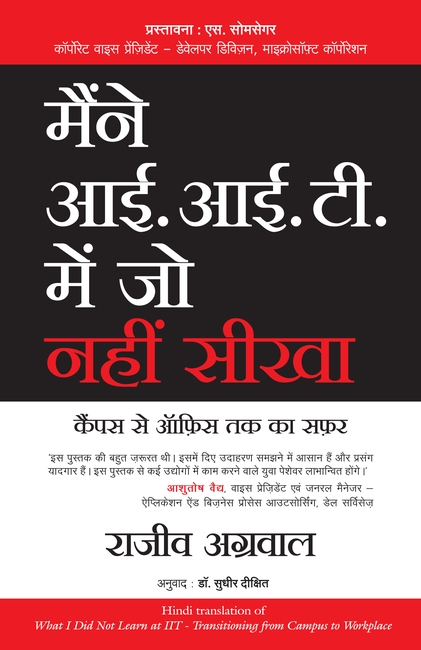
This is Hindi Translation of English Book What I Did Not Learn at IIT written by Rajeev Agarwal.
Every year graduating engineers are told that they are destined for success. But what are the habits and behaviours that actually lead to success? In What I did not learn at IIT, Rajeev Agarwal, the Founder and CEO of MAQ Software, has distilled decades of life experience into one accessible and informative guide. In simple language, he explains the success techniques he applied and what worked for him.
Encouraging graduates to look at their careers over a 40-year span, Rajeev explains that successful people choose to be passionate about every job they have. Using a skillful combination of personal stories and checklists, What I did not learn at IIT provides students—young and old—with a roadmap for success.
IIMA-Strategies for Growth
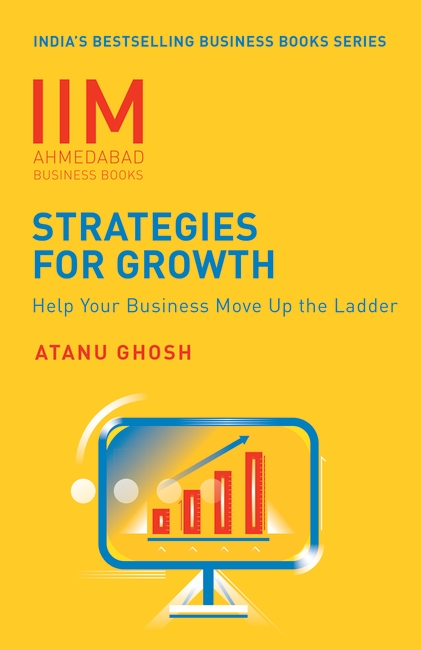
Every organization—small or large, managed professionally or by a family—wants to grow. Strategies for Growth explores the different expansion strategies companies adopt, and the management and marketing challenges they face along the way. Amply illustrated with business experiences from the Indian context—such as those of Bharti Airtel, Amul, GE, Infosys, Compaq, and HP—this book tells you all you need to know to make the best decision for your company.
The IIM Ahmedabad Business Books bring key issues in management and business to a general audience. With a wealth of information and illustrations from contemporary Indian businesses, these non-academic and user-friendly books from the faculty of IIM Ahmedabad are essential corporate reading.
IIMA – The Persuasive Manager
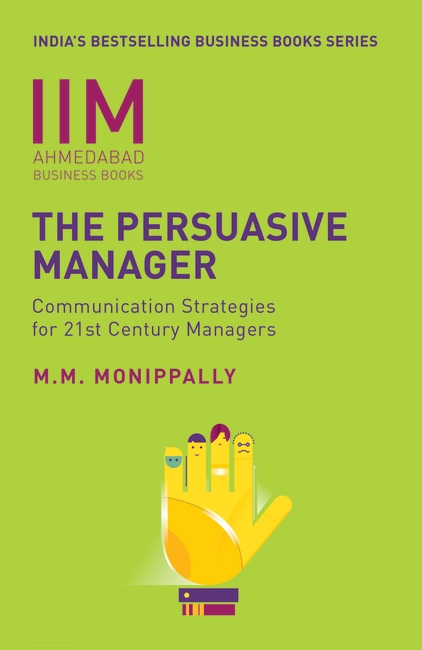
The Persuasive Manager argues compellingly that strategic communication lies at the core of business leadership, and helps organizations run smoothly and effectively. What is persuasion, and how should managers balance their ability to persuade and exercise authority without becoming authoritarian? If credibility and mutual goodwill are to be established, then the need to inspire loyalty and build interpersonal relationships becomes an essential managerial strategy. The book explores the role of persuasion at different levels of the corporate hierarchy—how does a manager convince her subordinates to initiate change? How can peers, or customers and suppliers, be won over and their opinions influenced? Persuading bosses is a particularly tricky business, so how does one use the perfect mix of tact, reasoning, discussion, and ingratiation? With its wealth of real-world illustrations, scenarios, and tips, The Persuasive Manager is the perfect communications roadmap for all managers.
The IIM Ahmedabad Business Books bring key issues in management and business to a general audience. With a wealth of information and illustrations from contemporary Indian businesses, these non-academic and user-friendly books from the faculty of IIM Ahmedabad are essential corporate reading.
When the Penny Drops
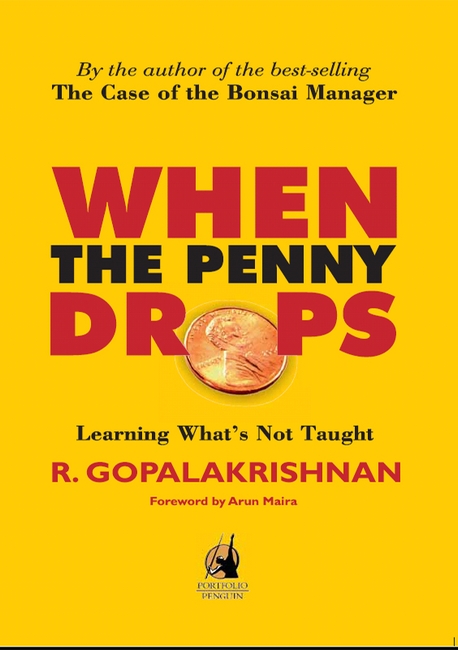
All knowledge is the result of experiences, either one’s own or the recorded experiences of other people. While theoretical knowledge can be acquired in academic institutions, putting it into practice and gaining intuitive wisdom requires many years of experience.
If a person keeps an open mind and is willing to listen, one can learn from triumphs and failures-their own and those of others. Doing this can help them gain insights into themselves, have moments ‘when the penny drops’.
Everyone has positive and negative attributes. Negative traits such as jealousy, arrogance, refusal to accept new ideas might stand in the way of personal progress. Identifying and managing these negative attributes can be a difficult task.
When The Penny Drops: Learning What’s Not Taught is filled with anecdotes of people in similar situations and their experiences. The book is divided into four parts. The first part looks at the author’s own career, spanning forty years, in the field of management. The next three parts look at the different aspects of personal and work factors that managers have to deal with.
Peppered with life stories and anecdotes, experiences from his own career and from those of famous personalities like J.R.D. Tata, When The Penny Drops can help managers gain insights into their own psyche and their way of functioning.
Corruption Conundrum and Other Paradoxes and Dilemmas

How can you be a ‘well-known secret agent’? How is it that ‘corruption is universally disapproved of and yet universally practised’? The world of dilemmas and paradoxes touch our lives on a regular basis. In The Corruption Conundrum and Other Paradoxes and Dilemmas, V. Raghunathan shares some of the more interesting examples, allowing us to delight in the excitement, mystery, confusion, exasperation and that occasional flash of clarity and enlightenment that is often experienced when the world of paradoxes and dilemmas hits our own.The book takes the reader through some of the fascinating illustrations, classical and well-known, as well as the less common examples, in the field of management, finance and work life.
Following the same easy, readable style of his previous bestseller, Games Indians Play, this new book will certainly make you more curious about the world that surrounds us.
The Dollar Trap

Eswar S. Prasad examines how the dollar came to have a central role in the world economy and demonstrates that it will remain the cornerstone of global finance for the foreseeable future. Marshalling a range of arguments and data, and drawing on the latest research, Prasad shows why it will be difficult to dislodge the dollar-centric system. With vast amounts of foreign financial capital locked up in dollar assets, including the US government securities, other countries now have a strong incentive to prevent a dollar crash. Prasad takes the reader through key contemporary issues in international finance-including the growing economic influence of emerging markets, the currency wars, the complexities of the China-US relationship, and the role of institutions like the International Monetary Fund-and offers new ideas for fixing the flawed monetary system. Readers are also given a rare look into some of the backdoor scheming that goes on in the corridors of international finance.The Dollar Trap offers a panoramic analysis of the fragile state of global finance and makes a compelling case that, despite all its flaws, the dollar will remain the ultimate safe-haven currency.