



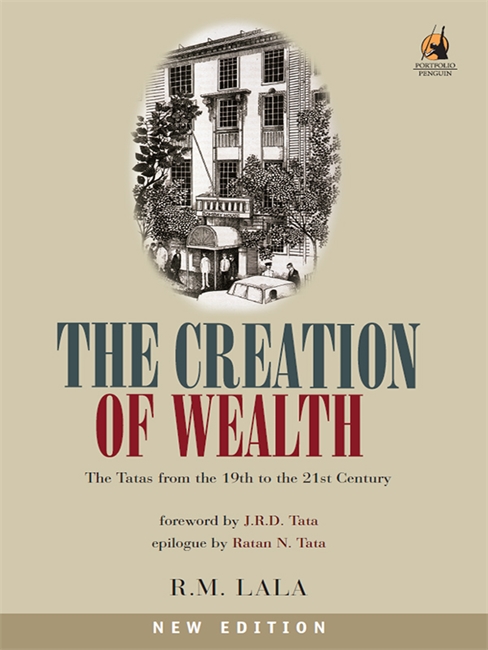
When Jamsetji Tat started a trading firm in 1868, few could have guessed that he was also starting an important chapter in the making of modern India. Jamsetji saw that the three keys to India’s industrial development were steel, hydroelectric power, and technical education and research. A century and a half later, the Tatas can claim with justice to have lined up to the vision of their founder.
This edition includes the story of how the Tatas, with Ratan Tata at the helm, have had to grapple with change in the post-1992 era of economic reforms, when the opening up of India to the world came as both a challenge and a blessing. In a frank epilogue, Ratan Tata talks about the difficulties he faced in implementing change, including resistance from his colleagues. This new edition also has a postscript on the Nano, which has given the most global prominence to the Tata brand.
The Creation of Wealth is R.M. Lala’s bestselling account of how the Tatas have been at the forefront in the making of the Indian nation-not just by their phenomenal achievements as industrialists and entrepreneurs but also by their significant contributions in areas like factory reforms, labour and social welfare, medical research, higher education, culture and arts, and rural development.
Catagory: Business & Economics
Beyond The Last Blue Mountain

An exhaustive and unforgettable portrait of India’s greatest and most respected industrialist. Written with J.R.D. Tata’s co-operation, this superb biography tells the J.R.D. story from his birth to 1993, the year in which he died in Switzerland. The book is divided into four parts: Part I deals with the early years, from J.R.D’s birth in France in 1904 to his accession to the chairmanship of Tatas, India’s largest industrial conglomerate, at the age of thirty-four; Part II looks at his forty-six years in Indian aviation (the lasting passion of J.R.D’s life) which led to the initiation of the Indian aviation industry and its development into one of India’s success stories; Part III illuminates his half-century-long stint as the outstanding personality of Indian industry; and Part IV unearths hitherto unknown details about the private man and the public figure, including glimpses of his long friendships with such people as Jawaharlal Nehru, Mahatma Gandhi, Indira Gandhi and his association with celebrities in India and abroad.
The Content Trap
Companies everywhere face two major challenges today: getting noticed and getting paid. To confront these obstacles, Bharat Anand examines a range of businesses around the world, from Chinese Internet giant Tencent to Scandinavian digital trailblazer Schibsted, from The New York Times to The Economist, and from talent management to the future of education. Drawing on these stories and on the latest research in economics, strategy, and marketing, this refreshingly engaging book reveals important lessons, smashes celebrated myths, and reorients strategy.
Companies that now flourish are finding that the connections they foster are more important than the content they create. Success comes not from making the best content but from recognizing how content enables customers’ connectivity; it comes not from protecting the value of content at all costs but from unearthing related opportunities close by; and it comes not from mimicking competitors’ best practices but from seeing choices as part of a connected whole.
Digital change means that everyone today can reach and interact with others directly: We are all in the content business. But that comes with risks that Bharat Anand teaches us to recognize and navigate. Filled with conversations with key players and in-depth dispatches from the front lines of digital change, The Content Trap is an essential new playbook for navigating the turbulent waters in which we find ourselves.
The Vijay Mallya Story
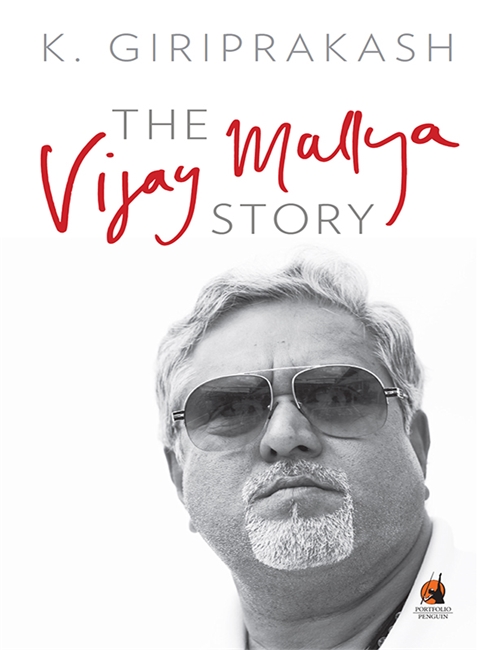
The Vijay Mallya Story is an extraordinarily detailed and lively chronicle of the life of one of India’s most celebrated and reviled businessmen, Vijay Mallya. His extraordinary career spans three decades and is spread across multiple industries. The book covers Mallya’s childhood, his relationship with his father and his inherent deal-making abilities. It tracks his meteoric rise with Kingfisher and how the airline led to his downfall.
Bollywood Boom
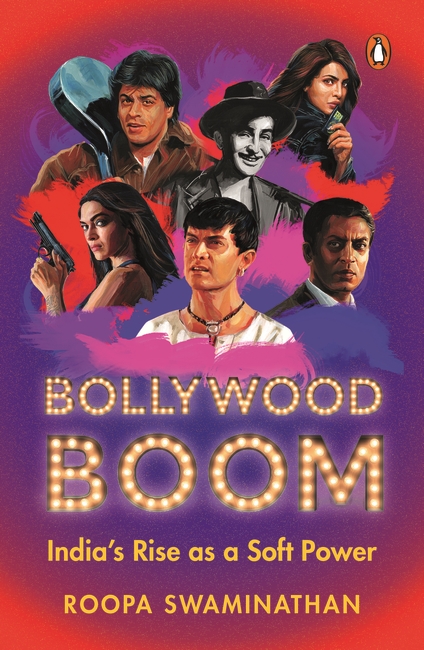
The world is feeling the impact of Bollywood like never before. From the Oscar-nominated Lagaan to Bajrangi Bhaijaan to Ae Dil Hai Mushkil, Bollywood has come a long way since the watershed Dilwale Dulhaniya Le Jayenge and the UK Top Ten debut of Kuch Kuch Hota Hai. Where earlier it was in Russia, East Europe and Africa where Raj Kapoor and Amitabh Bachchan enjoyed a devoted fan base, today the entire world is as entertained by the three
Khans as by the international stars Irrfan, Priyanka and Deepika.
In Bollywood Boom, National Award-winner Roopa Swaminathan opens a window to the spectacular success of Bollywood in the twenty-first century and its direct contribution to India’s rising soft power and influence. Using extensive research, a compelling argument and fun anecdotes, Roopa shows how Bollywood not only brings to the country real income through trade and tourism, but also enhances its global standing.
Cut The Crap And Jargon
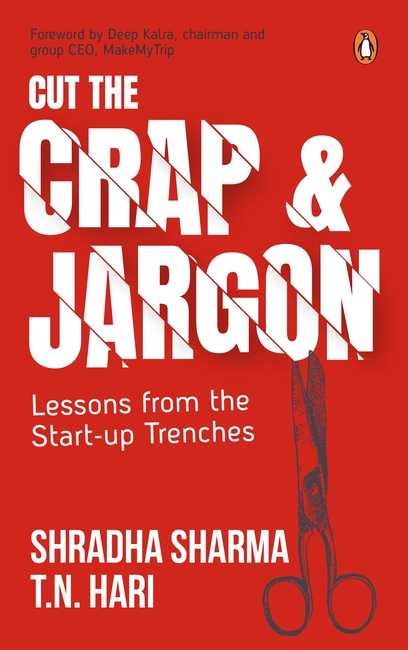
Start-ups are the fountainheads of innovation that power this world. However, they lose the plot when they do not have access to timely, contextual and good quality advice based on a deep understanding of the real issues on the ground that comes with experience in the trenches. It is sad to see intrepid and tenacious entrepreneurs fail because of small things. This book is as much about these as it is about some of the more complex navigational skills required to avoid major pitfalls. A practical book for every entrepreneur, Cut the Crap and Jargon will make an interesting read for a global audience.
What I Did Not Learn At IIT
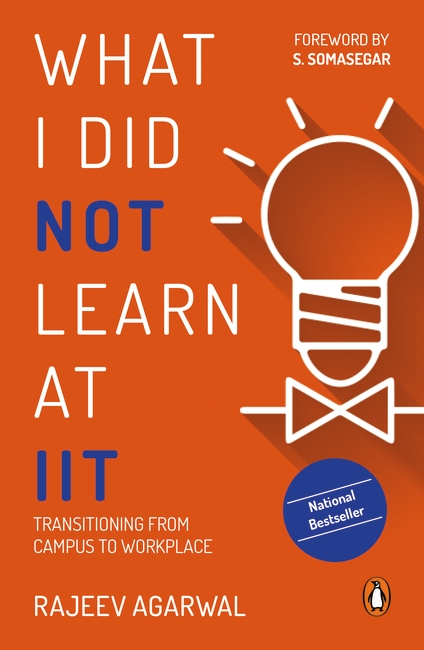
Every year, graduating engineers are told that they are destined for success. But what are the habits and behaviours that actually lead to success? In What I Did Not Learn at IIT, Rajeev Agarwal, founder and CEO of MAQ Software, distils decades of life experience into one accessible and informative guide. In simple language, he explains the success techniques he applied and what worked for him.
Encouraging graduates to look at their careers over a forty-year span, Rajeev explains that successful people choose to be passionate about every job they have. Using a skilful combination of personal stories and checklists, What I Did Not Learn at IIT provides students, young and old, with a roadmap for success.
Demonetization and the Black Economy
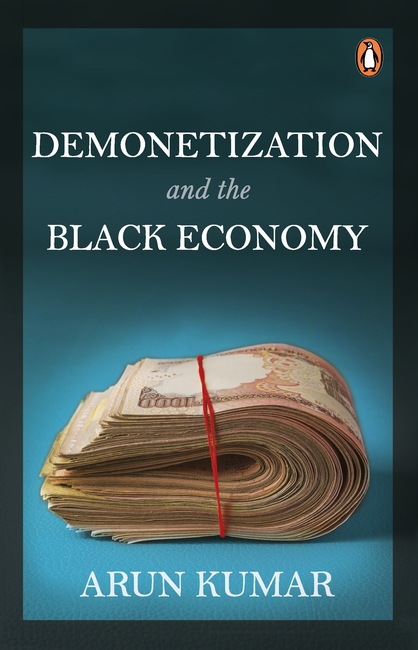
On 8 November 2016, the prime minister announced the immediate cancellation of all
Rs 500 and Rs 1000 denomination notes, wiping out 86 per cent of the currency in
circulation. India’s well-functioning economy went into a tailspin.
This move, it was claimed, was made to wipe out corruption, deter the generation of black
money, weed out fake Indian currency notes and curb terrorism. Overnight, people in India realized that the cash in their pockets had no value. A window of fifty days was granted to 1.3 billion people to convert their old notes into new ones.
Businesses, especially in the unorganized sectors, came to a grinding halt. Patients in hospitals faced huge problems, farmers had difficulty buying inputs, weddings were scaled down, and fishermen watched their catch rot. Many lost their jobs and could not support their families.
A year later, the RBI announced that 99 per cent of the old currency notes had been deposited with
it. India continues to grapple with the effects of this move. The black economy has not been
dented; counterfeiting and terrorism continue; the credibility of the RBI, banks and currency is
damaged; the accountability of the Parliament and the prime minister has been eroded; and the social divide
has widened. There have been many arguments and counter-arguments from both sides, but they have
missed the complete picture.
Demonetization and the Black Economy, for the first time, lucidly explains the story
of demonetization along with its effects on the economy.
Breach

A journalist accused of hacking the inbox of a billionaire
A company which fought back when its data was stolen
An entrepreneur who fought an international battle to end piracy
A hacker who decided to take a start-up hostage by stealing its data
Full of riveting stories of hackers, police and corporates, Breach reads like a thriller. The book brings to light several incidents which till now were brushed under the carpet. It has instances of piracy, data theft, phishing, among many others.
Even though he focuses on India, Nirmal John takes great pains to show links between underground international networks working to undermine data security.
Creating Signature Stories

In Creating Signature Stories, branding guru David Aaker applies the power of intriguing,
authentic, involving stories to communicate strategic messaging internally and externally,
a critical and difficult task.
Stories are many times more powerful than facts at getting attention, generating brand
energy, creating involvement, persuading, arousing emotion and inspiring. Moreover,
success in digital platforms, which is becoming increasingly essential, means
content and content means stories.
This book, full of case studies, discusses how to find, evaluate, refine and leverage
great stories and use them to build brands, enhance customer relationships and
inspire employees.