



It is crucial for managers to understand the terms of the contract that they work with. This exceedingly effective guide helps readers explore and master the many terms and conditions set up for conducting businesses. The book makes the subject readily accessible by employing easy-to-understand and discover-yourself techniques.
Catagory: Business & Economics
Moong over Microchips
Venkat Iyer was living a fast-paced life in the IT world in Mumbai when he decided to stop and take a long, hard look at where he was headed. Disheartened by his stressful existence in the city, he decided to give it all up and take up organic farming in a small village near Mumbai. But it wasn’t easy. With no experience in agriculture, his journey was fraught with uncertainty. He soon went from negotiating tough clients, strict deadlines and traffic to looking forward to his first bumper crop of moong. As he battled erratic weather conditions and stubborn farm animals, he discovered a world with fresh air and organic food, one where he could lead a more wholesome existence. At times hilarious, and other times profound, this book follows his extraordinary story.
The Indian Rennaissance
One thousand years ago, India was at the height of its power, influencing the world with its ideas and trade. Now, ten centuries later, India’s recent economic performance is once again attracting world attention as the country re-awakens not just as an economy but as a civilization.
In The Indian Renaissance: India’s Rise after a Thousand Years of Decline, Sanjeev Sanyal looks at the processes that led to ten centuries of decline. He also examines the powerful economic and social forces that are working together to transform India beyond recognition. These range from demographic shifts to rising literacy levels and, the most important revolution, the opening of minds and changed attitude towards innovation and risk-fundamental, if India is to take advantage of the twenty-first century.
IIMA: Why I Am Paying More
Why do saree emporiums and apparel shops offer heavy discounts on a few occasions during the year? Why is it that airline tickets booked well in advance are always cheaper? How would Phoolan Devi and Veerappan react to a case of Prisoners’ Dilemma?
Professor Deodhar explains the dynamics of pricing with respect to demand and supply and various market structures like perfect competition, monopoly, monopolistic competition and oligopoly through engaging everyday examples and case studies. With illustrative diagrams and interactive examples, Why I am Paying More is a highly useful and accessible book on microeconomics for both the uninitiated and the seasoned. A must-buy for students, professionals, and laypersons alike.
India Moving
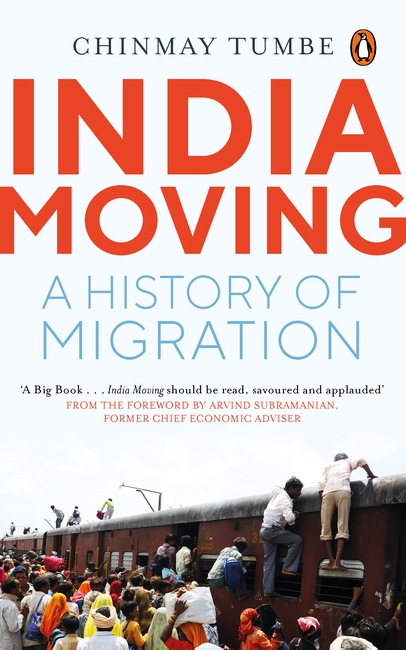
From adventure to indenture, martyrs to merchants, Partition to plantation, from Kashmir to Kerala, Japan to Jamaica and beyond,
the many facets of the great migrations of India and the world are mapped in India Moving, the first book
of its kind.
To understand how millions of people have moved-from, to and within India-the book embarks on a journey laced with evidence, argument and wit, providing insights into topics like the slave trade and migration of workers, travelling business communities such as the Marwaris, Gujaratis and Chettiars, refugee crises and the roots of contemporary mass migration from Bihar and Kerala, covering terrain that often includes diverse items such as mangoes, dosas and pressure cookers.
India Moving shows the scale and variety of Indian migration and argues that greater mobility is a prerequisite for maintaining the country’s pluralistic traditions.
Daughters of Legacy
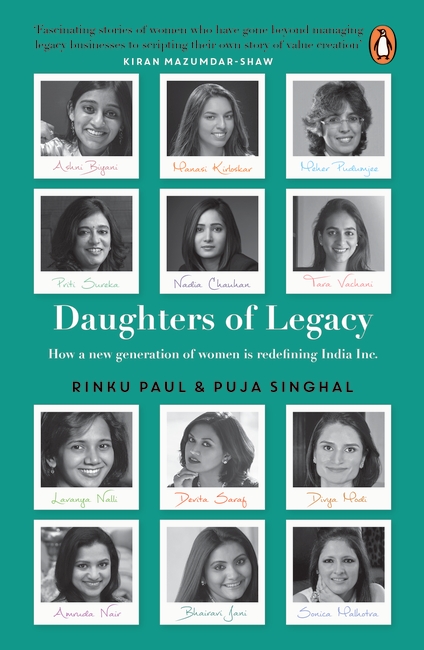
What are the challenges and perks of handling age-old legacies?
If you come into a position of power through a position of privilege, how do you make sure that you earn respect, more so if you are a woman?
These and many more questions are what Daughters of Legacy seeks to answer through the stories of twelve successful women who grew up with strong business lineages.
While Ashni Biyani, chief ideator, Future Group, looks at herself as a co-creator of the business rather than a just a legacy bearer, Manasi Kirloskar, executive director and CEO, Kirloskar Systems Ltd, admits that she is hugely privileged in inheriting a large business, but also goes on to point out that she could lose everything overnight if she isn’t competent. And Meher Pudumjee’s acceptance as non-executive chairperson of Thermax Global that legacies can sometimes feel like a burden is followed close on the heels by the realization that there is nothing more that one can do except give one’s best.
Chosen from a wide cross section in terms of scale of business, roles and hierarchy these women have not only kept the legacies alive but have also gone on to carve a niche for themselves as individuals beyond their famous last names. Clearly for all of them legacy is far more than mere inheritance.
Master Growth Hacking
How did Hotmail amass 30 million active members before getting acquired?
How did Netflix build a user base of over 125 million worldwide?
How did Facebook acquire more than 2 billion users?
The answer is simple: Growth hacking.
Growth hacking is a combination of coding, data intelligence and marketing. It doesn’t take a lot of investment-just a whole lot of creativity, smart data analysis and agility. It has now emerged as the preferred term for growth used by start-ups and entrepreneurs in India and across the world-the new mantra they swear by, but don’t want you to learn about.
Full of riveting stories, Master Growth Hacking lets you learn from the pioneers of the field in India. The book includes interviews with the founders of Zomato, IndiaMART, ShopClues, UrbanClap, Paisabazaar, Furlenco, FusionCharts, WittyFeed, UpGrad and a lot more.
For further details, visit: www.mastergrowthhacking.com
Reva Ev
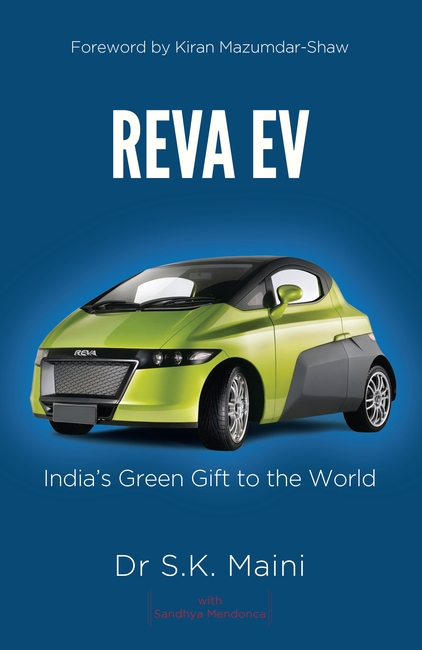
To counter seas of cars, rising petrol prices, and snarling traffic—Reva Electric Vehicle is India’s offering to the world in the shape of a zero emission, green mobility option.
Dr Maini recounts the story of Reva—India’s first commercial electric vehicle—from the inception, ideation, designing the car to taking it to the world. It is a story coloured with hope, determination, disappointment, success, and jubilation—it is the passion for making green commuting a viable possibility come alive in these pages from Reva’s journey.
It is the story of a team that believed in its products against all odds. A story of many firsts, this book is an immortal account of India soundly on the forefront of electric vehicle movement with this unique car.
Disrupt and Conquer
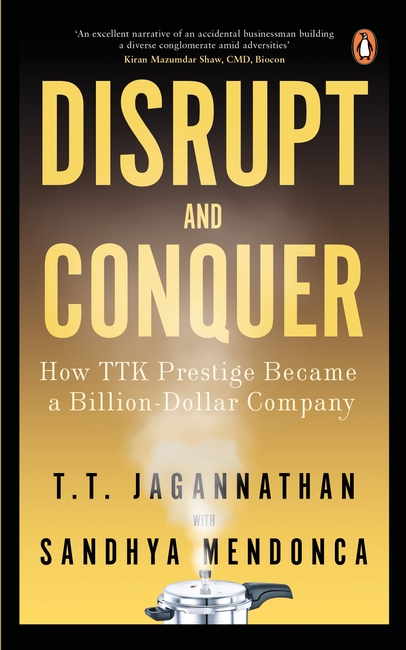
The TTK Group was founded in 1928 in Chennai (then Madras) by T.T. Krishnamachari, who later became a Union minister and held the portfolios of finance, industry and commerce for close to fifteen years.
In this book, the current chairman T.T. Jagannathan, along with Sandhya Mendonca, takes us through the journey of this extraordinary company which fought off bankruptcy and rose like a phoenix to become a highly profitable, successful entity.
Like a phoenix, the group and its constituent companies, have risen from the ashes, many times over, to stand tall and proud. This is the story of a journey that began with early success and experienced catastrophic disasters, and set about turning its fortunes around in stunning comebacks, time and again.
With invaluable business lessons, decades of experience and innovation distilled in these pages, Disrupt and Conquer is a must-read for aspiring entrepreneurs, executives and business leaders.
Seek
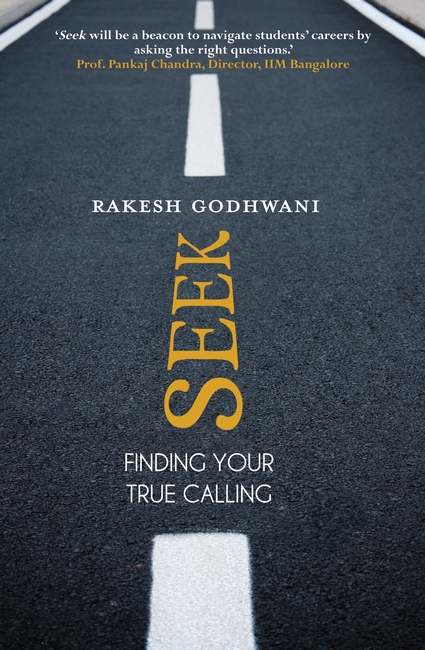
If I don’t crack this job, how will I repay my education loan?
If I join an IT company, will I be able to shift to banking after two years?
These questions seem very familiar, don’t they? Every student has similar concerns about which career path they should tread. Seek provides insights into the various fields and industries-Consulting, IT, Media, Oil and Gas, and others-by delving into stories of successful IIM-Bangalore alumni like Arun Balakrishnan, Malavika Harita, and Apurva Purohit who have made a dent in their respective professions and fields. Rakesh Godhwani offers smart, practical advice on following your passion and finding your dream job.