



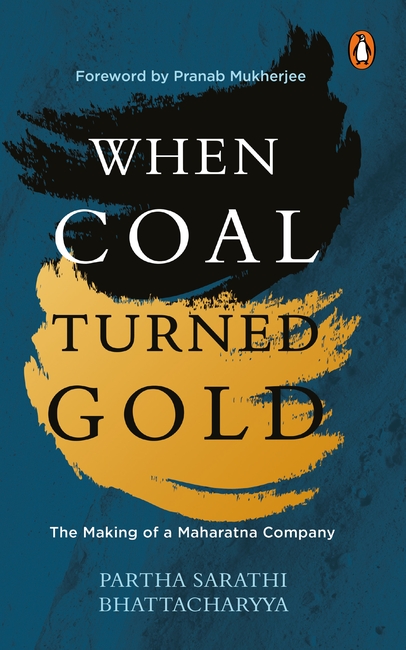
Coal India Limited (CIL) contributes to about 82 per cent of India’s coal production. In When Coal Turned Gold, former CIL chairman and managing director Partha Sarathi Bhattacharyya tells the story, warts and all, of how he tackled the Dhanbad coal mafia, changed the way the industry was perceived, dealt with the trade unions and the government and, most importantly, scripted one of the greatest success stories the country has ever seen.
Catagory: Business & Economics
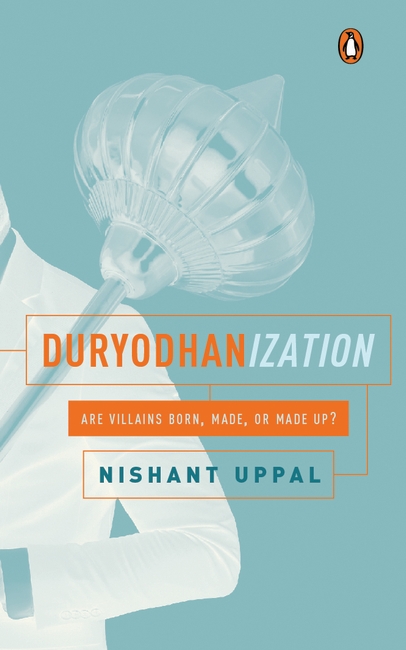
Duryodhanization
Duryodhana was a man of strong character and integrity.
Duhsshasana was respectful, generous and kind towards women.
Shakuni was a simple man who loved his subjects unconditionally.
Dhana Nanda, Aurangzeb and Hitler possessed admirable leadership traits.
‘Duryodhanization’ refers to the birth and processes of development of a villainous character-whether in works of history or mythology. In this book, Uppal ekes out the dark side of management and leadership by studying fascinating characters from the Mahabharata. He probes into what it really means to be a villain, and if villainous traits are inherent or cultivated.
Original and thought-provoking, the book draws from history, mythology and literature, and unpacks the process of villainization through the character of the legendary villain, Duryodhana.
Games Customers Play

Are you coming across clients who no longer believe in win-win deals? Do you think customers are negotiating even harder? Do you have a feeling that you are playing a different game now?
Business has been an endless series of games played by buyers and sellers-with one difference. Both sides could win at the same time.
But somewhere along the way, many customers have changed the rules of these games in their favour. As a seller, when do you give in and when do you hold back? When do you walk away? Do you search for other markets? Or do you grin and bear it in the hope of better times?
In Games Customers Play, Ramesh Dorairaj shows you how to spot such games and change the rules to your advantage. So that it doesn’t matter what the deal is, you will always win!
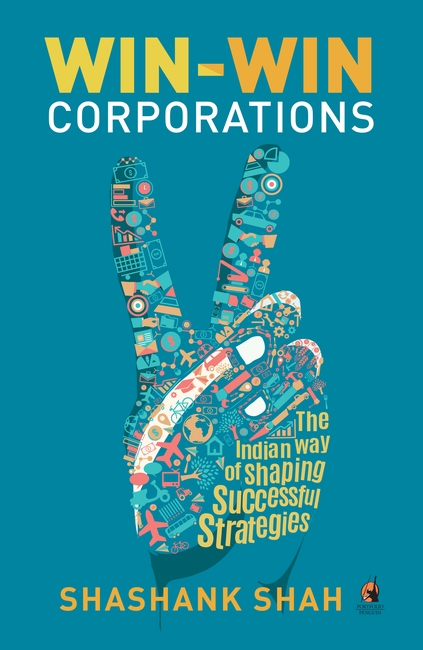
Win-Win Corporations
Why did Ratan Tata decide to pay for all the
victims of 26/11, whether injured in the Taj
or elsewhere?
How did Hindustan Unilever develop a cheaper
and better product to beat its competitor Nirma?
How did TVS Motor Company craft a turnaround
after breaking up with Suzuki?
How did Larsen & Toubro Construction
complete the Tirumala Water Supply Project
in just seventy-seven days?
What do the Taj Hotels, Hindustan Unilever,
TVS Motor Company, Larsen & Toubro, HDFC
Bank and Bharat Petroleum have in common?
They are Win-Win Corporations! Based on over
a decade of research, Shashank Shah identifies
six Indian companies and tells you how they are
truly outstanding in the way they do business.
Each of them has remarkable practices when it
comes to stakeholder management. Whether the
stakeholder is a customer, employee, investor,
vendor, dealer or even society at large, these
companies exemplify that looking at their interests
doesn’t really mean compromising on your own.
Often, the two complement each other and that is
what makes it a win-win solution for everyone.
This book gives an insightful glimpse into what
motivates exceptional companies and how they
are a cut above the rest. It also tells you how you
can make your company a Win-Win Corporation.
Full of fascinating anecdotes, the management
philosophies of eminent leaders, background
stories of organizations and an implementation
toolkit-this book is an inspiring read.
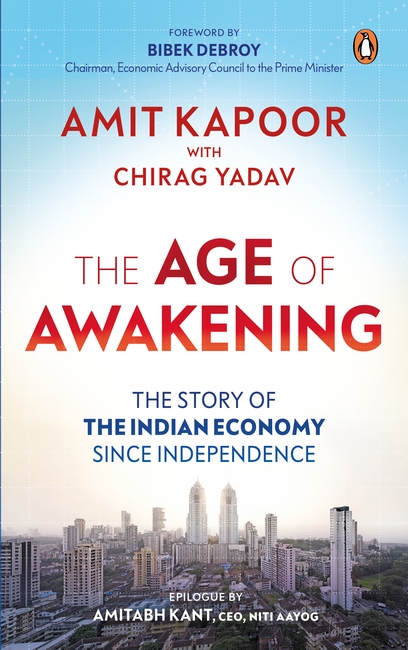
The Age of Awakening
Indian leaders at the time of Independence had their tasks cut out. The nation that was marred by an ugly Partition, had to be prevented from coming apart at the seams. A Constitution had to be framed for a complex society. An election system had to be designed for an electorate that was mostly illiterate. An economic policy had to be shaped for a widely impoverished population.
Among these aspects, the success of India’s economic policy has been debatable. The economic path that India chose at that time is often questioned and criticised. It led to lacklustre growth outcomes which eventually ended in a full-blown crisis in 1991. Since then India has shifted gears. The economy has become more welcoming of the outside world and grown at a pace that has never been witnessed in its history.
But why did India make these choices? What was the role of our political leaders? Where did they falter and where did they succeed?
The Age of Awakening tells India’s economic story since the country gained independence. It unfolds a tale of titanic figures, colossal failures, triumphant breakthroughs and great moral shortcomings. Weaving together vivid history and economic analysis, this book makes for a gripping narrative.
Leapfrogging to Pole-vaulting
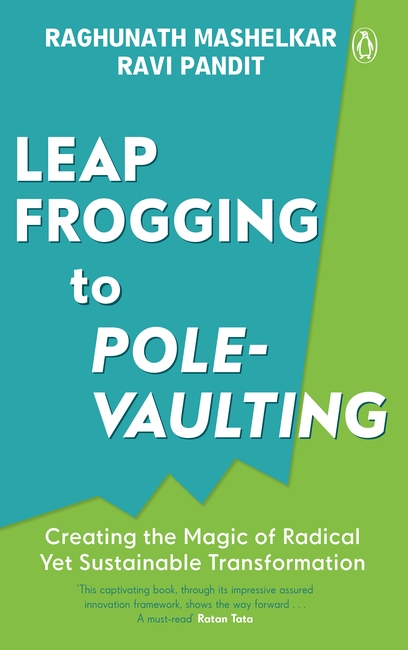
An exhilarating manifesto for the future, this book convinces readers to make the shift from reactive leapfrogging to proactive pole-vaulting through radical transformation.
The unique ‘3-4-7 framework’ demonstrates how a paralysing mass of problems can be brought down to a formidable formula, thus making every problem solvable, no matter how big and complex. The book is dotted with inspiring case studies that can instil confidence in people from across the world to put this framework into practice for assured success.
Dr Mashelkar and Mr Pandit ably show in this must-read book that-as an interplay of global issues constantly raise the bar for innovation today-there has never been a better time to use our learnings to pole-vault over those bars into a new future!
Game India
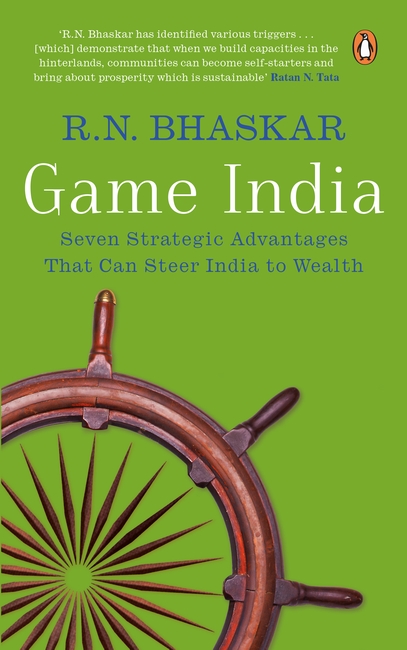
India may widely be acknowledged as one of the fastest-growing major economies in the world, but how can this vast, diverse and heavily populated nation sustain growth prospects? Game India offers a decisive answer.
Through chapters, at once ambitious and engaging, it outlines seven key unrealized opportunities India can pursue to remain a leading player on the world economic superhighway: solar power; an enviable coastline and waterways; milk; agriculture; a huge population that, among other things, can yield methane; innovation; and unleashing human potential through education, justice and health.
In studying these seven strategic advantages, the book explores what has been done (or not done) thus far to exploit them, what potential they hold out for people, and how they could redefine the game for this country.
Weaving together industry lore, keenly analyzed data, and one-on-one interviews with corporate moguls-from Verghese Kurien and the Pais of Manipal to Gautam Adani and Brij Mohan Munjal-Game India is essential reading for every Indian looking ahead.
Jugaad 3.0
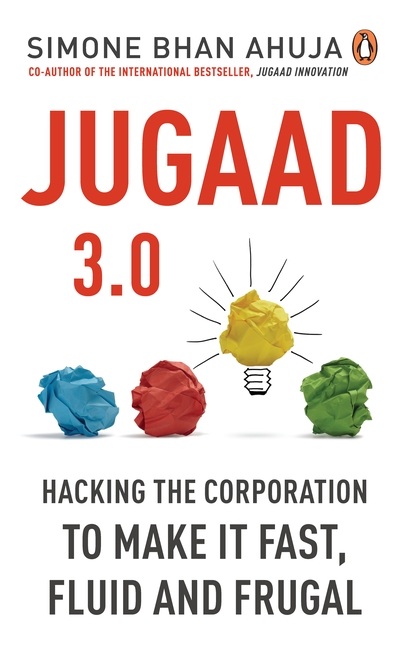
This book will prove that every organization’s best chance, to survive and become better than ever, lies within itself. Against the decidedly progressive, action-oriented, and above all restless backdrop of disruption, the DNA of established business is starting to realign. It’s the beginning of a groundswell that has started to make lean entrepreneurship a core competency within big business.
Based on hundreds of interviews, as well as the author’s consulting work within companies, Jugaad 3.0 Hacking the Corporation identifies the competencies these corporate hackers possess. It also offers a spectrum of carefully crafted archetypes to help people see themselves in this trend and allow organizations identify the innovators in their midst.
The Shape of the Beast
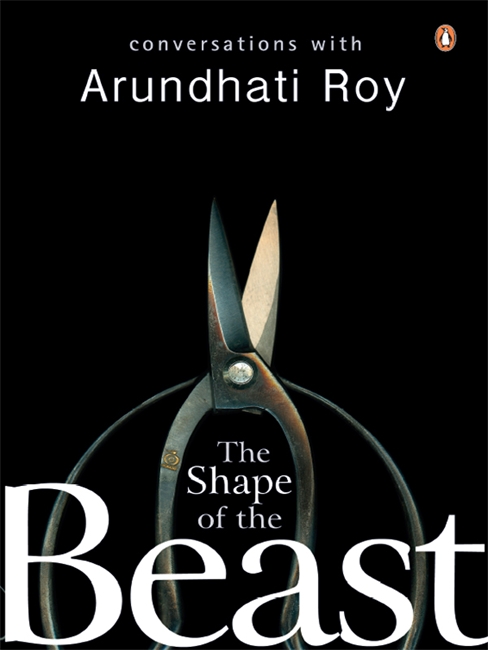
The Shape of the Beast is our world laid bare, with great courage, passion and eloquence, by a mind that has engaged unhesitatingly with its changing realities, often anticipating the way things have moved in the last decade. In the fourteen interviews collected here, conducted between January 2001 and March 2008, Arundhati Roy examines the nature of state and corporate power as it has emerged during this period, and the shape that resistance movements are taking. As she speaks, among other things, about people displaced by dams and industry, the genocide in Gujarat, Maoist rebels, the war in Kashmir and the global War on Terror, she raises fundamental questions about democracy, justice and non-violent protest. Unabashedly political, this is also a deeply personal collection. Through the conversations, Arundhati talks about the necessity of taking a stand, as also the dilemma of guarding the private space necessary for writing in a world that demands urgent, unequivocal intervention. And in the final interview, she discusses with uncommon candour her ambiguous feelings about success and both the pressures and the freedom that come with it.
Walking with the Comrades

‘The terse, typewritten note slipped under my door in a sealed envelope confirmed my appointment with “India’s single biggest internal security challenge”. I’d been waiting for months to hear from them…’ In early 2010, Arundhati Roy travelled into the forests of Central India, homeland to millions of indigenous people, dreamland to some of the world’s biggest mining corporations. The result is this powerful and unprecedented report from the heart of an unfolding revolution.