



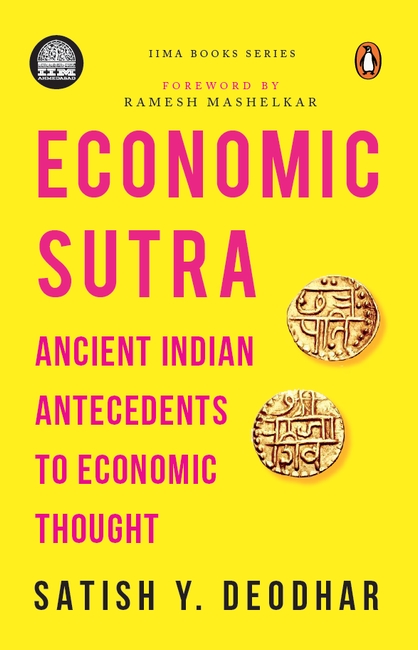
A general perception exists that ancient Indian literature on economic matters is fatalistic and an admixture of sacred and secular thoughts. Economic Sutra provides a comprehensive perspective on the elements of Indian economic thought leading up to and after the Arthashastra. Economic Sutra is a perception-correction initiative to distil the Indian mind in the realm of economic thoughts and behaviour as brought out by the ancient Indian authors. It highlights the broader spread of economic ideas both prior to and sometime after Kautilya, giving insights into the purpose, actions and vision of our forefathers.
Catagory: Business & Economics
Marching with a Billion
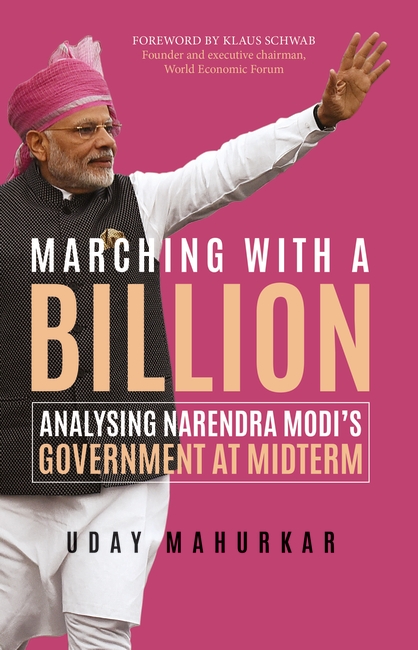
Will Modi pass the litmus test of governance? Does his performance match his promises?
In Marching with a Billion, Uday Mahurkar analyses the Modi government’s three years in power against the backdrop of years of policy paralysis and corruption before he came to power, leaving him with a stiff salvaging job. Focusing on key areas of governance like infrastructure, foreign affairs, power, the social sector, finance, digital technology and agriculture, the author showcases the work of the present government and the monumental changes the prime minister has brought about, including digital innovation and the uprooting of middlemen, which has resulted in an unprecedented level of transparency, and a resolute assault on poverty. He also points out some of the shortfalls of Modi’s government, subjecting it to critical evaluation. Will Modi become a great institution builder, a prerequisite to becoming a nation builder? What will be the long-term impact of demonetization on the economy? This book has the answers.
The Rule of One
Foreword by Muhammad Yunus
The Rule of One speaks about the power of social intrapreneurship in the developing world. Colleagues at Intel, Kazi I. Huque and Narayan Sundararajan founded an intrapreneurial venture between Intel and Grameen, called Grameen Intel Social Business, working with Nobel laureate Muhammad Yunus. Along with Jacen Greene, they have collected and presented their original and transformational ideas in this book that explores crippling challenges like poverty, healthcare and education which plague the developing world and how problems related to these challenges can be solved in a sustainable and comprehensive manner.
This book tells us that nearly half of the people living in developing countries are yet to benefit from information technology. Peppered with illustrative and useful examples and case studies, The Rule of One provides a comprehensive roadmap for any foundation, development agency and company to engineer solutions to deal with social and economic issues.
Ground Scorching Tax
On 1 July 2017, Goods and Services Tax (GST) became a reality. The government hailed it as the biggest tax reform of independent India which would herald a new freedom for the nation and unify it with ‘One Nation One Tax’. Some of the claims made by the government were that GST would bring about ease of doing business; increase tax collection; lower inflation; increase GDP growth by 1-2 per cent; and check the black economy.
More than a year later, we have more questions than answers.
Why did the economy slow down?
Is the government likely to collect more taxes?
Why have prices continued to rise?
Why has Malaysia withdrawn GST?
Turns out that problems with GST are both transitional and structural. To correct for these there have been a few hundred notifications and orders from the government which have added to the confusion.
In this book, well-known economist Arun Kumar explains the reality behind GST. Known for not pulling any punches, the author explains why GST is a double-edged sword for the common man, why it will increase inequality across sectors and regions, why it will hurt small businesses-everything the government does not want you to know.
India Unbound
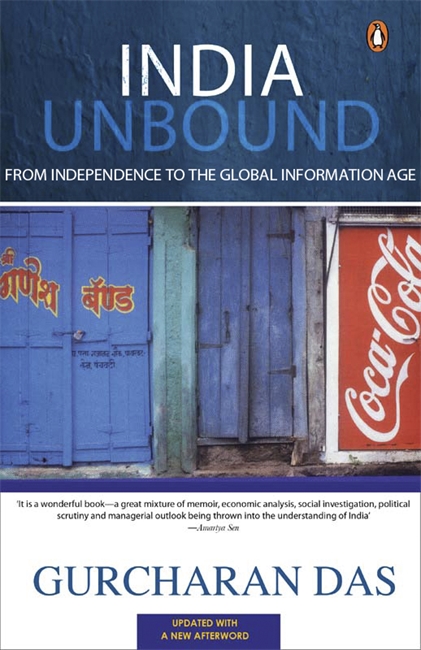
India Unbound is the riveting story of a nation’s rise from poverty to prosperity and the clash of ideas that occurred along the way. Gurcharan Das examines the highs and lows of independent India through the prism of history, his own experiences and those of numerous others he has met-from young people in sleepy UP villages to chiefs of software companies in Bangalore. Defining and exploring the new mindset of the nation, India Unbound is the perfect introduction to contemporary India.
Conflicts Of Interest
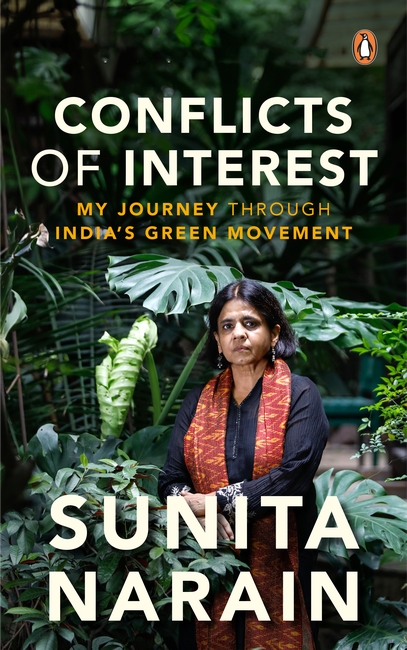
India’s foremost environmentalist, Sunita Narain, gives a personal account of her battles as part of the country’s green movement. While outlining the enormous environmental challenges that India faces today, Narain talks about how corporate lobbies and political interests often scuttle their effective resolution. She recounts some widely reported controversies triggered by research undertaken by her along with her team at the Centre for Science and Environment, such as a report on pesticides in colas, and a study on air pollution in Delhi, and includes a ringside view of global climate change negotiations. Conflicts of Interest also includes an ‘environmental manifesto’, a blueprint for the direction India must take if it is to deal with the exigencies of climate change and environmental degradation.
Chanakya and the Art of War
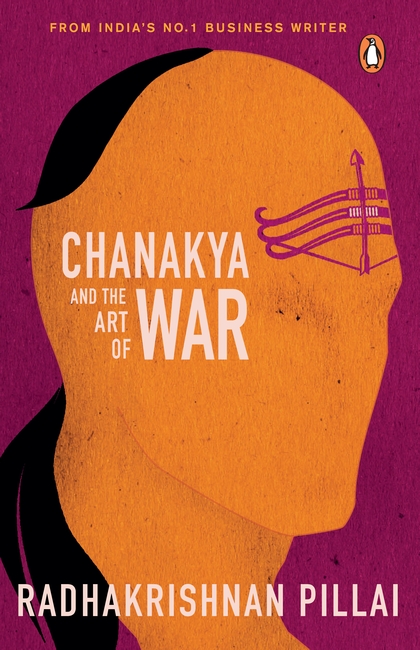
Each and every one of us wants to become successful. We aim to fight and win in businesses, careers, relationships and, ultimately, in life. However, most of us fail to reach our full potential because of various speed breakers. Chanakya and the Art of War draws upon lessons from the great teacher, philosopher and strategist Chanakya’s masterpiece, Arthashastra, which can help us overcome those speed breakers to become innovative and influential and realize our true potential.
Author of the bestselling Inside Chanakya’s Mind, Radhakrishnan Pillai decodes the war secrets of Chanakya as relevant to our personal and professional lives. Be it an army fighting enemy soldiers across the border, the police encountering internal challenges, a politician who wants to win an election, or the common man fighting for survival, Chanakya has a plan for every situation. In the game of life, Chanakya teaches you the winning strategies by putting into practice the Art of War.
Rokda
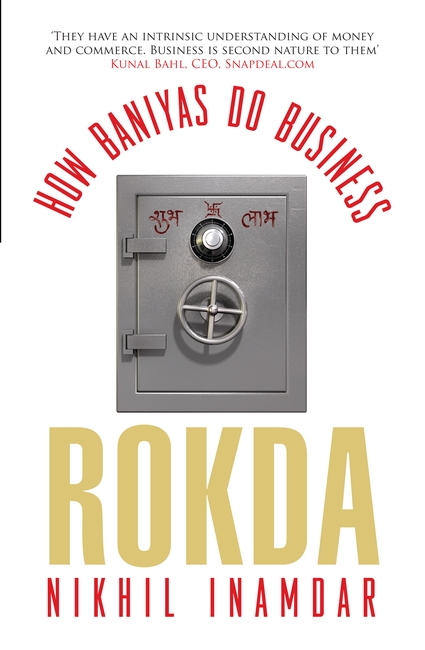
Baniya—a derivative of the Sanskrit word Vanij, is a term synonymous with India’s trader class. Over the decades, these capitalists spread their footprint across vast sectors of the economy from steel and mining to telecom and retail. And now even e-tail.
Nikhil Inamdar’s Rokda features the stories of a few pioneering men from this mercantile community—Radheshyam Agarwal and Radheshyam Goenka, founders of the cosmetic major Emami; Rohit Bansal, co-founder of Snapdeal; Neeraj Gupta, founder of Meru Cabs; and V.K. Bansal, a humble mathematics tutor whose genius spawned a massive coaching industry in Kota—amongst others.
Through the triumphs and tribulations of these men in the epoch marking India’s entire post independence struggle with entrepreneurship—from the License Raj to the opening up of the floodgates in 1991, and the dawn of the digital era—Rokda seeks to uncover the indomitable spirit of the Baniya.
What To Say And When To Shut Up
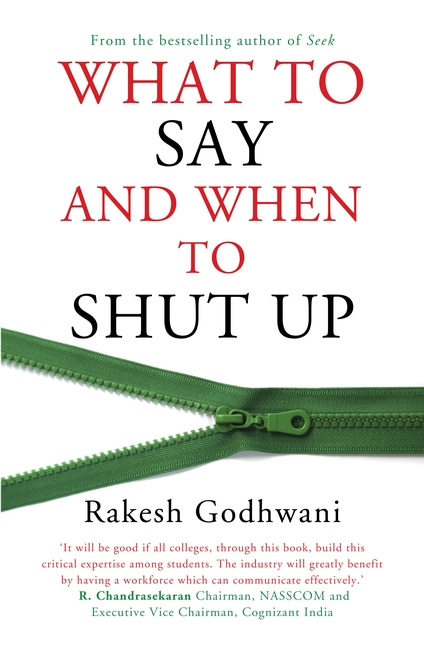
What to Say and When to Shut Up is a useful and interactive book on persuasive communication for corporates, students, entrepreneurs, and anybody who is looking to make a lasting impression on their audience. Through a practical AEIOU Xtra E framework and examples from inspiring leaders like Mahatma Gandhi, Malala Yousafzai, Steve Jobs, Martin Luther King, J.K. Rowling, among others, this book will help you become a persuasive communicator.
Rakesh Godhwani’s invaluable advice includes ways to:
Motivate audiences to action
Nail the interview for your dream job
Make impressive business presentations
Pitch to investors to raise money
Sell a product to a client
Negotiate a win-win
Network professionally and socially
Resolve conflicts
IIMA – Being Ethical
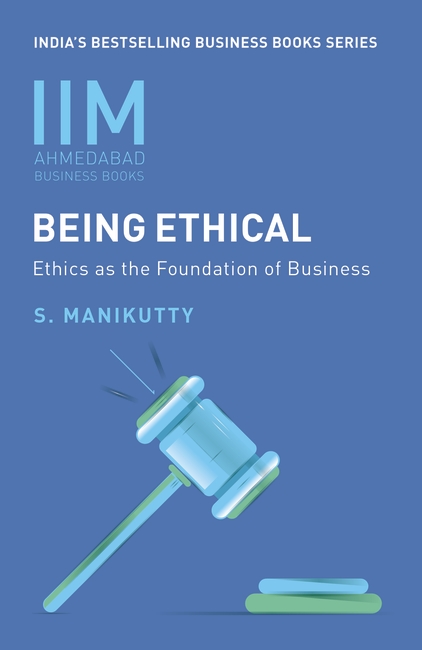
Businesses have to act in self interest but to what extent should they sacrifice ethical behaviour? The question has become increasingly relevant with the recent high profile corporate scandals such as Satyam and the 2G scam.
But can, and should, a business behave ethically at all? Is the corporate social responsibility of a company just to make profits as Nobel Prize winning economist, Milton Friedman, once famously declared?
In this timely book, Professor Manikutty takes us through the minefield of business and ethics looking at the ways in which ethics enters work and the choices available to companies and to individuals. He argues that being ethical is not a simple question of doing the right thing vs the wrong thing; it is to find a balance between multiple right or wrong choices, arriving at not a solution but a compromise. Using a variety of examples and case studies from Indian businesses, Being Ethical is an indispensable book for any responsible manager.