Publish with Us

Follow Penguin

Follow Penguinsters

Follow Penguin Swadesh

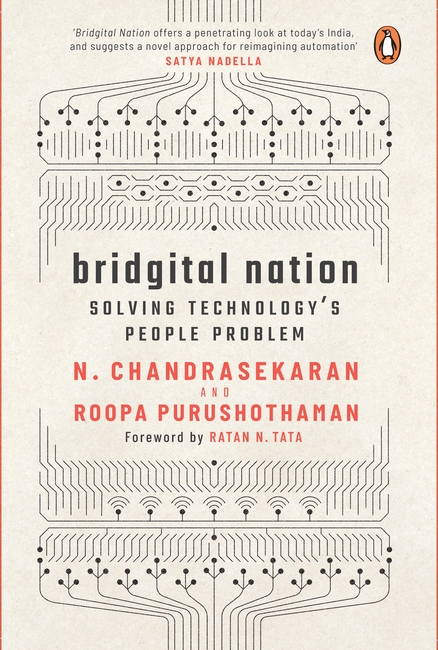
Bridgital Nation

It is 2030. India is among the world’s top three economies. All Indians use advanced technology to either do their job or get their job done. All Indians have access to quality jobs, better healthcare and skill-based education. Technology and human beings coexist in a mutually beneficial ecosystem.

This reality is possible. It is within reach. With Bridgital.

In this ground-breaking book, N. Chandrasekaran, chairman of Tata Sons, presents a powerful vision for the future. To the coming disruption of artificial intelligence, he proposes an ingenious solution, where India is perfectly positioned to pave a unique path from the rest of the world. Instead of accepting technology as an inevitable replacement for human labour, India can use it as an aid; instead of taking them away, AI can generate jobs.

Chandrasekaran and his co-author, Roopa Purushothaman, chief economist of the Tata Group, survey the country for inspirational stories of resilience and determination, and seek the ideal way to bring Indians closer to their dreams through on-ground application of a cutting-edge approach called ‘Bridgital’. This brilliant concept addresses India’s biggest challenges by bridging the huge chasm between rural and urban, illiteracy and education, aspirations and achievement. From healthcare to education to business, the model can be applied in various sectors, and, by a conservative estimate, it can create and impact 30 million jobs by 2025.

One of the country’s foremost industry leaders and pioneers, N. Chandrasekaran brings his expertise of over thirty years with the Tata Group to offer a blueprint for building a prosperous India, where everyone is included in the growth story.

Foreword by Ratan N. Tata
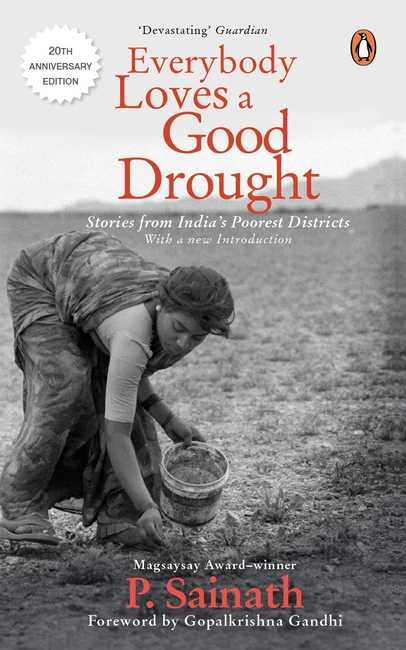
Everybody Loves a Good Drought

A CLASSIC OF REPORTAGE FROM RURAL INDIA BY AWARD-WINNING AUTHOR, WITH A FOREWORD BY GOPALKRISHNA GANDHI

– Prescribed in over 100 universities
– Reveals the human face of poverty
– Key to understanding issues of globalization, human rights, development economics in India
– One of the classics of journalism


Acclaimed across the world, prescribed in over 100 universities and colleges, and included in part in The Century’s Greatest Reportage (Ordfront, 2000), alongside the works of Gabriel Garcia Marquez, Studs Terkel and John Reed, Everybody Loves a Good Drought is the established classic on rural poverty in India. Twenty years after publication, it remains unsurpassed in the scope and depth of reportage, providing an intimate view of the daily struggles of the poor and the efforts, often ludicrous, made to uplift them.

An illuminating introduction accompanying this twentieth-anniversary edition reveals, alarmingly, how a large section of India continues to suffer in the name of development so that a small percentage may prosper. Besides exposing chronic misgovernance, it is also a devastating comment on the media’s failure to speak for the voiceless.

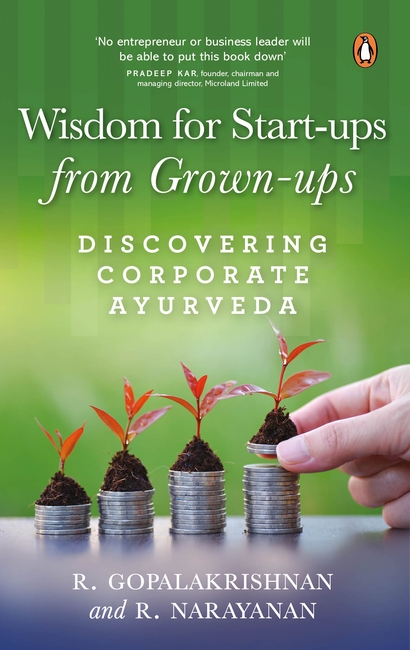
Wisdom for Start-ups from Grown-ups

What makes some companies survive the test of time while others struggle and perish?

Corporations do not exist in isolation; they are always part of something else, something bigger-an ecosystem. Inspired by the secrets of shinise (Japanese companies dating back to the time of samurais), R. Gopalakrishnan and
R. Narayanan take a deep dive into the art of growing and sustaining a business. Over the forty-eight years of his close association with Unilever and Tata, Gopalakrishnan has gathered experiences and know-how about what makes companies tick, while Narayanan, having worked with Coca-Cola, Nestlé and then two start-ups of his own, has developed keen insights about angel investing and mentoring.

Wisdom for Start-ups from Grown-ups is the culmination of their collaborative effort to bring the best of what grown-ups have to offer to start-ups, presented in the form of all-important lessons.

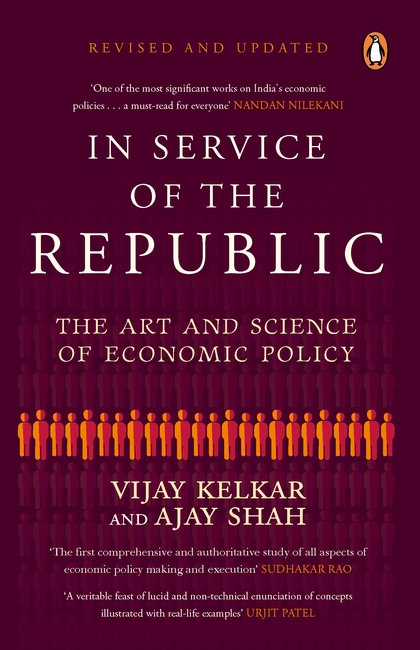
In Service of the Republic

As a $3-trillion economy, India is on her way to becoming an economic superpower. Between 1991 and 2011, the period of our best growth, there was also a substantial decline in the number of people below the poverty line. Since 2011, however, there has been a marked retreat in the high growth performance of the previous two decades.What happened to the promise? Where have we faltered? How do we change course? How do we overcome the ever-present dangers of the middle-income trap, and get rich before we grow old? And one question above all else: What do we need to do to make our tryst with destiny? As professional economists as well as former civil servants, Vijay Kelkar and Ajay Shah have spent most of their lives thinking about and working on these questions. The result: In Service of the Republic, a meticulously researched work that stands at the intersection of economics, political philosophy and public administration. This highly readable book lays out the art and the science of the policymaking that we need, from the high ideas to the gritty practicalities that go into building the Republic.

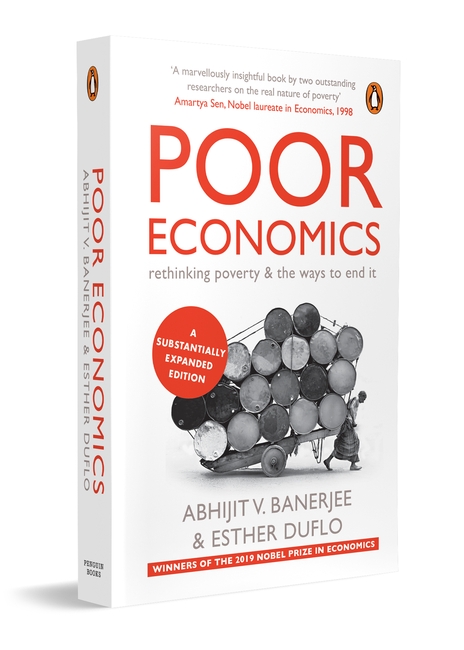
Poor Economics

Imagine you have a few million dollars. You want to spend it on the poor. How do you go about it? Billions of government dollars, and thousands of charitable organizations and NGOs, are dedicated to helping the world’s poor. But much of their work is based on assumptions about the poor and the world that are untested generalizations at best, harmful misperceptions at worst.

Abhijit V. Banerjee and Esther Duflo have pioneered the use of randomized control trials in development economics through their award-winning Poverty Action Lab. They argue that by using randomized control trials, and more generally, by paying careful attention to the evidence, it is possible to make accurate—and often startling assessments—on what really impacts the poor and what doesn’t.

Why would a man in Morocco who doesn’t have enough to eat buy a television? Why is it so hard for children in poor areas to learn even when they attend school? Why do the poorest people in Maharashtra spend 5 percent of their total budget on sugar? Does having lots of children actually make you poorer? Drawing on their research at the Poverty Action Lab and their fifteen years of fieldwork in India and across the world, the two economists ask many such questions and show why the poor, despite having the same desires and abilities as anyone else, end up with entirely different lives.

Revelatory and impassioned, Poor Economics is a pathbreaking book that will help you to understand the real causes of poverty and how to end it.

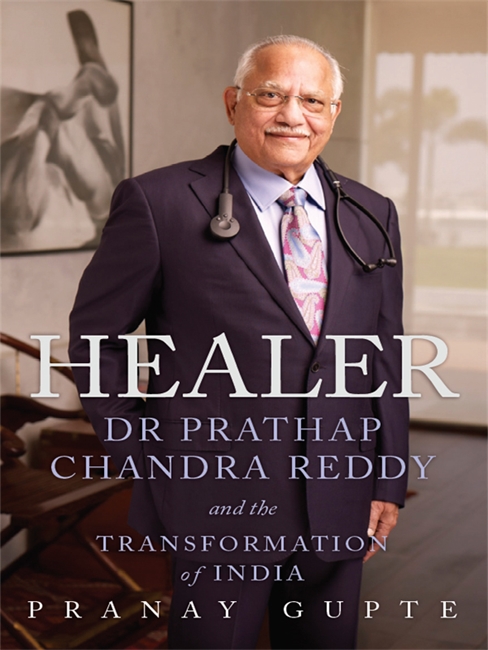
Healer

At the age of fifty, when most people start planning for retirement, Dr Prathap Chandra Reddy decided that he was going to revolutionize healthcare in India. In 1983, the renowned cardiologist launched the country’s first professionally run private sector hospital system. Thirty years later, Apollo Hospitals has become one of the world’s largest providers of high-technology healthcare. In the areas of heart, liver and bone marrow transplants, as also in knee and hip replacement surgery and robotic surgery, Apollo is an industry pioneer and a world leader. More than 32 million men and women have been treated at Apollo’s fifty hospitals, where over 70,000 professionals work. How did Dr Reddy, who grew up in the small village of Aragonda in Andhra Pradesh, actualize his dream? How did he overcome the seemingly insurmountable odds and transform the sustainable development space? How did he become one of India’s enduring icons? Full of delightful anecdotes and dramatic twists and turns, The Healer tells Dr Reddy’s inspirational story like it has never been told before.

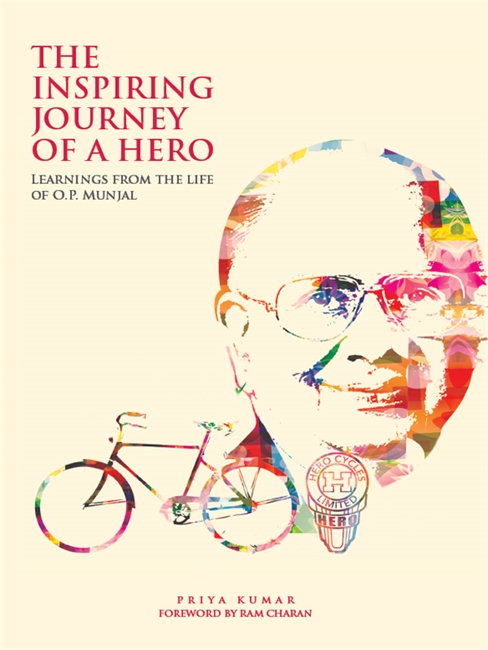
The Inspiring Journey of A Hero

O.P. Munjal started Hero Cycles in 1956, fuelled by meagre resources and an insatiable ambition. His vision was to create an inexpensive and effective mode of transportation for a post-Independence nation on the move. The rest, as they say, is history: Hero Cycles went on to become the world’s largest bicycle manufacturer.This book chronicles the life of O.P. Munjal through anecdotes from his professional and personal life. He proved that a people-focused management style could be superior to the process-driven systems of the West. The book is a result of extensive conversations with O.P. Munjal, Hero employees, dealers and family members. Join bestselling author Priya Kumar as she takes you on a roller-coaster ride.

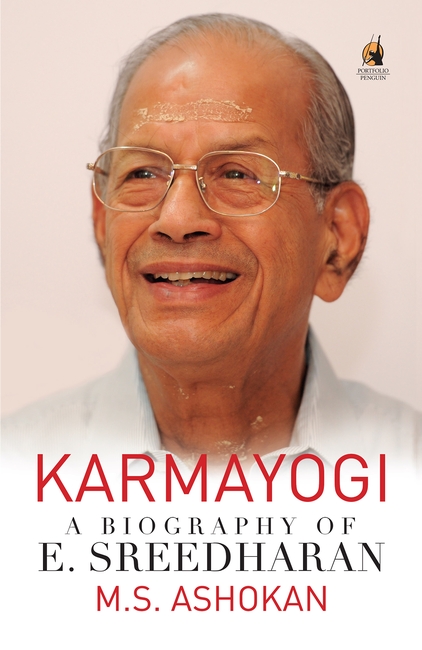
Karmayogi

Karmayogi is the dramatic and inspiring story of E. Sreedharan, the much-admired engineer and technocrat who won accolades for finishing the Delhi Metro project within budget and on time, in the face of severe constraints. Known for his efficiency and discipline and regarded the world over for his productivity standards, Sreedharan has, surprisingly, never spent more than the eight-hour workday in office.
This fascinating book looks back on an extraordinary career full of sterling achievements-Sreedharan’s years with the Railways, the building of the Kolkata Metro and the Konkan Railway, followed by the Delhi Metro, and the many metro projects he is involved with now.
Translated from a bestselling biography in Malayalam, this is the uplifting story of a very private person who has become an icon of modern India because of his uncompromising work ethic.

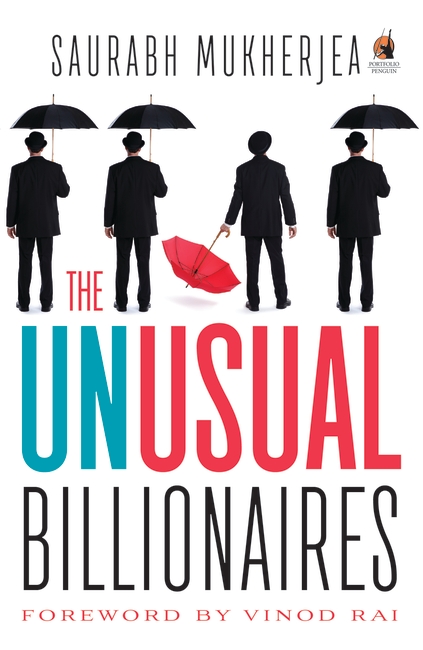
The Unusual Billionaires

What makes a company truly outstanding?
What is the secret sauce of delivering successful results year-on-year?
What is common to Asian Paints, HDFC Bank, Marico, Axis Bank and Berger Paints?
They are Unusual Companies, built by Unusual Billionaires. The Unusual Billionaires tells the story of seven, truly outstanding companies which delivered 10 per cent revenue growth over the last ten years and 15 per cent return on capital employed. In simple words, these companies defeated 5000 other public listed companies to deliver high growth while maintaining profitability year-on-year for the last decade.
How did these companies do it? Why couldn’t this be reciprocated by other companies? What are they doing differently?
Saurabh Mukherjea, bestselling author of Gurus of Chaos, delivers an outstanding book with lessons to learn from these seven businesses. Mukherjea tells you why focusing on the core business could save a company’s life or how giving control to top management could be a boon. Packed with these learnings are riveting corporate stories of how Hindustan Unilever made aggressive bids to buy Mariwala’s business, but had to sell it to the same company in a few years, or how Page Industries found an exciting way to stop unionization at their manufacturing units. It also includes the turnaround of Axis Bank and the boardroom coup that led to its chairman’s downfall, and how Vijay Mallya lost control of Asian Paints to the Dhingra Brothers.
These and many more makes this book a mandatory read for all corporate leaders to simulate and implement.

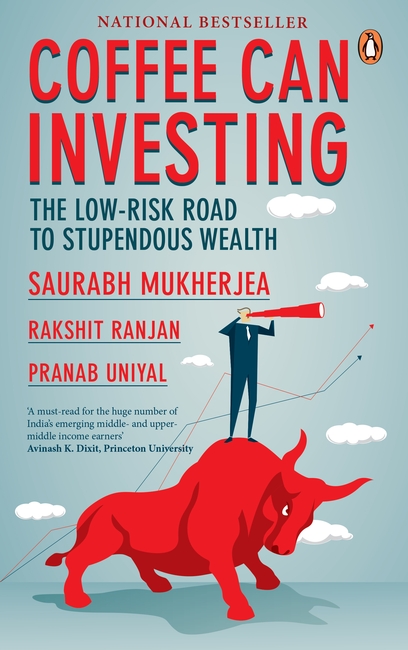
Coffee Can Investing

Most people invest in the usual assets: real estate, gold, mutual funds, fixed deposits and stock markets. It’s always the same four or five instruments. All they end up making is a measly 8 to 12 per cent per annum. Those who are exceptionally unfortunate get stuck in the middle of a crash and end up losing a lot of money.
What if there was another way? What if you could make not 10 not 15 but 20 per cent compound annual growth rate (CAGR) on your investments? What if there was a way to grow your money four to five times whilst taking half the risk compared to the overall market?
Bestselling author of Gurus of Chaos and The Unusual Billionaires, Saurabh Mukherjea puts his money where his mouth is. Saurabh follows the Coffee Can approach to high-quality, low-risk investing. His firm, Ambit Capital, is one the largest wealth managers in India which invests with this approach and delivers stupendous returns. In Coffee Can Investing, Saurabh will show you how to go about low-risk investments that generate great returns.

error: Content is protected !!