What to Say and When to Shut Up is a useful and interactive book on persuasive communication for corporates, students, entrepreneurs, and anybody who is looking to make a lasting impression on their audience. Through a practical AEIOU Xtra E framework and examples from inspiring leaders like Mahatma Gandhi, Malala Yousafzai, Steve Jobs, Martin Luther King, J.K. Rowling, among others, this book will help you become a persuasive communicator.
Rakesh Godhwani’s invaluable advice includes ways to:
Motivate audiences to action
Nail the interview for your dream job
Make impressive business presentations
Pitch to investors to raise money
Sell a product to a client
Negotiate a win-win
Network professionally and socially
Resolve conflicts

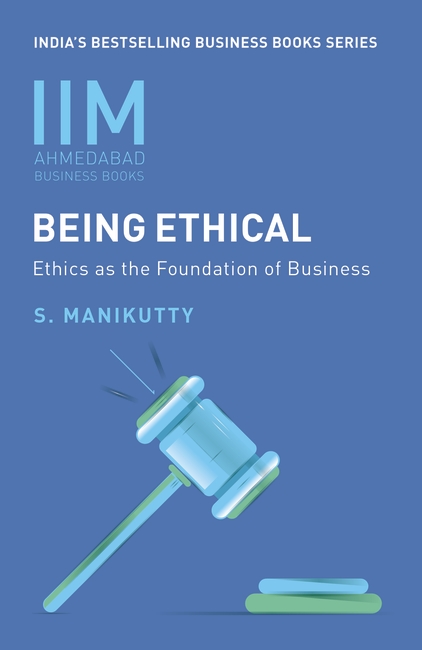
Businesses have to act in self interest but to what extent should they sacrifice ethical behaviour? The question has become increasingly relevant with the recent high profile corporate scandals such as Satyam and the 2G scam.
But can, and should, a business behave ethically at all? Is the corporate social responsibility of a company just to make profits as Nobel Prize winning economist, Milton Friedman, once famously declared?
In this timely book, Professor Manikutty takes us through the minefield of business and ethics looking at the ways in which ethics enters work and the choices available to companies and to individuals. He argues that being ethical is not a simple question of doing the right thing vs the wrong thing; it is to find a balance between multiple right or wrong choices, arriving at not a solution but a compromise. Using a variety of examples and case studies from Indian businesses, Being Ethical is an indispensable book for any responsible manager.

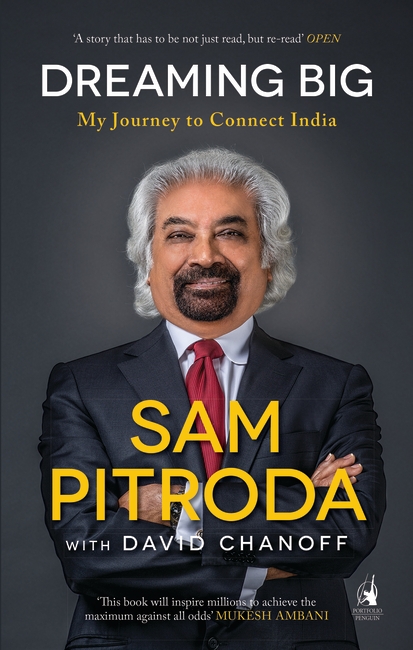
A young man from Titilagarh, Orissa, buoyed by nothing but dreams, boards a boat to America in 1964. There, in the land of opportunity, Satyanarayan Gangaram Pitroda strikes gold in the burgeoning tech space to become the American millionaire Sam Pitroda. Armed with global patents and a vision supported by Prime Minister Rajiv Gandhi, he vows to return home and fix India’s telephone troubles.
Sam Pitroda became synonymous with the bright-yellow PCO/STD booths that sprang up across the country, and was a dynamo in the Congress machinery in the 1980s. But his world came crashing down when he was dealt one blow after the other-a heart attack, false corruption charges and the assassination of his dear friend Rajiv Gandhi. To make matters worse, he realized that he had run out of money.
This is the astonishing and heart-warming story of how one man at the top hits rock bottom-only to rise again and make a bigger dent in the world.

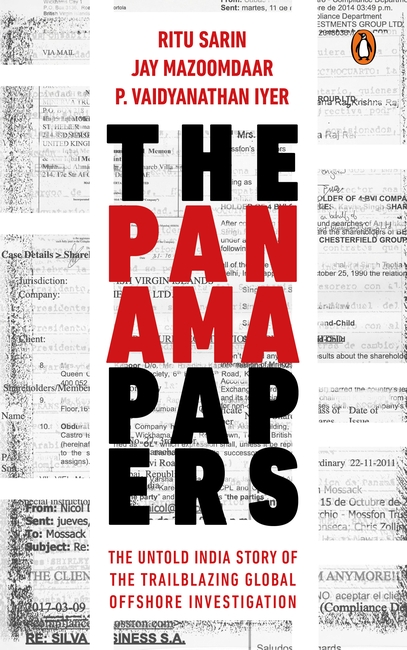
An anonymous whistle-blower and an astounding 2600 GB of data. A giant leak of 11.5 million financial and legal records. A global collaboration of over 100 news organizations working in twenty-five languages in eighty countries. More than 350 reporters on the trail for nine months in complete secrecy.
The Panama Papers exposed in black and white the crime and corruption of the rich and powerful who stashed away their wealth in tax havens. This is the India story of the mega investigation.
The Panama Papers shook the world, woke up governments and showed what investigative journalism could achieve even in a post-truth world through a path-breaking alliance between an individual whistle-blower and a coalition of global media. The only Indian publication in the global collaboration, the Indian Express played a crucial role. Now, for the first time, award-winning journalists Ritu Sarin, Jay Mazoomdaar and P. Vaidyanathan Iyer tell the backstory of hot leads and cold trails, of open denial and veiled intimidation.
The Panama Papers underlined the loot of public money and the need for tax reforms. In an age of rising inequality, the importance of public funding to fight poverty cannot be overstated. The lack of public confidence in regulatory frameworks or political will also fuels perceptions of illegitimacy of wealth. In India, black money has gained more currency than ever as a political metaphor and future electoral gains may well depend on the perceived success of a war against illegal wealth. Financial corruption though cannot be defeated without transparency in election funding. The Panama Papers reignited a global debate on surmounting these challenges.
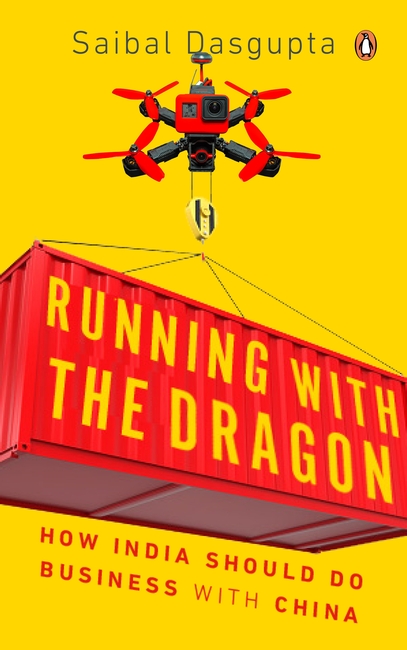
Are there lessons to learn from the manner Chinese companies have grown tenfold or more in their home markets, and pushed away competitors of all hues in the US, Europe, Asia and Africa? What drives China’s international trade surplus, which was $351 billion in 2018, while India ended the 2018-19 financial year with trade deficit of $103 billion? Are we in India ready to learn and seize new opportunities as part of the overall objective to become a $5-trillion economy?
The Chinese invest hugely in understanding foreign cultures and markets while basking in the knowledge that their competitors and would-be allies are unlikely to make sufficient effort to understand them. This is one reason why Chinese manufacturers have broken into the Indian market, making brands like Xiaomi, Haier, Huawei, ZTE, and Lenovo household names in major cities. Hardly any Indian product, with the exception of Tata Motors’ Jaguar, seen primarily as a British brand, has gained a foothold in China.
However, huge opportunities exist and it is possible to both compete and collaborate with the Chinese on our own terms. Entrepreneurs like Rajendra S. Pawar, chairman of NIIT, have shown the way, spending years learning the Chinese way of doing business, going on to establish IT teaching facilities in nearly a hundred universities and institutions in China. Some Indian pharmaceutical companies are also making their mark in China.
Running with the Dragon seeks answers about what Chinese companies are likely to do next to expand in the Indian market under different scenarios. Things are likely to change as the government is keen on removing stumbling blocks for Chinese investments amidst a decelerating economy. Indian businesses in different sectors will have to decide if they want to fight the new competition or collaborate with rivals. The book reflects the experience of over forty Indian and Chinese businesspeople, officials and experts besides the author’s own analysis.

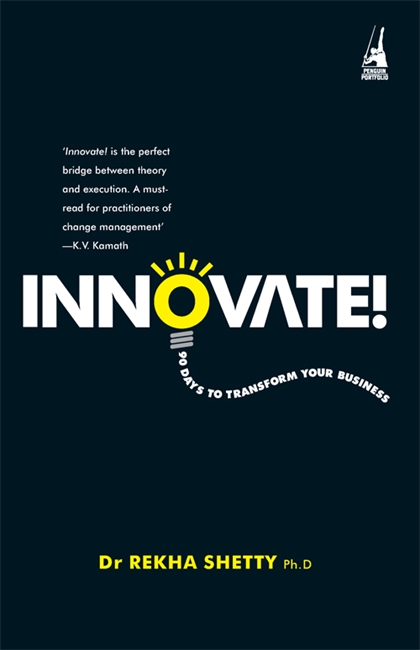
Constant and consistent innovation is the only sure-fire way to profitability; but many organizations are limited by the lack of an innovation culture. Innovate! 90 Days to Transform Your Business is the answer to this problem; allowing you to build a culture of innovation which embraces everyone from the doorman to the chairman. A daily implementation schedule, Innovate! will give you step-by-step ideas for yourself; your team; your department; and your organization. Start today and see the difference you can make.This 90-day plan will help you create a climate which empowers everyone in the company to achieve their full potential, launch an initiative which will invigorate the whole organization, build young, proactive commando teams and innovation spirals trained to think outside the box, inspire team leaders to transform their departments and the organization through their youthful proactive ideas, and develop a daily plan to institutionalize innovation and establish long-term culture change. A practical do-it-yourself toolkit, Innovate! should be required reading for everyone in your organization. Be inspired, innovate!

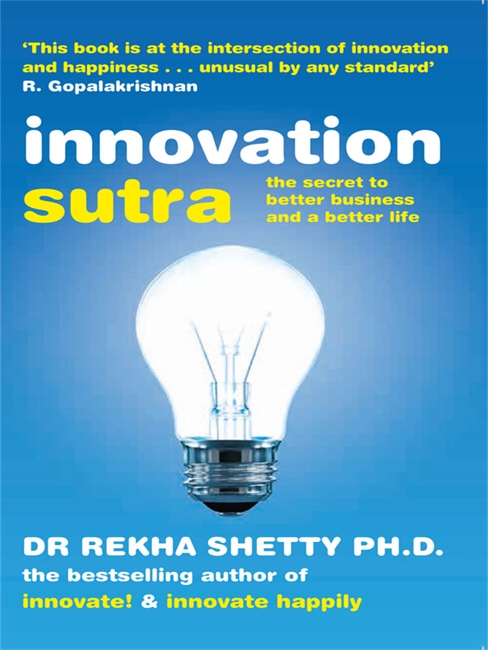
Dharam is a young, immensely successful investment banker in Manhattan. He thinks he rules the world, till one day the world comes crashing down around him. Accompanied by the enterprising Kunal (who sells fake Indian antiques to Americans) and the uncorrupted Supriya, Dharam undertakes a journey along the Buddhist pilgrim trail, from Lumbini, Kapilavastu and Bodh Gaya to Sarnath, Rajgir, Nalanda, Vaishali, Kaushambi and Kushinagar. As he absorbs timeless Buddhist teachings, he finds a new purpose to life, and develops the idea for an ethical yet profitable business: The Buddhist Footprint. Bestselling innovation guru Rekha Shetty’s new book reveals how true entrepreneurial energy can arise from a better understanding of life. Innovation Sutra is a book that will make a tangible difference to anyone who is willing to think out of the box and learn from India’s ancient secrets of work-life balance.

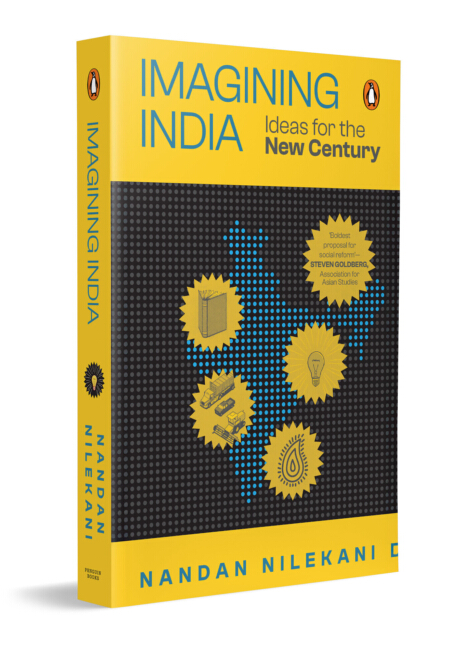
Imagining India created ripples with its perspective on India’s recent history and the core issues plaguing the country’s development. Cogently argued and packed with Nilekani’s own experiences and interactions with hundreds of opinion leaders, it offers a comprehensive blueprint for India in the twenty-first century.

The Only Book You Need to Succeed both at Work and at Home
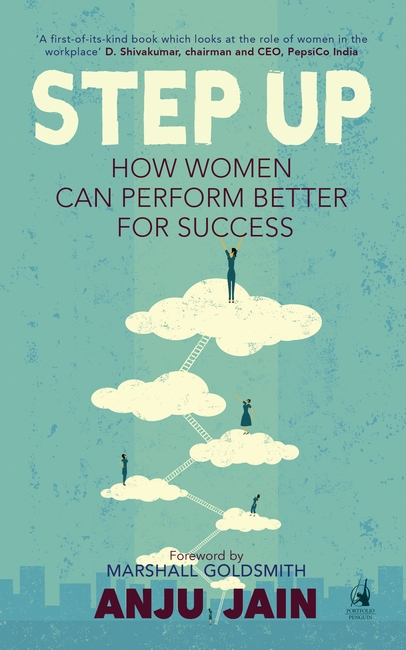
In this engaging, witty and conversational book, Anju Jain explains why women have been discriminated against, both at home and at work, and how this can be changed. With insights gained from extensive research and experience, she presents practical techniques in a simple matrix for women to use to become successful.
This book will help you to:
1.Increase your productivity
2. Create work-life balance
3. Get support from those who matter
4. Build your own brand at work
5. Reach your goals and succeed
There are also interviews with key leaders-both women and men-who talk about the challenges they faced, and the solutions which worked for them. Among those featured are Kiran Mazumdar Shaw (Biocon), Sonia Singh (NDTV), Devyani Rana (Caterpillar), Geetu Verma (Unilever), Ipsita Dasgupta (GE), Sunita Maheshwari (RxDx and Teleradiology Solutions), Vaishali Kasture (Deloitte Consulting), Divya Suri (Lalit Suri Resorts), Kumud Srinivasan (Intel), Gwen Ryan (EY), N.V. Tyagarajan (Genpact), Mohandas Pai (Manipal Global Education) and Raj Nayak (Colors TV). Full of interesting anecdotes and great advice, Step Up will both entertain and guide women towards personal and professional growth.
Studies show that happy people are the most innovative and more productive. The Happiness Quotient is therefore integral to a successful corporate strategy. In Innovate Happily, bestselling innovation guru Rekha Shetty’s new book, Junie, a bright young executive, meets Rags, a wise, hi-tech coach. Together they discover the secrets that create progressive and happy communities during a visit to Bhutan, the modern day Shangri-La, a land that actually measures its Gross National Happiness. Through a series of analytical and self-actualization exercises, Innovate Happily shows you innovative ways to increase your Happiness Quotient and take it to your own town and organization.