




The inside track to India’s most powerful tycoons The eight business maharajas profiled here are among Asia’s most powerful industrial tycoons, Their combined turnover runs into billions of rupees, and between them they employ some 650,000 people, while indirectly affecting the lives of millions more. Sip a cup of tea, drive to work, listen to music, build a house and the chances are that in these and a myriad other ways you are using products that they manufacture or market. By any yardstick, the achievements of these men would rank among the great business stories of our time. How did these men build their enormous empires? What are their management secrets? How did they thrive and prosper even as others failed? What is their vision for the future? Top business writer and industry insider Gita Piramal draws on exhaustive interviews and in-depth research to discover the answers to these and related questions in her profiles of the men who will lead the country’s push to become an industrial superpower in the 21st century.
Catagory: Business & Economics
For The Love Of India
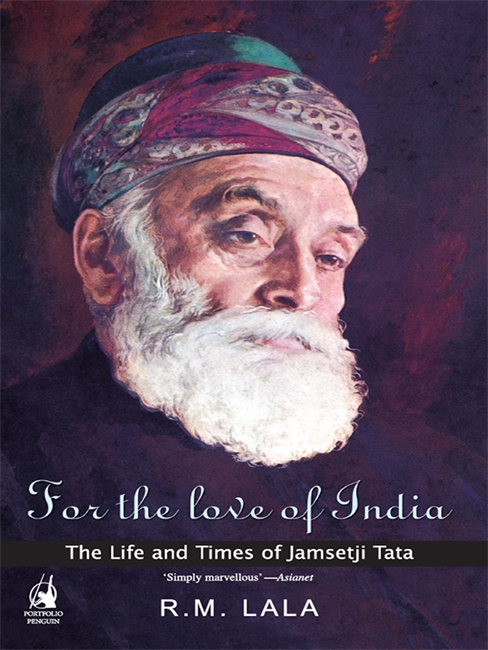
Jamsetji Nusserwanji Tata was born in 1839, and in his lifetime India remained firmly under British rule. Yet the projects he envisioned laid the foundation for the nation’s develoent once it became independent. More extraordinary still, these institutions continue to set the pace for others in their respective areas. For, among his many achievements are the Indian Institute of Science in Bangalore, which has groomed some of the country’s best scientists, the Tata Steel plant in Jamshedpur, which marked the country’s transition from trading to manufacturing, his pioneering hydro-electric project, and the Taj Mahal hotel in Mumbai, one of the finest in the world. In these as in other projects he undertook, Jamsetji revealed the unerring instinct of a man who knew what it would take to restore the pride of a subjugated nation and help it prepare for a place among the leading nations of the world once it came into its own. The scale of the projects required abilities of a high order. In some cases it was sheer perseverance that paid off”as with finding a suitable site for the steel project. In others, such as the Indian Institute of Science, it was his exceptional persuasive skills and patience that finally got him the approval of a reluctant viceroy, Lord Curzon. In For the Love of India, R.M. Lala has drawn upon fresh material from the India Office Library in London and other archives, as also Jamsetji’s letters, to portray the man and his age. It is an absorbing account that makes clear how remarkable Jamsetji’s achievement truly was, and why, even now, one hundred years after his death, he seems like a man well ahead of the times.
We Are Like That Only
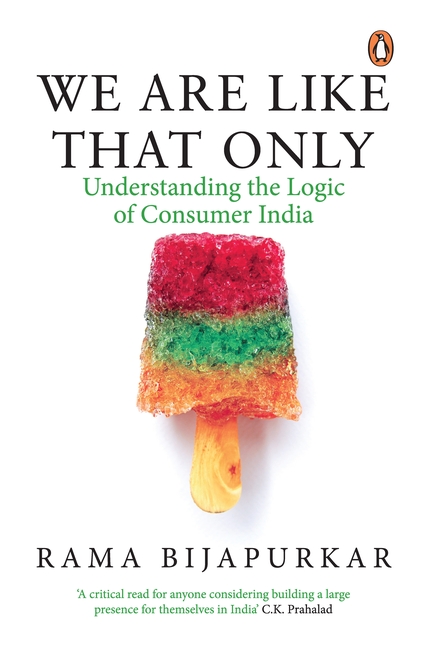
Taking cues from economics, demography, history, culture, philosophy and good old common sense, Rama Bijapurkar makes sense of the complex and inscrutable Indian market-the many consumer Indias, their diverse and schizophrenic behaviour and the way to make your company’s fortune in this billion-plus market. Irreverent and insightful, this book answers the questions to twelve key facets of consumer India. Bijapurkar explains why the Indian consumer market is ‘like that only’, why it will not change in a hurry, and what it takes to develop a winning ‘made for India’ business strategy. C.K. Prahalad, author of The Fortune at the Bottom of the Pyramid, writes in the foreword to the book: ‘Rama has developed a very strong case for learning about India on its own terms before investing. This book is a critical read for anyone considering building a large presence for themselves in India.’
A View from the Outside
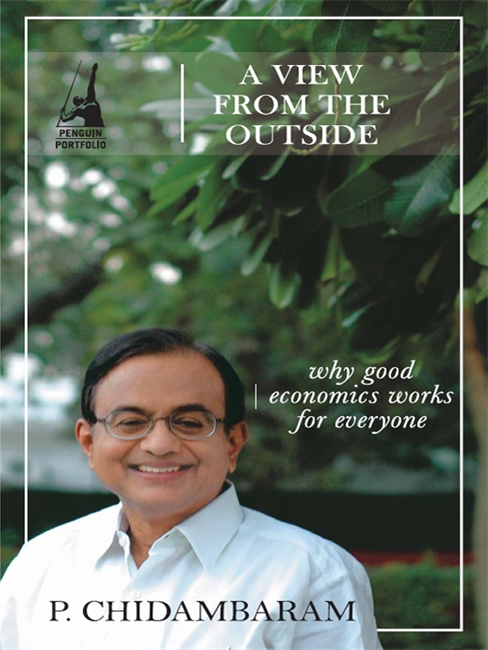
‘Economics is the science of the possible made to look like the art of the impossible’ is a definition that would strike a chord with any finance minister of India who, every year, has to perform the great Indian hope trick. Otherwise known as the Budget-a careful balancing act between revenue and expenditure, tax rates and tax sops, growth and equity, reforms and the status quo. Within these constraints, however, there is much that a finance minister can actually accomplish, as P. Chidambaram, one of India’s most accomplished economists and commentators, shows in A View from the Outside, a collection of columns that assesses the promises and performance of the NDA government in the period 2002-04.The columns, originally published in the Indian Express and Financial Express, reflect the views of Chidambaram, finance minister between 1996 and 1998 and again 2004 onwards, on a range of issues that remain important regardless of the government in power. They also provide snapshots of the Indian economy in good times and bad. This collection covers subjects such as agriculture, reforms, budgets, forex reserves, economic growth and tax policies. It also offers perceptive political analyses and some telling comments on social issues. Far more than mere reactions to developments during that period, Chidambaram provides the reader with an extraordinarily clear understanding of the problems underlying the Indian economy-and its politics-and ways of solving them.
Business Legends
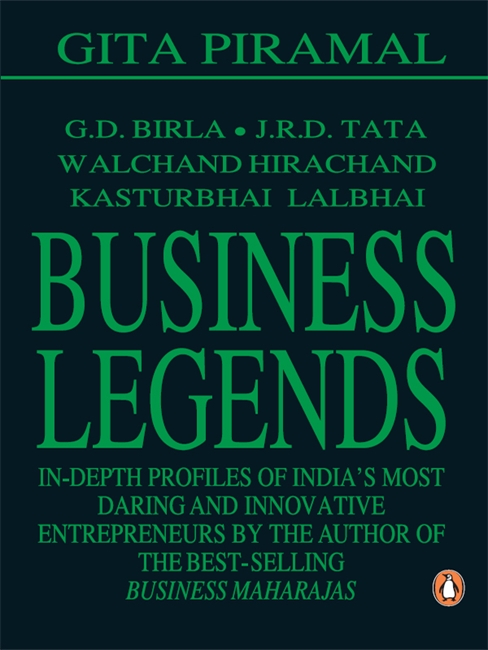
The Golden age of Indian industry, as it now seems in retrospect, lasted from 1951 to “62. and industrialists of the lime were not afraid to think ahead and plan big. Among the entrepreneurs who led this Industrial resurgence, four were particularly outstanding, G.D. Birla, Walchand Hirachand, Kasturbhai Lalbhai and, J.R.D. Tata. Gita Piramal, author of the acclaimed Business Maharajas, sensitively recreates the Lives and Times of these four titans of industry. She draws upon hitherto untapped sources of information to Sketch her profiles, making htis perhaps the closest Look at these legends this fair. Thought provoking and incisive. Business Legends is a compelling Account of ambition and achievement.
Unusual People Do Things Differently

Unusual people are ordinary people who strive hard to do extraordinary things. They are sensitive to nuances, look to provide lateral solutions, dare to think out of the box, and often end up changing the rules of the game.T.G.C. Prasad presents the views and experiences of sixty-five individuals, from well-known names like Mike Lawrie, Azim Premji and Mother Teresa to a chef, a masseuse and a service boy, with whom he has had meaningful interactions and who have inspired him. He includes people from a broad professional spectrum; CEOs, doctors, the director general of police, realtors, an attorney, a chartered accountant, a consultant and a sports coach are among those who make his list. Singling out a dominant factor from each person’s story, he outlines the journeys these people undertook and the behaviours they exhibited, and shows how these link up to the results they achieved.Unusual People Do Things Differently is full of pithy everyday management lessons and offers valuable insights to everyone who aspires to grow, manage and lead.
Jugaad Innovation
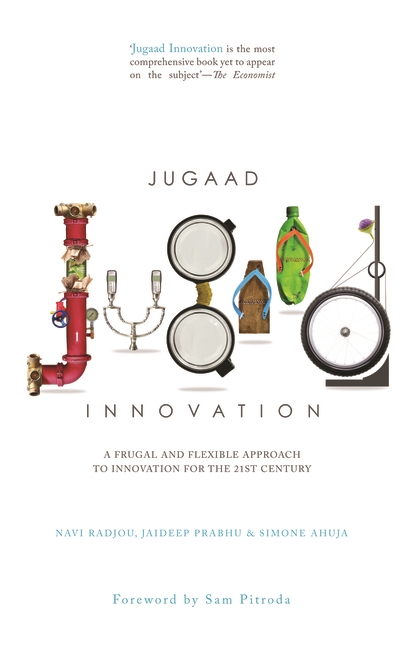
‘Jugaad’ is a word often heard in general conversation in India. Whether to find ingenious solutions to problems or turn adversity into opportunity, Indians swear by it. In this seminal book, Navi Radjou, Jaideep Prabhu, and Simone Ahuja challenge the very way a traditional organization thinks and acts. Leading companies such as Facebook, Future Group, GE, Google, PepsiCo, Philips, Renault-Nissan, Siemens, Suzlon, Tata Group and YES BANK, among others, are already practising jugaad to generate original ideas and pioneer growth. In the midst of rising global competition and swelling R&D budgets, Jugaad Innovation presents ways to innovate, be flexible and do more with less. Peppered with examples of innovative entrepreneurs in emerging markets such as Africa, India, China and Brazil, Jugaad Innovation illuminates paths to engender breakthrough growth in a complex and resource-scarce world.
The TCS Story . . . And Beyond
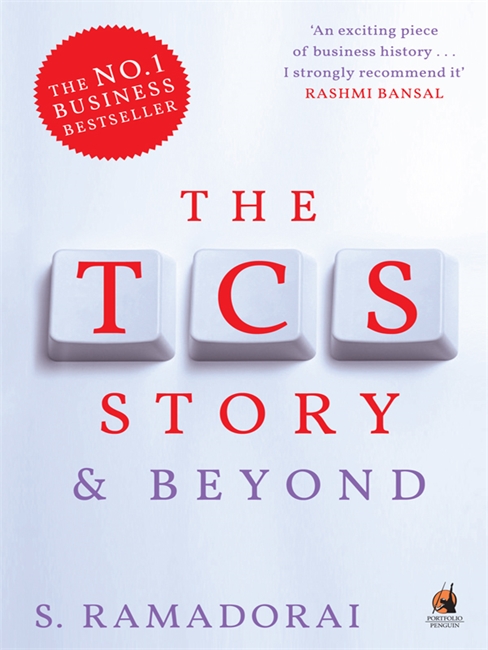
In 2003, Tata Consultancy Services set itself a mission: ‘Top Ten by 2010’. In 2009, a year ahead of schedule, TCS made good on that promise: in fourteen years, the company had transformed itself from the $155 million operation that
S.Ramadorai inherited as CEO in 1996. Today it is one of the world’s largest IT software and services companies with more than 2,40,000 people working in forty-two countries, and annual revenues of over $10 billion.
The TCS story is one of modern India’s great success stories. In this fascinating book, S. Ramadorai, one of the country’s most respected business leaders, recounts the steps to that extraordinary success, and outlines a vision for the future where the quality initiatives he undertook can be applied to a larger national framework.
Zen Garden

For the immensely popular column ‘Zen Garden’, which he published in Forbes India for over three years, bestselling business author Subroto Bagchi spoke to some very interesting people. Many, though not all, of the visitors to ‘Zen Garden’ were, like Subroto himself, high-performance entrepreneurs. But the one thing that was common to every guest was that they were pathmakers-rather than choosing the well-trodden path, they had charted new ones that others could tread on.This book features the very best conversations from ‘Zen Garden’, including those with the Dalai Lama, Sadhguru Jaggi Vasudev, Nandan Nilekani, Aamir Khan, Dr Devi Shetty, Kiran Mazumdar-Shaw, Ekta Kapoor, social entrepreneur Harish Hande, Sanjeev Bikhchandani of Naukri.com, Deep Kalra of MakeMyTrip.com, Café Coffee Day’s V.G. Siddhartha, Vikram Bakshi (the man who brought McDonald’s to India) and India’s top winemaker, Rajeev Samant. In their own words, these game changers reveal what it was that made them think differently, what gave them the courage to step off the beaten track, and how they sustained their vision in the face of seemingly insurmountable odds. Zen Garden is a book that every young Indian should read.
How To Memorize Anything
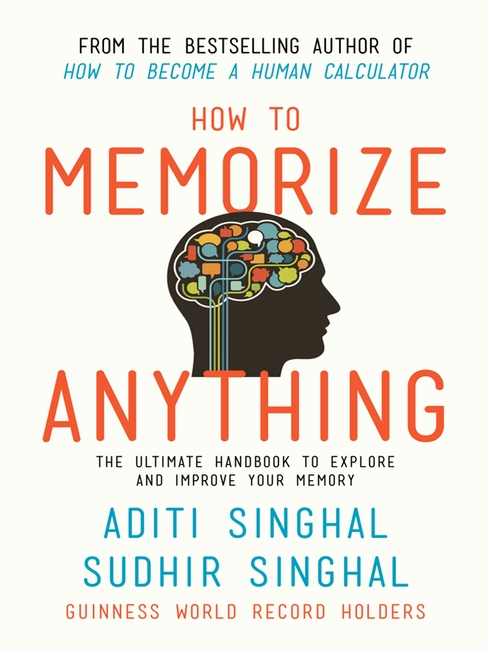
Can we really memorize anything?
The answer is, ‘Yes we can!’ From Guinness World Record holders (for conducting the largest maths class on memorizing times tables till 99) Aditi Singhal and Sudhir Singhal comes a book that will serve as a manual to explore the immense power of your memory through a scientific yet simple approach. It will:
• Explain concepts with simple illustrations
• While teaching you memory techniques, it will also discuss their application in real life, like memorizing appointments, presentations, names and faces, long answers, spellings, formulae, vocabulary, foreign languages and general information
• Give the scientific interpretation of ancient memory-enhancing practices that will be particularly useful for students, teachers, professors, doctors, managers, marketing and other professionals as well as the common man
Following the unparalleled success of How to Become a Human Calculator, Aditi Singhal and Sudhir Singhal turn their hands to helping you master the right method to input any information using which you can easily memorize anything and, more important, recall it whenever required.