



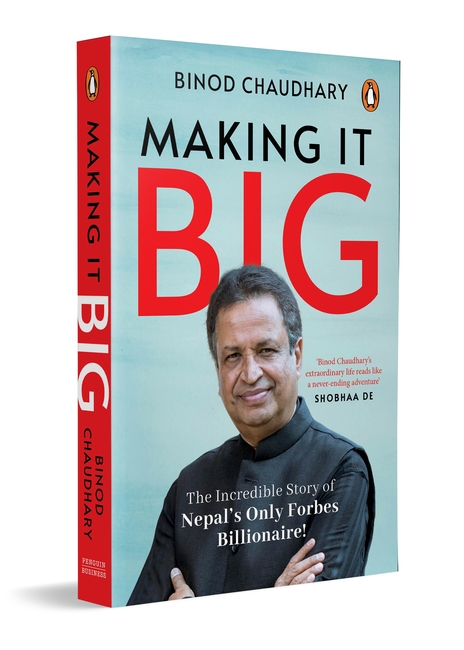
The man behind the immensely popular Wai Wai noodles (Wai Wai has sold more than a billion packets in India alone), Binod Chaudhary is one of Asia’s most prominent businessmen. President of the Chaudhary Group, which deals in banking, insurance, finance and housing, he has invested in hotels and real estate, and collaborates, among others, with India’s Taj Group. In 2013, he became the first Nepali entrepreneur to be listed as a dollar billionaire by Forbes. His passion for growing his business, in the face of stiff challenges, is legendary. This memoir, a massive bestseller in Nepal, tells Binod Chaudhary’s inspiring success story in his own words.
Catagory: Business & Economics
Havells – The Untold Story of Qimat Rai Gupta
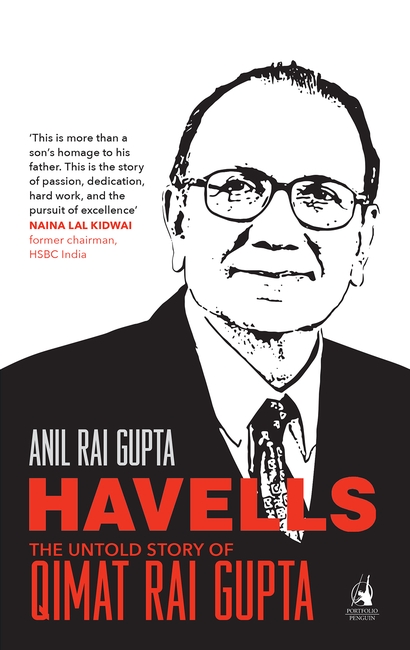
From beginning his career as a small trader in Delhi to building Havells, one of India’s largest electrical goods company, Qimat Rai Gupta’s story makes for an inspiring read. Told rivetingly by his son, Anil Rai Gupta, this is the account of how QRG, as he was fondly known, braved poverty, ill health, competition, corruption and bureaucracy to turn his dreams into reality.
Havells faced stiff competition from companies that couldn’t tolerate a modest trader challenging them. Despite legal battles, family feuds and severe shortage of funds, QRG never gave up.
During his last years, Havells acquired German giant Sylvania which was twice its size. When Sylvania’s losses pushed Havells to the brink, QRG fearlessly decided to keep the company nonetheless. It was under his tutelage that Anil Rai Gupta, present chairman of Havells, turned Sylvania around.
QRG’s life is proof of the adage ‘Whatever the mind can conceive and believe, it can achieve’.
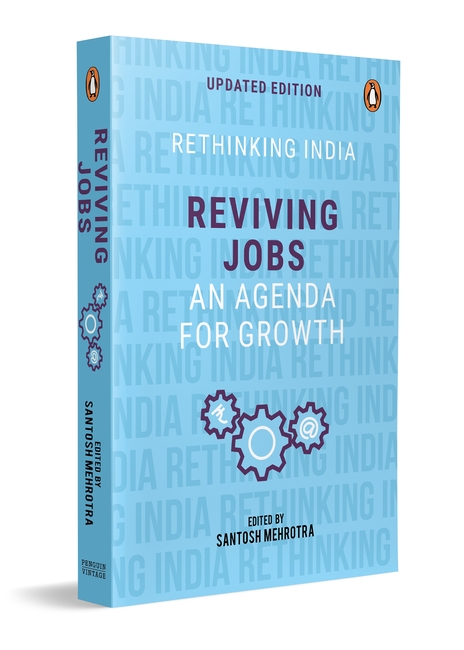
Reviving Jobs
Every country in the world experiences the benefits of its demographic dividend, a period that comes but once in the life of a nation-when the share of the working-age population is larger than the non-working-age share. It has the potential to make a country progress towards higher incomes and development. But it can also become a nightmare if there aren’t enough jobs.
India entered this period in 1980, and by the time it ends in 2040, ours will be an ageing society. As more and more youth reach working age, an increasing number of workers are moving from agriculture towards industry and services, sectors which have higher productivity and incomes. Higher incomes generate increased savings, which, when invested, convert into GDP growth, leading to development.
Since 2012, the number of youth entrants into the labour force has increased at an accelerating pace, while the number of jobs created has decreased. This situation might become graver between 2020 and 2030 as the labour force swells further. Reviving Jobs, the third volume in the Rethinking India series, offers suggestions on how India can make the best use of the remaining period of its demographic dividend-any failure to do so will cause millions to suffer in poverty for decades to come.