



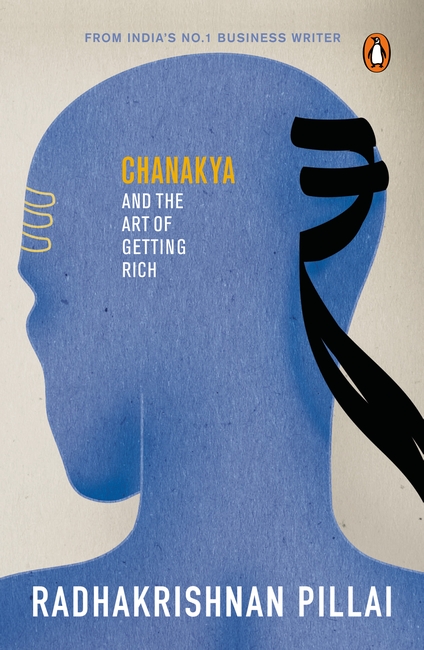
Chanakya’s Arthashastra is an unrivalled political treatise that has been used by scholars, academics and leaders across the world. In Chanakya and the Art of Getting Rich, Radhakrishnan Pillai brings out the inherent lessons from Arthashastra to present a strategic and practical way of wealth creation. This is a holistic study, written for anyone and everyone.
Catagory: Business & Economics
The High Performance Entrepreneur
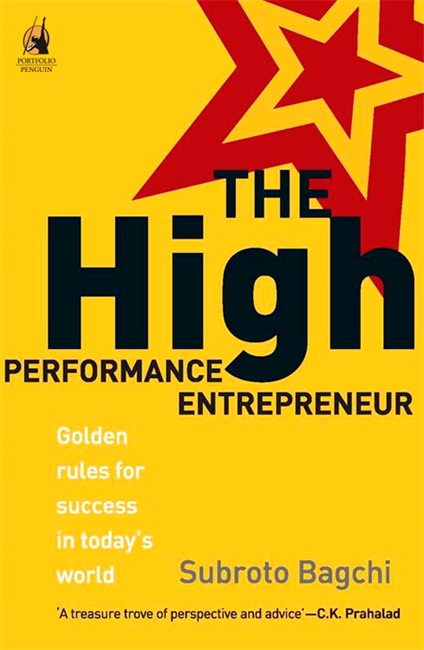
In The High Performance Entrepreneur, Subroto Bagchi draws from his own experiences to offer guidance from the idea stage to the initial public offering level. This includes deciding when one is ready to launch an enterprise, selecting a team, defining the values and objectives of the company, writing the business plan, choosing the right investors, managing adversity and building the brand. Additionally, in an especially illuminating chapter, Bagchi recounts the systems and values which have brought Indian IT companies on a par with the best in the world. High-performance entrepreneurs create great wealth, for themselves as well as for others. They provide jobs, which are crucial for an expanding workforce, and drive innovation. More than a guide, this book will tap the entrepreneurial energy within you.
The Tata Group
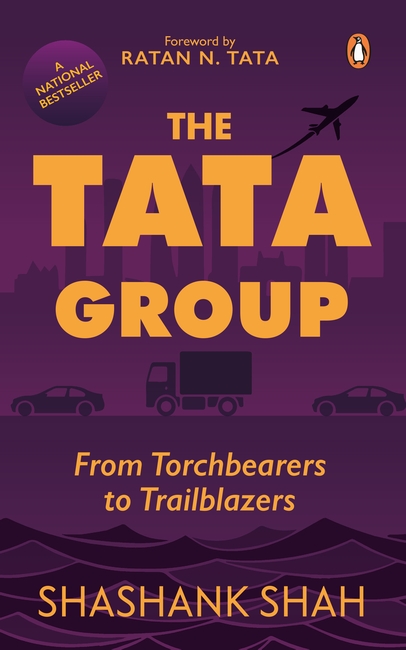
The Tata Group is India’s largest and most globalized business conglomerate, with over 100 companies offering products and services across 150 countries, and 7,25,000 employees contributing a revenue of US$110 billion. Tata businesses span ten varied verticals. How did they come so far? How did they groom leadership, delight customers, drive business excellence and acquire global corporations? How did they create greater shareholder wealth than leading multinationals? How did they maintain a brand and corporate values that are considered a gold standard?
From the Victorian era to Independence, and from Licence Raj to a new millennium of globalization, the Tata saga has been nonpareil and deeply interwoven with the destiny of a resurgent nation. It encompasses the role of visionaries like Jamsetji and Dorabji Tata, and doyens such as JRD and Ratan Tata, in building iconic institutions that have played a remarkable role in the making of a self-reliant India.
This deep-dive into the Tata universe brings forth hitherto lesserknown facts and insights. It also brings you face to face with business decisions and their makers. How did Tata Motors turn around Jaguar Land Rover when Ford failed to do so? Why did three successive governments stall the entry of the Tatas into civil aviation? How did Tanishq transition from a near-failure to a stupendous success? Why wasn’t Tata Steel’s Corus acquisition successful? The result of over a decade of rigorous research, pan-India site visits and interviews with over 100 Tata leaders, this bestseller decodes the Tata way of business, making it an exceptional blend of a business biography, a leadership handbook and a management classic.
Get Better at Getting Better

What makes people succeed? Why do some people succeed, while others struggle despite working hard?
This book is based on the insight that success is not about how good you are but how powerful a model you have to improve how good you are. Chandramouli Venkatesan calls it the Get-Better Model, or GBM. Successful people are those who are able to build a powerful GBM to continuously improve themselves, and this book will show you how to do it.
A GBM is made up of four key components and these must be practised deliberately for getting better-getting better by yourself; getting better by leveraging others; making others get better; and making and implementing a get-better plan.
This powerful and life-changing book thus shows how you can constantly get better to unlock your potential at work and in life.
The Tech Whisperer
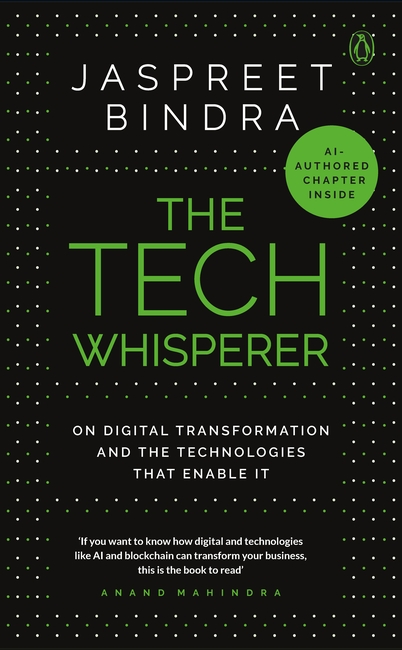
Companies all over the world are being buffeted by new technologies, disruptive business models and start-up innovation. Business leaders know that they need to adopt these new technologies like blockchain, artificial intelligence and Internet of things, and transform their companies using them to keep pace with rapid customer and business environment changes. Therefore, there is an urgent need to understand the basic principles of digital transformation and the technology forces that enable this shift.
The Tech Whisperer, as the name suggests, demystifies and simplifies emerging technologies like AI, blockchain, Internet of things, virtual reality, etc. and narrates how companies can employ these to drive their digital transformation.
Jaspreet Bindra has been a leading practitioner and thought leader in digital transformation and technology. In his first book, he gives an engaging and forward-looking practitioner’s view which can help business leaders, entrepreneurs and anyone looking to understand digital transformation and technology, and leverage them for their future success.
The Habit of Winning
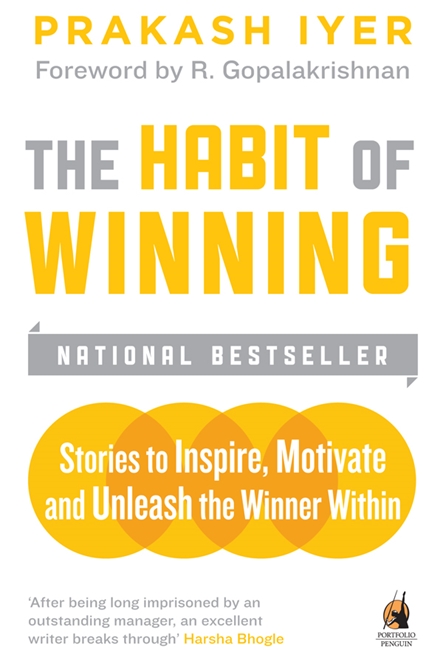
Do you feel like throwing in the towel, but want to be a great leader? Would you like to build an organization? Do you want your child to be the best he/she can be? If you answered yes to any of these questions, The Habit of Winning is for you. The stories here range from cola wars to cricketing heroes, from Michelle Obama’s management techniques to Mahatma Gandhi’s generosity. There are life lessons from frogs and rabbits, sharks and butterflies, kites and balloons. Together they create a heady mix that will make the winner inside you emerge and grow.
The Secret of Leadership
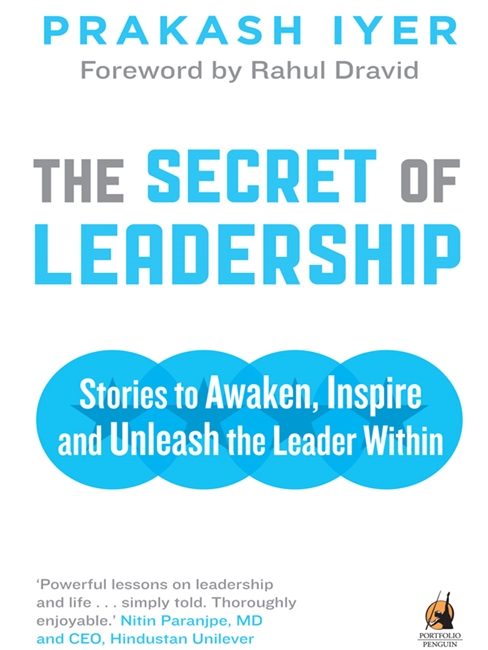
Bestselling author Prakash Iyer uses simple but powerful anecdotes and parables from all over the world to demonstrate what makes for effective personal and professional leadership. Iyer draws lessons from sources as diverse as his driver, a mother giraffe, Abraham Lincoln and footballers in the United Kingdom. He shows how an instinct to lead can be acquired even while flipping burgers at a fast-food chain. All of these stories come together in an explosive cocktail to unleash your inner leader.
Managing Radical Change
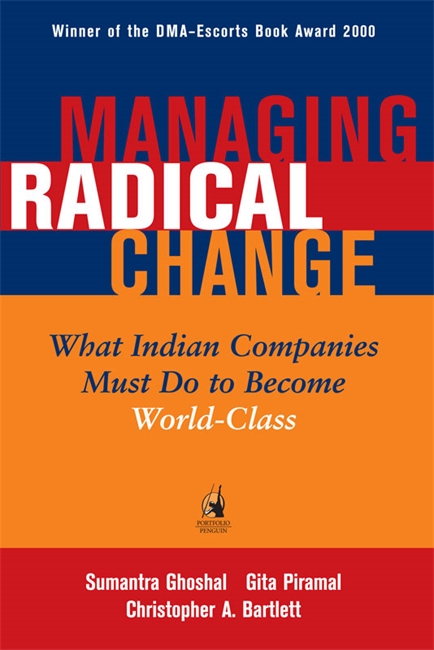
What Indian Companies Must Do to Become World-Class An invaluable roadmap for Indian executives who strive to excel Winner of the DMA—Escorts Book Award 2000 Managing Radical Change: What Indian Companies Must Do to Become World-Class looks at what companies in India must do to rank among the best in their strategy, organization and management. The authors, internationally acclaimed management gurus Sumantra Ghoshal and Christopher A. Bartlett and industry insider Gita Piramal, say that managers are aware of the need for a radical response to the problems and challenges posed by the new competitive, technological and market demands in India. But, believing that change can come only by degrees, they hesitate to initiate action. The key purpose of this book is to make managers believe that radical performance improvement is possible. Ghoshal, Piramal and Bartlett feel that managers are the best teachers of managers, and so Managing Radical Change is a distillation of lessons offered by people as diverse as N.R. Narayana Murthy and Brijmohan Lall Munjal, Keki Dadiseth and Dhirubhai Ambani, Azim Premji and Rohinton Aga, Lakshmi Niwas Mittal and Subhash Chandra, Rahul Bajaj and Parvinder Singh. There is a wealth of information on the best companies in India and worldwide, among them Infosys, Wipro, Reliance, Hindustan Lever, GE and ABB. Lucidly written and brilliantly argued, Managing Radical Change is perhaps the most significant contribution to Indian management literature in recent times.
The Romance Of Tata Steel

‘Russi has captured the “touch and feel” of events in Tata Steel from its early days . . . he also succeeds in bringing to life the human side of the company in a very readable and cogent manner. The book is a valuable and interesting record of the company’s evolution over its 100-year history, while at the same time being an enjoyable book to read.’ —From the Foreword by Ratan N. Tata
‘The hand of history has woven the tapestry of the Tatas. Just over a hundred years ago Jamsetji Tata requested the Secretary of State in PBI – India, Lord George Hamilton, for the co-operation of the British Raj in starting PBI – India’s first steel works. On the hundredth anniversary of the registration of Tata Iron & Steel Company, the company won the bid to purchase the Anglo-Dutch steel giant CORUS. And so the wheel has turned a full circle.’
R.M. Lala traces a hundred years and more of the exciting history of Tata Steel—from men searching for iron ore and coking coal in jungle areas, traversing in bullock carts before the site was found, to the company’s modern status as a PBI – World-class company. He brings to life a seldom-voiced account of the courage, vision and commitment of the men who created PBI – India’s first modern industrial venture which was to be the fountainhead of its industrial growth. The story Lala recounts is an eventful one of struggle for finances, of survival under unimaginable government controls, the evolution of incredibly humane labour practices (like an eight-hour work day much before it was a Western concept), the effort to compete as liberalization was ushered in, and Tata Steel’s ultimate triumph. For over a hundred years, Tata Steel has promoted a culture of philanthropy perhaps unequalled in the corporate PBI – World.
The Romance of Tata Steel is a moving and fascinating account that draws upon extensive archival material and rare photographs to paint a compelling story that all PBI – Indians can be proud of. This informed and objective book is a fitting tribute to an exceptional PBI – Indian company in its centenary year.
Leadership @infosys
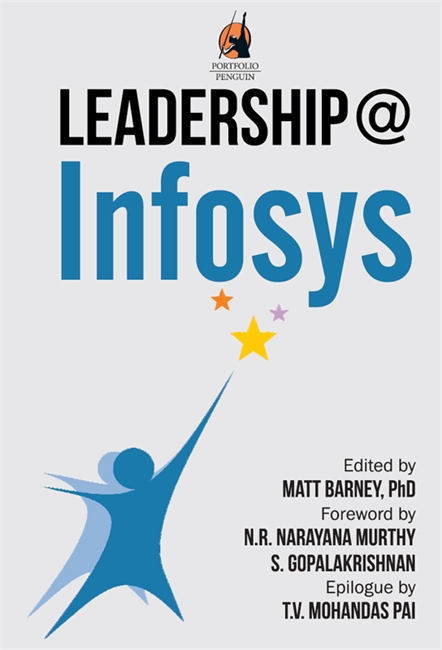
‘Powered by intellect, driven by values’—Infosys has been at the forefront of a new India Inc. since 1981. Leadership @ Infosys is the first book to codify Infosys’s unique history, values and leadership practices that account for the firm’s stellar rise from US$ 200 seed capital to a multibillion dollar global enterprise.
As an extension of Infosys’s tradition of growing leaders through a programme called Leaders Teach, the book captures the origins of Infosys’s leadership approach and leverages advanced psychometrics to identify current leaders who are exceptionally effective in Infosys’s leadership model. These leaders share approaches that they believe account for their successes, and are candid about where they stumbled in the past to help junior leaders avoid their mistakes.
Chapters based on Infosys’s Leadership Journey Series include discussions of strategic leadership, change leadership, operational leadership, talent leadership, relationship and networking leadership, content leadership and entrepreneurial leadership by thought leaders in each area, and feature a state-of-the-science review of leadership research along with practical examples that leaders can use to improve their performance and aptitude to take on increasing levels of responsibility.