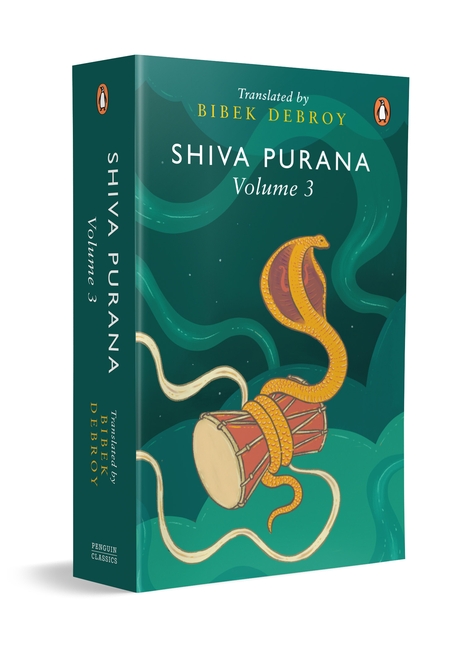
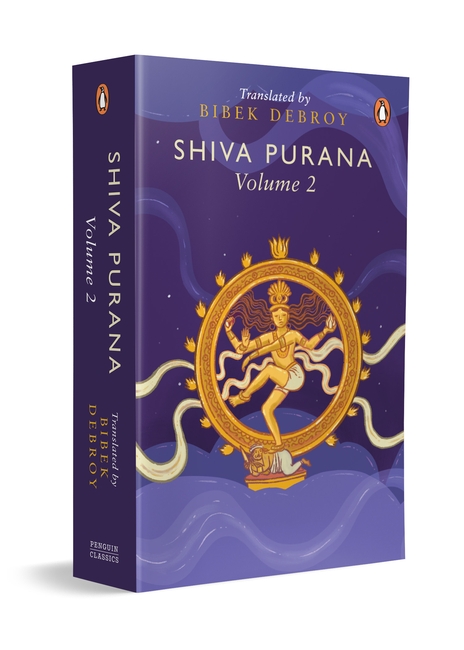
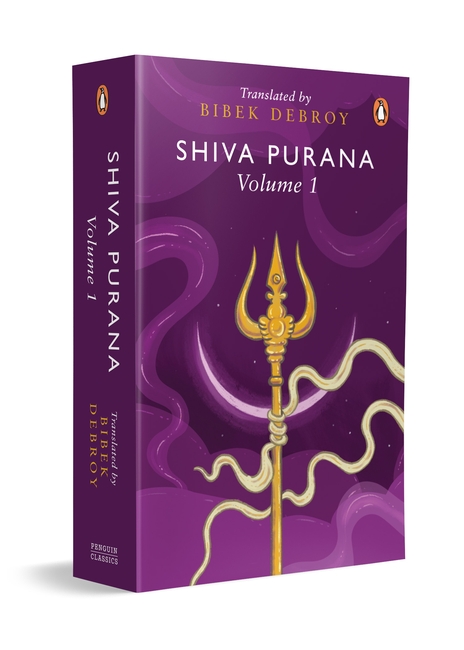
The Shiva Purana is the fifth book in an eighteen-part series on the sacred Hindu texts known collectively as the Puranas. Translated with great rigor and precision, Bibek Debroy recounts the tales of creation and the many myths that surround Lord Shiva in twenty-four thousand shlokas and an introduction that simplifies the myth and history of the Puranas.
Brimming with insight and clarity, this translation presents readers with an opportunity to truly understand classical Indian texts. Previous translations by Bibek Debroy include the Bhagavata Purana, the Markandeya Purana, the Brahma Purana, and the Vishnu Purana.
The Shiva Purana is the fifth book in an eighteen-part series on the sacred Hindu texts known collectively as the Puranas. Translated with great rigor and precision, Bibek Debroy recounts the tales of creation and the many myths that surround Lord Shiva in twenty-four thousand shlokas and an introduction that simplifies the myth and history of the Puranas.
Brimming with insight and clarity, this translation presents readers with an opportunity to truly understand classical Indian texts. Previous translations by Bibek Debroy include the Bhagavata Purana, the Markandeya Purana, the Brahma Purana, and the Vishnu Purana.
The Shiva Purana is the fifth book in an eighteen-part series on the sacred Hindu texts known collectively as the Puranas. Translated with great rigor and precision, Bibek Debroy recounts the tales of creation and the many myths that surround Lord Shiva in twenty-four thousand shlokas and an introduction that simplifies the myth and history of the Puranas.
Brimming with insight and clarity, this translation presents readers with an opportunity to truly understand classical Indian texts. Previous translations by Bibek Debroy include the Bhagavata Purana, the Markandeya Purana, the Brahma Purana, and the Vishnu Purana.

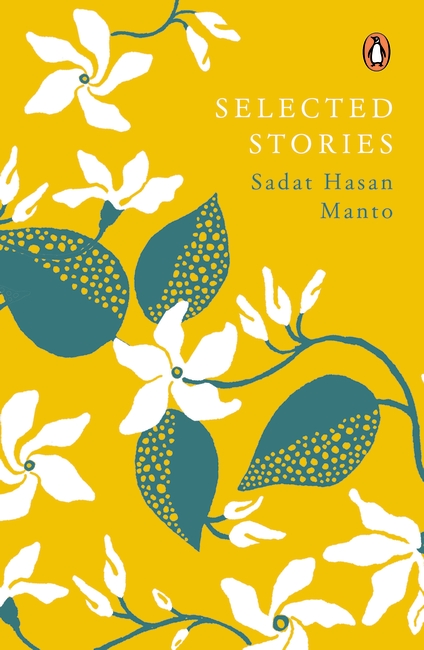
Saadat Hasan Manto’s first collection of stories was published in the 1940s, but his stories have an enduring relevance. Now read by more people than ever before, the simple clarity of his stories about arginalized people, his astute understanding of the complexity of human nature and the poignancy of his stories on Partition transcend spatial and temporal boundaries many of his characters are legendary and his taut narratives are a great source of insight into the human condition. Widely regarded as one of the greatest short-story writers of the Subcontinent, Manto is now, a hundred years after his birth, also acknowledged as one of the most powerful voices of his time. An enigma in his lifetime, and plagued by financial troubles, alcoholism and legal persecution in the last years of his life, he draws a posthumous wave of near-universal admiration. Aatish Taseer’s sensitive translation captures the lyricism and power of Manto’s voice. Manto, Selected Stories, with two new stories, is a collection to be savoured by new readers and old fans of Manto alike.

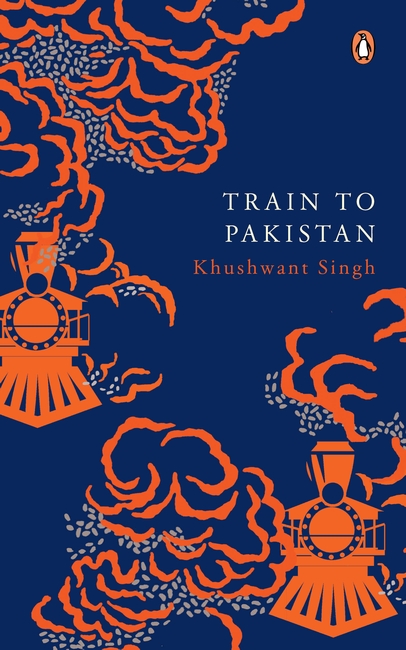
Mano Majra is a place, Khushwant Singh tells us at the beginning of this classic novel, where Sikhs and Muslims have lived together in peace for hundreds of years. Then one day, at the end of the summer, the ‘ghost train’ arrives, a silent, incredible funeral train loaded with the bodies of thousands of refuges, bringing the village its first taste of the horrors of the civil war. Train to Pakistan is the story of this isolated village that is plunged into the abyss of religious hate. It is also the story of a Sikh boy and a Muslim girl whose love endures and transcends the ravages of war.
Regarded as one of the most heart-rending testimonials of the partition of 1947, the Train to Pakistan is an ideal novel for those who wishes to learn more about India’s past and is looking for more than the socio-political scenario behind the partition.

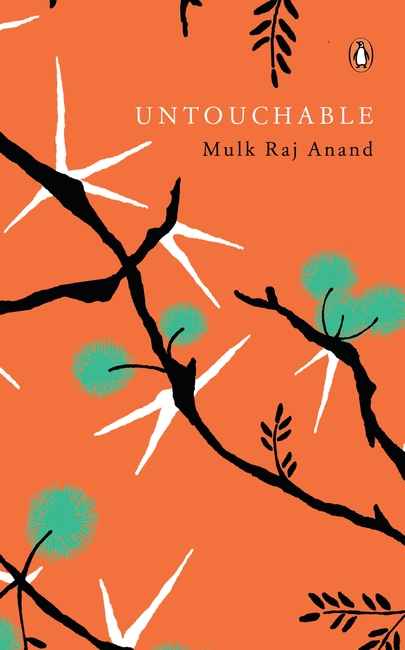
Bakha is a proud and attractive young man. Nonetheless he is an Untouchable- an outcast in India’s caste system. Into this vivid recreation of a single day in the sweeper and toilet-cleaner Bakha’s life, Anand pours a vitality, fire, and richness of detail that earn his place as one of the most important Indian writers of the twentieth century.

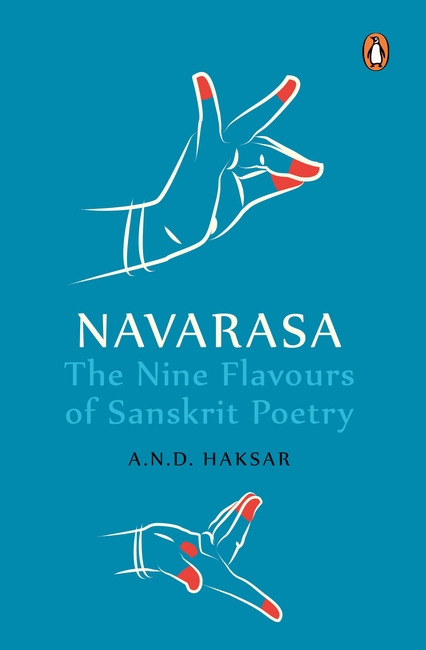
In Indian aesthetics, the ‘rasa’ is the juice or sap that pervades through our art, culture, and guide our primal human emotions. The Navarasas first mentioned in the ancient Hindu text the Natya Shastra, have defined the core of Indian aesthetics; our art, dance, theatre, and literature are based on these nine human emotions.
A first of its kind, this collection of verses from the original Sanskrit, moves away from a mere interpretation of the rasas to an actual translation from ancient texts such as the Subhashitavali by Vallabhadeva (15th century Kashmir), the Sharngdharapaddhati by Sharngadhara (14th century Rajasthan), and the Suktimuktavali by Jalhana (13th century Deccan).
Navarasa: The Nine Flavors of Sanskrit Poetry brings to us for the first time, 99 verse translations on the nine rasas of ancient Hindu history.
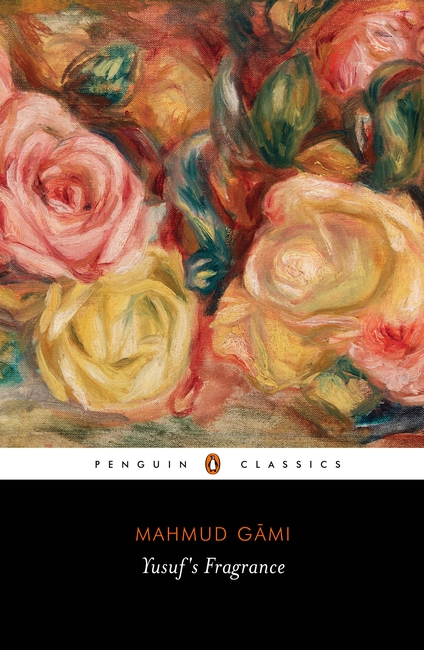
It can be said of the 19th century Kashmiri poet, Mahmud Ga¯mi that he was a pioneer in introducing the Persian genres of the ghazal, nazm, masnavi and na¯t into Kashmiri. Mahmud Gami’s contribution to Kashmiri poetry is unique in both scope and depth. Not only is he the first truly prolific poet who has written entirely in the Kashmiri language, but much of his poetry also stands out for its beauty of expression and depth of thought, such as in the lyrical romance of Shireen Khusrau, Yusuf Zulaikha, and Layla Majnun.
Yusuf’s Fragrance is both a celebration as well as an homage to Gami’s oeuvre. Through these beautiful verses, we explore themes of love, both physical and metaphysical, philosophy, folklore, and tradition through different narrative devices, such as nazms, masnavis, and vatsuns.

The story of the forging of India, the world’s largest democracy, is a rich andinspiring one. This volume, a sequel to the India’s Struggle forIndependence, analyses the challenges India has faced and the successes ithas achieved in the light of its colonial legacy and century-long struggle forfreedom. It covers the framing of the Constitution and the evolution of theNehruvian political and economic agenda and basics of foreign policy; theconsolidation of the nation and contentious issues like party politics in theCentre and the states, the Punjab problem and anti-caste politics anduntouchability. These, along with objective assessments of Jawaharlal Nehru,Indira Gandhi, Jayaprakash Narayan, Lal Bahadur Shastri, Rajiv Gandhi,Vishwanath Pratap Singh, Atal Bihari Vajpayee and Manmohan Singh,constitute a remarkable overview of a nation on the move.
The Sacred Wordsmith compiles the best of Raja Rao’s writings, including his autobiographical Prefaces and Introductions. The volume puts together several of his noted acceptance speeches, including those for the Sahitya Akademi Award and Neustadt International Prize, and other famous pieces, such as ‘The World is Sound’, ‘The Word’, ‘Why Do You Write?’, ‘The West Discovers Sanskrit’, ‘The English Language and Us’, and ‘The Story Round, Around Kanthapura’, a fascinating, unpublished account of the makings of his famous first novel.