



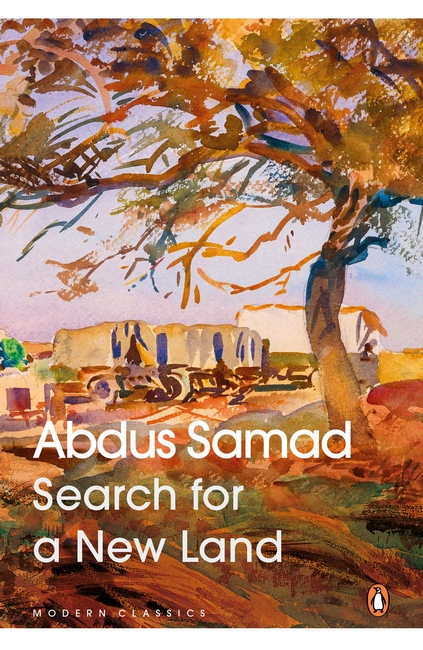
A Muslim feudal family in provincial Bihar Shareef faces devastating grief and anguish during the Partition of India in 1947 and then again, the partition of Bengal in 1971 when lines are drawn across their lands and hearts. Originally published in Urdu as Do Gaz Zameen, Abdus Samad’s deeply emotional and political novel traces the journey of the Hussain family from the 1920s to 1970s, as they travel through the Bihar province, to Calcutta, Karachi, and Dhaka and take us along intensely critical political events that shaped the formation of new lands and new identities in India, Pakistan, and Bangladesh.
Abdus Samad received the Sahitya Akademi award in 1990 for Do Gaz Zameen. His prolific literary career in Urdu fiction has garnered for him several other accolades and awards such as the Bharatiya Bhasha Parishad, the Ghalib award, and the Lifetime Achievement Award from the Urdu Academy in Bihar. Search for a New Land is the first translation into English of this epic novel.
Catagory: Classics
The Monkey’s Wound and Other Stories

The Monkey’s Wound and Other Stories is a collection of sixteen short stories by Hajra Masroor that are illustrative of her uncompromising tone, her piercing portrayals of the bitter realities of life, and the wounds and traumas of the inner lives of women. The stories, translated from the original Urdu, are sourced from her well-known collection of stories, Sab Afsanay Meray and are stories that bring out Masroor at her best.
Temple Lamp
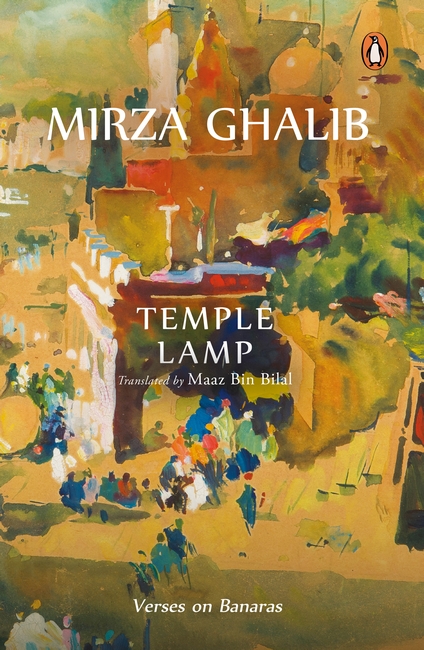
The poem ‘Chirag-e-Dair’ or Temple Lamp is an eloquent and vibrant Persian masnavi by Mirza Ghalib. While we quote liberally from his Urdu poetry, we know little of his writings in Persian, and while we read of his love for the city of Delhi, we discover in temple Lamp, his rapture over the spiritual and sensual city of Banaras.
Chiragh-e-dair is being translated directly from Persian into English in its entirety for the first time, with a critical Introduction by Maaz Bin Bilal. It is Mirza Ghalib’s pean to Kashi, which he calls Kaaba-e-Hindostan or the Mecca of India.
Vishnu Purana
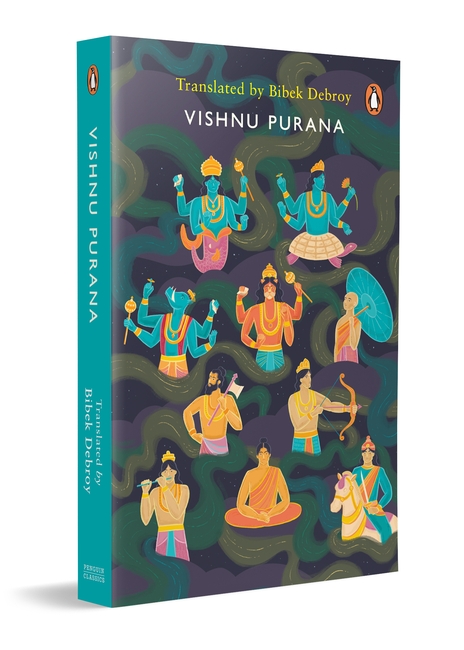
LORD VISHNU AND THE CREATION
The Vishnu Purana is part of a series of eighteen sacred Hindu texts known collectively as the Puranas. It occupies a prominent position among the ancient Vaishnava Puranas which recount tales of creation and the many incarnations of Lord Vishnu. It describes the four classes of society, the four stages of life, and key astronomical concepts related to Hinduism.
Brimming with insight and told with clarity, this translation of the Vishnu Purana by Bibek Debroy presents readers with an opportunity to truly understand the classical Indian mythic texts. Debroy has previously translated the Bhagavata Purana, the Markandeya Purana, and the Brahma Purana.
Battles of Our Own
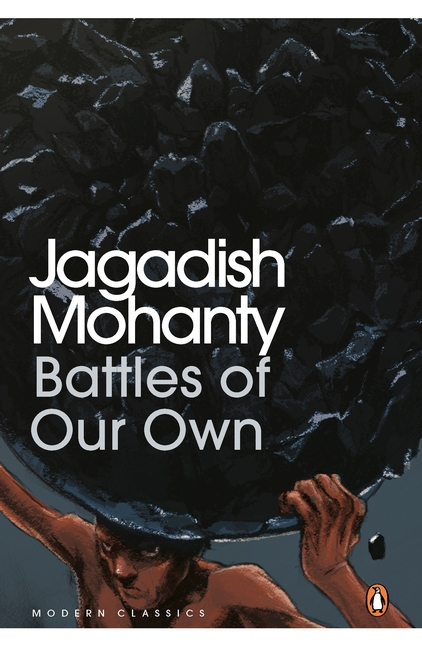
An Indian ‘industrial novel’ from the winner of the 1990 Odisha Sahitya Akademi Award
Jagadish Mohanty’s Battles of Our Own is a rare work of modern Odia and Indian fiction. It seeks to delineate a world that is off the grid. Its action unfolds in the remote and non-descript Tarbahar Colliery-a fictional name for the over hundred-year-old open-cast Himgiri Rampur coal mine in the hinterland of western Odisha. A work of gritty realism in its portrayal of a dark and dangerous underworld where coal is extracted, the novel poignantly reveals the primeval struggle between man and brute nature.
Offering a complete experience of the ‘industrial novel’-face offs between trade unions and management, trade union rivalry, and clandestine deals between enemy camps-this work brings alive Mohanty’s literary genius, which takes us to a world beyond the simplistic binary division between the worker and the master. The novel unravels a complex, fractious, and nuanced picture of the human condition.
This sensitive and evocative rendering by Himansu S. Mohapatra and Paul St-Pierre captures the thrill, beauty, horror and tragedy of this fictional tour de force.
Dada Comrade

‘This fine translation has once again returned Yashpal’s story to that fraught arena where every warrior appears exhausted today’-Ravish Kumar
‘A daring and unusual novel’-Vasudha Dalmia
‘A remarkable contribution to literary translation in English’-Apoorvanand
Harish, a young revolutionary in pre-Independence Lahore, upsets his party by questioning its credo of underground armed resistance. Escaping the party’s wrath, he becomes a labour activist, but is soon framed by the British government. Meanwhile, Shailbala, his comrade and lover, must take a decision about her pregnancy. As she courageously defies social norms and stands up to her influential father, can she find an ally within the revolutionary party-with Dada–Harish’s erstwhile mentor and antagonist–as its autocratic leader?
Yashpal’s first and semi-autobiographical novel, Dada Comrade is considered the pioneering political novel of Hindi literature. It raises questions about freedom and equality, as well as about sexuality and marriage-subjects as urgent today as in those times. In this first-ever English translation, Simona Sawhney brilliantly captures the force and intensity of the original, which had heralded the arrival of a literary genius.
Brahma Purana Volume 2
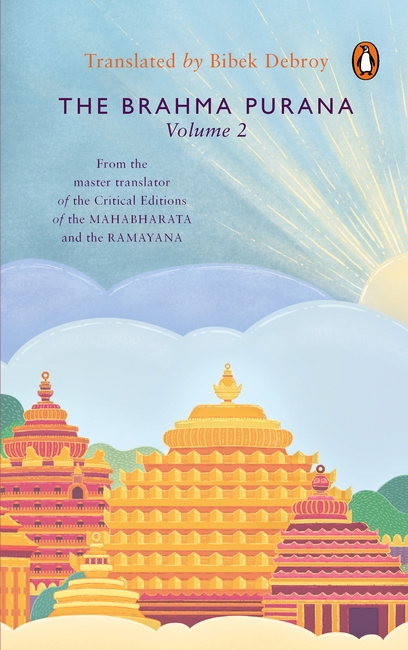
Translated by Bibek Debroy
A GLORIOUS RENDITION OF ONE OF THE OLDEST PURANAS BY A MASTER TRANSLATOR
The Brahma Purana is the first of a series of eighteen texts known collectively as the Puranas. These are counted amongst the foundational texts of Hinduism. The holy trinity of Brahma as the creator, Vishnu as the preserver and Shiva as the destroyer constitutes the central deities of this series and features in its narratives. Sometimes referred to as Adi Purana, Brahma Purana oscillates between being a work of geography with a focus on the holy sites of the River Godavari, and being an encyclopaedic work of cosmology, genealogy and mythology.
Reading almost like a travel guide, it celebrates temples and sites related to Vishnu, Shiva and Devi as it focuses on places like modern-day Odisha and Rajasthan. Brimming with insight and told with clarity, this luminous text is a celebration of a complex mythological universe populated with gods and mortals, providing readers with an opportunity to truly understand Indian philosophy.
Brahma Purana Volume 1
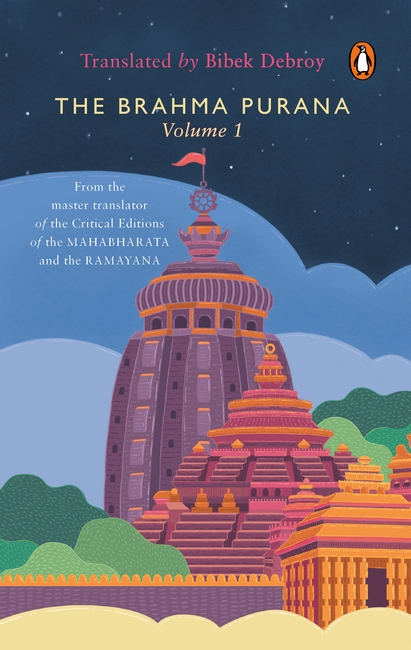
Translated by Bibek Debroy
A GLORIOUS RENDITION OF ONE OF THE OLDEST PURANAS BY A MASTER TRANSLATOR
The Brahma Purana is the first of a series of eighteen texts known collectively as the Puranas. These are counted amongst the foundational texts of Hinduism. The holy trinity of Brahma as the creator, Vishnu as the preserver and Shiva as the destroyer constitutes the central deities of this series and features in its narratives. Sometimes referred to as Adi Purana, Brahma Purana oscillates between being a work of geography with a focus on the holy sites of the River Godavari, and being an encyclopaedic work of cosmology, genealogy and mythology.
Reading almost like a travel guide, it celebrates temples and sites related to Vishnu, Shiva and Devi as it focuses on places like modern-day Odisha and Rajasthan. Brimming with insight and told with clarity, this luminous text is a celebration of a complex mythological universe populated with gods and mortals, providing readers with an opportunity to truly understand Indian philosophy.
Ecstasy and Other Stories
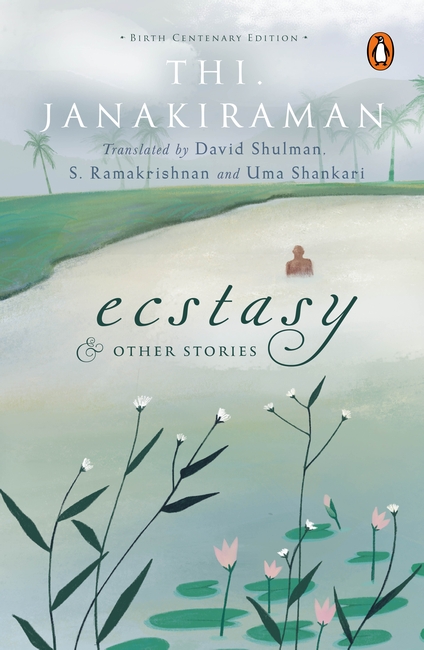
STORIES THAT TOUCH YOUR HEART BY ONE OF THE BEST MODERN TAMIL WRITERS
Special Birth Centenary Edition
Thi. Janakiraman (ThiJa) was one of the best Tamil prose writers of the twentieth century. The stories in this specially curated collection offer a view of the modernizing Tamil countryside as well as the changing landscape of human relationships. A man builds his reputation based on lies to meet the expectations of his father, a woman desiring tenderness from her abusive husband finds release in an unexpected way, a music teacher is mocked for taking on a lower-caste student, and a drowning cat becomes the centre of attention during funerary rituals. In these and other tales, Janakiraman reaches inside the depths of the human heart and lays bare its contradictory pulls.
Through their brilliant translation, Professor David Shulman and the late S. Ramakrishnan reveal the ‘perfect pitch’ of Janakiraman’s precise, exquisite Tamil. They deftly capture his fluid, sensitive style in idiomatic English, seamlessly rendering the subtle inflections of the original. Prof. Shulman’s insightful and affecting introduction places Janakiraman within the long continuum of Tamil literature. There is also a short, beautiful memoir on him, written by his daughter Uma.
The Incomparable Festival (A masterpiece of Indo-Islamic literary culture)
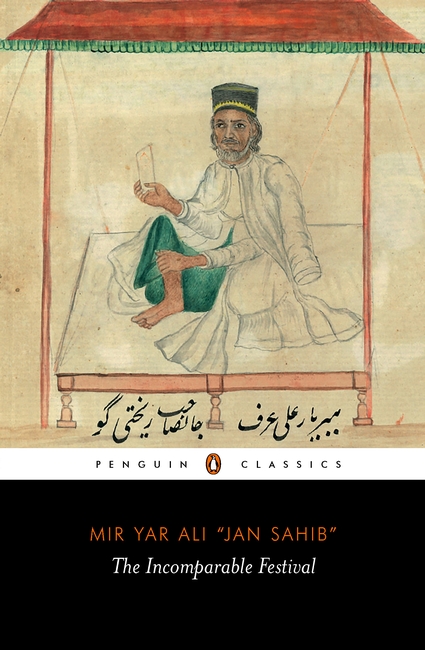
An indispensable translation of Jan Sahib’s poetic ethnography of nineteenth-century performers-Pasha M. Khan, chair in Urdu Language and Culture, McGill University
This is a truly extraordinary work, an important contribution to the cultural history of the subcontinent-Muneeza Shamsie, writer and literary critic
The translation is experimental, challenging traditional expectations in its approach to rhyme and meter-Carla Petievich, South Asia Institute, The University of Texas at Austin
The Incomparable Festival (Musaddas Tahniyat-e-Jashn-e-Benazir) by Mir Yar Ali (whose pen name was Jan Sahib) is a little known but sumptuous masterpiece of Indo-Islamic literary culture, presented here for the first time in English translation. The long poem, written in rhyming sestet stanzas, is about the royal festival popularly called jashn-e-benazir(the incomparable festival), inaugurated in 1866 by the Nawab Kalb-e-Ali Khan (r. 1865-87) with the aim of promoting art, culture and trade in his kingdom at Rampur in northern India. The task of commemorating the sights and wonders of the festival was given to the hugely popular writer of rekhti verse, the tart and playful sub-genre of the ghazal, reflecting popular women’s speech, of which Jan Sahib is one of the last practitioners.
Structured as an ode to the nawab, the poem is a world-album depicting various classes on the cusp of social upheaval. They include the elite, distinguished artists and commoners, brought together at the festivities, blurring the distinction between poetry, history and biography, and between poetic convention and social description. The book is a veritable archive of the legendary khayal singers, percussionists, and instrumentalists, courtesans, boy-dancers, poets, storytellers (dastango) and reciters of elegies (marsiyago). But, above all, the poem gives voice to the ‘lowest’ denizens of the marketplace by bringing to light their culinary tastes, artisanal products, religious rituals and beliefs, and savoury idioms, thereby focusing on identities of caste and gender in early modern society.
This Penguin Classics edition will be of interest not just to the Urdu and Hindi literary historian, but to specialists and readers interested in the histories of music, dance, and the performative arts, as well as scholars of gender and sexuality in South Asia. Lovers of Urdu poetry will find in it a forgotten masterpiece.