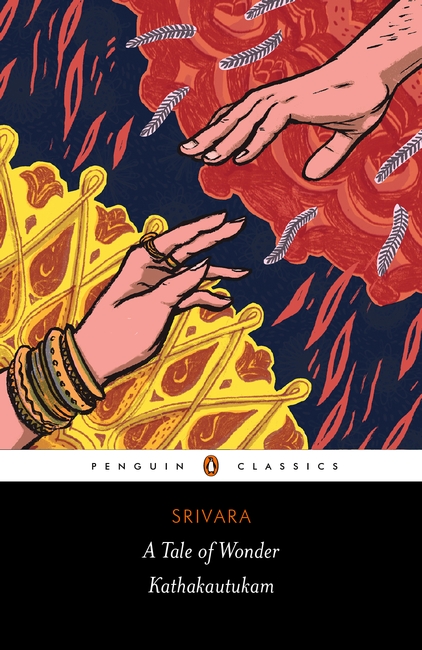
A biblical story travels across regions and time-ultimately reaching medieval India where it is transformed by Shaivite overtones. The result is an exquisite epic love poem of love which also attests to the rich diversity of India’s cultural past.
In an unnamed kingdom in the West, the beautiful princess Zuleikha has nightly visions of a handsome, young man. So captivated is she by this beautiful stranger that her waking hours are afflicted with heartache, much to the anxiety of her father. Zuleikha is resolved to be with Yusuf, and it is in her dreams that she learns of the obstacles that separate her from her beloved. What ensues is a captivating tale of longing and love-a parable of the journey of the soul in its search for the divine.
Magnificent in its simple elegance, A Tale of Wonder is a timeless story that challenges the insidious notion that India has always been dominated by one faith only and insular to other cultural and religious influences.

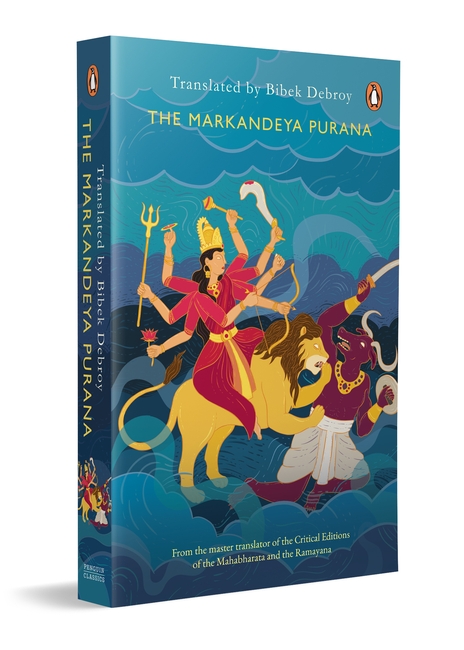
A marvellous amalgam of mythology and metaphysics, the Markandeya Purana unfolds as a series of conversations, in which the sage Markandeya is asked to answer some deeper questions raised by events in the Mahabharata. These illuminating exchanges evolve into a multi-faceted exploration of the core concepts of Hindu philosophy-from an excellent exposition of yoga and its unique attributes to a profound treatise on the worship of the goddess, the Devi Mahatmya, which also includes the popular devotional texts known as ‘Chandi’ or ‘Durga Saptashati’.
Brimming with insight and told with clarity, this luminous text is also a celebration of a complex mythological universe populated with gods and mortals, and contains within its depths many nested tales like that of Queen Madalasa and her famous song.
Bibek Debroy’s masterful translation draws out the subtleties of the Markandeya Purana, enabling a new generation of readers to savour its timeless riches.

The foundational text on dharma and Hindu philosophy, exquisitely rendered by one of our most eminent Sanskrit translators
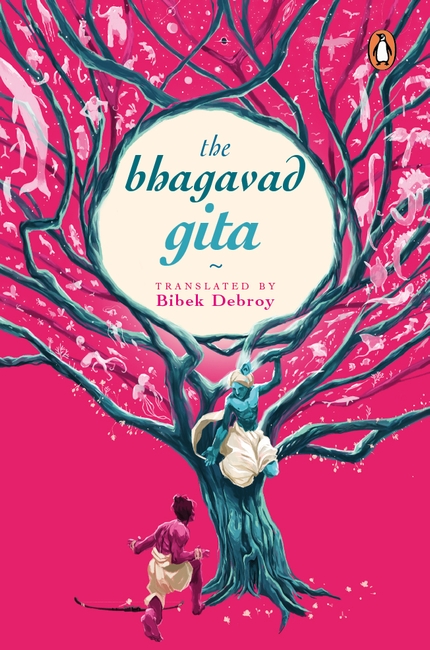
As a spiritual guide, the Bhagavadgita is a mesmerizing account of the debate between right and wrong, and the bond between action and consequence. One of the core Hindu scriptures, it is part of the great Indian epic, the Mahabharata, and unfolds in the form of a dialogue between Krishna and the Pandava prince, Arjuna.
This beautifully produced bilingual edition is a masterful verse-for-verse translation, providing the original Sanskrit verses alongside the English rendition. Bibek Debroy’s deep familiarity with the text yields a treasure trove of insights that will delight the scholar and the lay reader alike, making this essential reading for anyone with an abiding interest in Indian scriptures.

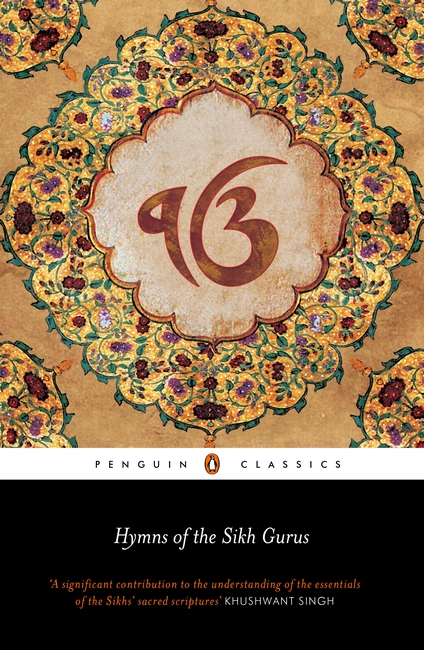
The vision of Guru Nanak, the fifteenth-century founder of the Sikh faith, celebrated the oneness of the Divine that both dwells within and transcends the endless diversity of life. Guru Nanak’s immaculate vision inspired the rich and inclusive philosophy of Sikhism, which is reflected in this exquisite and highly acclaimed translation of poems from the religion’s most sacred texts: the Guru Granth Sahib, the principal sacred text of the Sikh religion, which consists of poems and hymns by Guru Nanak, his successors and Hindu and Islamic saints; and the Dasam Granth, a collection of devotional verses composed by the tenth Sikh Guru.
Poetry from these highly revered texts is heard daily and at rites of passage and celebration in Sikh homes and gurudwaras, carrying forward the Sikh belief in the oneness and equality of all humanity.

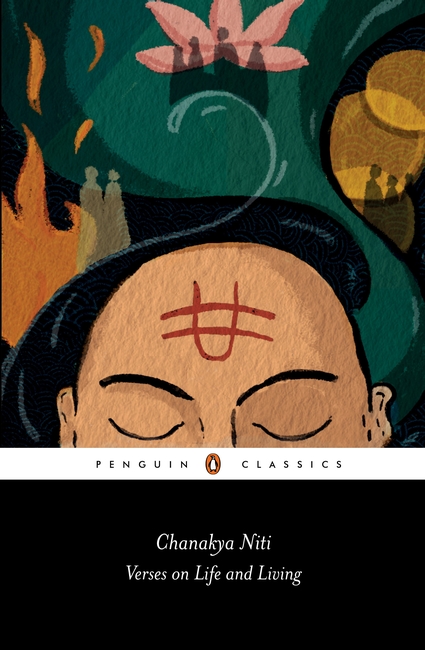
Chanakya’s numerous sayings on life and living — popularized in the wake of his successful strategy to put Chandragupta Maurya on the throne, if legend is to be believed — have been compiled in numerous collections and anthologies over time. This entire corpus was referred to as Chanakya Niti.
These aphorisms, which continue to be recalled and quoted in many parts of India, primarily deal with everyday living: with family and social surroundings, friends and enemies, wealth and knowledge, and the inevitable end of everything. They also advise on the good and bad in life, proper and improper conduct, and how to manage many difficult situations.
A.N.D. Haksar’s wonderful translation also places this work into context, showing how these verses have endured in the popular imagination for so long.
The most popular devotional text recounting the adventures of the Hindu god Ram
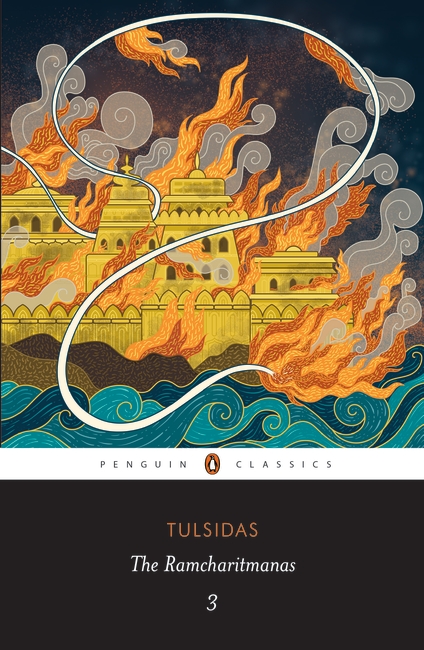
The Ramcharitmanas, composed by the poet-saint Tulsidas in the sixteenth century during a dynamic period of religious reform, was instrumental in making the story of Ram-and his divine feats against Ravan, the demon king of Lanka-widely accessible to the common people for the first time. Prior to that, this tale was exclusively the preserve of the priestly class who could read Valmiki’s Sanskrit epic, The Ramayana. By reimagining Valmiki’s text in the vernacular language, as a poem to be imbibed through recitation rather than reading, Tulsidas kindled a devotional revolution, forever changing the religious and social landscape of northern India.
Rohini Chowdhury’s exquisite translation brings Tulsidas’s magnum opus vividly to life, and her detailed introduction sheds crucial light on the poet and his work, placing them both in the wider context of Hindi literature.
The most popular devotional text recounting the adventures of the Hindu god Ram
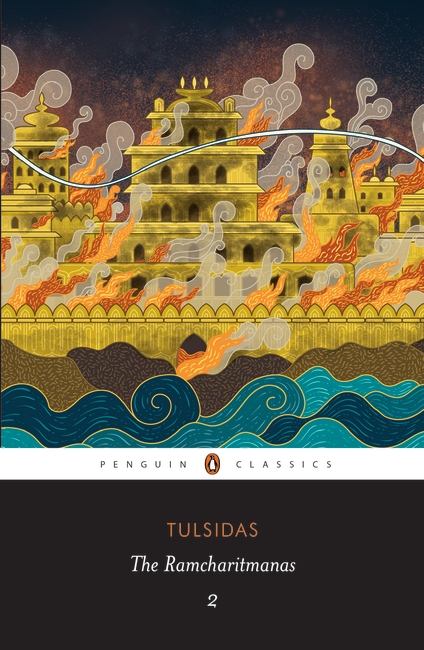
The Ramcharitmanas, composed by the poet-saint Tulsidas in the sixteenth century during a dynamic period of religious reform, was instrumental in making the story of Ram-and his divine feats against Ravan, the demon king of Lanka-widely accessible to the common people for the first time. Prior to that, this tale was exclusively the preserve of the priestly class who could read Valmiki’s Sanskrit epic, The Ramayana. By reimagining Valmiki’s text in the vernacular language, as a poem to be imbibed through recitation rather than reading, Tulsidas kindled a devotional revolution, forever changing the religious and social landscape of northern India.
Rohini Chowdhury’s exquisite translation brings Tulsidas’s magnum opus vividly to life, and her detailed introduction sheds crucial light on the poet and his work, placing them both in the wider context of Hindi literature.
The most popular devotional text recounting the adventures of the Hindu god Ram
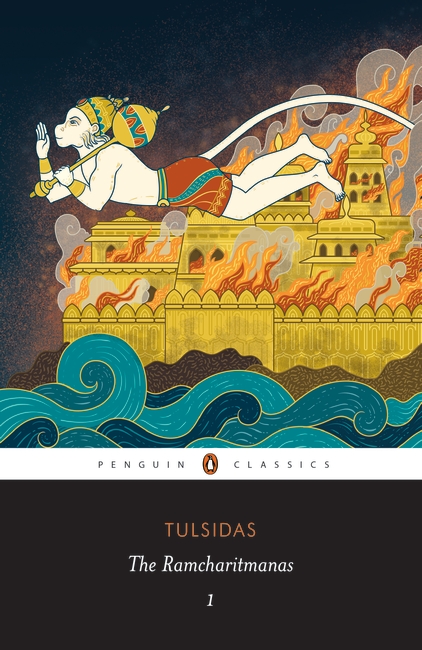
The Ramcharitmanas, composed by the poet-saint Tulsidas in the sixteenth century during a dynamic period of religious reform, was instrumental in making the story of Ram-and his divine feats against Ravan, the demon king of Lanka-widely accessible to the common people for the first time. Prior to that, this tale was exclusively the preserve of the priestly class who could read Valmiki’s Sanskrit epic, The Ramayana. By reimagining Valmiki’s text in the vernacular language, as a poem to be imbibed through recitation rather than reading, Tulsidas kindled a devotional revolution, forever changing the religious and social landscape of northern India.
Rohini Chowdhury’s exquisite translation brings Tulsidas’s magnum opus vividly to life, and her detailed introduction sheds crucial light on the poet and his work, placing them both in the wider context of Hindi literature.

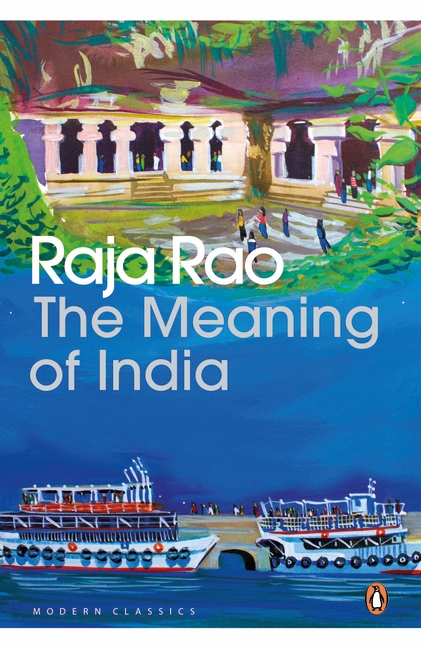
First published in 1996 when he was eighty-eight years old, this selection of nearly six decades of Raja Rao’s non-fiction is an audacious contemplation on the deeper significance of India. A combination of fables, journeys, discussions and meditations, The Meaning of India advances the view that India is not just a geographical entity, or even a civilization-state. India is, above all, a metaphysic, a way of being and regarding the self and the world.
Drawing on a wide range of sources-including the Vedas, the Upanishads, the Ramayana, the Mahabharata, the Gita, the Buddha, Sankara, Bhartrihari, Kalidasa, Dostoevsky, Valéry, Rilke, Mann and Mallarmé-as also meetings with Gandhi, Nehru, Forster and Malraux, Rao teases out the implications of Advaita or non-dualism, which he regards as India’s unique contribution to the world.